
How to Schedule Reddit Posts Safely (Timing, API, and the Subreddit Rules)
Build your own Reddit scheduling pipeline in Python: authenticate once, compute the best time to post from real subreddit data, vet each community's rules, and publish on a human cadence. Copy-paste code included.

Scheduling a Reddit post sounds like one action, but it is really three. You decide what to post and where, you decide when it goes live, and then you publish it. The hosted tools on the first page of search collapse all three into a calendar widget and hide the parts that actually matter to a developer: how the timing is computed, what each community allows, and what the publish step really does. This guide pulls the three apart and shows you how to build the whole pipeline yourself in Python against a REST API, so the timing is computed from real data, the rules are checked per community, and the publish step is something you understand line by line.
Not affiliated with Reddit Inc. redditapis.com is an independent third-party REST proxy for Reddit's API. This guide is vendor-neutral: it shows the native scheduling path, names the hosted scheduling tools, and teaches the build-your-own pipeline side by side so you can pick what fits.
TL;DR: Reddit has no public submit-a-post API, so a programmatic scheduler is a loop you build. Authenticate once with
POST https://api.redditapis.com/api/reddit/loginto get session cookies. Compute the best time to post per community by pulling a month of top posts withGET /api/reddit/posts?subreddit=<sub>&sort=top&t=monthand bucketing eachcreated_utcby hour and weekday. Vet the target community withGET /api/reddit/search/communities?q=<name>(readsubreddit_type,over_18,quarantine, and the sidebardescription) and a karma read fromGET /api/reddit/user/:name. Then fire the documented write call at the scheduled minute via cron or APScheduler:POST /api/reddit/commentfor a comment orPOST /api/reddit/votefor a vote. "Safely" means respecting each community's posted rules, meeting its eligibility, tailoring content per sub, and posting on a human pace. Costs are cents (pricing): reads are $0.002, a comment is $0.012, a vote is $0.005.
What you'll learn:
- Why Reddit's native scheduler does not give a developer a real API, and what to build instead
- How to compute the best time to post for a specific subreddit from live data, not a decade-old chart
- How to read a community's rules and eligibility before anything fires
- How to schedule the write call with cron or a job scheduler, on a timing envelope that stays human
- Exactly what the REST write surface publishes today, in plain terms, with no invented endpoints
Why Reddit's Native Post Scheduling Falls Short for Developers
Reddit's native post scheduling exists, but it is a moderator-facing UI feature with no public scheduling API, which means a developer who wants to script it has nothing to call. Reddit shipped Scheduled and Recurring Posts and announced the feature in r/modnews, and it works fine if you are a mod scheduling a weekly thread from a desktop browser. The catch shows up the moment you try to do it at any scale or from code. The three gaps that native scheduling does not solve:
- No public API surface: there is no endpoint to queue or publish a post programmatically
- No timing data: no structured way to compute when a subreddit's audience is online from a script
- No rules layer: no machine-readable read of each community's posting rules at fire time
That gap is why the search results for scheduling split into two camps that never meet. One camp is hosted SaaS schedulers (Later for Reddit, Postpone, Postiz) that wrap the whole thing in a calendar and a monthly fee. The other camp is developers in r/redditdev and r/learnpython asking how to wire it themselves and getting half-answers. One thread on r/redditdev put the missing piece plainly: the author said their experience with the API "only extends to using PRAW for posting a submission in real time," and they wanted to understand the scheduling layer that sits on top of that. The real-time post is the easy part. The queue, the clock, and the timing logic are what a scheduler actually is, and none of that is in the native feature.
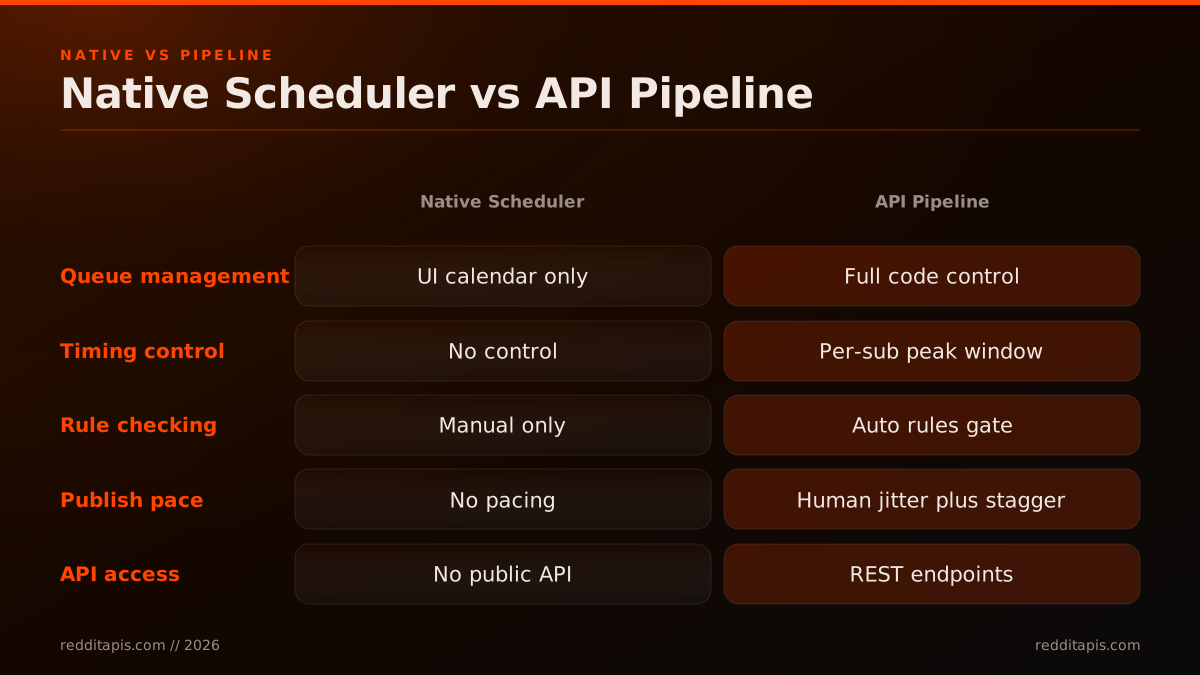 Native scheduling versus a pipeline you control: the difference is everything below the calendar widget
There is also a trust question that the hosted tools have trained people to ask. A user on r/help looking at the same SaaS options hesitated, saying they were "hesitant to use them in case they're not safe," and that instinct is reasonable. Handing your account credentials to a black-box scheduler and trusting its posting behavior is a leap. Building the pipeline yourself replaces that leap with something you can read: you see the timing logic, you see the rules check, and you see exactly what gets published. Builders keep arriving at the same conclusion, that a scheduler is really an automation system once you look under the calendar:

Fraser
@iamfra5er
THIS GUY BUILT A SOCIAL MEDIA SCHEDULER TO $43K/MO AND THE PIVOT THAT DOUBLED HIS REVENUE IS INSANE nevo started with a basic open-source scheduling tool but his churn was killing him at 25% so he stopped thinking like a scheduler and started thinking like an automation engine… Show more

The practical move, then, is to stop looking for a native scheduling API that does not exist and instead assemble three things you do have: a way to read when a community is active, a way to read what that community allows, and a way to publish an action on a schedule. The rest of this guide builds exactly that, and the related Reddit API rate limits guide and how to get a Reddit API key cover the access layer underneath it.
What "Scheduling Safely" Actually Means on Reddit
Scheduling safely means posting content that already belongs in a community, at a time that community is active, within the rules that community has posted, and at a pace a person could plausibly keep. None of those four are about gaming anything. They are about being a good fit for the room you are posting into, on a clock instead of by hand. A scheduler is a timing convenience: it takes a post you would happily make manually and picks a better moment for it. It is not a way to make content land where it would not be welcome.
The four parts, made concrete:
- Fit. The content suits the subreddit's topic and format. Tailored per community, not one identical post fanned out across twenty subs.
- Timing. It goes live when the audience is actually around, so it gets seen. This is reach optimization, and it is the part most worth computing from data.
- Rules. It respects the subreddit's posted rules, its link limits, and any karma or account-age eligibility the community sets.
- Pace. Each account posts on a natural human cadence, spread out, rather than firing a burst all at once.
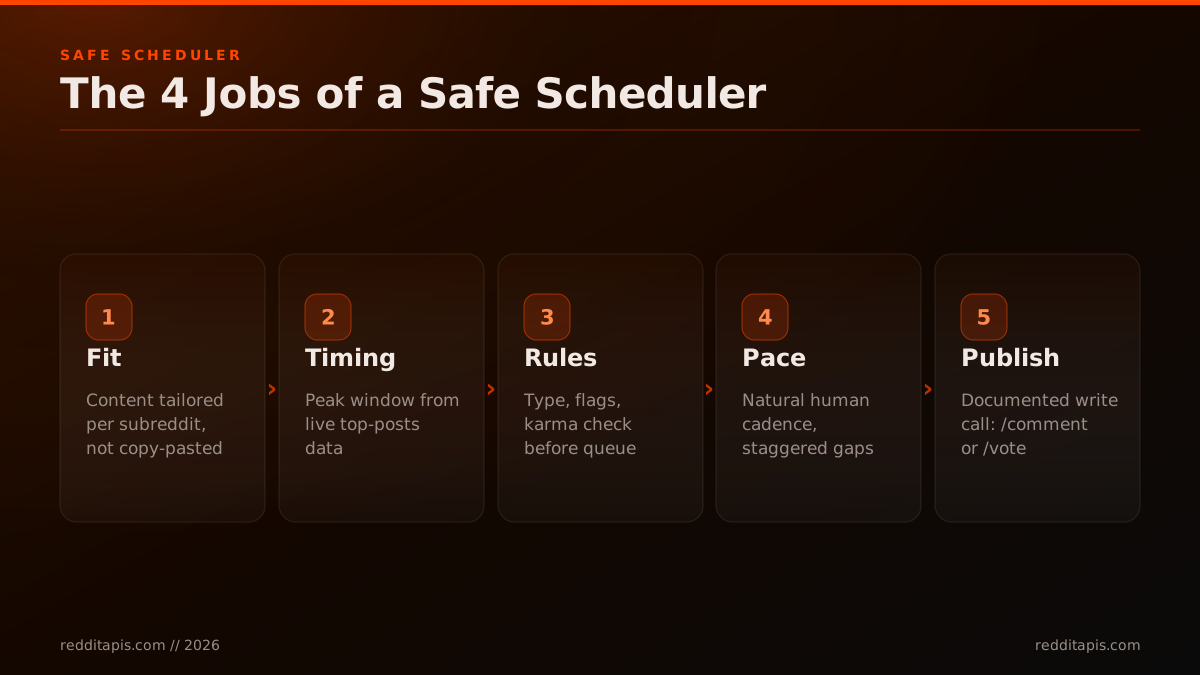 The four jobs of a safe scheduler, sitting on top of the single publish action
The demand for getting this right across several communities at once is loud and specific. The same wish shows up repeatedly in r/redditdev and r/learnpython: developers ask how to automate posting to the three or four subreddits they regularly contribute to and want to build it themselves rather than trust a black-box SaaS:
How to use reddit API to auto post to one subreddit everyday, with one minute delay
The reason the multi-community case needs the rules-and-pace discipline most is that the same content rarely fits every subreddit equally, and the link rules differ from one community to the next. A scheduler that treats all subs as one bucket produces the copy-paste pattern that communities dislike on its own merits, separate from any platform behavior. Tailoring per sub and spacing the actions out is simply how you would post if you were doing it by hand and cared about each community, and the scheduler's only job is to do that on a timer. Reddit's own content policy and rules are the floor; each subreddit's sidebar is the ceiling, and the next sections read both.
Authenticate Once and Reuse the Session
A scheduler authenticates once, caches the session cookies, and reuses them for every write action until they expire, rather than logging in on every fire. The login endpoint takes a username and password (plus an optional TOTP secret for 2FA accounts) and returns the full cookie set you paste into the write calls. Each login costs $0.012 (pricing), so caching matters: a scheduler that logged in before every comment would multiply its cost and its latency for no reason.
Here is the login step, returning the cookies the rest of the pipeline reuses:
import os
import requests

API_KEY = os.environ["REDDITAPI_KEY"]
BASE = "https://api.redditapis.com"
HEADERS = {"Authorization": f"Bearer {API_KEY}"}


def login(username, password, totp_secret=None):
    """Authenticate once and return the cookie bundle for write calls.
    Cache the result; re-login only when the cookies stop working."""
    payload = {"username": username, "password": password, "method": "browser"}
    if totp_secret:
        payload["totp_secret"] = totp_secret
    resp = requests.post(
        f"{BASE}/api/reddit/login",
        json=payload,
        headers=HEADERS,
        timeout=60,
    )
    resp.raise_for_status()
    data = resp.json()
    if not data.get("success"):
        raise RuntimeError(f"login failed: {data.get('error')}")
    return data  # has 'cookies', 'link_karma', 'comment_karma', 'username'


session = login(os.environ["RD_USER"], os.environ["RD_PASS"])
cookies = session["cookies"]
print("logged in as", session["username"],
      "| link karma", session["link_karma"],
      "| comment karma", session["comment_karma"])
The response carries more than cookies. It also returns link_karma and comment_karma, which you will want in the rules check, because a community's eligibility threshold is measured against exactly those numbers. The login docs recommend method: "browser" for the most compatible write-session cookies, which is the mode to use when the session will drive /vote or /comment calls later. If your accounts use 2FA, pass the Base32 totp_secret and the server generates the rotating code per request, so you never hardcode a six-digit code that expires in thirty seconds.
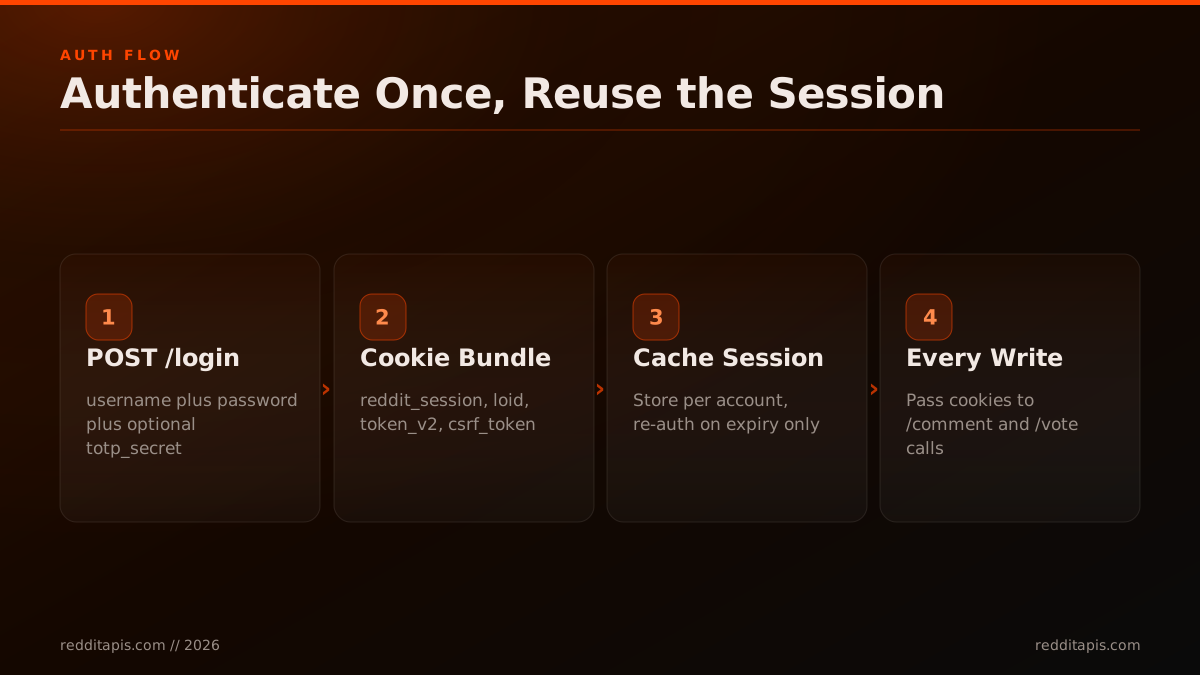 One login produces the cookie bundle that every later write call reuses until it expires
One header carries the whole thing: Authorization: Bearer <key>. There is no OAuth handshake and no Reddit developer-app registration to wait on, which is the part that trips people up in the official flow, as the Reddit API authentication guide and the PRAW vs REST comparison both cover. The cookies do expire, so wrap the login in a small cache that re-authenticates when a write call starts returning auth errors, and store the bundle keyed by account so a multi-account scheduler keeps one live session per identity.
Find the Best Time to Post From Real Subreddit Data
The best time to post is not a universal hour; it is whatever hour the specific subreddit's high-performing posts already cluster into, and you can compute that directly from the posts endpoint. The classic reference everyone cites, the r/dataisbeautiful study titled "The best time to post to reddit" is a decade old and site-wide, which makes it a fine intuition and a poor instruction. A community of machine-learning researchers and a community of European football fans do not share a peak hour. The fix is to measure each sub.
The method is three steps: pull a month of that subreddit's top posts, bucket each post's created_utc by hour and weekday in your audience's timezone, and read off the recurring peak. The posts endpoint gives you everything you need in one read at $0.002 (pricing):
import datetime
import collections


def busy_windows(subreddit, tz_offset_hours=0):
    """Histogram a subreddit's top-of-month posts by local hour and weekday.
    Returns the hours and days its best posts cluster into."""
    resp = requests.get(
        f"{BASE}/api/reddit/posts",
        params={"subreddit": subreddit, "sort": "top", "t": "month", "limit": 100},
        headers=HEADERS,
        timeout=60,
    )
    resp.raise_for_status()
    posts = resp.json()["posts"]

    by_hour = collections.Counter()
    upvotes_by_hour = collections.defaultdict(list)
    by_weekday = collections.Counter()
    for p in posts:
        ts = p.get("created_utc")
        if not ts:
            continue
        local = datetime.datetime.utcfromtimestamp(ts) + datetime.timedelta(hours=tz_offset_hours)
        by_hour[local.hour] += 1
        by_weekday[local.strftime("%a")] += 1
        upvotes_by_hour[local.hour].append(p.get("upvotes") or 0)

    avg_upvotes = {
        h: sum(v) // max(1, len(v)) for h, v in upvotes_by_hour.items()
    }
    return {
        "busiest_hours": by_hour.most_common(5),
        "busiest_weekdays": by_weekday.most_common(3),
        "best_avg_upvote_hours": sorted(avg_upvotes.items(), key=lambda x: -x[1])[:5],
        "sample_size": len(posts),
    }


print(busy_windows("SaaS"))
Run that against a few communities and the per-sub story is obvious. Pulling the top posts of the month in mid-2026, r/SaaS concentrated its volume between 12
and 15 UTC and its highest average-upvote posts around 11 UTC, with Thursday the busiest weekday. r/socialmedia peaked later, near 15 and 22 UTC, while r/marketing's strongest average-upvote hour landed in the early morning around 08 UTC. Three communities, three different clocks. A single scheduled time applied to all of them would hit the peak for one and miss for the other two.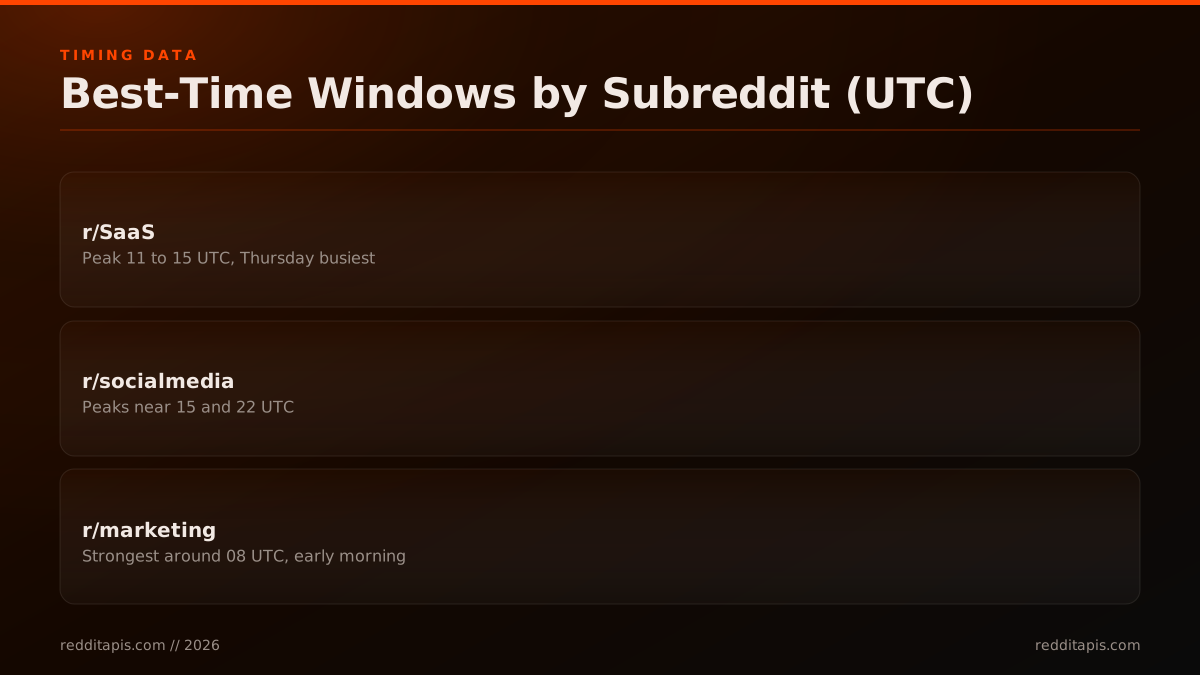 Best-time computed from live data: each subreddit's top posts cluster into its own hours and days
A few honest caveats keep this from becoming false precision. The created timestamps are UTC, so convert to your audience's timezone before reading them, which the tz_offset_hours argument above does. A sample of one hundred top posts is a signal, not a law, so treat the peak as a window of a couple of hours rather than a single magic minute. And upvote_ratio is fuzzed by Reddit on fresh posts, so lean on raw upvotes and post count rather than the ratio. Community members reach for exactly this kind of per-sub timing tool. A thread on r/redditdev captured the same demand precisely: developers want a scheduler that computes the best time from real data, not a fixed-hour guess, and a short walkthrough of the timing approach is worth a watch for the framing:
I want to make a simple Reddit post scheduler. Where do I start? Should I use PRAW?
For deeper reading patterns behind this, the Reddit search API tutorial and the Reddit data API guide cover pagination and filtering across larger samples than a single top-of-month pull.
Start building with Redditapis
Reads $0.002, votes $0.005, writes $0.012, DMs $0.025. $0.50 free credits.
Build the Per-Subreddit Rules Check Before Anything Publishes
A scheduler should refuse to fire an item until it has read the target community's metadata and confirmed the account is eligible to post there, because the rules differ from one subreddit to the next and a queue that ignores them is a queue of future removals. The communities endpoint returns the data you gate on in one read: whether the sub is public or restricted, whether it is NSFW or quarantined, and the sidebar description where the actual posted rules live.
def community_meta(name):
    """Read a subreddit's posting-relevant metadata: type, flags, sidebar rules."""
    resp = requests.get(
        f"{BASE}/api/reddit/search/communities",
        params={"q": name, "limit": 5},
        headers=HEADERS,
        timeout=60,
    )
    resp.raise_for_status()
    for c in resp.json().get("communities", []):
        if c["name"].lower() == name.lower():
            return c
    return None


def can_post(name, account_link_karma, account_comment_karma, min_karma=0):
    """Gate one queue item against the target community before it fires."""
    meta = community_meta(name)
    if meta is None:
        return False, "subreddit not found"
    if meta["subreddit_type"] != "public":
        return False, f"subreddit is {meta['subreddit_type']}, not open to post"
    if meta.get("quarantine"):
        return False, "subreddit is quarantined"
    if (account_link_karma + account_comment_karma) < min_karma:
        return False, f"account below the {min_karma}-karma bar this sub expects"
    return True, "clear"


ok, reason = can_post("SaaS", session["link_karma"], session["comment_karma"], min_karma=10)
print(ok, reason)
The fields that matter for a gate are subreddit_type (a restricted or private sub will not accept a normal post, so there is no point firing into it), quarantine and over_18 (flags you usually want to handle deliberately rather than by accident), and description, which holds the sidebar markdown where most communities spell out their link limits, self-promotion ratios, and karma or account-age requirements. The subscribers count is a useful sanity check too, since a target community with a handful of members is rarely worth a scheduled slot.
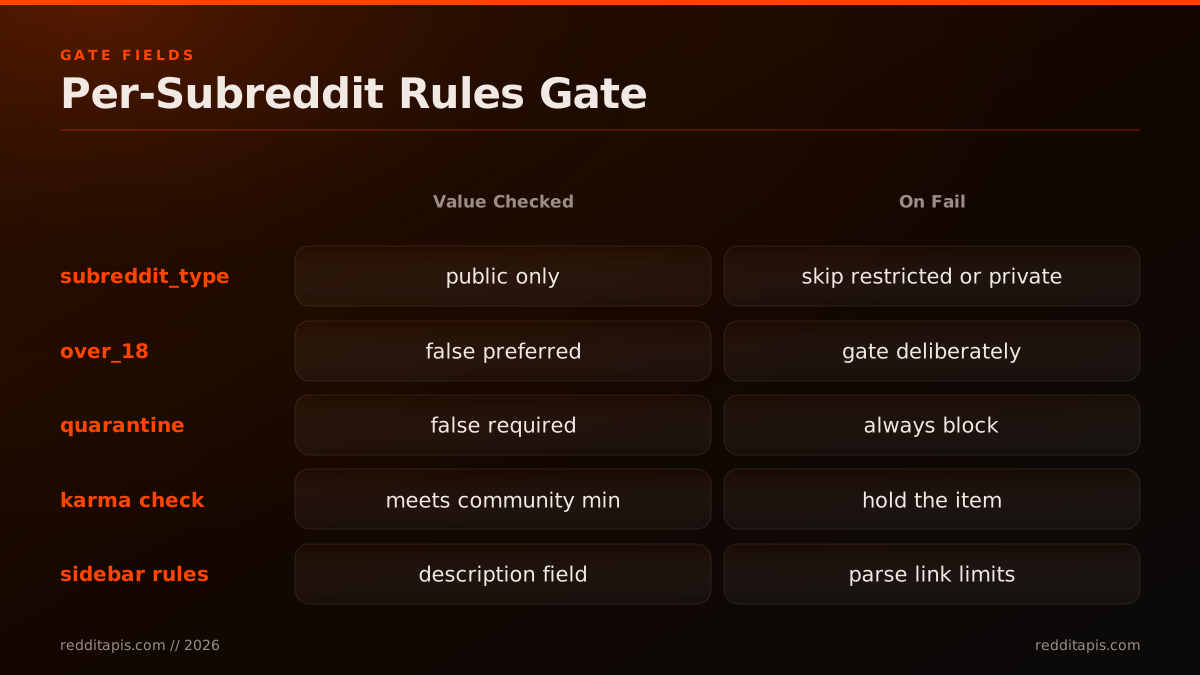 The rules gate every queue item passes before it is allowed to fire
Eligibility is the part people forget, and it has a clean data answer. Many communities set a karma or account-age floor for posting, and you already have the account's link_karma and comment_karma from the login response, so the gate is a comparison. For a richer read, including account age and a per-account karma breakdown, call GET /api/reddit/user/:name, which the posts endpoint documentation points to for exactly this purpose. If a community's threshold is higher than the account meets, the right move is to hold the item, not to force it, and to let the account build standing in that community first. The find subreddits API guide covers discovering and vetting communities at scale, which pairs naturally with this gate: find the right small set of subs, read each one's rules, and only queue into the ones the account belongs in. The Reddit shadowban guide covers the account-health side of the same coin.
Schedule the Write Call With Cron and a Timing Envelope
Scheduling the publish step means storing a fire-time for each item and running a small recurring tick that fires items as they come due, with a little jitter so the exact second is never robotic. The clock can be the operating system's cron, a Python loop, or a library like APScheduler; they all do the same job of waking up on an interval and asking the queue what is due. The timing envelope is the small idea that turns a raw schedule into a human one: instead of firing at exactly 11:00
, you fire at a random moment inside an 11 to 11 window, because a person does not post on the dot.import random
import time
from datetime import datetime, timezone
def due_items(queue, now=None):
"""Yield queue items whose fire-time has arrived."""
now = now or datetime.now(timezone.utc)
for item in queue:
if item["status"] == "pending" and item["fire_at"] <= now:
yield item
def envelope_delay(max_minutes=20):
"""A human jitter so the exact post second is never identical run to run."""
return random.uniform(0, max_minutes * 60)
def tick(queue, cookies):
"""One scheduler pass: fire everything that is due, with a small jitter."""
for item in due_items(queue):
ok, reason = can_post(
item["subreddit"],
item["account_link_karma"],
item["account_comment_karma"],
item.get("min_karma", 0),
)
if not ok:
item["status"] = "skipped"
item["note"] = reason
continue
time.sleep(envelope_delay()) # land inside the window, not on the dot
result = publish(item, cookies) # defined in the next section
item["status"] = "done" if result.get("success") else "error"
item["permalink"] = result.get("permalink")
The envelope is reach-friendly and human at the same time. Posting at a natural, slightly irregular moment inside your computed best-time window is how a real person behaves and how you avoid the slightly uncanny precision of a machine posting at the same exact second every day. Keep the window inside the peak you computed in the timing section, so a twenty-minute jitter still lands where the audience is. The same idea applies to spacing between items, which the multi-account section covers: the goal across the whole queue is a cadence that looks like attention, not a metronome.
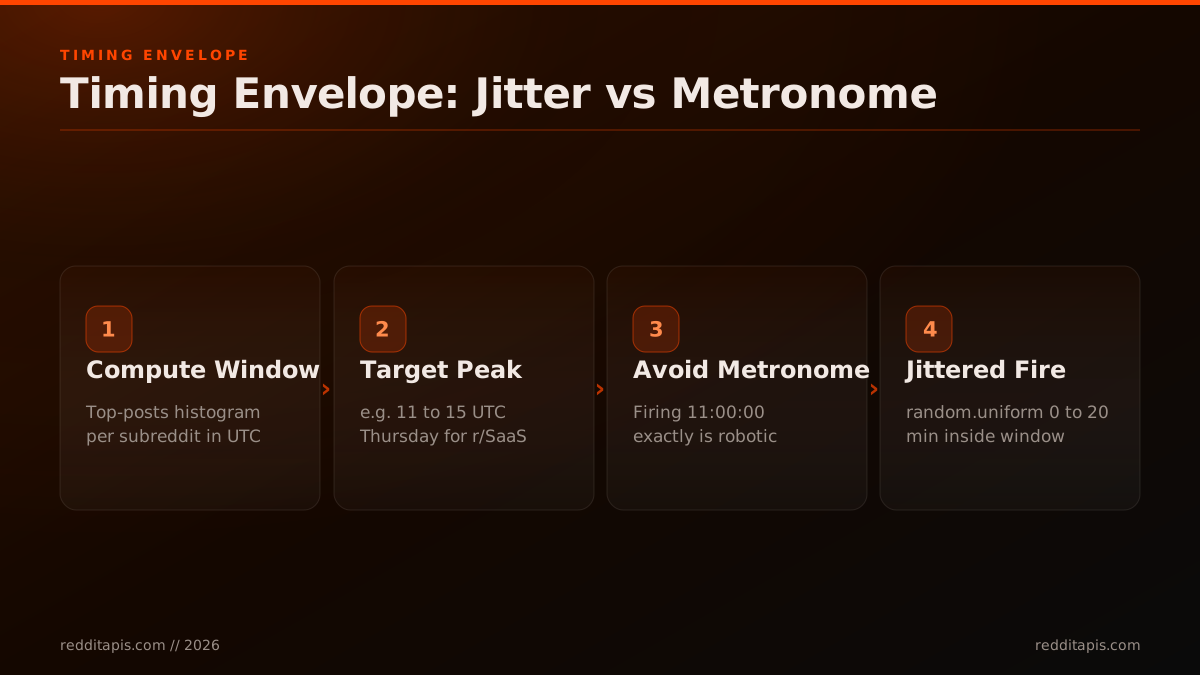 The timing envelope: fire somewhere inside the computed peak window, never on the exact second
If you prefer the operating system to own the clock, a single crontab line that runs the tick every minute (* * * * * /usr/bin/python3 /path/scheduler_tick.py) is enough, and the script reloads the queue, fires what is due, and exits. The community has built versions of this for years, from the open-source reddit-post-scheduler that runs on an always-on machine to the bulk schedulers people post about in r/redditdev. The difference here is that the timing and the rules check are computed from live data rather than hardcoded. The broader shift toward cron-based automation over SaaS schedulers is also picking up among developers building their own tooling:

Tony Dinh
@tdinh_me
There is no reason to use an email drip/automation SaaS anymore. Any kind of automation can be done with a cron job and 1 prompt away. Fully personalized to the user's context and language. "You haven't started your trial" "Congrats on your new site! Here's what to do next" etc
The Full Scheduler: Queue, Timing Gate, Rules Gate, Publish
The complete scheduler is four parts wired in a line: a queue of items with fire-times, a timing gate that releases items when due, a rules gate that vets each item's target community, and a publish step that fires the documented write call. Here is the whole thing end to end, small enough to read in one sitting, using the comment write endpoint as the publish primitive (the next section explains that choice precisely).
import os
import json
import requests
from datetime import datetime, timezone

API_KEY = os.environ["REDDITAPI_KEY"]
BASE = "https://api.redditapis.com"
HEADERS = {"Authorization": f"Bearer {API_KEY}"}


def publish(item, cookies):
    """Publish one scheduled action: a comment on a target thread.
    Reddit exposes no submit-a-post REST endpoint, so the documented
    write primitives are /comment and /vote (see the next section)."""
    body = {
        "post_url": item["post_url"],
        "text": item["text"],
        "reddit_session": cookies["reddit_session"],
        "loid": cookies["loid"],
        "token_v2": cookies.get("token_v2"),
        "csrf_token": cookies.get("csrf_token"),
    }
    resp = requests.post(f"{BASE}/api/reddit/comment", json=body, headers=HEADERS, timeout=90)
    if resp.status_code != 200:
        return {"success": False, "status": resp.status_code}
    return resp.json()


def run_scheduler(queue_path, cookies):
    """One pass over a JSON queue file: vet, fire, and persist results."""
    with open(queue_path) as fh:
        queue = json.load(fh)

    now = datetime.now(timezone.utc)
    for item in queue:
        if item["status"] != "pending":
            continue
        fire_at = datetime.fromisoformat(item["fire_at"])
        if fire_at > now:
            continue

        ok, reason = can_post(
            item["subreddit"],
            item["account_link_karma"],
            item["account_comment_karma"],
            item.get("min_karma", 0),
        )
        if not ok:
            item["status"], item["note"] = "skipped", reason
            continue

        result = publish(item, cookies)
        item["status"] = "done" if result.get("success") else "error"
        item["permalink"] = result.get("permalink")
        item["fired_at"] = now.isoformat()

    with open(queue_path, "w") as fh:
        json.dump(queue, fh, indent=2)


# queue.json item shape:
# {
#   "subreddit": "redditdev",
#   "post_url": "https://www.reddit.com/r/redditdev/comments/xxx/title/",
#   "text": "a comment that fits this thread",
#   "fire_at": "2026-06-27T11:05:00+00:00",
#   "account_link_karma": 120,
#   "account_comment_karma": 4300,
#   "min_karma": 10,
#   "status": "pending"
# }
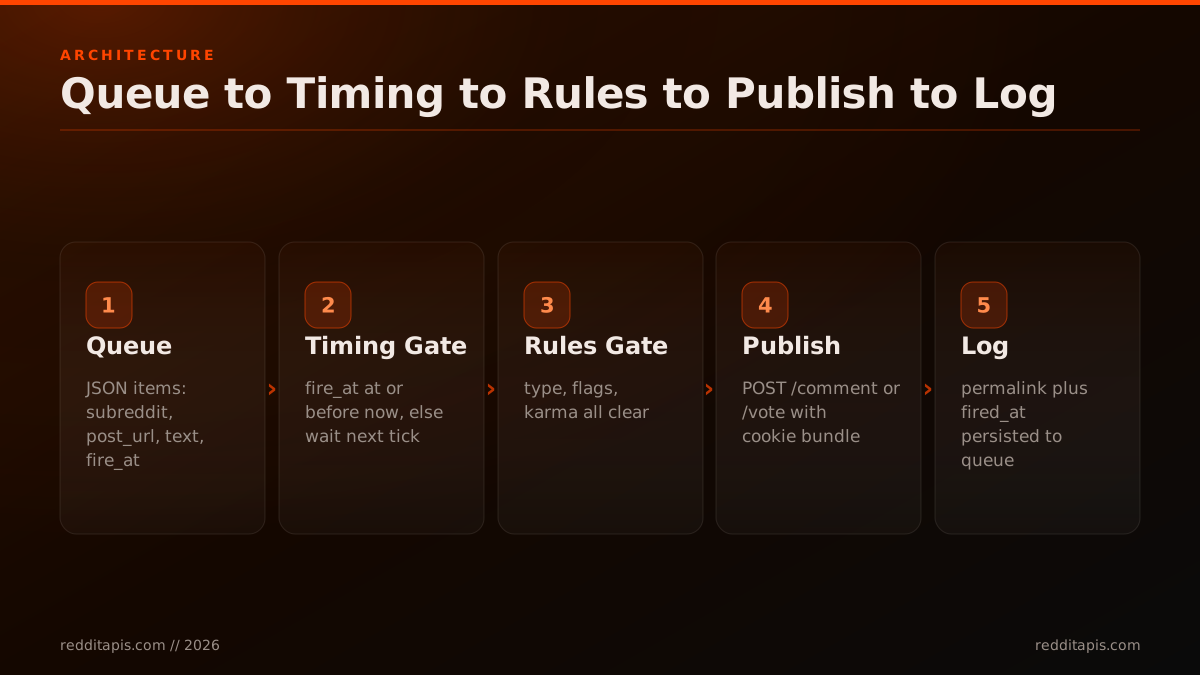 The four-stage pipeline: queue, timing gate, rules gate, publish, with every result logged
The queue is deliberately a flat JSON file here so the shape is obvious, but the same loop runs against a database table, a spreadsheet, or a message queue without changing the logic. Each item is self-describing: it knows its subreddit, its target thread, its content, its fire-time, and the karma the account brings, so the gate has everything it needs at fire time. Persisting the result back to the queue gives you the audit trail the verification section builds on, and it makes the scheduler idempotent: an item marked done is never fired twice. The Reddit API Python tutorial and the vote API tutorial go deeper on the individual write calls this loop orchestrates.
Space Activity Across Multiple Accounts and Subreddits
Running a queue across several accounts and communities is the same loop with one extra rule: each account posts on its own human cadence, and each subreddit gets content tailored to it rather than a copy of one post. The structure is one queue with many lanes. Every item already carries its own subreddit and fire-time, so the multi-community case needs no new machinery, only deliberate spacing and per-sub content.
The demand for this is the loudest single signal in the research. Beyond the r/socialmedia request to manage and schedule across multiple subreddits, developers in r/redditdev keep asking how to handle the three or four communities they regularly contribute to without doing it by hand. The honest answer is that the queue handles the mechanics, but the content discipline is yours: a post worth scheduling into r/SaaS reads differently from the same idea in r/marketing, because the communities value different framings, and the link rules in each sidebar differ too.
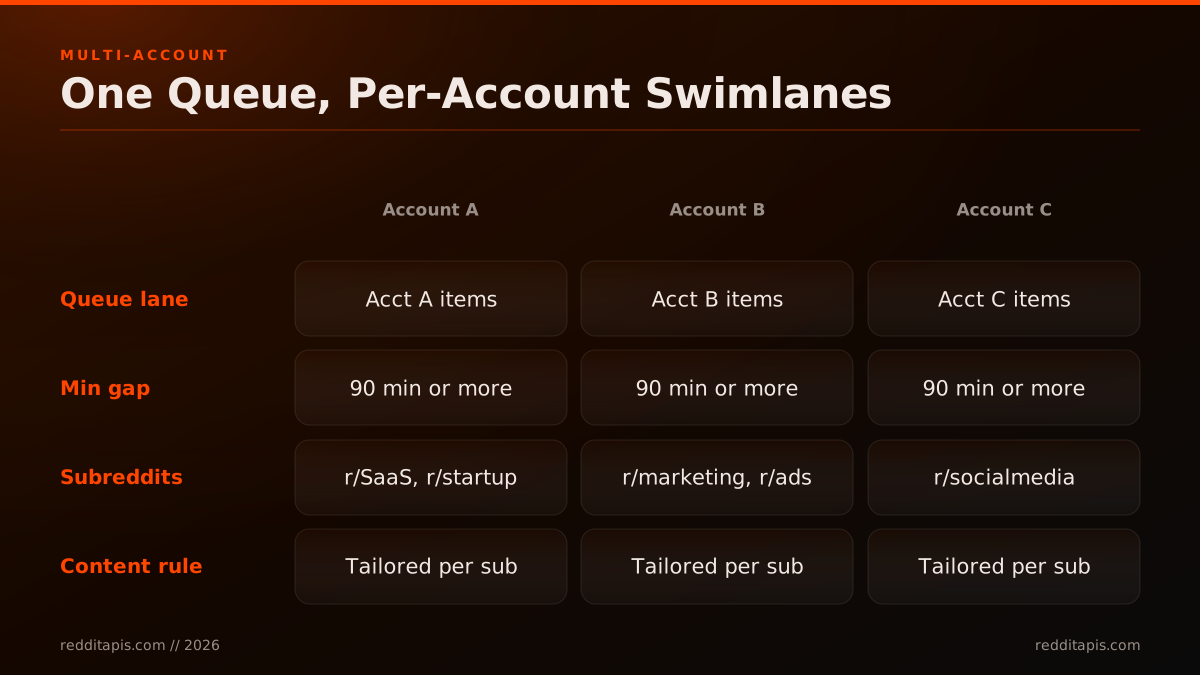 One queue, many lanes: per-account pacing and per-subreddit content, scheduled from a single loop
from datetime import timedelta


def stagger(items, min_gap_minutes=90):
    """Push fire-times apart per account so no account posts in a burst."""
    last_per_account = {}
    for item in sorted(items, key=lambda x: x["fire_at"]):
        acct = item["account"]
        earliest = last_per_account.get(acct)
        fire = datetime.fromisoformat(item["fire_at"])
        if earliest and fire < earliest + timedelta(minutes=min_gap_minutes):
            fire = earliest + timedelta(minutes=min_gap_minutes)
            item["fire_at"] = fire.isoformat()
        last_per_account[acct] = fire
    return items
The stagger helper keeps each account's actions apart by a comfortable gap so the day reads like a person checking in a few times rather than a script emptying a queue. Set the gap to whatever a real contributor's rhythm would be in your context; the point is spacing, not a magic number. For accounts that connect through different networks, the residential proxies for Reddit guide covers giving each account a stable, clean IP, and the login endpoint accepts a per-account proxy object so each session keeps its own egress. Provider options on that side include vendors like Bright Data, Oxylabs, and Apify, which the Reddit API pricing versus Apify piece weighs against a direct API. Tailoring content per community is not just etiquette, it is what makes the scheduled post worth posting, and the Reddit DM via API guide plus the DM versus chat versus modmail breakdown cover the adjacent outreach surfaces when a comment is not the right channel.
The cheapest Reddit API. Try it free.
Reads from $0.002 per call. $0.50 free credits. No credit card required.
What the REST API Publishes Today (and What It Does Not)
The documented REST write surface publishes two things today: comments, through POST /api/reddit/comment and the faster POST /api/reddit/v2/comment, and votes, through POST /api/reddit/vote. There is no top-level submit-a-post endpoint in the docs, and this guide does not pretend otherwise. Being precise about this is the difference between a tutorial you can trust and one that breaks the first time you run it.
What that means in practice is clean once you see it. A scheduler built on this API automates three layers fully: the timing layer (computed from the read endpoints), the rules layer (read from the communities and user endpoints), and the engagement publish layer (scheduled comments and votes via the documented write calls). For the fourth thing, an actual top-level submission, you wire the publish hook to your chosen submission path, and the entire queue, timing, and rules architecture above is reused without a single change, because the scheduler does not care what the publish function does internally.
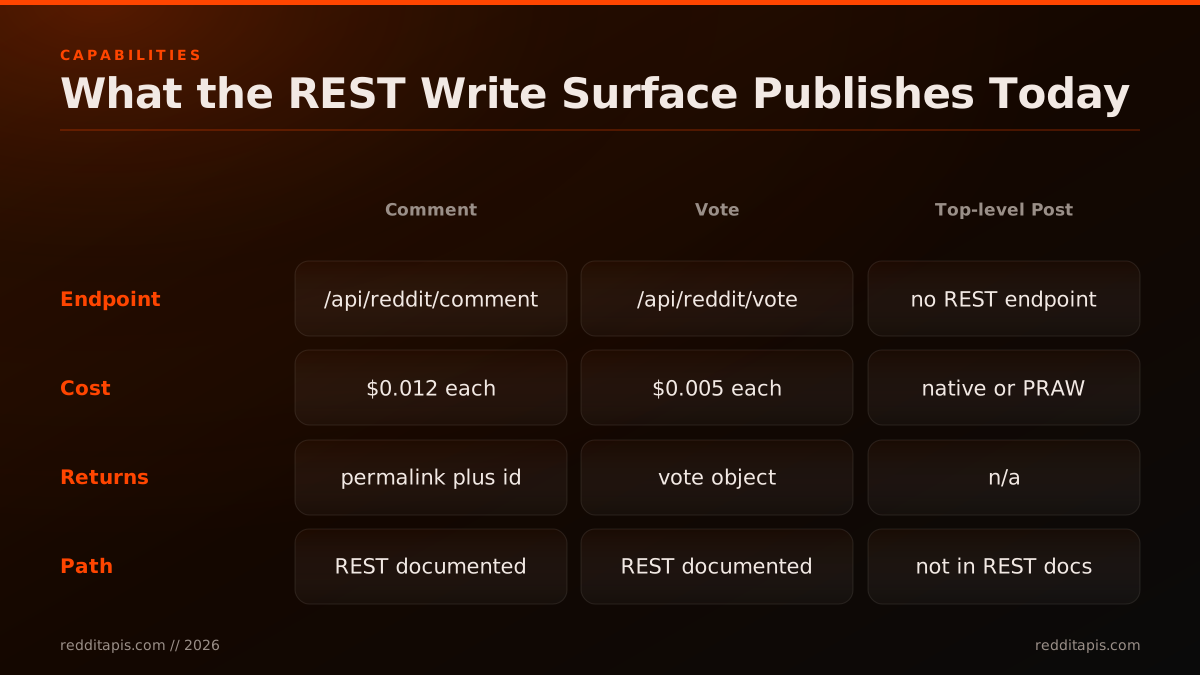 What the documented write surface publishes today, stated plainly, with no invented endpoints
The developer instinct to script the whole thing, including submissions, is long-standing, and the community has built it on top of PRAW for years. A representative r/redditdev thread walks through submitting a scheduled post with Python and PRAW, which is the library path for the submission step that the REST surface does not cover:
Submit a Scheduled Post using Python + PRAW
So the clean architecture is a publish function with a swappable body. For scheduled comments and votes, the body is the documented REST write call, with the cookies from your one login, and you get a permalink back to log. For a top-level submission, the body is whatever path you use, and the scheduler's timing and rules gates still run first. The comment and vote calls each return a success object with the new id and a permalink, which is what the next section reads to confirm the action landed. The PRAW versus REST data guide covers the trade-offs between the two write paths in more depth.
Verify a Scheduled Action Landed and Track Its Engagement
A scheduler is not done when it fires; it is done when it confirms the action is publicly visible and starts tracking how the timing choice performed. The write call returns a permalink and an id on success, so the first verification is simply logging those and treating a missing permalink as a failure to retry. The second verification is a read a few minutes later that confirms the action surfaces publicly, which closes the loop between firing and landing.
def confirm_and_measure(subreddit, permalink_fragment):
    """Read back the subreddit and confirm the fired action is visible,
    then return its current engagement for timing analysis."""
    resp = requests.get(
        f"{BASE}/api/reddit/posts",
        params={"subreddit": subreddit, "sort": "new", "limit": 50},
        headers=HEADERS,
        timeout=60,
    )
    resp.raise_for_status()
    for p in resp.json()["posts"]:
        if permalink_fragment in (p.get("permalink") or ""):
            return {
                "visible": True,
                "upvotes": p.get("upvotes"),
                "comments": p.get("comments"),
                "created": p.get("created"),
            }
    return {"visible": False}
Tracking engagement over time is what makes the whole pipeline get smarter. Re-read each fired action's upvotes and comments at a few intervals over the day after it goes live, store those numbers against the hour it fired, and after a few weeks you have your own per-sub timing dataset that beats any generic chart, because it is measured on your account, your content, and your communities. This is the loop that converts a guess about the best time into a measured one, and it is the same read pattern the Reddit keyword monitor tutorial and the scraping benchmarks guide build on for monitoring at scale.
A note on honesty about measurement: upvote_ratio is fuzzed by Reddit for fresh posts, and early engagement is noisy, so judge a timing choice on the trend across many fired actions rather than on any single one. One post that did well at an off-peak hour is luck; forty posts that consistently do better in your computed window is a signal you can schedule against.
Cost and Rate-Limit Math for a Scheduling Pipeline (2026)
A scheduling pipeline costs cents per day because the read calls that dominate its call count are $0.002 each (pricing), and the write calls fire only a handful of times. Putting the documented per-call prices next to a realistic daily workload makes the economics concrete and removes the surprise that hosted monthly fees train you to expect.
The per-action prices, straight from the pricing page:
| Action | Endpoint | Price |
|---|---|---|
| Authenticate | POST /api/reddit/login |
$0.012 |
| Read posts (timing) | GET /api/reddit/posts |
$0.002 |
| Read community (rules) | GET /api/reddit/search/communities |
$0.002 |
| Read user (karma) | GET /api/reddit/user/:name |
varies, read-tier |
| Publish a comment | POST /api/reddit/comment |
$0.012 |
| Register a vote | POST /api/reddit/vote |
$0.005 |
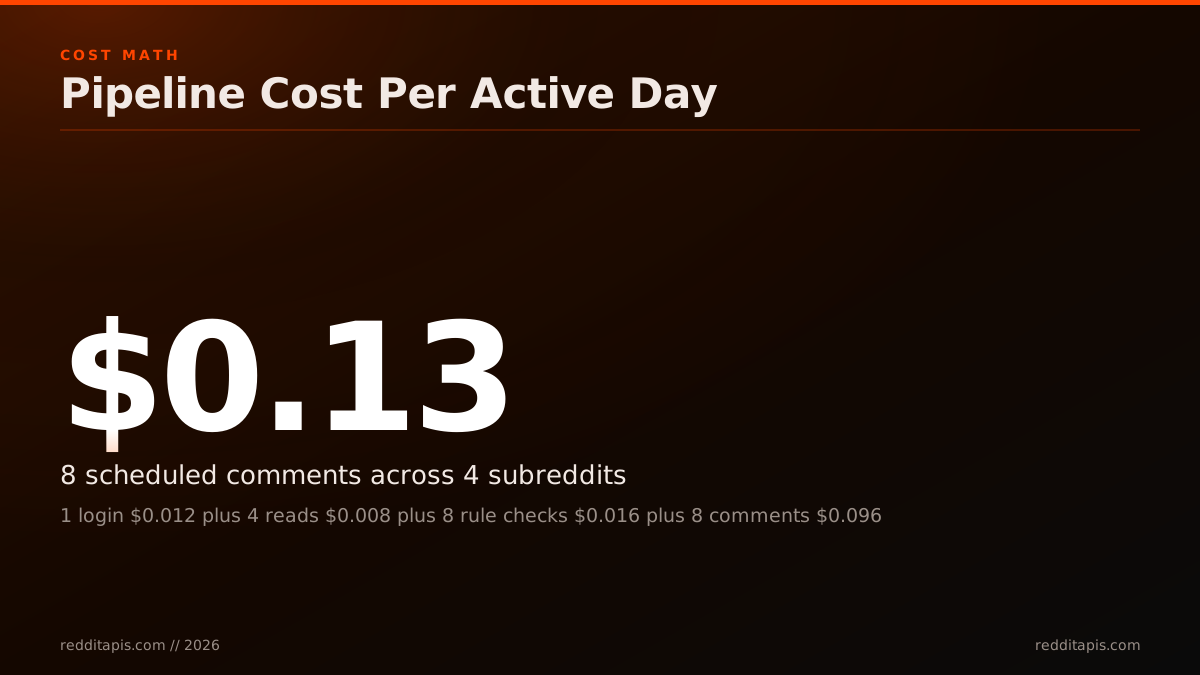 Pipeline cost math: one login, a few reads per item, a handful of writes, all of it cents per day
Work a realistic day. Say you schedule eight comments across four communities. You log in once per account (one account, one login, $0.012, see pricing), you read timing data for the four subs once that morning (four reads, $0.008), you run the rules gate on each of the eight items at fire time (eight community reads, $0.016), and you publish eight comments ($0.096, pricing). That is approximately $0.13 for the day, and the reads are the cheap majority of the calls. Scale the comment count up and the writes grow linearly at $0.012 each, but the read scaffolding stays nearly flat, which is the opposite of a per-seat monthly plan. The Reddit API rate limits guide covers the throughput side, and a scheduler is naturally gentle on limits because its actions are spread across the day by design rather than fired in a burst. The Reddit API key guide covers getting the key that meters all of this.
The Scheduling Loop, End to End
The whole pipeline is a loop you can hold in your head: plan the content, compute the time, vet the community, publish on a human envelope, verify it landed, and feed what you measured back into the next plan. Every piece in this guide slots into one of those six steps, and the value is that you own each one instead of trusting a calendar widget to do it invisibly.
The loop, in order:
- Plan. Write content that fits the target community, tailored per sub, not copy-pasted.
- Time. Compute the best window from that subreddit's own top-post data, in your audience's timezone.
- Vet. Read the community's type, flags, and rules, and confirm the account meets its eligibility.
- Publish. Fire the documented write call (the
publish()function) inside the peak window with a human jitter. - Verify. Confirm the action is publicly visible and log its permalink.
- Measure. Track engagement over the following day and feed it back into step two.
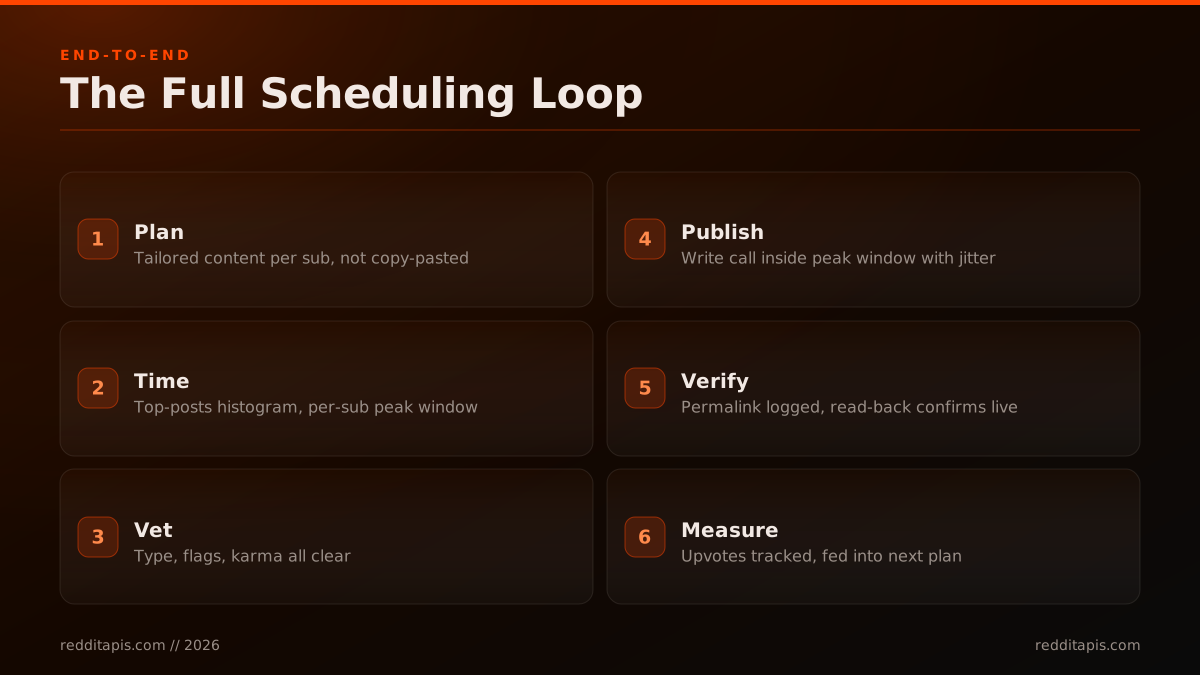 The full loop: plan, time, vet, publish, verify, measure, and back to plan
The reason to build it this way rather than rent it is that the rented version hides exactly the parts worth understanding. When a hosted tool picks your posting time, you cannot see whether it measured your community or applied a stale global rule. When it publishes, you cannot see what it did with your account. When you build the loop yourself against a REST API, the timing is a histogram you can read, the rules check is a function you can audit, and the publish step is one documented call that returns a permalink you can verify. That transparency is the safety, far more than any promise printed on a pricing page. The pipeline here computes timing from live data, respects each community's posted rules, paces every account like a person, and tells you exactly what it published, which is the whole job. If you want the data layer underneath it for training or analysis, the Reddit AI training data guide and the usage-based data licensing explainer cover that, and the GummySearch alternatives comparison covers the read-side tooling. Grab a free key and build the scheduler above.
Where these numbers come from.
Each row is a figure in this post and the artefact it was read from. Reddit's access rules and the third-party archives around them keep moving, so check the date on a source before you build against it.
- Reddit API documentation
- The official submit endpoint behind the publish step of the scheduler.
- Reddit Content Policy
- The subreddit-rules and anti-spam basis for the safe-cadence gate.
- redditapis.com API docs
- The managed submit path and timing controls the pipeline calls.
- PRAW Subreddit model
- The subreddit rules() access used to vet each community before publishing.
Frequently asked questions.
Reddit's native Scheduled and Recurring Posts feature exists, but it is UI-only and built mainly for moderators, with no public scheduling API. So a programmatic scheduler is a small system you build yourself: you supply the queue and the clock, and a REST API supplies the read endpoints that tell you when to post and what each community allows, plus the write endpoints that publish the action. The read calls are GET https://api.redditapis.com/api/reddit/posts for timing data and GET https://api.redditapis.com/api/reddit/search/communities for a subreddit's rules, and the documented write calls are POST /api/reddit/comment and POST /api/reddit/vote. See the native-scheduling section.
There is no single best time, because every subreddit keeps its own rhythm. The reliable method is to compute it per community: pull a month of top posts with GET https://api.redditapis.com/api/reddit/posts?subreddit=<sub>&sort=top&t=month&limit=100, bucket each post's created_utc by hour and weekday in your audience's timezone, and post into the hours where the high-upvote posts already concentrate. A pull of r/SaaS in mid-2026 clustered its top posts around 11:00 to 15:00 UTC with Thursday the busiest weekday, while r/marketing peaked earlier in the morning, which is exactly why a per-sub computation beats a generic chart. See the timing section.
Store each queued item with a target subreddit, the content, and an ISO fire-time. Run a small loop, a cron job or an APScheduler tick, that wakes up every minute and checks the queue. When an item is due, run a rules check on its target subreddit, then publish with the documented write call using the session cookies you got once from POST /api/reddit/login. The whole loop is about sixty lines of Python and is shown in full in the scheduler section.
The documented REST write surface publishes comments through POST /api/reddit/comment and POST /api/reddit/v2/comment, and registers votes through POST /api/reddit/vote. There is no top-level submit-a-post endpoint in the docs, so a scheduler built on this API automates the engagement layer (scheduled comments and votes) plus the timing and rules layers, while you wire the actual submission step to your chosen path, including Reddit's own native scheduler. See what the API publishes today.
Call GET https://api.redditapis.com/api/reddit/search/communities?q=<name> and read the metadata it returns: subreddit_type tells you if the community is public or restricted, over_18 and quarantine are flags you usually want to gate on, and description carries the sidebar markdown where the posted rules live. Pair that with a karma read from GET /api/reddit/user/:name so your queue only fires items into communities the account is actually eligible to post in. See the rules-check section.
Scheduling is safe when it respects the things Reddit and each subreddit publish openly. Post within the community's stated rules and link limits, meet any karma or account-age eligibility the subreddit sets, tailor content to the community instead of copy-pasting it everywhere, and keep a natural posting pace rather than a burst. Scheduling is a timing convenience that picks a good moment for content that already belongs in the community; it is not a way around a community's rules. See what scheduling safely means.
Keep one queue where every item carries its own target subreddit and fire-time. Vet each item against that specific subreddit's rules at fire time, write content tailored to each community rather than one identical post fanned out everywhere, and stagger the fire-times so each account posts on a human cadence instead of all at once. The pattern is one queue, many lanes, and it is covered in the multiple-subreddits section.
Using the documented per-call pricing, a login is $0.012, a posts or search read is $0.002, a comment is $0.012, and a vote is $0.005. A scheduler that logs in once a day, reads timing data for a few subreddits, and publishes a handful of scheduled comments costs a few cents per day, because the read calls dominate the call count and each one is $0.002. See the cost section.
The write call returns a permalink and an id on success, so log those for every fired item. Then close the loop with a read: call GET https://api.redditapis.com/api/reddit/posts or the search endpoint a few minutes later and confirm the action surfaces publicly, and re-read its upvotes and comments over the next day to track how the timing choice performed. See the verification section.
Keep reading.
Continue exploring related pages.
Reddit API documentation
The complete 2026 reference: auth, all 59 endpoints, and code.
Get a Reddit API key
Instant bearer token, no waitlist and no enterprise contract.
Reddit Responsible Builder Policy
Why Reddit denies API applications, and the managed REST bypass.
Reddit API use cases
14 use cases from AI training to brand monitoring and DMs.
Reddit Search API
Search posts, comments, users, and communities over one REST endpoint.
Reddit MCP server
Wrap the REST API as MCP tools for Claude, Cursor, and any MCP client.
Reddit MCP hub
Install tabs for every client, the full tool table, pricing and fixes.
Reddit API for AI agents
Live Reddit context for tool calls, MCP servers, and RAG pipelines.
Redditapis pricing
Endpoint-level costs and quick monthly totals - reads from $0.002 / call.
Reddit API cost calculator
Estimate monthly spend using your request volume.
Reddit API guides and tutorials
Tutorials, walkthroughs, and API deep-dives for developers.
Reddit API alternatives
Evaluate alternatives by cost model, limits, and integration fit.
Cheap Reddit API
The cheapest way to get Reddit data: $0.002 per call, no contract, no minimum.
Official Reddit API vs Redditapis
Access, setup, rate limits, and pricing, side by side.
PRAW alternative
A hosted Reddit REST API for any language, no app registration or OAuth.
Reddapi alternative
A maintained Reddit REST API with published pricing and write endpoints.
Reddit comment scraper alternative
The raw comment API: search and filter comments, historical and live, clean JSON.
Reddit scraper API
Hosted scraper API vs building your own: managed proxies, clean JSON.
RapidAPI Reddit alternative
A direct, maintained Reddit API with published pricing and write endpoints.
Bright Data Reddit alternative
A purpose-built Reddit API vs a general scraping platform: structured JSON, plus writes.
ScraperAPI Reddit alternative
A Reddit-native API vs a generic HTML fetcher: auth and pagination handled, typed JSON.
TikHub alternative
TikHub's Reddit surface is read-only; get comment, vote, and DM endpoints too.
EnsembleData alternative
No $100/month floor: pay per call from $0.002, plus write, vote, and DM endpoints.
Scrape Creators alternative
7 read-only Reddit endpoints vs a dedicated API with real write, vote, and DM paths.
FetchLayer alternative
Posts, comments, and search only; add vote, comment, and DM over the same REST auth.
PullPush alternative
PullPush is free but volunteer-run and goes offline for reindexing; a maintained REST API that stays up.
Reddit monitoring API
Build your own keyword and brand-mention monitor: search, comment search, and subreddit streams over REST.
F5Bot vs Redditapis
F5Bot's Slack and Discord delivery needs its $49.99/mo Gold tier; Redditapis includes it from $19/mo.
Syften vs Redditapis
Syften caps you at 100 to 500 results a day; Redditapis allows 10,000 a day per monitor at the entry plan.
Octolens vs Redditapis
Octolens meters by mention with overage fees; Redditapis is flat-priced by subreddit slot from $19/mo.
Affiliate program
Earn 20% lifetime commissions - capped at $5,000/yr.
Reddit Vote API tutorial
Upvote and downvote a post programmatically via the REST API.
Reddit Data API: REST, no PRAW
REST endpoints for Reddit data with no PRAW and no OAuth dance.
Reddit scraping benchmarks
Real throughput, error rates, and cost benchmarks for Reddit scraping.
Reddit API answers
Direct answers on cost, access, rate limits, endpoints, and auth.
How much the Reddit API costs
Per-call pricing from $0.002 a read, with $0.50 in free credits.
Reddit API in Python
One requests call with a bearer token, no PRAW and no OAuth flow.
Reddit shadowban checker
Check if a Reddit account is shadowbanned in seconds, free and no login.
Subreddit stats checker
See any subreddit's live subscriber count, active users, and age, free and no login.
Similar reads.
More guides on the Reddit API, scraping, pricing, and MCP servers.
How to Estimate Your Reddit API Bill: a Per-Call Cost Model in Python
A per-call Reddit API cost model in Python: price every read, write and DM, then size the monthly bill for a keyword monitor, a RAG refresh and a reply bot.
Reddit Bot Rules in 2026: What Automation Is Actually Allowed
Reddit's bot rules changed twice in a year. What is permitted, what needs approval, what is prohibited, with the source and number for every rule.

No-Code Reddit Automation Tools vs. a Direct API: PhantomBuster, Make.com, Zapier, and Octoparse Compared
Make.com, Zapier, PhantomBuster, and Octoparse all claim to automate Reddit. None of them talk to Reddit's actual API. Here is what each one does instead, what it costs at real volume, and when a direct API replaces the whole stack.

How to Send Reddit DMs from an AI Agent: MCP and REST Patterns for Automated Outreach
Wire an AI agent to send Reddit DMs. A working MCP tool, a raw REST pattern, real cost math, and the guardrails that keep the account alive.
How to Detect Trending Topics on Reddit With an API
Detect trending topics on Reddit with an API: snapshot hot and top listings, compute score and comment velocity, and surface rising posts, subreddits, and topics.

Most Popular Subreddits via the Reddit API: Trending and Hot Communities in 2026
How to pull the most popular, trending, and hot subreddits programmatically: the popular and community-search endpoints, why popular is not the subscriber ranking, with runnable code.

Advanced Reddit Search Filters API (2026)
Filter Reddit search by score, comment count, media type, and NSFW over one authenticated GET. Every filter parameter, the response meta, and real Python.

Reddit Bulk Fetch by ID: Hydrate Posts in One API Call
Fetch many Reddit posts in one call with the by_id API. Hydrate t3_ fullnames from a stream, backfill archives, and dedup at scale, with copy-paste Python for 2026.