
Build a Reddit Keyword Monitor in Python (2026): No Per-Minute Quota, No SaaS Fee
Build your own Reddit keyword monitor in Python in 2026. A copy-paste polling loop on a managed REST search endpoint, with dedup, email and Slack alerts, scheduling, and why polling beats PRAW streaming on rate limits.

A Reddit keyword monitor is a small program that watches Reddit for new posts and comments matching the words you care about, your product name, a competitor, a problem your tool solves, then alerts you the moment a match shows up. The commercial versions of this are everywhere: Syften, Octolens, F5Bot, Brand24. The thing none of them shows you is that the core is about fifty lines of Python, you can run it yourself, and the version you build is cheaper, more flexible, and not at the mercy of whether a vendor keeps its Reddit license. This guide builds that monitor end to end: the polling loop, the deduplication that stops double-alerts, email and Slack delivery, keyword and subreddit filtering, and the scheduling that keeps it running. It also explains the one design decision that makes or breaks a Reddit monitor in 2026, which is polling instead of streaming.
Not affiliated with Reddit Inc. redditapis.com is an independent third-party REST proxy for Reddit's API. This guide is vendor-neutral: it shows you the build-your-own path with copy-paste code, names the free and paid hosted tools honestly, and points at the native Reddit API so you can pick what fits your situation.
TL;DR: Build a Reddit keyword monitor by polling a search endpoint on an interval, not by streaming. A single
GET https://api.redditapis.com/api/reddit/search?q=<keyword>&sort=newcovers all of Reddit in one call, so you poll every 5 to 15 minutes, filter to your keywords, deduplicate against post IDs you have already seen, and fire an alert by email, Slack, or webhook. Polling wins because PRAW's stream polls/newevery few seconds per subreddit and triggers429once you watch more than one or two communities, while one search call covers them all on your own schedule through a clean IP pool. GummySearch shut down in November 2025 and the SERP is wall-to-wall SaaS, so the durable move for a developer is to own the pipeline. The core is about 50 lines, costs a few dollars a month at $0.002 per call, and the first $0.50 of credit is free at /signup.
What you will build:
- A polling-loop keyword monitor that watches all of Reddit for your terms in about 50 lines of Python
- Deduplication that alerts you once per post, never twice, and survives a restart
- Alert delivery over email, Slack, and generic webhooks
- Keyword and subreddit filtering that cuts the noise before it reaches you
- A scheduling setup (cron or systemd) that keeps the monitor running unattended
If you are still deciding whether to build this at all, the mechanics of the category, what monitoring misses and how vendors meter it are covered in Reddit monitoring: how alerts actually work.
What Is a Reddit Keyword Monitor?
A Reddit keyword monitor is a program that periodically searches Reddit for new content matching a set of keywords and notifies you when something new matches. At its simplest it has four moving parts:
- Keyword list: the words and phrases you want to track (product name, competitor, problem phrase)
- Search fetch: one
GET /api/reddit/search?q=keyword&sort=newcovering all of Reddit per interval - Seen-set memory: post IDs already alerted on, persisted to disk so restarts never re-alert the backlog
- Alert channel: email, Slack, or any HTTP webhook that fires when a fresh match clears the dedup check
Everything a paid monitoring tool does on top of that, the dashboards, the team seats, the sentiment scoring, is a layer over those same four parts. Understanding the four parts is what lets you build the thing yourself and stop renting it.
People reach for a monitor because manual checking does not scale. A founder watching twenty subreddits by hand misses most of what matters and burns an hour a day doing it. The recurring ask on Reddit is exactly this, a way to catch relevant conversations without searching manually every time:
What's your go-to tool for monitoring Reddit keywords?
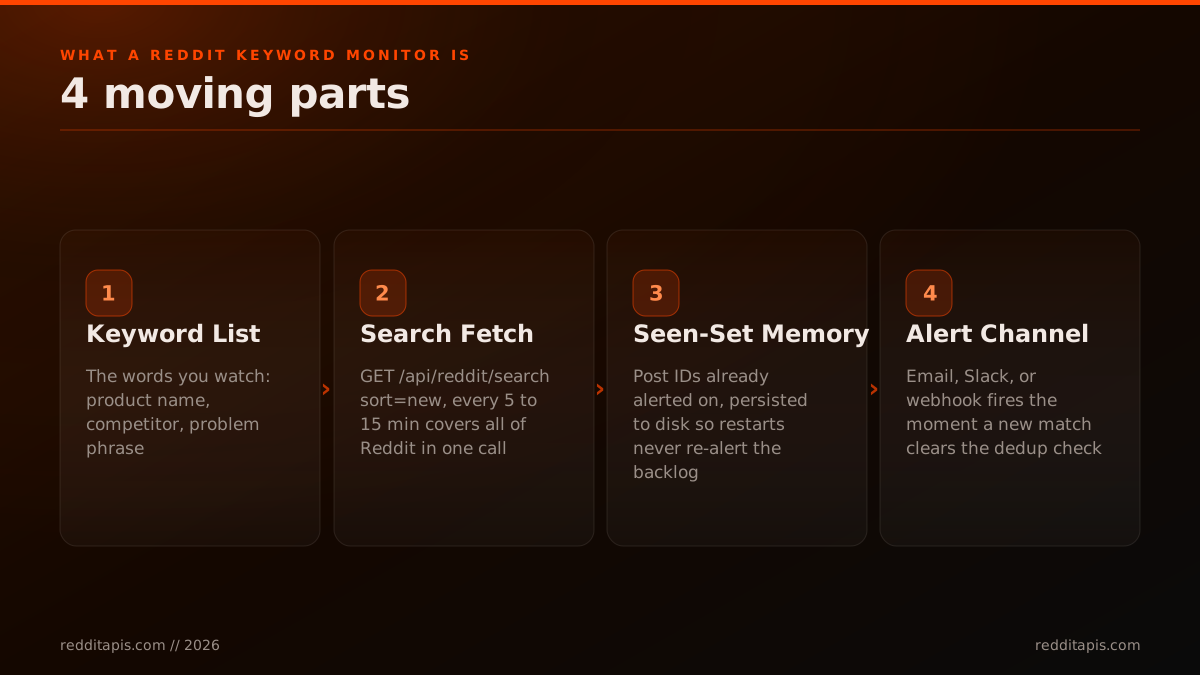 A keyword monitor is four parts: what to watch, how to fetch, what you have seen, and how to alert
The use cases cluster into four shapes, and they change almost nothing about the core loop, only the keywords and the response. Brand monitoring watches your product and company name so you can reply fast. Competitor monitoring watches rival names to catch switching intent and complaints. Lead discovery watches problem phrases ("how do I", "looking for a tool that", "alternative to") so you can help where help is wanted. Trend tracking watches a topic over time to chart what people are saying. The same fifty lines serve all four. What you do with a match is the only real difference, and we come back to that in the extension section.
Why Polling Beats PRAW Streaming for Monitoring With No Per-Minute Quota
Polling beats streaming for Reddit monitoring because polling a search endpoint makes one request per interval that covers all of Reddit, while streaming makes many requests per minute per subreddit and runs straight into the rate limit. This is the single most important design decision in the whole build, and getting it wrong is why so many home-grown monitors die with 429 Too Many Requests a week after they ship.
Here is what PRAW's stream actually does. subreddit.stream.submissions() looks like a magic firehose, but under the hood it polls that subreddit's /new listing every few seconds and yields any post it has not handed you before. For one subreddit that is fine. Monitoring is almost never one subreddit. The moment you want to watch ten communities, you are either running ten streams (each polling every few seconds) or you are polling r/all, and both patterns issue a stream of requests against a single OAuth token budget. As the Reddit API rate limits guide lays out, polling without backoff is the number one cause of 429 errors, and sharing one token across concurrent work multiplies the drain.
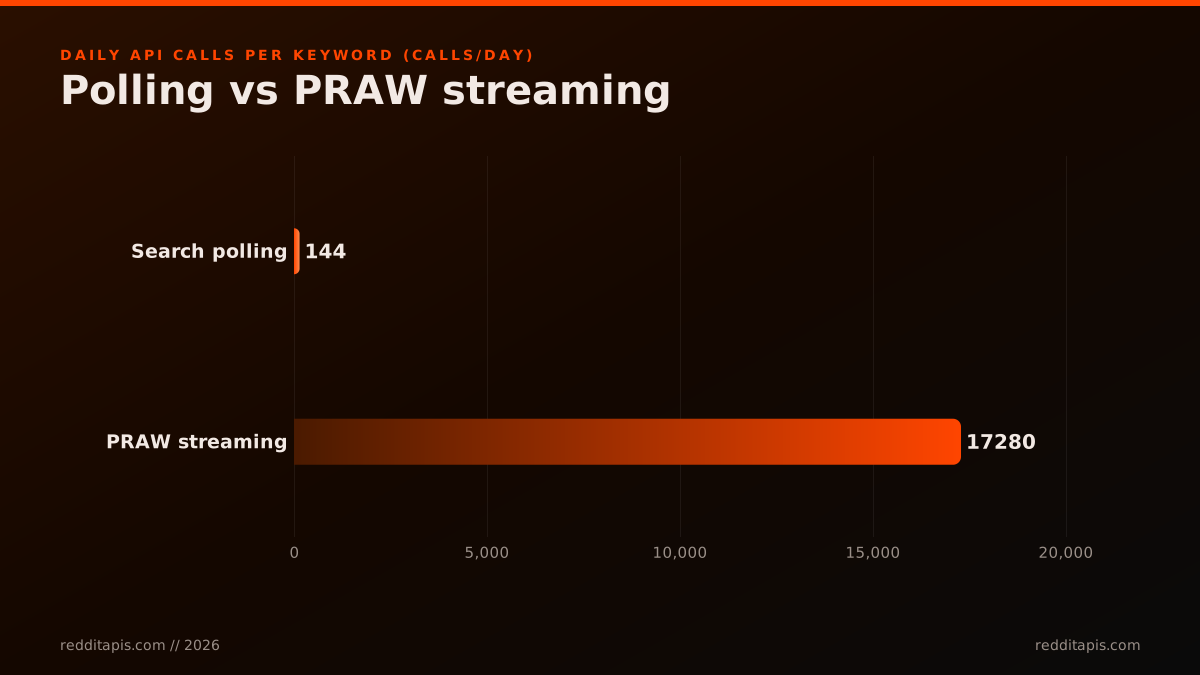 Streaming polls each subreddit on a tight loop; search polling covers them all in one call on your schedule
Search-based polling inverts the math. One GET /api/reddit/search?q=your+keyword&sort=new searches all of Reddit at once and returns the newest matches across every subreddit. You run that on an interval you choose, and for monitoring the right interval is minutes, not seconds. Polling every ten minutes is 144 calls a day per keyword. Streaming ten subreddits at a few-second cadence is tens of thousands of requests a day against a budget that was never sized for it. The developer who shows up in r/redditdev having been denied API access while trying to build "an app that monitors interesting posts and comments and sends alerts" is hitting this wall from the other side: the official path makes the obvious monitoring pattern expensive and gated, and the obvious pattern is the wrong one anyway.
There is a deeper reason polling is the better architecture for monitoring specifically, beyond the rate limit. A monitor does not need to know about a post the instant it is created. It needs to reliably catch every post within a tolerable delay. Polling gives you that guarantee with a trivial mental model: every N minutes, ask "what is new since last time," act on it, sleep. Streaming couples your reliability to a long-lived connection that can drop, miss items during a reconnect, and quietly fall behind. For a job whose whole point is "do not miss the mention," the simpler, restartable loop is the more robust design, not just the cheaper one.
The 2026 Monitoring Landscape: Why the SERP Is All SaaS
The Reddit monitoring market in 2026 is almost entirely paid SaaS, and the search results for "reddit monitoring tool" prove it: every top result is either a product (Octolens, Syften, Brand24) or a "best monitoring tools" listicle written by one of those products. There is no developer build-your-own tutorial in the top ten. That gap is the reason this guide exists, and the history behind it is worth understanding because it tells you which path is durable.
The pivotal event was GummySearch shutting down in November 2025. GummySearch was the beloved Reddit audience-research and monitoring tool for indie founders, and it closed because it could not secure a commercial license for Reddit's Data API at terms it could survive, as documented by the tools that rushed to replace it. That single fact should reframe how you think about depending on any hosted Reddit monitor: the tool lives or dies on a licensing relationship you have no visibility into. Founders felt it immediately, and the "what do I use now" threads have not stopped:
Looking to monitor reddit keywords
Read the replies on threads like that one and a pattern emerges. The community's own answer, repeatedly, is that you can use the Reddit API with a simple Python script and it is "surprisingly effective." That is the honest state of the art, and yet nobody has written the canonical 2026 version of that script. The hosted tools will not write it (it competes with them), and the developers who build their own rarely publish it. So the knowledge stays folklore.
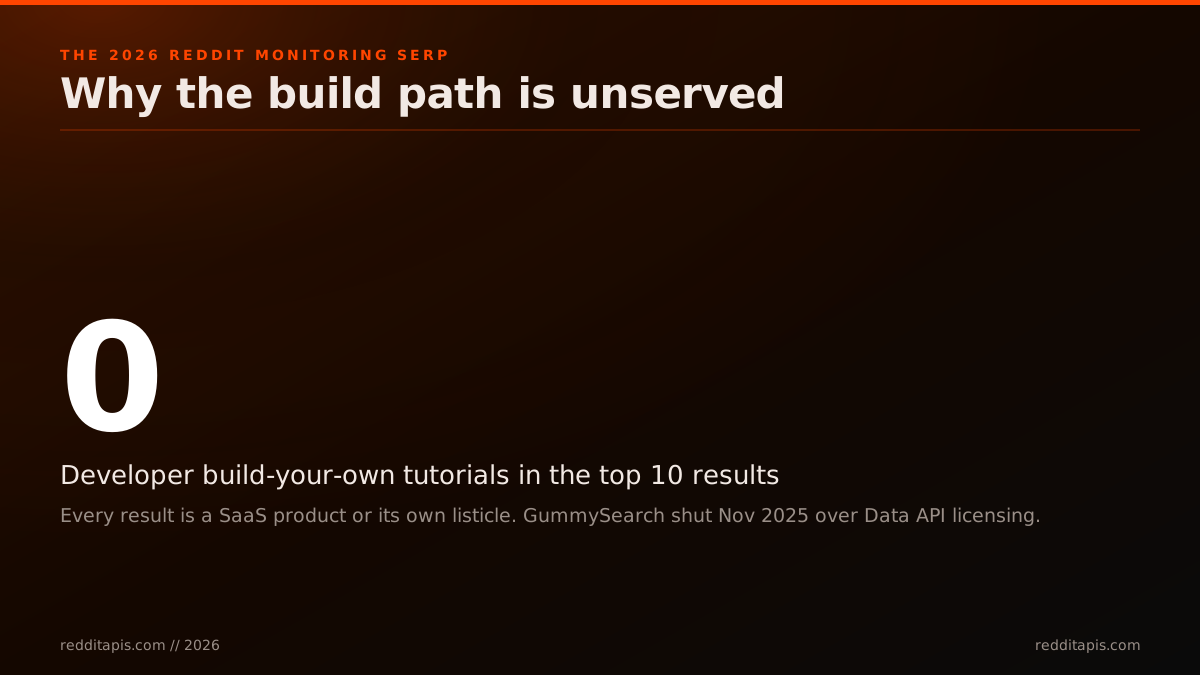 Every monitoring result is a product or a product's listicle; the developer build path is unserved
The free floor in this market is F5Bot, and it is genuinely useful. It emails you when your keywords show up on Reddit and Hacker News, for free, which is why it gets recommended constantly:

Jack Bridger
@jacksbridger
Apparently not everyone knows about f5bot so PSA: f5bot is free to monitor any mentions of your site or keywords on reddit, hackernews etc.
At a glance, the 2026 monitoring options for a developer:
| Tool | Type | Cost | Limits |
|---|---|---|---|
| F5Bot | Hosted, free | $0 | Keyword cap, fixed cadence, no custom filters |
| Syften / Octolens | Hosted, paid | $20-100+/mo | Per-seat or per-keyword pricing |
| Build your own | Usage-based | ~$0.002/call | Your code, your channels, your data |
F5Bot is the right starting point for a non-developer, and you should know it exists before you write a line of code. Its limits are also real: a cap on keywords, a fixed alert cadence you do not control, no custom filtering to cut noise, and no way to fold the matches into your own systems. The moment you want filtering, your own alert channels, or the data inside your own pipeline, you have outgrown the hosted free tier and the build-your-own path becomes the cheaper and more flexible option. The GummySearch alternatives breakdown compares the hosted options by data depth if you want to weigh them before deciding to build.
Build the Core: A Polling-Loop Keyword Monitor in Python
The core monitor is a loop that searches Reddit for each keyword, collects the matches, and hands the new ones to an alert function. We will build it in stages so each piece is clear, then assemble the full script. The only dependency is the requests library, and the only credential is one bearer token. The endpoint shape and response fields below come straight from the docs at docs.redditapis.com and the live-tested Reddit search API tutorial.
Start with the single search call. It is one authenticated GET that returns a top-level posts array, where each post is a flat object with id, title, author, subreddit, permalink, upvotes, comments, created_utc, and more:
import os
import requests

API_KEY = os.environ["REDDITAPI_KEY"]
BASE = "https://api.redditapis.com"
HEADERS = {"Authorization": f"Bearer {API_KEY}"}

def search_reddit(keyword, limit=25):
    """Return the newest Reddit posts matching a keyword, across all of Reddit."""
    resp = requests.get(
        f"{BASE}/api/reddit/search",
        params={"q": keyword, "sort": "new", "limit": limit},
        headers=HEADERS,
        timeout=60,
    )
    resp.raise_for_status()
    return resp.json()["posts"]

for post in search_reddit("reddit api"):
    print(f"r/{post['subreddit']} | {post['title']} | {post['permalink']}")
That is the whole data-fetch layer. sort=new is the correct choice for monitoring because you want freshness, not relevance ranking. Note the field names: this managed path uses upvotes and comments rather than the native score and num_comments, so if you have read older PRAW tutorials, map those once. The full parameter and field reference, including the q field operators like title:, author:, and subreddit:, lives in the search tutorial.
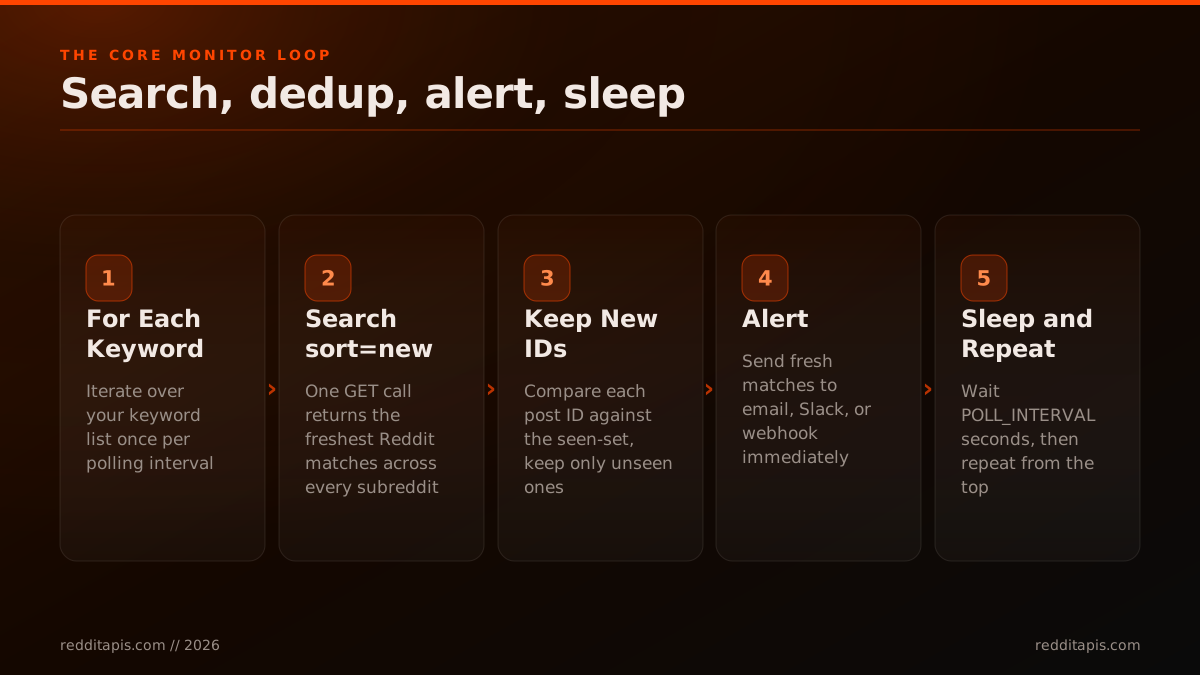 The loop: search each keyword, keep the new matches, alert, sleep, repeat
Now wrap the search in a loop over your keyword list, with a sleep between passes. This is the heart of the monitor:
import time

KEYWORDS = ["my product name", "competitor name", "alternative to my product"]
POLL_INTERVAL = 600  # seconds, so every 10 minutes

def poll_once(keywords):
    """Search every keyword once and return all matched posts."""
    matches = []
    for keyword in keywords:
        try:
            for post in search_reddit(keyword):
                post["matched_keyword"] = keyword
                matches.append(post)
        except requests.HTTPError as exc:
            print(f"search failed for '{keyword}': {exc}")
    return matches

def monitor(keywords, interval=POLL_INTERVAL):
    print(f"monitoring {len(keywords)} keywords every {interval}s")
    while True:
        matches = poll_once(keywords)
        print(f"{time.strftime('%H:%M:%S')} | {len(matches)} total matches this pass")
        # dedup + alert go here (next sections)
        time.sleep(interval)
This already does the hard part: it watches every keyword across all of Reddit, on a calm ten-minute cadence, with one search call per keyword per pass. Three keywords polled every ten minutes is about 432 calls a day, a few cents at $0.002 per call. Compare that to streaming, which the rate-limits guide shows can exhaust a token budget in minutes. The loop above never hits a per-token ceiling because the managed endpoint pools that server-side. What it is missing is two things: it alerts on nothing yet, and if you added a naive alert it would re-alert the same posts every ten minutes. Those are the next two sections.
Start building with Redditapis
Reads $0.002, votes $0.005, writes $0.012, DMs $0.025. $0.50 free credits.
Deduplicating Matches So You Alert Once, Not Every Loop
Deduplication is the logic that makes a monitor usable: it ensures you are alerted exactly once per matching post, never again on later passes. Without it, a ten-minute poll re-finds the same posts every pass and floods you with duplicate alerts until the post ages out of the search window. The fix is a set of post IDs you have already handled, checked before every alert.
The post id field is your dedup key. It is stable and unique per post. The pattern is: load the set of seen IDs, find matches whose ID is not in the set, alert on those, then add them to the set and save it. One subtlety matters on the very first run: you do not want to alert on every historical post the search returns, only on genuinely new ones going forward. So the first run records everything silently as "seen" and alerts on nothing, and every run after that alerts only on IDs that appeared since.
import json
import os

SEEN_FILE = "seen_ids.json"

def load_seen():
    if os.path.exists(SEEN_FILE):
        with open(SEEN_FILE) as f:
            return set(json.load(f))
    return set()

def save_seen(seen):
    with open(SEEN_FILE, "w") as f:
        json.dump(sorted(seen), f)

def new_matches(matches, seen, first_run):
    """Return only posts not seen before; on first run, seed silently."""
    fresh = []
    for post in matches:
        if post["id"] in seen:
            continue
        seen.add(post["id"])
        if not first_run:        # do not alert on the historical backlog
            fresh.append(post)
    return fresh
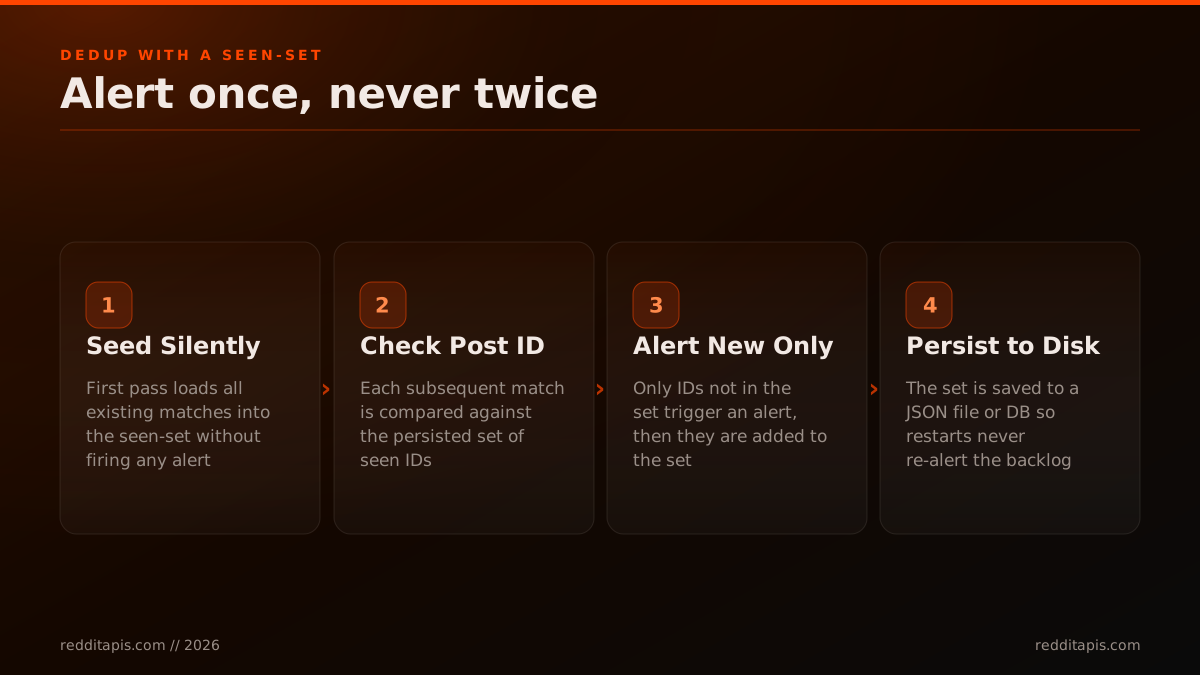 The seen-set seeds silently on the first pass, then only genuinely new IDs trigger an alert
Persisting the set to a file is what makes the monitor survive a restart without re-alerting its whole history. For a small monitor a JSON file is fine. If you watch high-volume keywords and the file grows large, move the set into SQLite or Redis and optionally expire IDs older than a few days, since Reddit's search window will not return ancient posts anyway. The principle does not change: check before you alert, record after you alert, and persist between runs. This is the same discipline that keeps any polling integration idempotent, and it is worth getting right once because every later feature (alerts, scoring, dashboards) sits on top of a clean "is this new" decision.
Adding Alerts: Email, Slack, and Webhook Delivery
An alert channel is how a match reaches you, and the three that cover almost every need are email, Slack, and a generic webhook. The monitor stays the same; you are just swapping what happens to a fresh match. Keep the alert function separate from the loop so you can change channels without touching the core, and so you can fan out to more than one at once.
The simplest useful channel is a Slack Incoming Webhook. Create one for the channel you want in your Slack admin, then POST a small JSON body to that URL. The whole integration is a few lines, documented in the Slack webhook reference:
import requests

SLACK_WEBHOOK = os.environ.get("SLACK_WEBHOOK_URL")

def alert_slack(post):
    text = (
        f":mag: New Reddit match for *{post['matched_keyword']}*\n"
        f"r/{post['subreddit']} | {post['upvotes']} upvotes\n"
        f"{post['title']}\n"
        f"https://www.reddit.com{post['permalink']}"
    )
    requests.post(SLACK_WEBHOOK, json={"text": text}, timeout=30)
Email is the other channel people expect, and Python's standard library handles it through smtplib. For anything beyond personal use, send through a transactional email provider rather than a personal account so you do not trip spam filters:
import smtplib
from email.message import EmailMessage

def alert_email(post, to_addr, from_addr, smtp_host, smtp_user, smtp_pass):
    msg = EmailMessage()
    msg["Subject"] = f"Reddit match: {post['matched_keyword']}"
    msg["From"] = from_addr
    msg["To"] = to_addr
    msg.set_content(
        f"r/{post['subreddit']} ({post['upvotes']} upvotes)\n"
        f"{post['title']}\n"
        f"https://www.reddit.com{post['permalink']}"
    )
    with smtplib.SMTP_SSL(smtp_host, 465) as server:
        server.login(smtp_user, smtp_pass)
        server.send_message(msg)
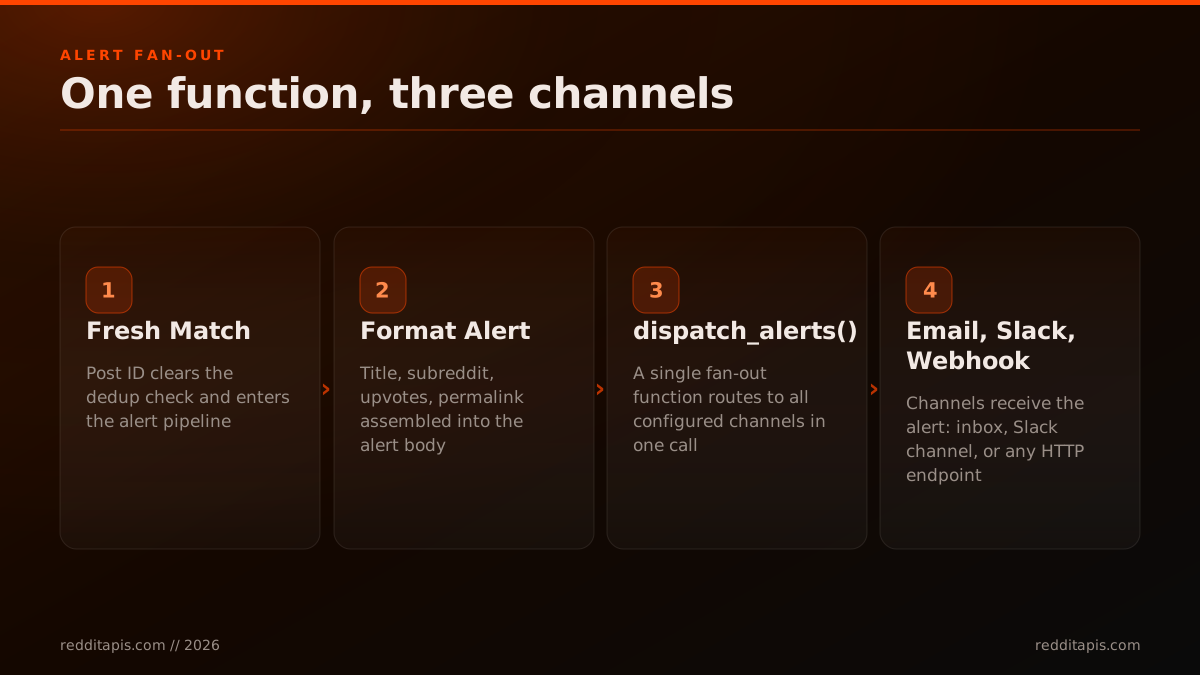 One alert function fans a fresh match out to email, Slack, or any HTTP webhook
A generic webhook covers everything else: Discord, a Zapier or n8n hook, your own internal endpoint. It is the same POST as Slack with whatever JSON shape the receiver expects. The pattern that keeps this clean is a single dispatch_alerts(post) function that calls whichever channels you have configured, so the loop only ever calls one thing. That is the behavior a marketer actually wants on the other end: a fast, specific signal that someone is talking about the thing they care about, so they can show up and be useful rather than promotional, which is the etiquette every experienced Reddit operator stresses:

Serdar
@zeroXserdar
MarketerProTip - Set up a free F5Bot alert to monitor for keywords, mentions of your brand or competitors on Reddit. - Jump in fast when there's a relevant post. - Do not shill right away. Be helpful first. P.S: Every second 100 people add "+ reddit" to their search on Google. h… Show more

Scoping and Filtering: Subreddits, Keywords, and Noise Control
Filtering is what separates a monitor you keep from one you mute after a day. A raw keyword search across all of Reddit will surface plenty of matches you do not care about, so you scope and filter before anything reaches your alert channel. There are three levers: which subreddits you include, how precisely your keywords match, and post-filters that drop noise after the search returns.
The first lever is the subreddit parameter. If your keyword is generic, scope the search to the communities where it actually matters. The managed endpoint takes a subreddit parameter directly, no restrict_sr fiddling:
def search_in_subreddit(keyword, subreddit, limit=25):
    resp = requests.get(
        f"{BASE}/api/reddit/search",
        params={"q": keyword, "subreddit": subreddit, "sort": "new", "limit": limit},
        headers=HEADERS,
        timeout=60,
    )
    resp.raise_for_status()
    return resp.json()["posts"]
The second lever is query precision through Reddit's q field operators. A bare keyword matches the title and body broadly; operators tighten it. title:keyword matches only titles, which cuts a lot of passing mentions. selftext:"exact phrase" matches a phrase in the body. You can combine them with boolean logic, so q=title:crm AND selftext:recommendation finds posts whose title is about CRMs and whose body asks for a recommendation, a classic lead signal. These operators forward to Reddit's search index identically on the managed path, and the search tutorial documents them in full.
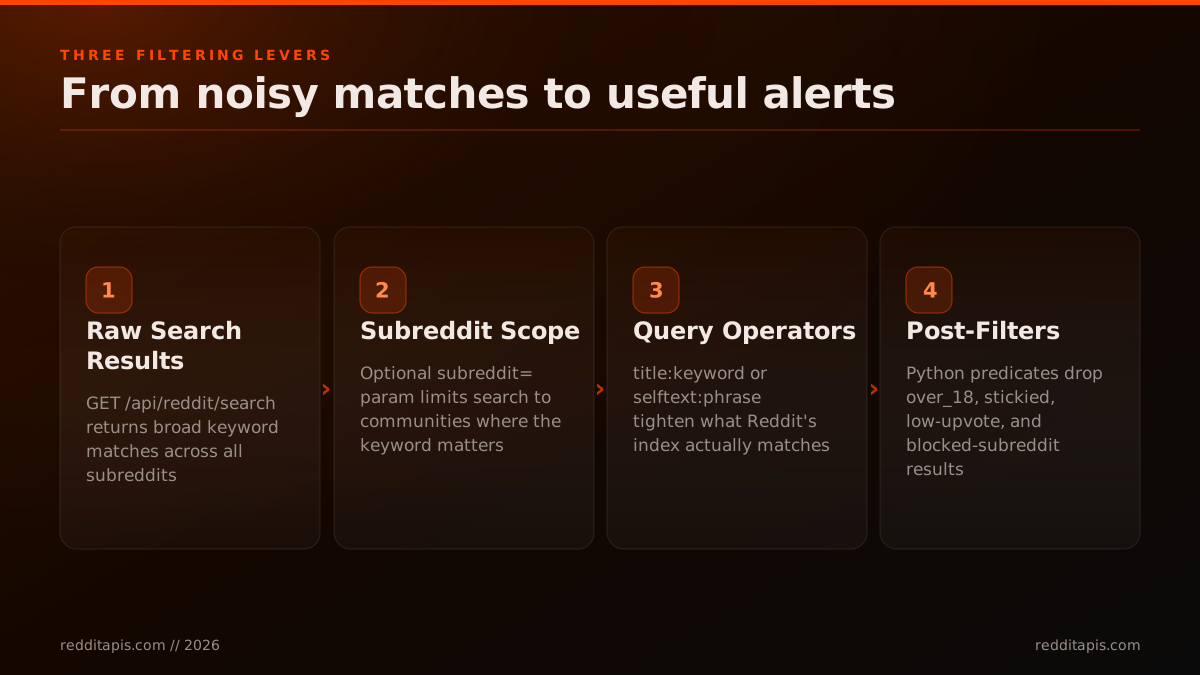 Subreddit scope, query operators, and post-filters narrow a noisy match set into alerts worth sending
The third lever is post-filtering in Python after the search returns, for rules the query cannot express. Drop posts below an upvote floor, skip over_18 content, ignore stickied or locked threads, exclude certain authors or subreddits, or require that the match is in the title rather than buried in a long body. A small predicate function keeps this readable:
def passes_filters(post, min_upvotes=0, blocked_subs=()):
    if post.get("over_18"):
        return False
    if post.get("stickied"):
        return False
    if post["subreddit"].lower() in {s.lower() for s in blocked_subs}:
        return False
    if post["upvotes"] < min_upvotes:
        return False
    return True
Finding the right communities to scope to is its own task, and Reddit's own search is not great at it. The how to find subreddits API guide covers discovering and vetting communities programmatically, which pairs naturally with monitoring: build your subreddit allowlist first, then point the monitor at it. Good filtering is the difference between an alert stream you trust and one you learn to ignore, so spend time here before you scale up keywords.
Scheduling the Monitor: Cron, systemd, and Always-On Runs
Scheduling is how the monitor runs unattended, and you have two clean options: a long-running process with its own sleep loop, or a short script that a scheduler runs on an interval. Both work; the choice is about where you want the "every ten minutes" decision to live and how you want failures handled.
The long-running approach is the while True loop from earlier, kept alive by a process supervisor. On a Linux server, a small systemd unit is the right tool: it starts the script on boot, restarts it if it crashes, and captures its logs. The loop owns the timing with time.sleep(interval), and systemd owns "keep this alive." This is the simplest model when the monitor holds state in memory between passes and you want one persistent process.
The cron approach flips it: the script does exactly one pass (search, dedup against the persisted seen-set, alert, exit) and a cron schedule runs it every N minutes. Because the dedup set lives in a file or database, each run picks up where the last left off. A crontab line like */10 * * * * runs the one-pass script every ten minutes. This model is more robust to crashes (a failed run does not take down a long-lived process, the next run just tries again) and it is the easier fit for serverless schedulers and managed cron services.
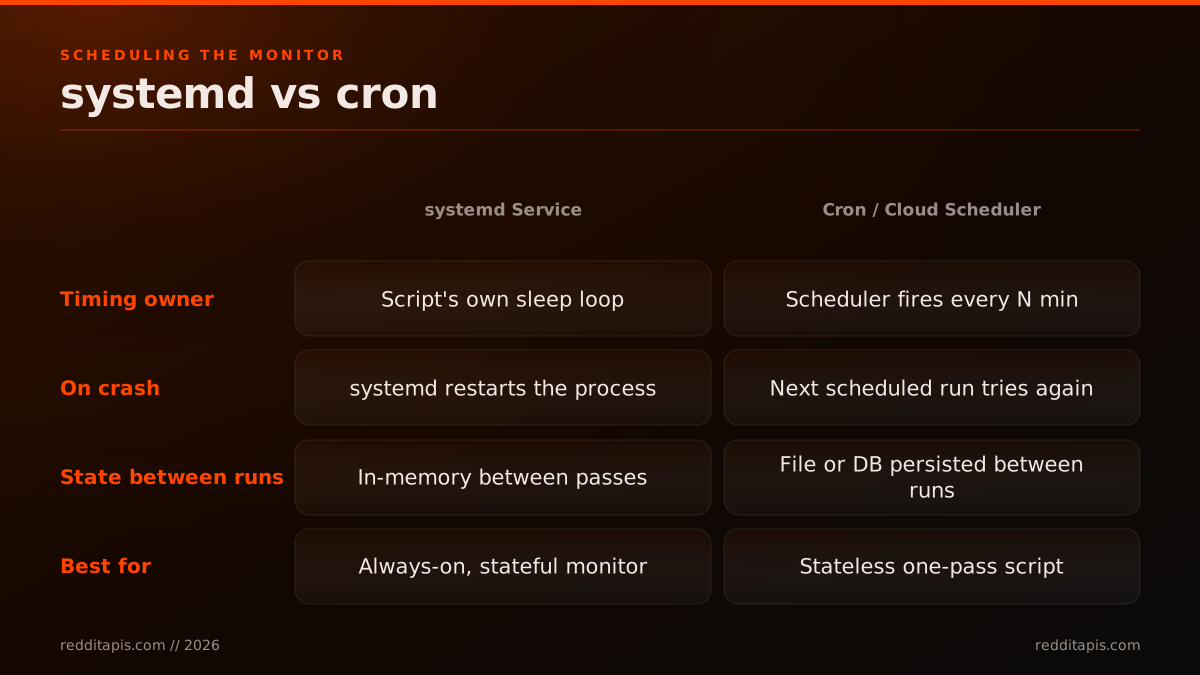 Two scheduling shapes: a supervised always-on loop, or a one-pass script a scheduler fires on an interval
Whichever you pick, three operational habits keep a deployed monitor healthy. Log every pass with a timestamp and a match count, so a silent failure is visible. Wrap the search call so a single failed request does not kill the whole run (the try/except in poll_once already does this). And persist the seen-set outside the process, so a restart never re-alerts the backlog. The one thing that bites people in 2026 is not the scheduler at all; it is where you run it, which is the subject of the next section.
The cheapest Reddit API. Try it free.
Reads from $0.002 per call. $0.50 free credits. No credit card required.
Why This Beats F5Bot, Syften, and Octolens for Developers
For a developer, building the monitor wins over the hosted tools on three axes: control, cost at scale, and durability. This is not a knock on F5Bot, Syften, or Octolens, they are good products for non-developers and for teams that want a dashboard. But if you can write the fifty lines above, the trade tilts toward owning the pipeline:
- Control: any filtering predicate, any alert channel (Slack, Discord, webhook, email), raw match data inside your own pipeline
- Cost at scale: $0.002 per search call (pricing) vs approximately $20-100+/month per SaaS seat, linear scaling with usage not with users
- Durability: GummySearch closed in November 2025 when its Reddit licensing relationship collapsed; a pipeline you own depends on no vendor's license
If you can write the fifty lines above, the trade tilts toward owning the pipeline, and it is worth being precise about why.
Control is the first axis. A hosted tool gives you the filters it chose to build and the alert channels it chose to support. Your own monitor gives you arbitrary filtering (any predicate you can write), arbitrary channels (anything with an HTTP endpoint), and the raw match data inside your own systems, where you can score it, route it, store it, or feed it to a model. The marketer's actual job, jump in fast and be helpful rather than promotional, is easier to support when the alert carries exactly the context you decided it should.
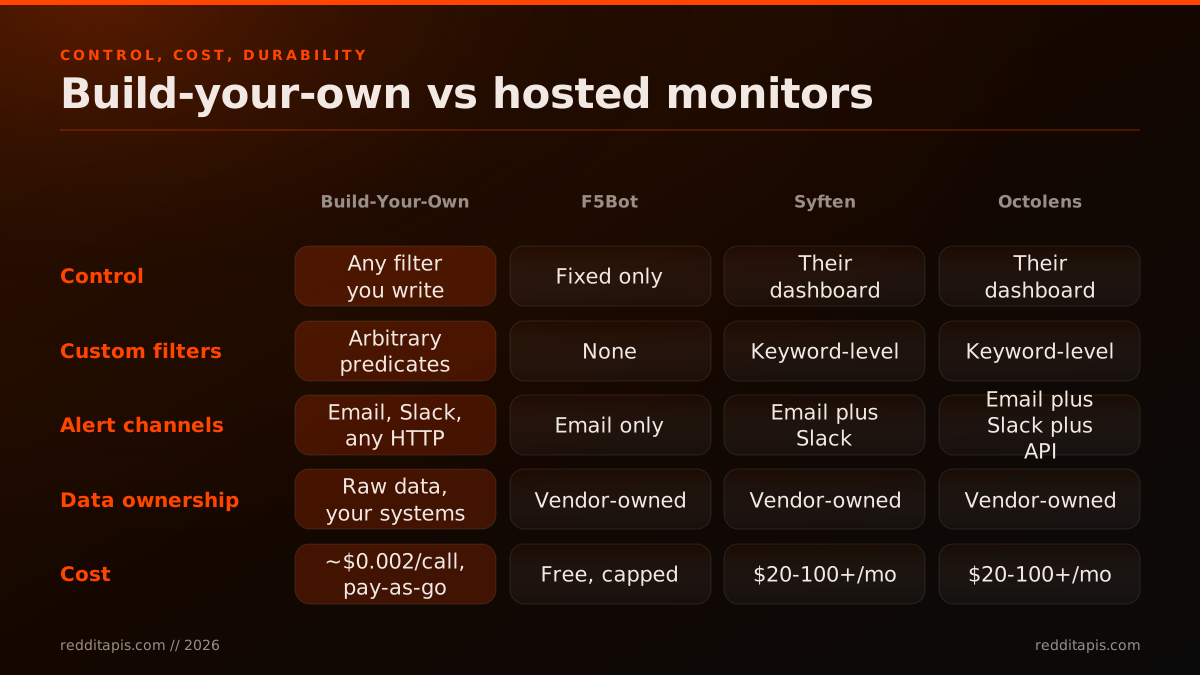 Where build-your-own wins: control, custom filtering, your own channels, data ownership, and usage-based cost
Cost at scale is the second axis. Hosted monitors price per seat or per tracked keyword, commonly an estimated $20 to $100 and up per month, with higher tiers gating the features you actually want. The build-your-own monitor costs $0.002 per search call (pricing). Polling one keyword every ten minutes is roughly 4,300 calls a month, a few dollars, and it scales linearly: ten keywords polled every ten minutes is still well under what a single SaaS seat costs, and you are not paying for users you do not have. Model your real numbers with the cost calculator and the pricing page before you commit either way, because at very low volume the hosted free tier (F5Bot) is genuinely free and worth using.
Durability is the third axis, and it is the one GummySearch taught the hard way. A hosted monitor depends on its vendor keeping a viable Reddit licensing relationship. When GummySearch could not, it shut down and took its users' workflows with it. A monitor you own depends only on a stable search endpoint and your own script, both of which you control. Developers are already rolling their own in response, building F5Bot alternatives with custom prompt and regex matching because the hosted options keep proving fragile. The full comparison of the hosted field by data depth is in the GummySearch alternatives ranking, and the REST vs PRAW breakdown covers the access-layer trade if you are deciding how to fetch.
Rate Limits, IP Filtering, and Why the Managed Endpoint Matters
The two things that kill a self-built Reddit monitor in production are rate limits and IP filtering, and both are about access infrastructure rather than your code. A monitor that runs perfectly on your laptop can die the day you deploy it, and the reason is almost never a logic bug. Understanding the two failure modes is what lets you pick an access path that survives deployment.
The rate-limit failure is the one the polling design already mostly solves. Reddit enforces a per-token budget that resets on a rolling window, and the patterns that blow through it (polling without backoff, sharing one token across threads, no cache) are exactly the patterns a naive streaming monitor falls into. Search-based polling at a minutes cadence stays well under any reasonable budget, and when you route through a managed endpoint, the token pooling and backoff happen server-side so there is no per-token ceiling for you to manage at all. The rate-limits reference covers the budget model, the X-Ratelimit-* headers, and token rotation if you are calling the native API directly.
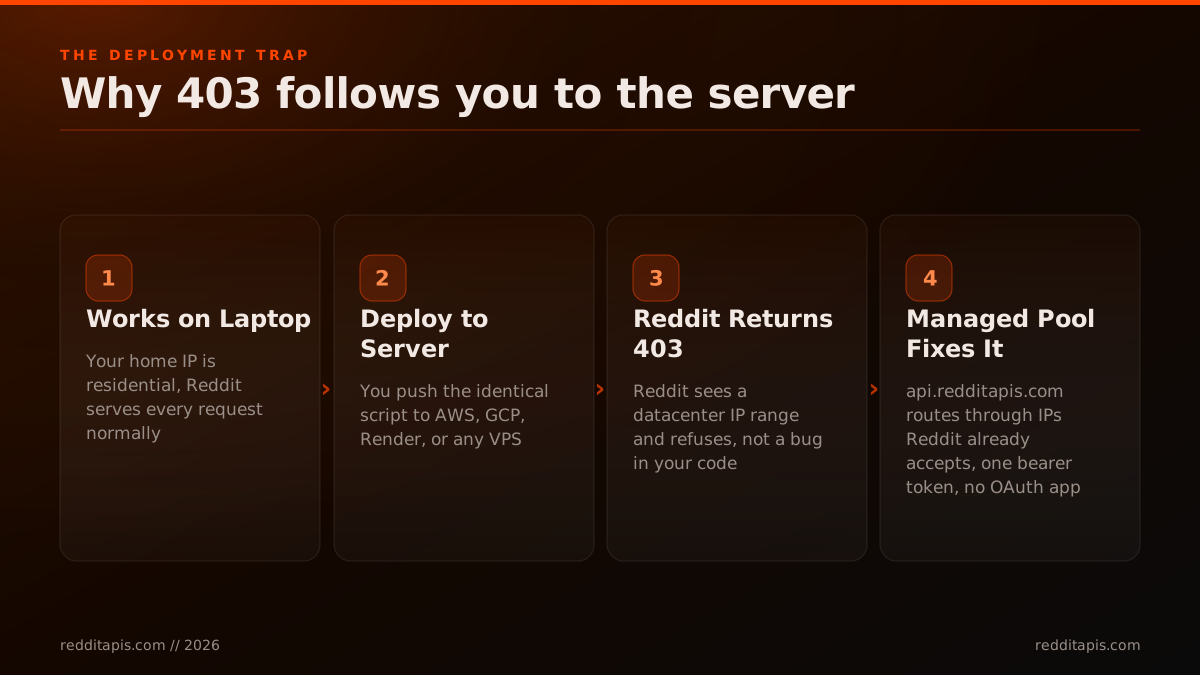 The deployment trap: Reddit's datacenter-IP filter turns a working laptop script into a server full of 403s
The IP-filtering failure is the nastier one because no header fixes it. Reddit blocks a large share of cloud and datacenter IP ranges, so the same correct script that works from your home connection returns 403 Forbidden from AWS, GCP, or a VPS. That is Reddit refusing the source IP, not your code failing. A monitor is by definition an always-on server-side job, which means it is exactly the workload that runs into this. Your options are to maintain residential IPs yourself (people do this with residential proxy pools from providers like Apify, Bright Data, or Oxylabs) or to route through a managed API whose IP pool Reddit already accepts. The scraping benchmarks show how often the datacenter 403 actually bites at volume, and it is often enough that planning for it up front is the right call. A managed GET https://api.redditapis.com/api/reddit/search sidesteps both failure modes with one bearer token and no OAuth app, which is why the build above uses it; the authentication guide and how to get a key cover the setup.
Extending the Monitor: Sentiment, Lead Scoring, and Multi-Keyword Tracking
Once the core monitor reliably catches and alerts on matches, the interesting work is in what you do with a match before it reaches you. Because you own the pipeline, you can add scoring, sentiment, and prioritization that no hosted tool exposes, and route different matches to different places. This is where owning the fifty lines pays off, and it is also where a tracking video on building Reddit data tooling in Python is worth watching for the broader shape:
Lead scoring is the highest-value extension for most builders. Not every match deserves the same urgency. A post whose title asks for a recommendation in a high-fit subreddit is worth an instant Slack ping; a passing mention in an unrelated community is worth a daily digest at most. A small scoring function over the post fields you already have (subreddit fit, keyword type, upvotes, whether the match is in the title, presence of intent phrases like "looking for" or "alternative to") lets you route high-score matches to a fast channel and batch the rest. That is the difference between a tool that helps you find leads and a firehose that buries them.
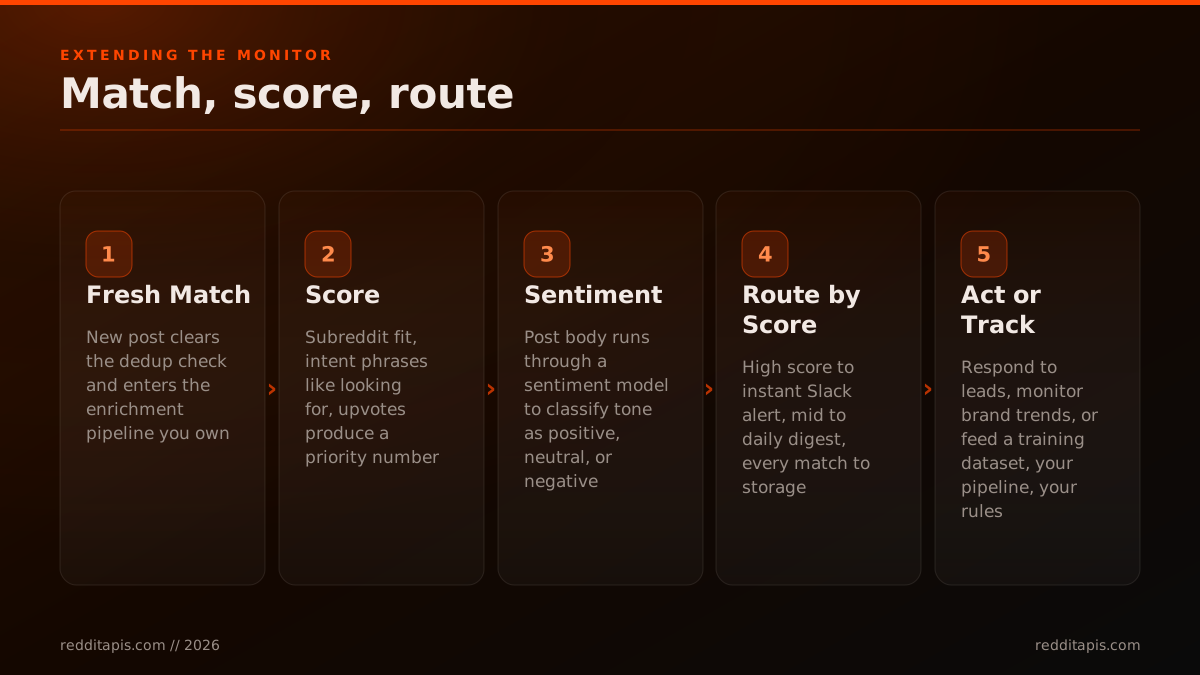 Owning the pipeline lets a match flow through scoring and sentiment before routing to the right destination
Sentiment is the next layer. Pulling the post text (and optionally the comment tree, which the search tutorial shows how to fetch by permalink) and running it through a sentiment model lets you separate complaints from praise and prioritize the angry ones, which is exactly what a brand-monitoring or support team wants. Multi-keyword tracking is the simplest extension of all: the loop already iterates a keyword list, so add competitors, problem phrases, and product variants, tag each match with its matched_keyword, and chart match volume per keyword over time to see trends. For deeper analysis at scale, the data you are collecting is the same clean, structured Reddit data that feeds AI training pipelines, and the Reddit data API overview covers the broader endpoint set you can pull from. If you eventually want to act on Reddit, not just watch it, the write side (voting, posting, DMs) is covered in the vote API tutorial, the DM guide, and the DM versus chat versus modmail breakdown, though acting on monitored conversations should always follow each community's rules.
Reddit Monitoring in the Age of AI Overviews (2026)
Reddit monitoring matters more now than it did two years ago because Reddit has become a primary source for AI answer engines, which raises the stakes on what gets said about you there. Google's AI Overviews surface Reddit threads directly, and assistants cite Reddit when answering "what do people think about X." A complaint or a recommendation on Reddit is no longer read only by the people scrolling that thread; it can become part of what an AI tells the next thousand people who ask. Monitoring is how you find out in time to respond.
The practical consequences for a monitor builder in 2026:
- Reddit threads now surface in Google AI Overviews, so a complaint that used to reach hundreds of scrollers can reach millions via AI citations
- The Reddit Data API pricing that killed free third-party access in 2023 also took GummySearch down in 2025, confirming that reliable server-side access is the load-bearing dependency
- The Pushshift alternatives story is the cautionary tale of building on a free firehose that can vanish; the same logic applies to any hosted monitoring service
This is also why the access story keeps tightening. The same Reddit Data API pricing that killed free third-party access in 2023 (API pricing changes thread), and that ultimately took GummySearch down in 2025, exists because Reddit content became valuable enough to license, partly for exactly this AI-training and AI-answer use case. The usage-based data licensing breakdown covers why the free-archive era ended and what replaced it. The practical consequence for a monitor builder is that reliable, server-side access to Reddit search is the load-bearing dependency, and the Pushshift alternatives story is the cautionary tale of building on a free firehose that can vanish.
There is one honest limitation to hold onto. A search-based monitor sees what Reddit's public search index surfaces, which is recent and broad but not exhaustive, and search indexing has its own lag, so treat your monitor as catching the large majority of relevant conversation within minutes, not as a guarantee of every single post the instant it posts. For monitoring that is exactly the right tradeoff, you want reliable coverage on a calm schedule, not a fragile firehose. If you also need to confirm whether your own posting account is being silently suppressed, that is a different check entirely, covered in the Reddit shadowban guide, and worth running alongside a monitor if you act on what you find. The pricing comparison versus scraping tools like Apify and the PRAW versus REST comparison round out the access-cost picture if you are still choosing your fetch layer.
The Bottom Line
A Reddit keyword monitor is four parts (a keyword list, a search call, a memory of what you have seen, and an alert channel) and the whole core is about fifty lines of Python. The one decision that determines whether it survives is polling instead of streaming: a single GET https://api.redditapis.com/api/reddit/search?q=<keyword>&sort=new covers all of Reddit in one call, so you poll every 5 to 15 minutes, deduplicate against post IDs you have already seen, and fire an alert by email, Slack, or webhook, without ever exhausting a per-token budget the way a streaming monitor does. The SERP for monitoring is wall-to-wall SaaS, and GummySearch's 2025 shutdown showed how fragile renting that pipeline can be, so for any developer who can write the code, owning the monitor is the cheaper and more durable move. Build the core loop, add dedup so you alert once, wire in the channel you actually read, scope your keywords and subreddits to cut noise, and schedule it with cron or systemd. Mind the deployment trap (Reddit's datacenter-IP 403) by running through a clean pool, and the monitor that worked on your laptop keeps working in production. The adjacent Reddit search API tutorial, rate-limits reference, and no-PRAW Python tutorial cover the surrounding read layer. Grab a free key and build the monitor.
Where these numbers come from.
Each row is a figure in this post and the artefact it was read from. Reddit's access rules and the third-party archives around them keep moving, so check the date on a source before you build against it.
- Requests: HTTP for Humans
- The HTTP client the polling-loop monitor is built on.
- PRAW documentation
- The PRAW streaming approach the article contrasts against polling.
- redditapis.com API docs
- The managed search endpoint the monitor polls, quoted for the no-per-minute-quota claim.
- Reddit Data API Wiki
- Reddit's rate limits, the reason polling PRAW streaming hits caps.
Frequently asked questions.
A Reddit keyword monitor is a script or service that watches Reddit for new posts and comments matching keywords you care about, then alerts you when a match appears. Commercial versions (Syften, Octolens, F5Bot, Brand24) wrap this in a dashboard and charge per seat. A build-your-own version is a small Python loop that calls a search endpoint on an interval, filters the results to your keywords, deduplicates what it has already seen, and sends an alert by email, Slack, or webhook. The core is about 50 lines. See the build section or grab a free key.
Poll a search endpoint on a sensible interval instead of streaming. PRAW's submission stream polls Reddit's /new listing every few seconds for every subreddit you watch, which multiplies requests fast and triggers 429 Too Many Requests once you watch more than a couple of communities. A single GET https://api.redditapis.com/api/reddit/search?q=<keyword>&sort=new covers all of Reddit in one call, on the interval you choose (every 5 to 15 minutes is plenty for monitoring), routed through a managed IP pool so you never collect the datacenter 403. There is no per-token budget for you to exhaust. See why polling beats streaming and the rate-limits reference.
GummySearch shut down in November 2025 because it could not secure a commercial Reddit Data API license, and the replacements are mostly other paid SaaS tools carrying the same risk. The free path that survives is to build your own monitor: F5Bot is the free hosted floor (it emails you keyword matches, with caps), and a custom polling loop on a REST search endpoint is the version you fully control, with your own filters, your own alert channels, and no per-seat fee. The first $0.50 of API credit is free at signup. See the 2026 landscape and the GummySearch alternatives comparison.
PRAW's subreddit.stream.submissions() works by polling that subreddit's /new listing repeatedly, every few seconds, and yielding posts it has not seen. One stream is fine. The problem is scale: monitoring is rarely one subreddit, and one OAuth token shared across several streams draws from a single per-token budget. Watching ten subreddits this way can issue dozens of requests per minute against one budget, which returns 429. Search-based polling flips the math: one query covers every subreddit at once, so you make one call per interval rather than one call per subreddit per few seconds. See polling vs streaming.
Create a Slack Incoming Webhook for the channel you want alerts in, then POST a JSON payload to that webhook URL from your monitor whenever a new match passes your dedup check. The payload is a single {"text": "..."} field with the post title, subreddit, and permalink. The same pattern works for Discord webhooks and for any HTTP endpoint. For email instead, send through smtplib or a transactional email provider. See the alerting section.
For brand and keyword monitoring, every 5 to 15 minutes is the right range. Reddit conversations do not move so fast that a 10-minute delay loses you anything, and a longer interval keeps your call volume and cost low. Polling every few seconds buys you almost nothing for monitoring and is exactly the pattern that exhausts a Reddit OAuth budget. Pick an interval based on how time-sensitive your response needs to be: 5 minutes for live support or PR, 15 to 30 minutes for lead discovery and trend tracking. See build the core.
Keep a set of post IDs you have already alerted on, and check each new match against it before sending an alert. On the first run you record every match without alerting (so you do not get a flood of historical posts), then on each subsequent loop you only alert on IDs that are not in the set. Persist the set to a small file or a database so a restart does not re-alert everything. The post id field is the stable dedup key. See the dedup section.
It depends on volume, but for most single-product monitoring the math favors building. SaaS monitors price per seat or per tracked keyword, often $20 to $100+ per month. A polling monitor at $0.002 per search call, polling every 10 minutes (about 4,300 calls per month per query), costs a few dollars a month per keyword and scales linearly with how many keywords and how often you poll. You trade a fixed subscription for a small usage fee plus the one-time work of standing up the script. Model your own numbers with the cost calculator and the pricing page.
Reddit filters a large share of cloud and datacenter IP ranges, so a script that works on your laptop frequently returns 403 Forbidden on AWS, GCP, or a VPS, no matter how correct your headers are. The 403 is Reddit refusing the source IP, not a bug in your code. You either run from residential IPs you maintain, or you route through a managed API whose IP pool Reddit accepts. This is the single most common reason a working monitor dies the moment it is deployed. See rate limits and IP filtering and the scraping benchmarks.
Keep reading.
Continue exploring related pages.
Reddit API documentation
The complete 2026 reference: auth, all 59 endpoints, and code.
Get a Reddit API key
Instant bearer token, no waitlist and no enterprise contract.
Reddit Responsible Builder Policy
Why Reddit denies API applications, and the managed REST bypass.
Reddit API use cases
14 use cases from AI training to brand monitoring and DMs.
Reddit Search API
Search posts, comments, users, and communities over one REST endpoint.
Reddit MCP server
Wrap the REST API as MCP tools for Claude, Cursor, and any MCP client.
Reddit MCP hub
Install tabs for every client, the full tool table, pricing and fixes.
Reddit API for AI agents
Live Reddit context for tool calls, MCP servers, and RAG pipelines.
Redditapis pricing
Endpoint-level costs and quick monthly totals - reads from $0.002 / call.
Reddit API cost calculator
Estimate monthly spend using your request volume.
Reddit API guides and tutorials
Tutorials, walkthroughs, and API deep-dives for developers.
Reddit API alternatives
Evaluate alternatives by cost model, limits, and integration fit.
Cheap Reddit API
The cheapest way to get Reddit data: $0.002 per call, no contract, no minimum.
Official Reddit API vs Redditapis
Access, setup, rate limits, and pricing, side by side.
PRAW alternative
A hosted Reddit REST API for any language, no app registration or OAuth.
Reddapi alternative
A maintained Reddit REST API with published pricing and write endpoints.
Reddit comment scraper alternative
The raw comment API: search and filter comments, historical and live, clean JSON.
Reddit scraper API
Hosted scraper API vs building your own: managed proxies, clean JSON.
RapidAPI Reddit alternative
A direct, maintained Reddit API with published pricing and write endpoints.
Bright Data Reddit alternative
A purpose-built Reddit API vs a general scraping platform: structured JSON, plus writes.
ScraperAPI Reddit alternative
A Reddit-native API vs a generic HTML fetcher: auth and pagination handled, typed JSON.
TikHub alternative
TikHub's Reddit surface is read-only; get comment, vote, and DM endpoints too.
EnsembleData alternative
No $100/month floor: pay per call from $0.002, plus write, vote, and DM endpoints.
Scrape Creators alternative
7 read-only Reddit endpoints vs a dedicated API with real write, vote, and DM paths.
FetchLayer alternative
Posts, comments, and search only; add vote, comment, and DM over the same REST auth.
PullPush alternative
PullPush is free but volunteer-run and goes offline for reindexing; a maintained REST API that stays up.
Reddit monitoring API
Build your own keyword and brand-mention monitor: search, comment search, and subreddit streams over REST.
F5Bot vs Redditapis
F5Bot's Slack and Discord delivery needs its $49.99/mo Gold tier; Redditapis includes it from $19/mo.
Syften vs Redditapis
Syften caps you at 100 to 500 results a day; Redditapis allows 10,000 a day per monitor at the entry plan.
Octolens vs Redditapis
Octolens meters by mention with overage fees; Redditapis is flat-priced by subreddit slot from $19/mo.
Affiliate program
Earn 20% lifetime commissions - capped at $5,000/yr.
Reddit Vote API tutorial
Upvote and downvote a post programmatically via the REST API.
Reddit Data API: REST, no PRAW
REST endpoints for Reddit data with no PRAW and no OAuth dance.
Reddit scraping benchmarks
Real throughput, error rates, and cost benchmarks for Reddit scraping.
Reddit API answers
Direct answers on cost, access, rate limits, endpoints, and auth.
How much the Reddit API costs
Per-call pricing from $0.002 a read, with $0.50 in free credits.
Reddit API in Python
One requests call with a bearer token, no PRAW and no OAuth flow.
Reddit shadowban checker
Check if a Reddit account is shadowbanned in seconds, free and no login.
Subreddit stats checker
See any subreddit's live subscriber count, active users, and age, free and no login.
Similar reads.
More guides on the Reddit API, scraping, pricing, and MCP servers.
Reddit Monitoring in 2026: How Alerts Actually Work, What They Miss, and How to Cut the Noise
Reddit has no push, so every Reddit alert is somebody's polling loop. What that means for speed, what monitoring silently misses, and how to make the output usable.
How to Estimate Your Reddit API Bill: a Per-Call Cost Model in Python
A per-call Reddit API cost model in Python: price every read, write and DM, then size the monthly bill for a keyword monitor, a RAG refresh and a reply bot.
Reddit Monitoring Over Webhooks: The Delivery Contract, Measured
Reddit has no push. A hosted monitor is a poller somebody else runs. Here is what it guarantees, HMAC signing, the retry ladder, and how to prove it works.
How to Detect Trending Topics on Reddit With an API
Detect trending topics on Reddit with an API: snapshot hot and top listings, compute score and comment velocity, and surface rising posts, subreddits, and topics.

Most Popular Subreddits via the Reddit API: Trending and Hot Communities in 2026
How to pull the most popular, trending, and hot subreddits programmatically: the popular and community-search endpoints, why popular is not the subscriber ranking, with runnable code.

Advanced Reddit Search Filters API (2026)
Filter Reddit search by score, comment count, media type, and NSFW over one authenticated GET. Every filter parameter, the response meta, and real Python.

Reddit Bulk Fetch by ID: Hydrate Posts in One API Call
Fetch many Reddit posts in one call with the by_id API. Hydrate t3_ fullnames from a stream, backfill archives, and dedup at scale, with copy-paste Python for 2026.
Reddit Sentiment Analysis With an API: A 2026 Guide
Build a Reddit sentiment analysis pipeline: pull posts and comments for a keyword through an API, score them with a model, and track brand sentiment over time.