
How to Find Subreddits Programmatically: A Subreddit Finder API Guide (2026)
Find subreddits by keyword at scale in 2026. Discover communities with the search/communities API, rank them by real activity, and compare the native reddit.com/search.json path with copy-paste Python.

Finding subreddits programmatically means discovering relevant communities by keyword through an API call instead of clicking through Reddit's search bar by hand. You send a GET to a community-search endpoint with a keyword, and you get back a structured list of matching subreddits with their subscriber counts, which you then rank by real activity. This guide shows the full path: discover with search/communities, score with the activity endpoints, compare the native reddit.com/search.json route, and build a fit scorecard, all with copy-paste Python.
Not affiliated with Reddit Inc. redditapis.com is an independent third-party REST proxy for Reddit's API. This tutorial is vendor-neutral: it shows the native
/search.jsonpath and a managed REST option side by side so you can pick what fits your job.
TL;DR: To find subreddits programmatically, call
GET https://api.redditapis.com/api/reddit/search/communities?q=<keyword>&limit=100, which returns up to 100 communities with subscriber counts in one authenticated call. Subscriber count alone lies, so rank each candidate by recent activity withGET /api/reddit/sub/<name>/top?t=weekand recency withGET /api/reddit/posts?subreddit=<name>&sort=new. The native equivalent ishttps://www.reddit.com/search.json?q=<keyword>&type=sr, free but rate-limited and 403-blocked from many cloud IPs. The manual sidebar-chaining method works for one lookup; the API is what you reach for when you need twenty relevant, ranked subreddits in a minute instead of two hours.
What you will build:
- A keyword search against
search/communitiesthat returns ranked communities with subscriber counts - An activity score per candidate using
sub/<name>/topandposts - The native
reddit.com/search.json?type=srcomparison and its 403 and rate-limit pitfalls - A fit scorecard that classifies each candidate as a good fit or a skip
What It Means to Find Subreddits Programmatically
Finding subreddits programmatically means treating community discovery as a code step, not a clicking step. You pass a keyword to an API, receive a structured list of matching subreddits with their subscriber counts, and rank that list by activity, all without opening a browser. The single discovery call is GET https://api.redditapis.com/api/reddit/search/communities?q=<keyword>&limit=100, which returns up to 100 communities per call. That is the whole idea: one request in, a hundred ranked candidates out, ready to filter and score in your own code.
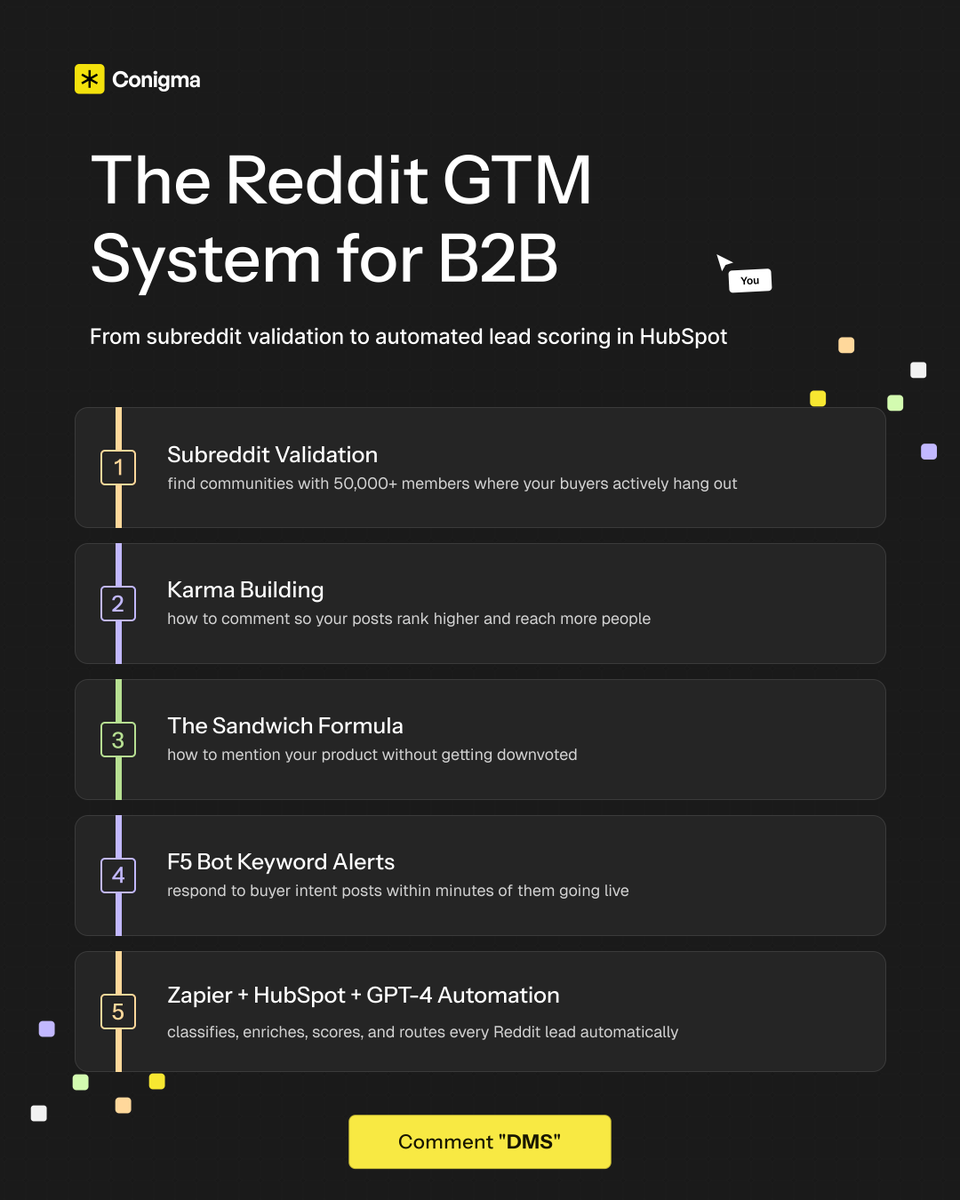
Discovery is rarely the end goal. It is step one of a larger job, whether that job is building a lead-generation tool, a social-listening dashboard, or a posting pipeline. A builder put the sequence plainly: the right subreddits come first, automation follows.

Alfie Carter
@AlfieJCarter
Most GTM teams ignore Reddit completely. That's exactly why it works. I spent weeks building a full Reddit GTM system - from finding the right subreddits to automating lead scoring in HubSpot. Here's the short version of what's inside: (Step-by-step playbook + Zapier https://t… Show more
The reason manual discovery breaks at scale is volume. Finding one community by hand is fine. Finding the twenty relevant communities for a product launch, refreshing that list weekly, or doing it for fifty different keywords across a dozen client accounts is not something you click your way through. The manual method is linear in human time; the API method is one call per keyword regardless of how many you run.
Here is the shape of a single discovery call: one request, a hundred communities back, each already carrying its subscriber count so you can rank before you ever look at a result.
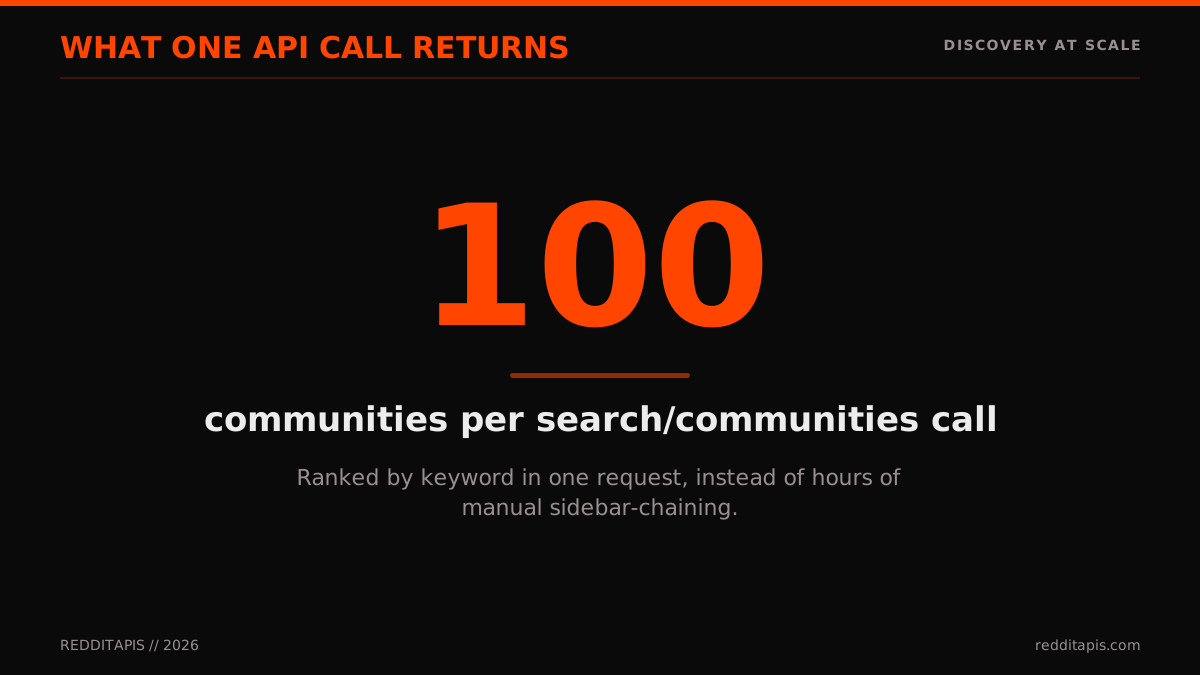 One call, a hundred ranked communities
The rest of this tutorial walks the full pipeline. You discover candidates by keyword, score them by real activity instead of trusting subscriber counts, check recency to drop dead communities, and rank what survives into a shortlist you can act on.
What Changed for Subreddit Discovery (2026)
Subreddit discovery is harder to automate now than it was three years ago, and the reasons are concrete. Reddit's 2023 API repricing moved free access to a strict per-OAuth-client rate ceiling and put high-volume programmatic reads behind paid enterprise terms, which is why so many third-party Reddit tools shut down that year. On top of that, Reddit now filters a large share of cloud and datacenter IP ranges, so a community-search call that works from a laptop returns 403 Forbidden from a server. The free manual and UI paths still exist, but neither one scales to a developer workload.
What broke and what it means for you:
- The 2023 API repricing. Reddit announced paid API pricing in April 2023; free access dropped to a tight rate ceiling and bulk programmatic reads moved to enterprise terms, which is why third-party clients folded en masse (The Verge).
- Cloud-IP 403 filtering. A correct script returns
403from AWS, GCP, or DigitalOcean while the identical script succeeds from a home connection, so server-side discovery now needs a clean IP path, not just correct headers. - Manual and UI discovery do not scale. The search bar, sidebar chaining, and UI finders are fine for one lookup but linear in human time, useless for twenty keywords across a dozen accounts.
- AI Overviews do not solve it either. Google's AI Overviews and AI search surfaces will name a few popular communities for a broad query, but they do not return a ranked, structured, hundred-deep list with subscriber counts you can score in code. They answer a question; they do not hand you a candidate set.
The official rules still apply on top of all this. Reddit's developer terms require a descriptive User-Agent, cap unauthenticated reads, and govern how community data may be used, so any discovery path (native or managed) inherits those constraints (Reddit Data API documentation). The community side is documented too: Reddit's help center explains how communities are named, found, and joined, which is the human-facing version of what the search endpoint automates (Reddit Help: communities).
The net effect is that discovery in 2026 has two viable shapes: a few clicks by hand for a single community, or a managed API path for anything repeatable. The middle ground (a quick unauthenticated script on a server) is exactly the path the IP filter broke. The rest of this guide builds the API path because that is the one that survived the 2023 and 2026 changes intact.
The Pipeline: Discover, Score, Rank
The programmatic discovery pipeline has four stages, and each one maps to a single API capability. You discover communities by keyword, score them by recent engagement, check how recently the community posted, and rank the survivors into a shortlist. Skipping any stage costs you accuracy: discover without scoring and you get a list padded with dead communities; score without recency and you keep subreddits that were busy a year ago and silent since. The four stages run in order, and the output of each feeds the next.
The four stages, in order:
- Discover by keyword with
GET /api/reddit/search/communities?q=<keyword>&limit=100, which returns up to 100 candidate communities with subscriber counts. - Score each survivor by recent engagement with
GET /api/reddit/sub/<name>/top?t=week, so you see whether posts actually earn upvotes. - Check recency with
GET /api/reddit/posts?subreddit=<name>&sort=new, which tells you when the community last posted at all. - Rank what clears the bar into a shortlist, weighting reach, engagement, recency, and relevance to match your job.
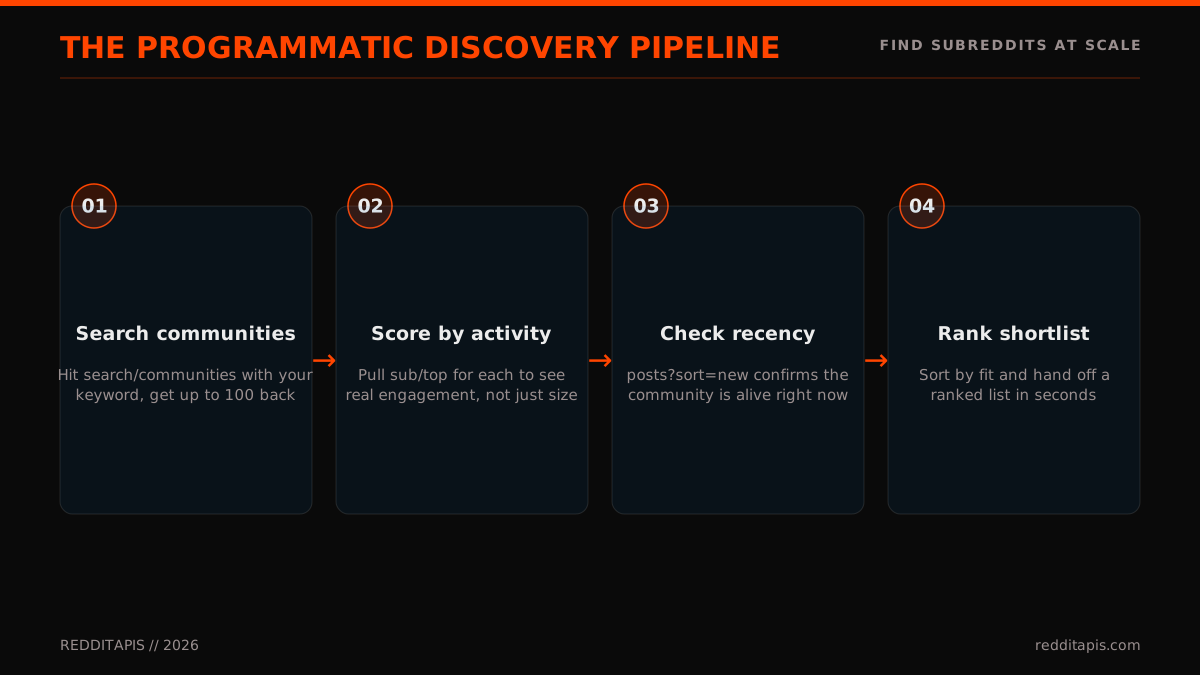 The programmatic discovery pipeline
The pipeline is deliberately small. Three endpoints cover all four stages, and the only state you carry between them is the list of community names. Everything else (subscriber counts, post scores, timestamps) comes back inside the responses, so you are mostly transforming JSON rather than orchestrating calls. That simplicity is the point: discovery should be a function you call, not a workflow you babysit.
This is also why the manual method does not scale into the same shape. A human chaining through sidebars is doing all four stages at once, by eye, and cannot hand the result to code. The API path separates the stages so each one is a cheap, repeatable, auditable step.
There is a second reason to keep the stages separate: cost control. Discovery is one call per keyword and returns a hundred candidates, but scoring is two calls per candidate, so a 100-community discovery result would be 200 activity calls if you scored everything. You almost never want to. The usual pattern is to discover broadly, sort by subscriber count, drop the obvious noise (communities under a floor, off-topic namesakes, banned or quarantined results), and only then run the activity check on the 15 to 25 candidates that survive the cheap filter. That keeps your call volume proportional to the communities you actually care about instead of paying to inspect a long tail you will discard. The manual method has no equivalent of this triage; a person inspects every candidate they open because they cannot pre-filter a sidebar.
The Manual Methods Everyone Uses (and Where They Fail)
The manual methods all work, and for a single lookup they are perfectly reasonable. There are four common ones: type a keyword into Reddit's search bar and open the Communities tab; open a subreddit you already know and follow its related-community links; ask in r/findareddit and wait for a human to suggest one; or run a site:reddit.com/r/ query in Google. Each returns real communities. Each also breaks the moment you need more than a handful, because every one of them is bounded by how fast a person can read and click.
The most-cited version of the manual method is a founder's sidebar-chaining system: find one relevant subreddit, read its sidebar for related communities, visit those, read their sidebars, and repeat. The honest headline on that post is the cost: two hours of work, trimmed to ten minutes only after building a repeatable routine.
The beginner version of the same pain shows up constantly in the new-user communities. People do not just want any subreddit; they want the ones that match a specific interest, and the search bar alone does not rank or qualify them.
How do I find Subreddits that match My interests?
I joined reddit a few minutes ago. Just a Quick one, how do I find subreddits that Match my interests, and those which I can comment freely as a newbie.
The deeper version is about quality, not quantity. It is not enough to find a subreddit on a topic; you need the active, on-topic one rather than a dormant duplicate or an off-purpose namesake.
How do I find good subreddits?
… and do I focus on a small amount or join a lot of them? I want to keep engaged and really join the conversation
The clearest evidence that manual discovery is a real, unsolved cost is that an entire community exists to do it for people. r/findareddit, with roughly 640,000 members, is a place where you post what you are looking for and wait for a human to suggest a community (r/findareddit). It is a useful service. It is also a 640,000-member admission that there is no fast, structured, self-serve way to do this by hand.
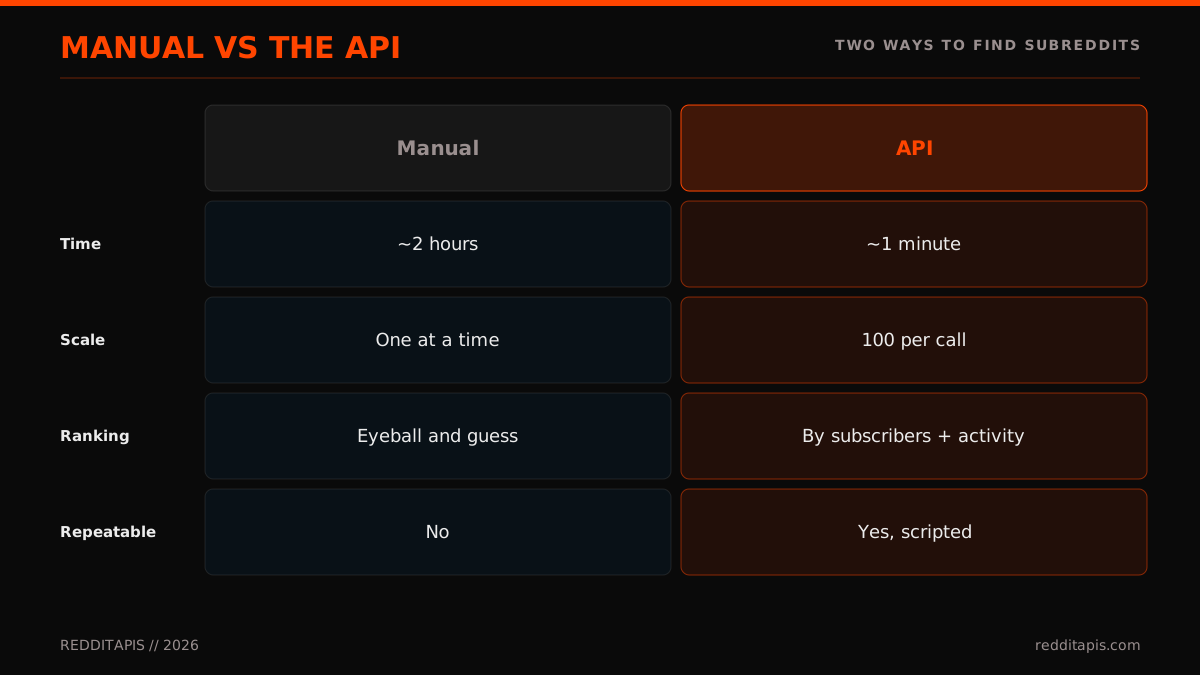 Manual versus the API, side by side
The grid above is the whole argument in one frame. Manual discovery wins on zero setup and is the right tool for one lookup. The API wins on time, scale, ranking, and repeatability, which are exactly the axes that matter once discovery is part of a product or a recurring workflow. UI tools like NicheProwler sit in between: they search by keyword and show subscriber counts, but you still click each result and you cannot pipe the output into code. For the developer or marketer building something on top of discovery, the API is the only path that fits.
A marketer-focused walkthrough of the same problem, finding the right subreddits before you build a posting plan, is worth watching for the framing:
Start building with Redditapis
Reads $0.002, votes $0.005, writes $0.012, DMs $0.025. $0.50 free credits.
Find Subreddits by Keyword with the API
The discovery call is one authenticated GET. You send a keyword to https://api.redditapis.com/api/reddit/search/communities with a limit of 100, attach a single Authorization: Bearer header, and you get back up to 100 matching communities, each with its subscriber count. That is the entire setup: no OAuth app registration, no Reddit developer-account review, no library beyond requests. Here is the call that turns a keyword into a ranked candidate list:
import os
import requests

API_KEY = os.environ["REDDITAPI_KEY"]
BASE = "https://api.redditapis.com"
HEADERS = {"Authorization": f"Bearer {API_KEY}"}

def find_subreddits(keyword, limit=100):
    resp = requests.get(
        f"{BASE}/api/reddit/search/communities",
        params={"q": keyword, "limit": limit},
        headers=HEADERS,
        timeout=60,
    )
    resp.raise_for_status()
    return resp.json()

data = find_subreddits("home automation")
communities = data["communities"]

# rank the candidates by subscriber count, biggest first
# (some communities return subscribers: null, so coerce to 0 before sorting)
communities.sort(key=lambda c: c.get("subscribers") or 0, reverse=True)

for c in communities[:15]:
    print(f"r/{c['name']:<24} {c.get('subscribers', 0):>9,} subs")
The response carries a communities array, and each element describes one subreddit: its name, title, public description, subscriber count, and over-18 flag. Up to 100 come back per call, which is enough to cover most single-keyword searches in one request. Sorting by subscriber count gives you a first-pass ranking, but read the next section before you trust that order, because subscriber count is the most misleading single number in subreddit discovery.
To search several interests at once, loop your keywords and dedupe the results by community name:
def discover_across(keywords, limit=100):
    seen = {}
    for kw in keywords:
        for c in find_subreddits(kw, limit)["communities"]:
            # keep the richest record if a community matches two keywords
            seen[c["name"]] = c
    return list(seen.values())

candidates = discover_across(["home automation", "smart home", "home assistant"])
print(f"{len(candidates)} unique communities across 3 keywords")
This is the step the manual method cannot match. Three keywords, three calls, one deduped candidate list, and you are done in the time it takes one request to round-trip. The same routine across thirty keywords is thirty calls, still seconds of wall-clock time, where the sidebar-chaining method would be an afternoon.
The three endpoints below are the entire toolkit. Discovery finds candidates, the top endpoint scores them, and the posts endpoint checks recency. Nothing else is required to build a complete discovery pipeline.
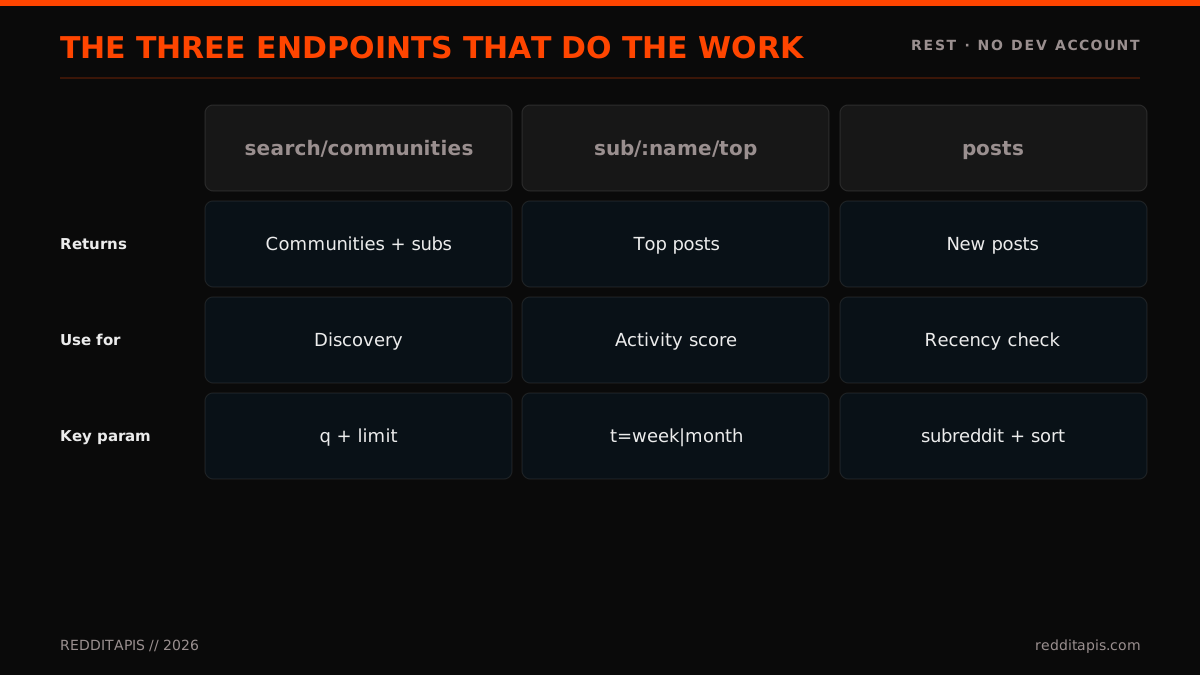 The three endpoints that do the work
Why subreddits are not interchangeable is the reason ranking matters at all. A builder marketing an iOS app made the point that different communities do different jobs and carry different sizes, so you cannot treat them as one bucket:

Yusuke
@yusukelp
If you are trying to market an iOS app on Reddit, stop treating every subreddit the same. Different subreddits do different jobs: 1. r/SideProject (681k) Best for: early visibility + first reactions 2. r/microSaaS (180k) Best for: product-near feedback and builder pain 3.
That is exactly why the discovery call returns subscriber counts inline and why the next step exists. Size is one signal; it is not the signal.
Rank Them by Real Activity
Subscriber count is the first number you see and the worst one to rank on alone. A community can have a million subscribers accumulated over a decade and post nothing this month, while a 40,000-member niche subreddit can be the liveliest, most on-topic place for your job. To rank by real activity, you pull two more signals per candidate: recent engagement and post recency. Recent engagement comes from GET /api/reddit/sub/<name>/top?t=week, which returns the week's top posts so you can see whether anything is actually getting upvotes. Recency comes from GET /api/reddit/posts?subreddit=<name>&sort=new, which shows when the community last posted at all.
Here is the activity check for a single candidate, combining both endpoints:
import os
import requests
from datetime import datetime, timezone

API_KEY = os.environ["REDDITAPI_KEY"]
BASE = "https://api.redditapis.com"
HEADERS = {"Authorization": f"Bearer {API_KEY}"}

def activity_signals(name):
    # recent engagement: this week's top posts
    top = requests.get(
        f"{BASE}/api/reddit/sub/{name}/top",
        params={"t": "week", "limit": 25},
        headers=HEADERS, timeout=60,
    ).json()["posts"]

    # recency: the newest post in the community
    new = requests.get(
        f"{BASE}/api/reddit/posts",
        params={"subreddit": name, "sort": "new", "limit": 1},
        headers=HEADERS, timeout=60,
    ).json()["posts"]

    top_score = max((p.get("upvotes", 0) for p in top), default=0)
    weekly_posts = len(top)
    newest_utc = new[0]["created_utc"] if new else 0
    days_since_post = (
        (datetime.now(timezone.utc).timestamp() - newest_utc) / 86400
        if newest_utc else 9999
    )
    return {
        "weekly_top_score": top_score,
        "weekly_posts": weekly_posts,
        "days_since_last_post": round(days_since_post, 1),
    }

print(activity_signals("homeautomation"))
The two numbers that matter most are weekly_top_score and days_since_last_post. A community whose best post this week scraped a dozen upvotes is not a place where your post will be seen, regardless of its subscriber count. A community whose newest post is three months old is functionally dead. Both endpoints return the data you need to make that call without ever loading the subreddit in a browser.
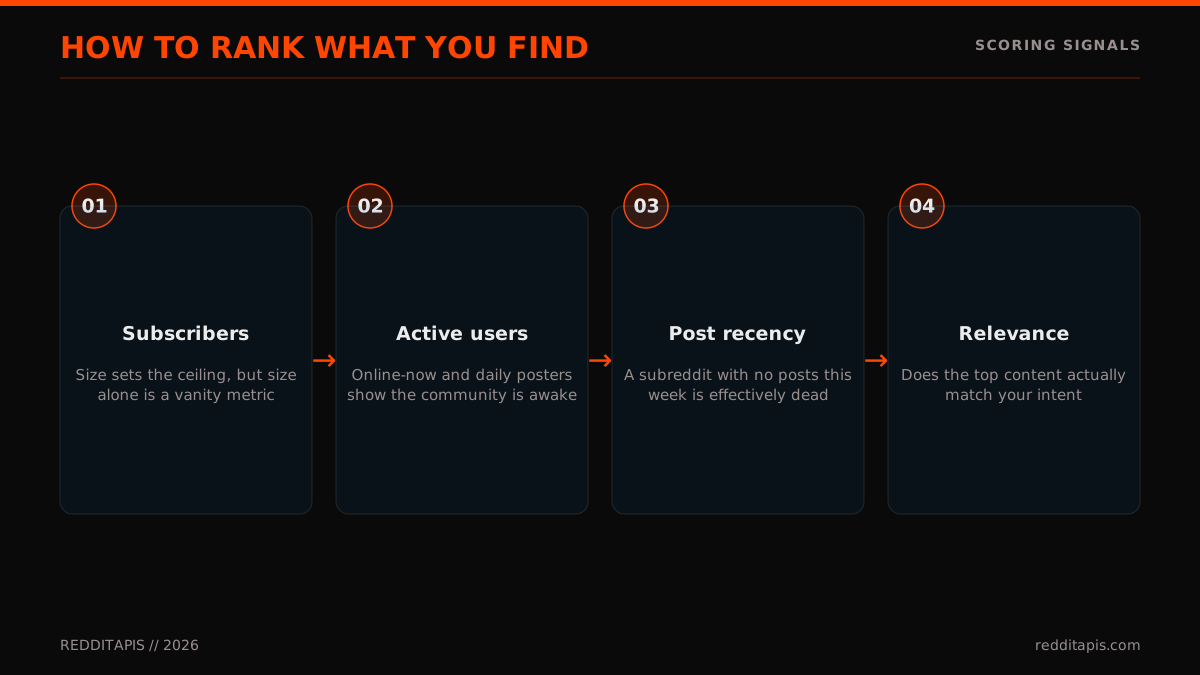 How to rank what you find
The four scoring signals are subscribers (reach), recent engagement (is anyone here), recency (is it still alive), and relevance (does it match your topic). Reach you get from discovery. Engagement and recency you get from the two activity endpoints. Relevance you judge from the community's description and the topics of its top posts. Weighting them is a judgment call: a lead-generation tool weights relevance and engagement highest, a brand-awareness play weights reach. The point is that all four are available programmatically, so the weighting is a parameter in your code rather than a gut feel while clicking.
This is where the manual two-hour search actually goes: not into finding communities, but into opening each candidate and eyeballing whether it is alive and on-topic. The API collapses that inspection into two calls per candidate.
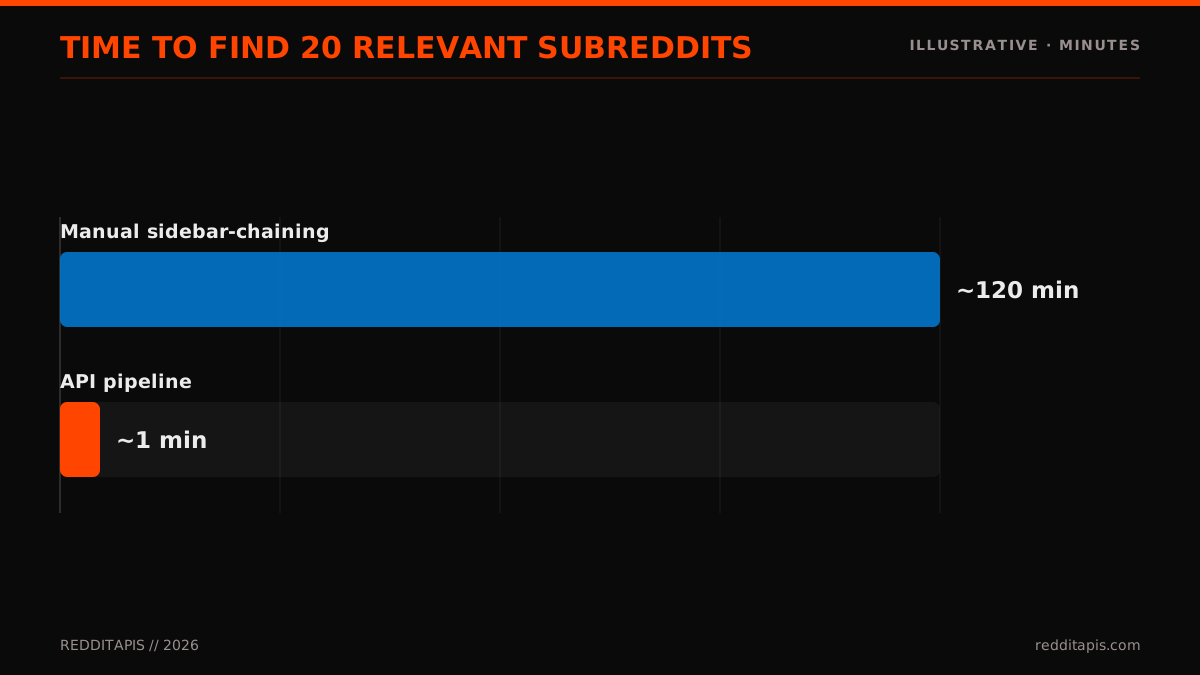 Where the two hours go
The figures above are illustrative, anchored to the publicly reported manual cost: a founder's account of two hours of sidebar-chaining to assemble a relevant list (IndieHackers). The roughly one-minute API figure is the wall-clock time for one discovery call plus two activity calls per candidate across a 20-community shortlist. Treat both as order-of-magnitude, not benchmarks: the exact numbers vary with network latency and how many candidates you score. The structural difference is what holds, the manual cost scales with the number of communities you inspect, while the API cost is a fixed handful of calls per candidate.
One more thing the activity check buys you that the subscriber number cannot: it catches the slow-decay communities. A subreddit that was the hub for a topic two years ago can still carry a huge subscriber count while its actual posting has migrated elsewhere, to a newer community, a Discord, or a different platform entirely. Subscriber count is a stock that only ever grows; people rarely leave a subreddit, they just stop visiting. Recent engagement is a flow, and flow is what tells you whether anyone is home right now. When weekly_top_score is low and days_since_last_post is creeping up on a community with a large subscriber base, you are looking at exactly that decay, and ranking on subscribers alone would have put it at the top of your list. Scoring on flow drops it where it belongs.
A practical refinement: cache the activity signals. Engagement and recency change slowly, on the order of days, so re-scoring a shortlist hourly is wasted spend. If you are running discovery as a recurring job, store the signals with a timestamp and only refresh a candidate's score when it is more than a day old. The discovery call itself is cheap enough to run fresh each time, but the per-candidate activity calls are where volume adds up, and a short cache window cuts that cost without meaningfully aging your rankings.
The Native reddit.com/search.json Path (and Its Limits)
Reddit exposes a public community search at https://www.reddit.com/search.json. Add type=sr to the query and it returns subreddits instead of posts, unauthenticated, with no developer account, at up to 60 requests per minute. It is the right tool for a quick lookup from your own machine, and it costs nothing in dollars. The catch today is not the rate limit; it is the IP filter. Reddit blocks a large share of cloud and datacenter IP ranges outright, so the same call that works from your laptop frequently returns 403 Forbidden from an AWS, GCP, or DigitalOcean box, no matter how correct your headers are.
Here is the native community search in Python:
import requests

URL = "https://www.reddit.com/search.json"
HEADERS = {"User-Agent": "subreddit-finder-tutorial/1.0 (by u/your_username)"}

params = {
    "q": "home automation",
    "type": "sr",       # sr = subreddit results, not posts
    "limit": 25,
}

resp = requests.get(URL, params=params, headers=HEADERS, timeout=20)
resp.raise_for_status()
data = resp.json()

for child in data["data"]["children"]:
    sub = child["data"]
    print(f"r/{sub['display_name']:<24} {sub.get('subscribers', 0):>9,} subs")
The native response is a standard Reddit listing object: a data.children array where each child wraps a subreddit under a {"kind": "t5", "data": {...}} envelope. You reach the subreddit fields at child["data"], where display_name and subscribers live. It works, and for a notebook on your own connection it is the fastest start.
Three things limit it in production. First, the rate ceiling: 60 requests per minute unauthenticated is fine for a handful of keywords and tight for a discovery feature serving many users. Second, the IP filter: a correct script on a server can return 403 while the identical script on your laptop succeeds, and no header fixes a filtered IP. Third, the nesting: every subreddit sits two levels deep under data.children[i].data, so you do more bracket-walking than on a flat managed response. The managed path trades the dollar cost of the call for a clean IP pool, a single bearer header, and a flatter communities array. A quick way to diagnose a 403 is to run the same script locally; if it works on your laptop but 403s on the server, you have an IP filter, not a code bug. For the broader access picture, see the Reddit API authentication and OAuth guide, the rate limits reference, and the official Reddit Data API wiki.
The coverage difference across discovery methods is worth seeing plainly. A single search bar query, an r/findareddit ask, and one API call do not surface the same number of communities for the same intent.
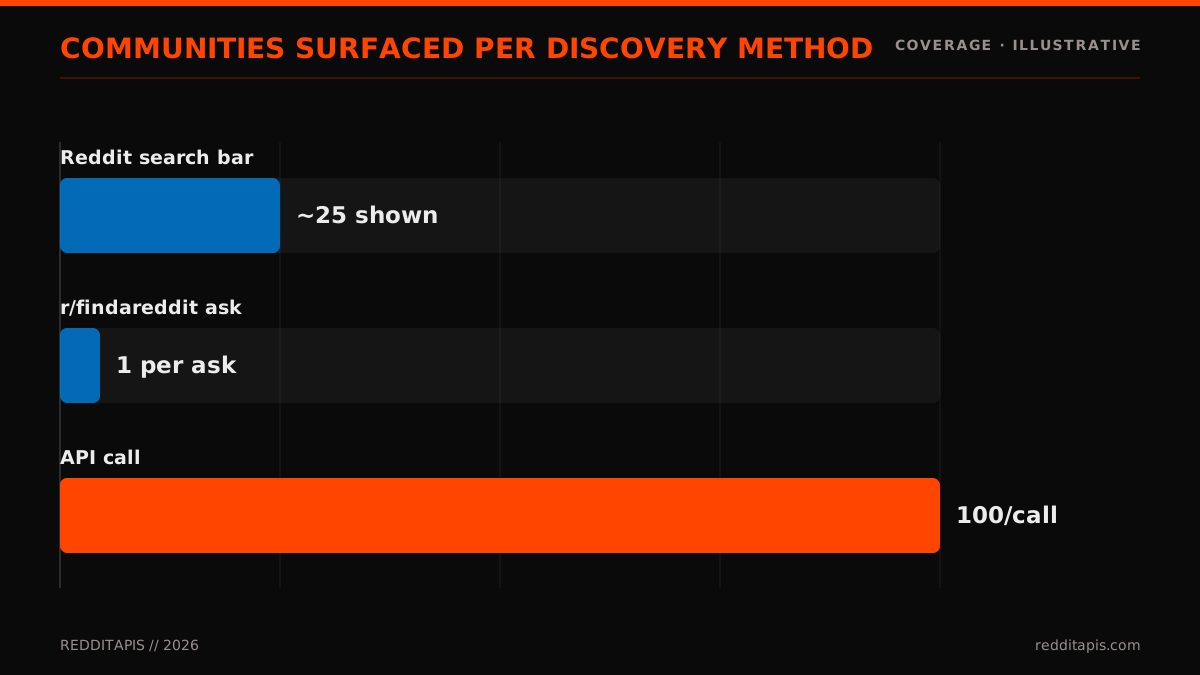 Coverage per discovery method
The chart is directional, not a benchmark: a search-bar query shows you a screen of results, an r/findareddit ask returns whatever humans happen to suggest, and one search/communities call returns up to 100 communities you can then rank. The structured, ranked, hundred-deep result is what makes the API path the base for a real pipeline rather than a one-off lookup.
Build a Subreddit Fit Scorecard
A fit scorecard turns the four signals into one yes-or-no decision per candidate. The idea is simple: define thresholds for each signal (a subscriber floor, a minimum weekly top score, a recency cutoff, and an on-topic check), then mark each community a good fit or a skip. This is where finding similar subreddits becomes mechanical: take a community that already fits, search its topic terms, and run every result through the same scorecard. Communities that clear the bar are your shortlist; the rest get dropped without you ever opening them.
Here are the four criteria, the source signal for each, and the cutoff that splits a good fit from a skip:
| Criterion | Source signal | Good fit | Skip |
|---|---|---|---|
| Subscribers | discovery subscribers count |
at or above your floor (e.g. 5,000) | below the floor, too small to matter |
| Activity | sub/<name>/top?t=week top score |
weekly top post clears your bar (e.g. 50+) | top post barely moves, nobody is reading |
| On-topic | community description + top-post titles |
term match, the community is about your topic | a namesake or off-purpose community |
| Rules | the community's own rules page (manual read) | self-promo or link posts allowed | self-promo banned, posting is pointless |
Here is a scorecard that combines discovery with the activity signals from earlier and labels each candidate:
def score_candidate(name, sub_count, signals, topic_terms, description):
    desc = (description or "").lower()
    on_topic = any(t.lower() in desc for t in topic_terms)
    checks = {
        "subscribers_ok": sub_count >= 5_000,
        "engaged": signals["weekly_top_score"] >= 50,
        "recent": signals["days_since_last_post"] <= 7,
        "on_topic": on_topic,
    }
    verdict = "GOOD FIT" if all(checks.values()) else "SKIP"
    return verdict, checks

# tie it to the discovery + activity calls from earlier sections
topic_terms = ["smart home", "automation", "home assistant"]
for c in discover_across(["home automation", "smart home"]):
    sig = activity_signals(c["name"])
    verdict, checks = score_candidate(
        c["name"], (c.get("subscribers") or 0), sig, topic_terms, c.get("description")
    )
    print(f"r/{c['name']:<24} {verdict:<9} {checks}")
Tune the thresholds to your job. A lead-generation tool might drop the subscriber floor to catch small, high-intent niches; a brand campaign might raise it. The structure stays the same: every candidate runs through the same four checks, and the verdict is reproducible rather than a judgment that drifts as you get tired of clicking.
The on-topic check in the code above is deliberately crude, a substring match against the community description, and you can make it as smart as your job needs. For a quick pass, the description match is enough to drop the obvious namesakes (a search for a tool called "Notion" surfaces both the productivity app community and unrelated communities that happen to use the word). For higher precision, score the top posts' titles against your topic terms too, since a community's description can be stale while its posts reveal what it actually talks about now. The point is that relevance is the one signal that benefits from your domain knowledge, so the scorecard leaves it as a hook you sharpen rather than a fixed rule.
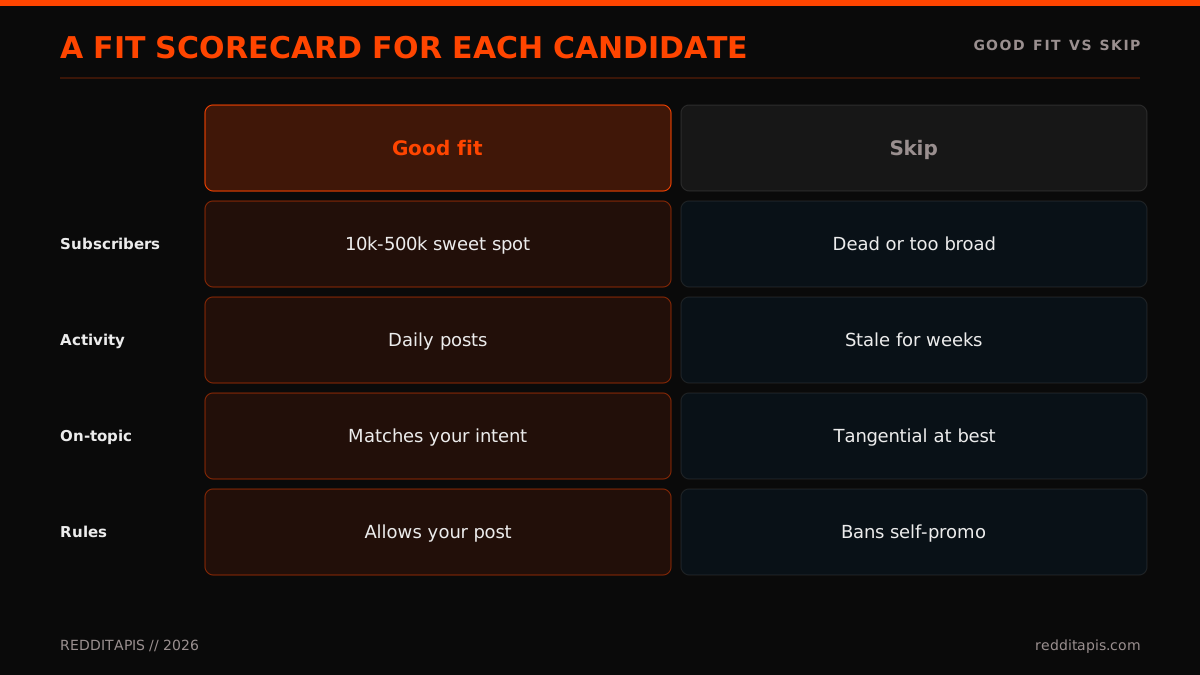 A fit scorecard for each candidate
The one signal the API does not score for you is rules. A community can clear every numeric bar and still ban self-promotion or link posts outright, which makes it a skip for a marketing job even though it is alive and on-topic. Read the community's rules before you act, every time. A contrarian but correct point from a builder is that finding the right subreddits is necessary, not sufficient; what you do once you are in them is the part that actually decides whether the effort pays off (@chikachiglobe). The scorecard gets you to a clean shortlist fast. It does not replace reading the room.
For finding similar subreddits by audience overlap rather than keywords, graph tools like anvaka's RedSim map communities by shared subscribers, which is a useful complement to the keyword approach when you want to discover adjacencies you would not have searched for.
The cheapest Reddit API. Try it free.
Reads from $0.002 per call. $0.50 free credits. No credit card required.
Common Subreddit-Discovery Mistakes
Most discovery pipelines fail in the same handful of ways, and every one of them comes from trusting a single signal instead of the scorecard. The recurring mistakes are ranking on subscriber count alone, skipping the recency check, ignoring community rules, treating namesakes as matches, and scoring every candidate instead of pre-filtering. Each is cheap to avoid once you know to look for it, and each one quietly wastes posts, calls, or both.
The five mistakes, what they cost, and the fix:
- Ranking on subscribers only puts a million-member dead community at the top of your list. The fix: score on
weekly_top_score, not subscriber stock. - Skipping the recency check means you target a subreddit that has been silent for months. The fix: gate on
days_since_last_postfrom the posts endpoint. - Ignoring community rules earns a removed post, a ban, or a reputation hit. The fix: read the rules page before you act, every time.
- Treating namesakes as matches pads the shortlist with off-topic communities. The fix: run the on-topic check against the description and top-post titles.
- Scoring every candidate burns 200 activity calls on a 100-result discovery. The fix: filter cheap on subscribers first, then score only the survivors.
The subscriber trap is the most common because it is the easiest signal to grab. Subscriber count is a stock that only grows; people rarely leave a community, they just stop visiting, so a large count can mask a dead room. Recent engagement is a flow, and flow is the only signal that tells you whether anyone is home right now. The lead-generation use case and the research use case both fall into this trap differently: a lead-gen pipeline over-weights reach and ends up posting into silence, while a research scrape over-weights raw size and pulls stale data from communities that moved on. The fix in both cases is the same scorecard, with the weights tuned to the job.
The last mistake, scoring everything, is the one that turns a working pipeline into an expensive one. Discovery is one call per keyword and returns a hundred candidates, but each activity check is two calls, so scoring a full result set is 200 calls per keyword. Filter on the cheap signal first (subscriber floor, obvious namesakes, banned or quarantined results), then run the activity check only on the 15 to 25 candidates that survive. Volume stays proportional to the communities you actually care about.
From Shortlist to Action
A ranked, scored shortlist is the input to whatever you are actually building. The handoff is the same regardless of the job: you discovered candidates, validated their rules, and now you either monitor those communities, post into them, or track them over time. Monitoring means pulling new posts on a schedule with GET /api/reddit/posts?subreddit=<name>&sort=new and alerting on matches. Posting means respecting the rules you just read and engaging like a member, not a billboard. Tracking means re-scoring the shortlist periodically, because communities grow, die, and change rules, and a list that was right three months ago drifts.
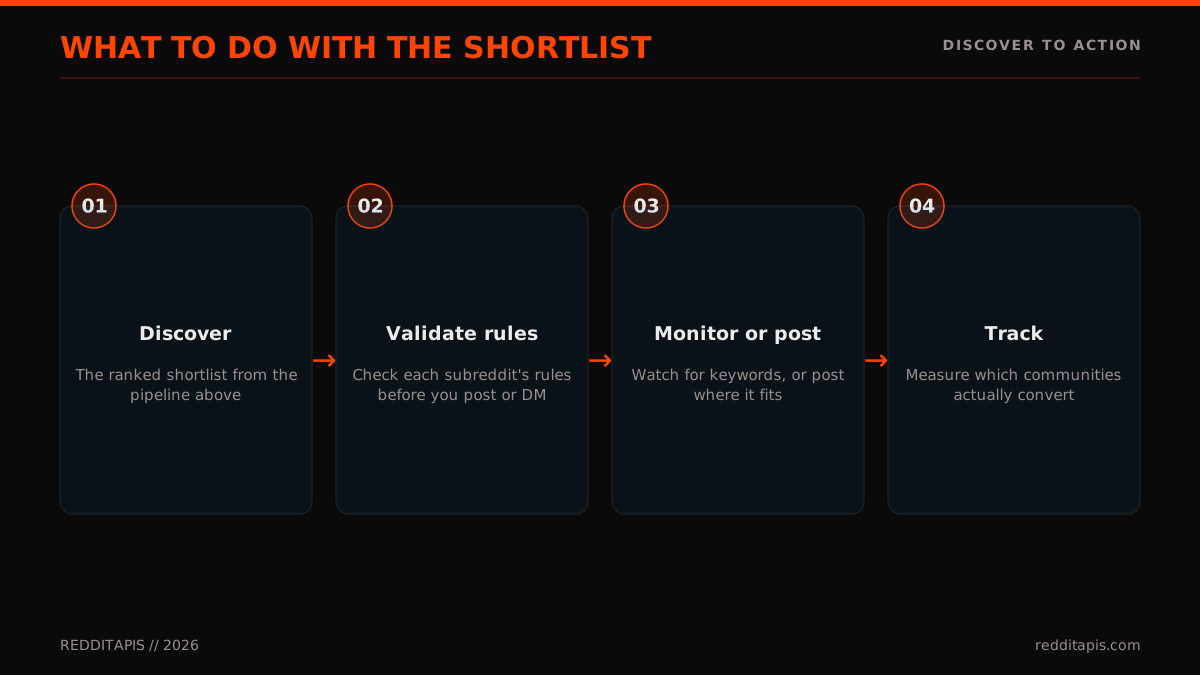 What to do with the shortlist
Why this matters comes down to trust. A builder framed Reddit as a trust game where posting into the wrong community fails outright (@buildwithdivv), and that is precisely why discovery and scoring are not busywork. The cost of posting into a dead or off-topic community is not just a wasted post; it is a removed post, a ban, or a reputation hit. The scorecard exists to keep you out of communities where the effort cannot land.
The discovery shortlist also feeds the search and read layer. Once you know which 20 communities matter, you query posts and comments inside them rather than across all of Reddit, which is cheaper and far higher signal. The Reddit search API tutorial covers keyword search inside a scoped subreddit, and the no-PRAW Python tutorial covers the surrounding read calls. If you are deciding between calling Reddit directly and a managed layer, the REST vs PRAW comparison and the PRAW vs managed REST breakdown lay out the tradeoffs, and the pricing page has the per-call detail.
Choosing Your Path
Match the tool to the job. For a single subreddit lookup, Reddit's search bar or a quick reddit.com/search.json?type=sr call from your laptop is the right answer; it is free and takes seconds. For finding a handful of communities once, the native path or even the manual sidebar chain is fine. The moment discovery becomes a recurring task, a multi-keyword sweep, or a feature inside a tool, the math flips: the rate ceiling, the cloud-IP 403s, and the per-candidate inspection time turn the free path into infrastructure you maintain. That is when a managed search/communities call, with its clean IP pool, single bearer header, and flat ranked response, becomes the path that holds up.
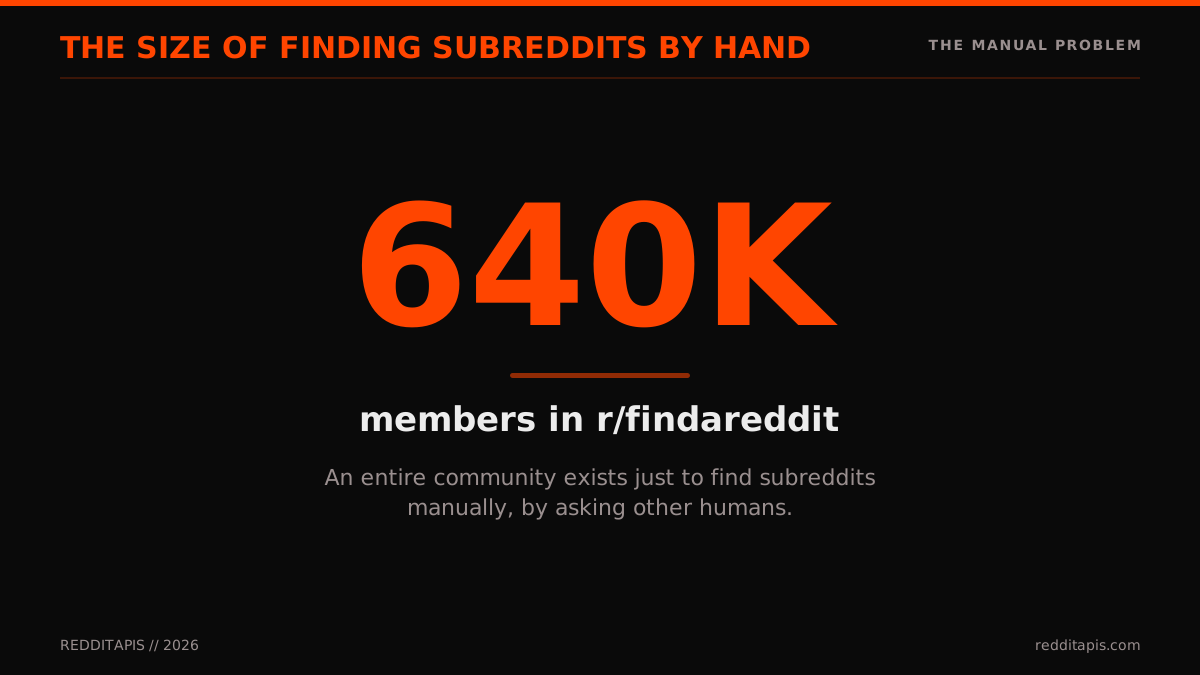 The size of the manual-discovery problem
The 640,000-member r/findareddit community is the clearest signal that manual discovery is a real, persistent cost (r/findareddit). People keep asking humans to find communities for them because there has been no fast, structured, self-serve way to do it. The API path is that way for anyone building on top of discovery. The data is the same communities Reddit returns; what changes is that you get them ranked, scored, and in code instead of in a browser tab. See the REST vs PRAW comparison and the broader Reddit data API guide for where this sits in the larger toolkit, the GummySearch alternatives and Pushshift alternatives breakdowns for adjacent tools, and the Apify pricing comparison plus the scraping benchmarks for the cost-and-throughput picture.
Verdict
For a one-off lookup, manual discovery wins on simplicity: type a keyword, open the Communities tab, done. For anything repeatable, the programmatic path is the only one that fits, because it returns communities ranked and structured in a single call instead of an afternoon of clicking. The pipeline is small and the same every time: discover with GET /api/reddit/search/communities?q=<keyword>&limit=100 for up to 100 candidates, score each with GET /api/reddit/sub/<name>/top?t=week and GET /api/reddit/posts?subreddit=<name>&sort=new, and run the survivors through a fit scorecard. The native reddit.com/search.json?type=sr route does the discovery half for free, until the rate ceiling and cloud-IP 403s push the job onto a managed pool. Start with the free path, measure how often you actually need to run discovery, and move to a managed endpoint when the manual and native limits start to bite. The authentication guide, the how-to-get-a-key walkthrough, and adjacent tutorials on voting, DMs, and usage-based data licensing round out the rest of the toolkit. Grab a free key and run the discovery call.
Where these numbers come from.
Each row is a figure in this post and the artefact it was read from. Reddit's access rules and the third-party archives around them keep moving, so check the date on a source before you build against it.
- The Verge, Reddit API terms change (April 2023)
- The 2023 repricing reporting cited for why free programmatic discovery moved behind a rate ceiling.
- Reddit API documentation
- Reddit's own search and listing reference behind the native search.json discovery path.
- Reddit Data API Terms
- The commercial terms that gate high-volume programmatic reads referenced in this guide.
- Reddit Data API Wiki
- Reddit's access documentation for the official data path this guide compares against.
Frequently asked questions.
If you know roughly what the community is called, the fastest path is a keyword search. On Reddit's site, type the term into the search bar and open the Communities tab. Programmatically, send a GET to https://api.redditapis.com/api/reddit/search/communities?q=<keyword>&limit=100 and you get back up to 100 matching communities with their subscriber counts in one call, then filter the array for the exact name. The native equivalent is https://www.reddit.com/search.json?q=<keyword>&type=sr, which works from a residential connection but gets 403-blocked from many cloud IPs. See the keyword discovery section or grab a free key.
Run a keyword search for each interest and collect the results. By hand, that means typing terms into the search bar, opening the Communities tab, and chaining through the related-community links in each sidebar, which is the manual method beginners ask about constantly in r/NewToReddit. Programmatically, loop your interest keywords through GET /api/reddit/search/communities?q=<keyword>&limit=100, dedupe the returned communities, and you have a candidate list in seconds rather than an afternoon of clicking. The manual methods section walks through both paths side by side.
Similarity comes from two signals: shared keywords and shared audience. The simplest programmatic approach is to take a subreddit you already know fits, search its topic terms through GET /api/reddit/search/communities?q=<topic>&limit=100, and treat the other communities that surface as candidates. Graph tools like anvaka's RedSim map communities by overlapping subscribers, which is useful for browsing. For a repeatable pipeline you want the API path so you can score and rank the matches instead of eyeballing a graph. See find similar subreddits below.
Yes. The discovery endpoint is GET https://api.redditapis.com/api/reddit/search/communities?q=<keyword>&limit=100, which returns up to 100 communities per call along with each one's subscriber count, sent through a clean IP pool with one Authorization: Bearer header. The native unauthenticated equivalent is https://www.reddit.com/search.json?q=<keyword>&type=sr, which works but is rate-limited and frequently 403-blocked from datacenter IPs in 2026. Both forward the same query to Reddit's community index. The API section has the copy-paste code.
Search the place name as your keyword. Most cities, regions, and countries have a community named after them, so GET /api/reddit/search/communities?q=<city or region>&limit=100 surfaces the local subreddit plus neighborhood and topic variants in one call. Then rank the matches by subscriber count to find the active hub rather than a dormant duplicate. The native path is https://www.reddit.com/search.json?q=<place>&type=sr. After you have the candidate, the activity ranking section shows how to confirm the community is actually live before you rely on it.
It depends on whether you are finding one subreddit by hand or building a discovery feature. For a one-off lookup, Reddit's own search bar and the r/findareddit community (about 640,000 members who suggest communities on request) work fine. For anything repeatable, a keyword search API is the better tool because it returns a ranked, structured list you can score and feed into code. UI finders like NicheProwler confirm the demand but still make you click. The honest answer is to match the tool to the job: manual for one, API for many. The comparison grid lays out the tradeoffs.
Subscriber count alone is misleading because a community can have a million members and almost no posting. To rank by real activity, pull each candidate's recent top posts with GET /api/reddit/sub/<name>/top?t=week&limit=25 and check the post recency with GET /api/reddit/posts?subreddit=<name>&sort=new. A community whose top weekly post has a handful of upvotes, or whose newest post is months old, is effectively dead no matter its subscriber number. Combine subscribers, recent engagement, and recency into one score. The activity ranking section has the scoring code.
Two ways. The native endpoint https://www.reddit.com/search.json?q=<keyword>&type=sr returns community matches unauthenticated at up to 60 requests per minute, with no developer account, as long as you send a real User-Agent and call from an IP Reddit has not filtered. The catch in 2026 is that filter: calls from cloud or datacenter hosts frequently return 403 regardless of headers. A managed REST API like https://api.redditapis.com/api/reddit/search/communities needs only a single bearer key, no OAuth app registration and no Reddit developer-account review, and routes through a clean pool. The native path section covers both.
Keep reading.
Continue exploring related pages.
Reddit API documentation
The complete 2026 reference: auth, all 59 endpoints, and code.
Get a Reddit API key
Instant bearer token, no waitlist and no enterprise contract.
Reddit Responsible Builder Policy
Why Reddit denies API applications, and the managed REST bypass.
Reddit API use cases
14 use cases from AI training to brand monitoring and DMs.
Reddit Search API
Search posts, comments, users, and communities over one REST endpoint.
Reddit MCP server
Wrap the REST API as MCP tools for Claude, Cursor, and any MCP client.
Reddit API for AI agents
Live Reddit context for tool calls, MCP servers, and RAG pipelines.
Redditapis pricing
Endpoint-level costs and quick monthly totals - reads from $0.002 / call.
Reddit API cost calculator
Estimate monthly spend using your request volume.
Reddit API guides and tutorials
Tutorials, walkthroughs, and API deep-dives for developers.
Reddit API alternatives
Evaluate alternatives by cost model, limits, and integration fit.
Cheap Reddit API
The cheapest way to get Reddit data: $0.002 per call, no contract, no minimum.
Official Reddit API vs Redditapis
Access, setup, rate limits, and pricing, side by side.
PRAW alternative
A hosted Reddit REST API for any language, no app registration or OAuth.
Reddapi alternative
A maintained Reddit REST API with published pricing and write endpoints.
Reddit comment scraper alternative
The raw comment API: search and filter comments, historical and live, clean JSON.
Reddit scraper API
Hosted scraper API vs building your own: managed proxies, clean JSON.
RapidAPI Reddit alternative
A direct, maintained Reddit API with published pricing and write endpoints.
Bright Data Reddit alternative
A purpose-built Reddit API vs a general scraping platform: structured JSON, plus writes.
ScraperAPI Reddit alternative
A Reddit-native API vs a generic HTML fetcher: auth and pagination handled, typed JSON.
TikHub alternative
TikHub's Reddit surface is read-only; get comment, vote, and DM endpoints too.
EnsembleData alternative
No $100/month floor: pay per call from $0.002, plus write, vote, and DM endpoints.
Scrape Creators alternative
7 read-only Reddit endpoints vs a dedicated API with real write, vote, and DM paths.
FetchLayer alternative
Posts, comments, and search only; add vote, comment, and DM over the same REST auth.
PullPush alternative
PullPush is free but volunteer-run and goes offline for reindexing; a maintained REST API that stays up.
Reddit monitoring API
Build your own keyword and brand-mention monitor: search, comment search, and subreddit streams over REST.
F5Bot vs Redditapis
F5Bot's Slack and Discord delivery needs its $49.99/mo Gold tier; Redditapis includes it from $19/mo.
Syften vs Redditapis
Syften caps you at 100 to 500 results a day; Redditapis allows 10,000 a day per monitor at the entry plan.
Octolens vs Redditapis
Octolens meters by mention with overage fees; Redditapis is flat-priced by subreddit slot from $19/mo.
Affiliate program
Earn 20% lifetime commissions - capped at $5,000/yr.
Reddit Vote API tutorial
Upvote and downvote a post programmatically via the REST API.
Reddit Data API: REST, no PRAW
REST endpoints for Reddit data with no PRAW and no OAuth dance.
Reddit scraping benchmarks
Real throughput, error rates, and cost benchmarks for Reddit scraping.
Reddit API answers
Direct answers on cost, access, rate limits, endpoints, and auth.
How much the Reddit API costs
Per-call pricing from $0.002 a read, with $0.50 in free credits.
Reddit API in Python
One requests call with a bearer token, no PRAW and no OAuth flow.
Reddit shadowban checker
Check if a Reddit account is shadowbanned in seconds, free and no login.
Subreddit stats checker
See any subreddit's live subscriber count, active users, and age, free and no login.
Similar reads.
More guides on the Reddit API, scraping, pricing, and MCP servers.

Reddit Bulk Fetch by ID: Hydrate Posts in One API Call
Fetch many Reddit posts in one call with the by_id API. Hydrate t3_ fullnames from a stream, backfill archives, and dedup at scale, with copy-paste Python for 2026.

Reddit Subreddit Rules API: Pull Posting Rules as JSON
Pull any subreddit's posting rules as structured JSON with the rules API. Build pre-submit validation, compliance checks, and automod-aware bots, with copy-paste Python for 2026.

Reddit User API: Fetch Profile, Karma, and History
Fetch a Reddit user's profile, karma, and full comment plus submission history from one API. Real request and response JSON, copy-paste Python, and pagination for 2026.
How to Get Reddit Comments via the API: Fetch the Full Comment Tree (2026)
Fetch Reddit comments by permalink, walk the nested tree, expand the more / morechildren nodes, and flatten replies in Python. Copy-paste code and first-party numbers, 2026.
Reddit API Pagination: The after Cursor and Getting Past the 1000-Item Ceiling (2026)
How Reddit API pagination works: the after cursor, the 100-per-page cap, and getting past the ~1000-item ceiling. Copy-paste Python and first-party numbers, 2026.

Reddit Search API Tutorial: Query Subreddits by Keyword in Python (2026)
Search Reddit posts by keyword in Python in 2026. Native /search.json, PRAW subreddit.search(), and a managed REST endpoint compared, with copy-paste code, parameters, and the 1,000-result cap explained.

Reddit API in Python: The Complete No-PRAW Tutorial (2026)
Use the Reddit API in Python without PRAW in 2026. Plain HTTP with requests or httpx, one bearer token. Code examples for posts, comments, search, votes, and DMs from $0.002 per call.
How to Detect Trending Topics on Reddit With an API
Detect trending topics on Reddit with an API: snapshot hot and top listings, compute score and comment velocity, and surface rising posts, subreddits, and topics.