
Reddit's Usage-Based AI Data Licensing in 2026: What Developers Pulling Reddit Data Need to Know
Reddit is moving its AI data licensing from flat annual fees toward usage and dynamic pricing in 2026. Here is what pay-per-crawl, pay-per-inference, RSL, and the robots.txt License directive mean for developers who pull Reddit data for agents, RAG, and analytics.

Reddit's AI data licensing is shifting from flat annual fees to usage-based and dynamic pricing in 2026. Reddit's early deals with Google and OpenAI, reported at approximately $60 million and $70 million per year respectively, were flat-fee arrangements. Public reporting through 2026 describes Reddit pushing toward compensation that scales with how often the data is crawled and how central it is to generated answers. The RSL standard, launched September 2025 with Reddit as a backer, makes this machine-readable via a License directive in robots.txt and a license.xml file with pay-per-crawl and pay-per-inference royalty terms.
TL;DR: Reddit's first AI data deals were flat annual fees, reported at roughly 60 million dollars a year with Google and roughly 70 million with OpenAI. Through 2026, public reporting describes Reddit pushing toward usage and dynamic pricing, where compensation scales with how often the data is crawled and how central it is to a generated answer. The open RSL standard makes this machine-readable: a License directive in robots.txt points crawlers to a license.xml file with usage categories and royalty terms like pay-per-crawl and pay-per-inference. For developers the takeaway is concrete: plan your Reddit data pipeline for metered, per-use economics, read the license before you crawl, and pick an access route that matches your scale. redditapis.com is an independent third-party not affiliated with Reddit Inc.
For two years the story of Reddit and artificial intelligence was simple to summarize: large AI labs paid Reddit a flat fee for access to its archive, and Reddit booked the revenue as a high-margin side business. That summary is now out of date. The pricing model underneath those deals is changing, an open standard is making the terms machine-readable, and the change reaches every developer who pulls Reddit data, not just the handful of labs that signed the original agreements.
This guide explains what is actually shifting, in plain terms, for the people who build on Reddit data. It covers the move from flat fees to usage and dynamic pricing, what the RSL standard adds and how a crawler reads it, what pay-per-crawl and pay-per-inference mean at the level of a billing line, and how to choose a compliant access route for an agent, a retrieval pipeline, or an analytics job. It is a developer explainer, not legal advice, and redditapis.com is an independent third-party not affiliated with Reddit Inc.
Why does this matter now rather than a year ago? Because the value of the underlying data became impossible to ignore, and the market reacted to it in public. When Reddit's leadership described the platform as one of the most cited sources across large language models, the framing spread fast.

Za
@ZaStocks
$RDDT CEO dropped a bomb on an AMA yesterday that the market might be waking up to. Reddit’s data is invaluable for AI labs, the market hasn’t caught on yet. “Foundational models benefit from Reddit in pre training, post training, grounding, and search because our authentic
That framing is the backdrop for the licensing change. When a data source is described as the most cited input across answer engines, the people who own it stop thinking about a one-time sale and start thinking about a meter. The rest of this post is what that meter looks like from a developer's seat.
From Flat Fee to Usage to Dynamic in 2026
Reddit AI data licensing is moving through three pricing eras. The flat-fee era, where a lab paid one annual sum for bulk access, undersold the data as AI usage grew. The usage-based era meters per crawl, per call, or per record. The dynamic era, which Reddit's public commentary points toward, scales price with how central the content is to the generated AI output, rewarding sources that contribute most to answers.
The three pricing eras, at a glance, before the detail:
- Flat fee: one annual sum for bulk access, signed once and forecast easily.
- Usage-based: a meter that runs per crawl, per call, or per record.
- Dynamic: a price that scales with how central the content is to the AI output.
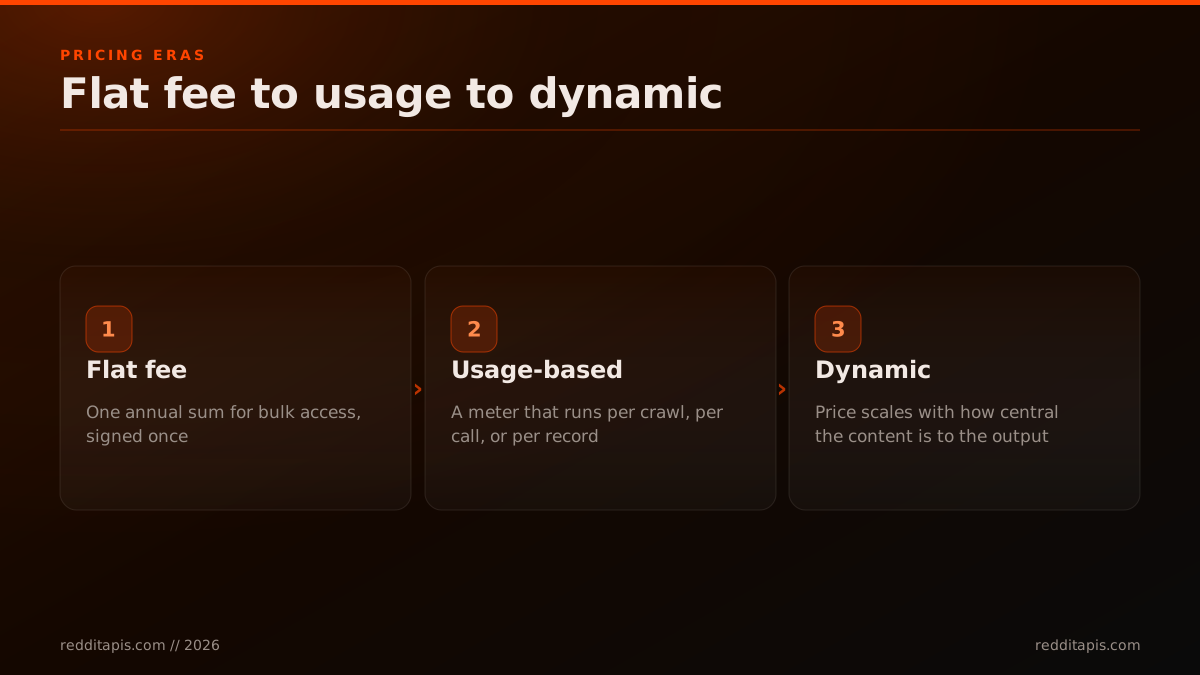
The cleanest way to understand the shift is as three eras, each pricing a different thing. The first era was the flat fee. A lab paid an agreed annual sum and got bulk access for the year. Simple to sign, simple to forecast, and, in hindsight, a structure that undersold the data as the AI market exploded.
The second era is usage-based. Instead of one number for the year, the publisher charges by volume: per crawl, per call, or per record. The meter runs with consumption. This is the model most developers already recognize from cloud infrastructure, and it is the one that makes small and mid-size access economically possible, because you are not buying a year of bulk rights you cannot use.
The third era, the one Reddit's public commentary points toward, is dynamic pricing. Here the price is not just a function of volume but of value: how integral the content is to the AI output that gets generated. If a model leans heavily on a source to produce an answer, that source is worth more per use. Dynamic pricing is harder to measure and harder to predict, but it aligns payment with the thing AI companies actually extract, which is useful answers.
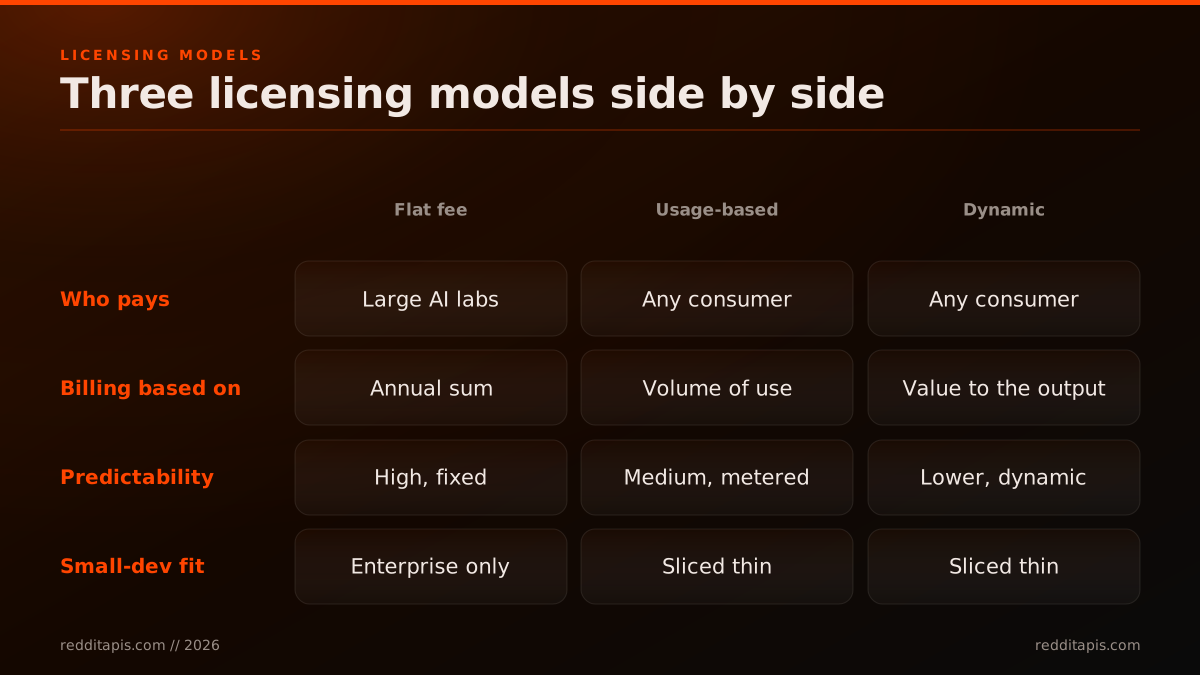
Reading down that comparison, the pattern that matters for a builder is in the bottom row. Flat-fee deals were never available to a solo developer or a small team; they were enterprise agreements with enterprise minimums. Usage and dynamic models, by contrast, can be sliced thin enough that a single project can pay for exactly what it consumes. The shift is not only about Reddit charging more at the top. It is also about access becoming purchasable in smaller units further down.
Public market commentary has been blunt about why the original deals are being reopened. The starting fees were fixed and, in retrospect, low relative to how the data is now used.

Tech Equity Engineer
@TechEquityEng
One of the biggest upcoming catalysts for $RDDT isn’t being discussed enough. The Reddit vs. Anthropic lawsuit isn’t just about one AI company scraping Reddit data. It’s a battle over who gets paid for the human-generated content that powers modern AI models. If Reddit wins or… Show more

The renegotiation pressure runs in one direction: away from a single check and toward a stream that grows with usage. For developers, that direction sets the planning assumption for the next several years. Build your cost model around per-use economics, because that is where the whole market is heading, Reddit included.
What the Reported Numbers Actually Say
The reported figures for Reddit's AI data deals, from public sources rather than audited disclosures, show a Google arrangement at roughly $60 million per year and an OpenAI arrangement at roughly $70 million per year, totaling approximately $203 million disclosed across AI partners. These were flat-fee starting points. Through 2026, reporting describes Reddit working to convert those flat structures into usage-based arrangements that grow with consumption.
The reported flat-fee figures, all from public reporting rather than line-item disclosures:
- Google (2024): a content-licensing arrangement reported at roughly 60 million dollars a year.
- OpenAI (2024): a separate arrangement reported at roughly 70 million a year.
- Total disclosed: licensing agreements worth on the order of 203 million dollars across AI partners.
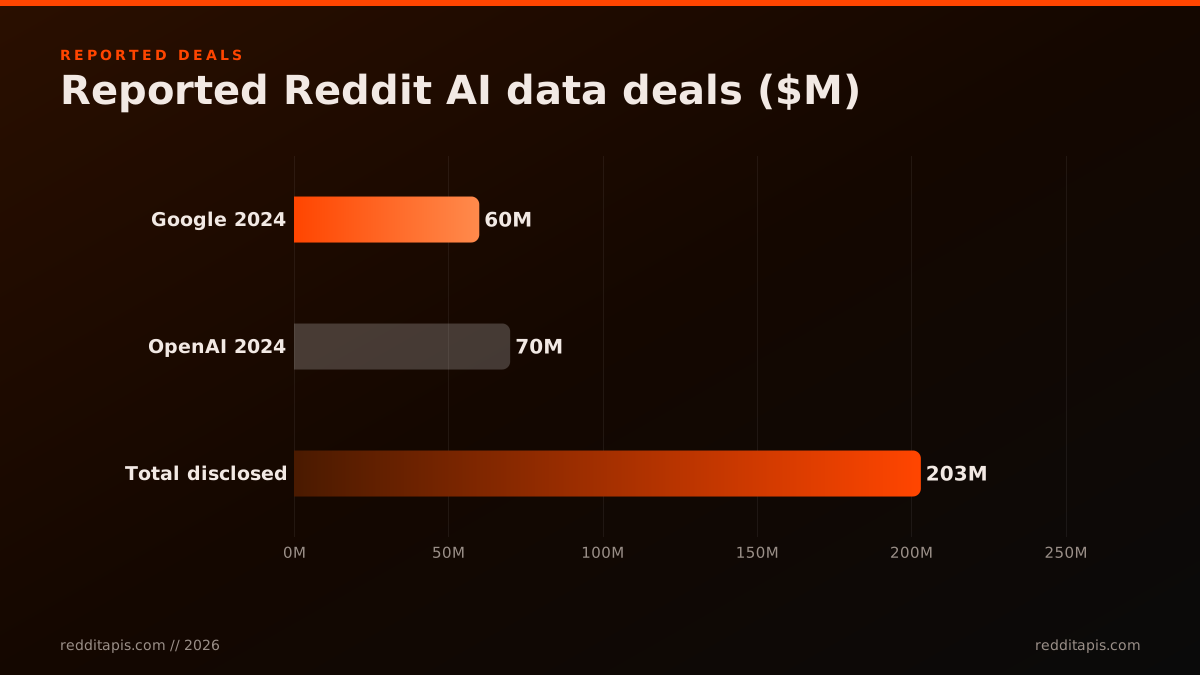
It helps to anchor the discussion in the figures that have actually been reported, while being clear that these are public-reporting numbers, not audited disclosures broken out line by line. Reddit's content-licensing arrangement with Google was widely reported at around 60 million dollars a year, struck in early 2024. A separate arrangement with OpenAI was reported at roughly 70 million a year. In aggregate, Reddit disclosed licensing agreements worth on the order of 203 million dollars across its AI partners.
Those are flat-fee starting points. The reporting through 2026 describes Reddit working to convert that structure into something that scales, and treating future arrangements as deeper product partnerships rather than simple data-for-dollars sales. The exact economics of any renegotiated deal are not public, and you should treat any specific future number you see as speculation until a company confirms it.
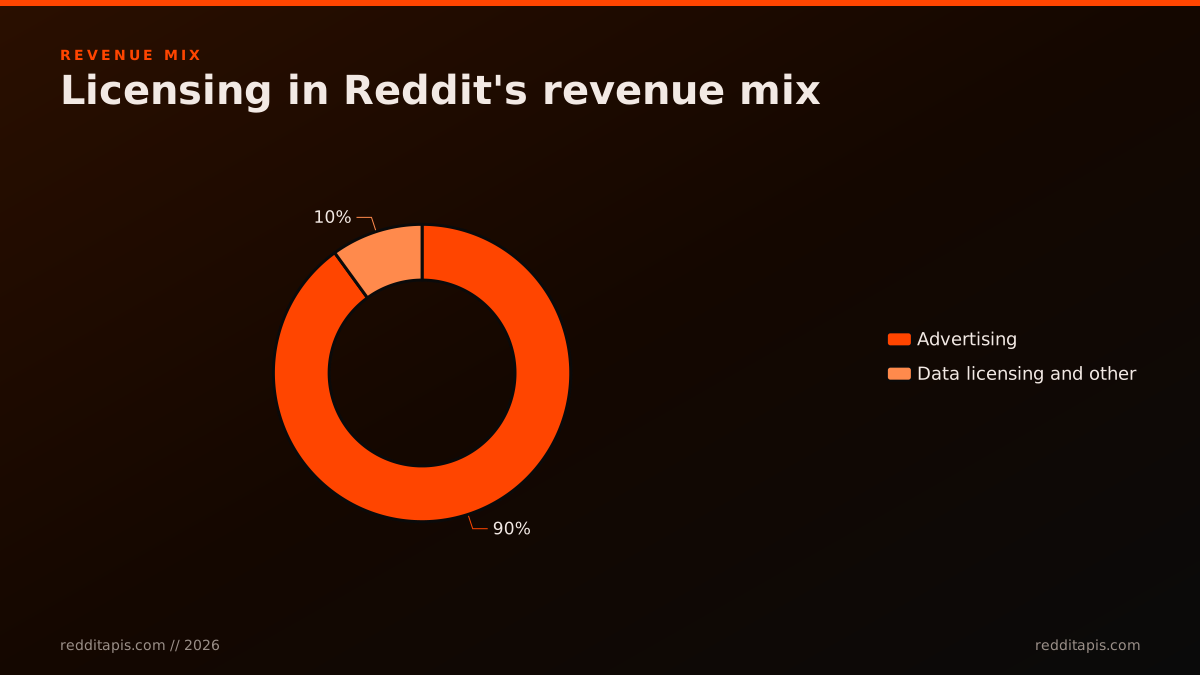
The proportion is worth keeping in mind because it explains the urgency. Licensing is a small slice of total revenue today, on the order of ten percent by public commentary, with advertising still the core. But it is a slice with very high margin and a clear growth path, which is exactly the kind of line a company works hard to expand. The pricing-model change is how that expansion happens: a flat fee cannot grow without a renegotiation, while a meter grows on its own as AI usage climbs.
None of this is unique to Reddit. The same move from flat to usage to dynamic is playing out across content platforms as AI demand reshapes how data gets sold. Reddit is simply one of the most visible cases because its data is so frequently cited in AI outputs.
RSL: The Machine-Readable Layer
A pricing model is only useful at scale if machines can read it without a human in the loop for every request. That is the problem the RSL standard sets out to solve. RSL, short for Really Simple Licensing, launched in September 2025 as an open standard for expressing content licensing terms in a form an AI crawler can parse automatically. Reddit was among the launch backers, alongside Yahoo and Medium, and later reporting added participants such as BuzzFeed, USA Today, and Vox Media.
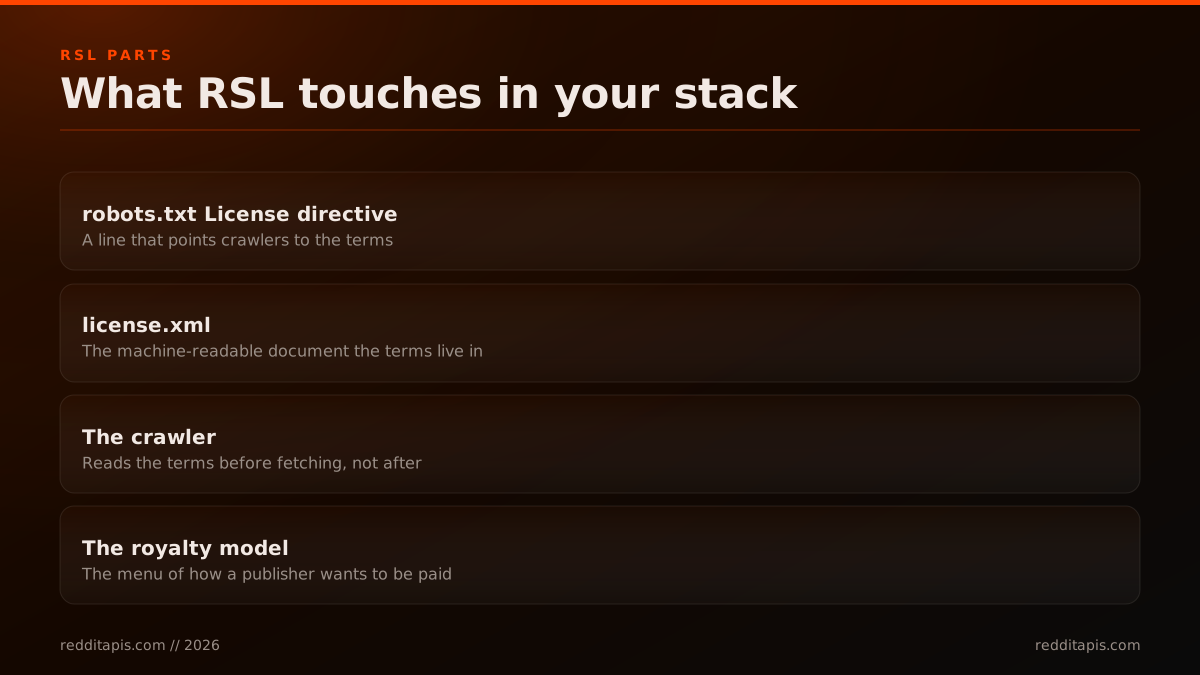
RSL has four moving parts worth holding in your head as a developer. The first is the robots.txt License directive, a line that tells crawlers where to find the licensing terms. The second is the license.xml file, the machine-readable document those terms live in. The third is the crawler itself, which is expected to read the terms before fetching rather than after. The fourth is the royalty model, the menu of how a publisher wants to be paid. Get those four parts straight and the rest of RSL is detail.
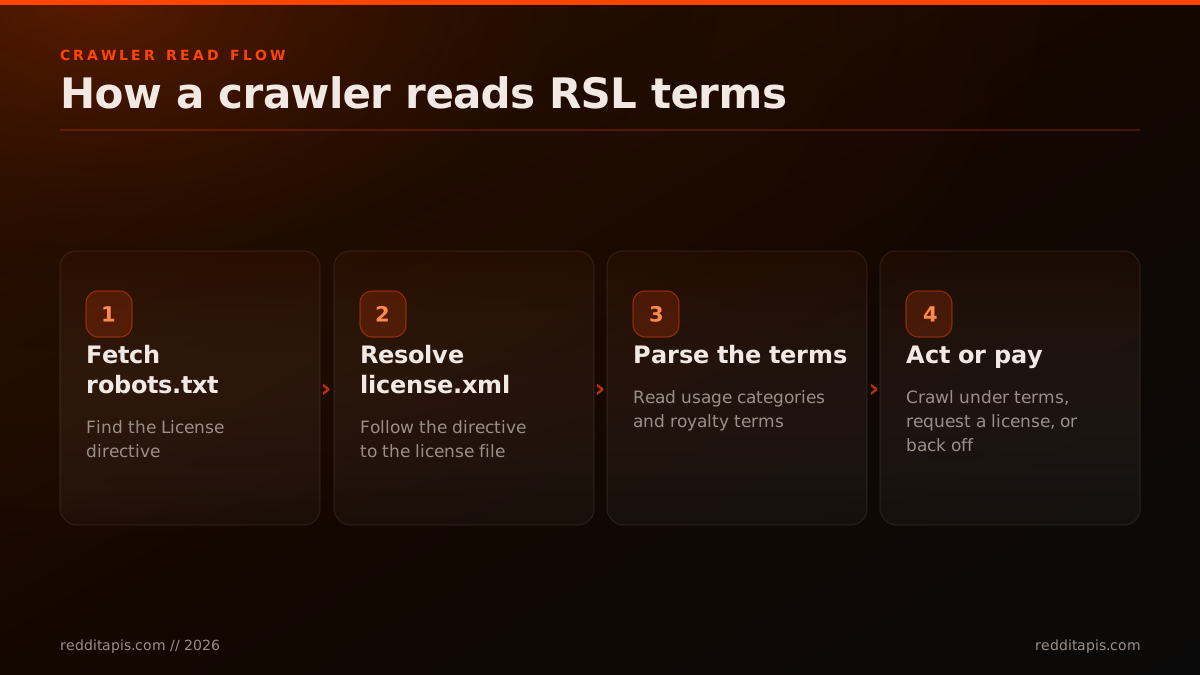
The read flow is the heart of it. A compliant crawler fetches robots.txt and finds the License directive. It follows the directive to the license.xml file. It parses the usage categories and the royalty terms inside that file. Then it acts: it crawls under the stated terms, it requests a license, or it backs off. The point of the standard is to replace a guess with a contract that software can evaluate, so that the decision to crawl or not is made against explicit terms rather than against an empty robots.txt and a hope.
The Usage Categories
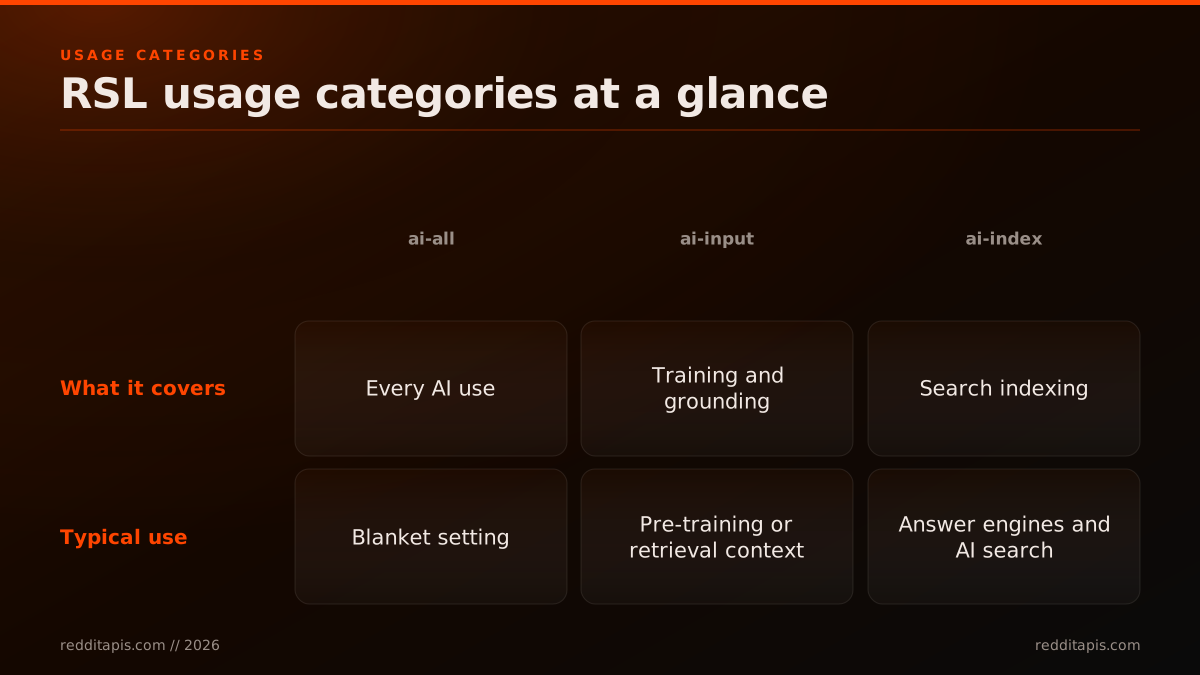
RSL does not treat all AI use as one thing, which is the feature that matters most for developers. It defines usage categories that let a publisher allow one kind of use while pricing or restricting another. The category ai-all covers every AI use, a blanket setting. The category ai-input covers training and grounding, the data that goes into a model during pre-training or gets pulled in as context for retrieval. The category ai-index covers search indexing, the use that powers answer engines and AI search results.
That granularity is the reason the standard is more than a fancier robots.txt. A publisher can say, in machine-readable terms, that indexing for search is allowed under attribution while training requires a paid license. A crawler that respects the standard can tell the difference and behave accordingly. For a developer, the practical instruction is to know which category your project falls under before you fetch anything, because that category determines what the license actually permits.
The Royalty Models
The royalty model is where pricing and standard meet. RSL supports a range of models that a publisher can attach to any usage category: free, attribution, subscription, pay-per-crawl, and pay-per-inference. The last two are the ones that carry the usage-based and dynamic ideas into practice.
Pay-per-crawl meters at ingestion. Every time an AI application fetches the content, the meter ticks, and the publisher is compensated for that fetch. It is straightforward to measure because a crawl is a discrete, observable event.
Pay-per-inference meters at output. Every time the content is used to generate a response, the publisher is compensated for that use. This is the model that most closely matches dynamic pricing, because it ties payment to actual usage in answers rather than to a one-time fetch. It is harder to measure, since it requires attributing an output to its inputs, but it aligns incentives tightly: a source gets paid in proportion to how much it actually contributes to what the AI produces.
What This Means When You Pull Reddit Data
So far this has been about the supply side: how the owner of the data is choosing to price and express access. The more useful question for a builder is what changes on your side of the wire. The honest answer is that the mechanics change less than the economics and the compliance surface, because the underlying activity is still text and data mining, only now with an explicit price attached. Three things shift for you:
- The cost shape: from a flat tier you could ignore once paid, to a meter you watch.
- The pre-flight step: read robots.txt and any license.xml before you crawl, not after.
- The category question: know whether your use is training, indexing, or inference.
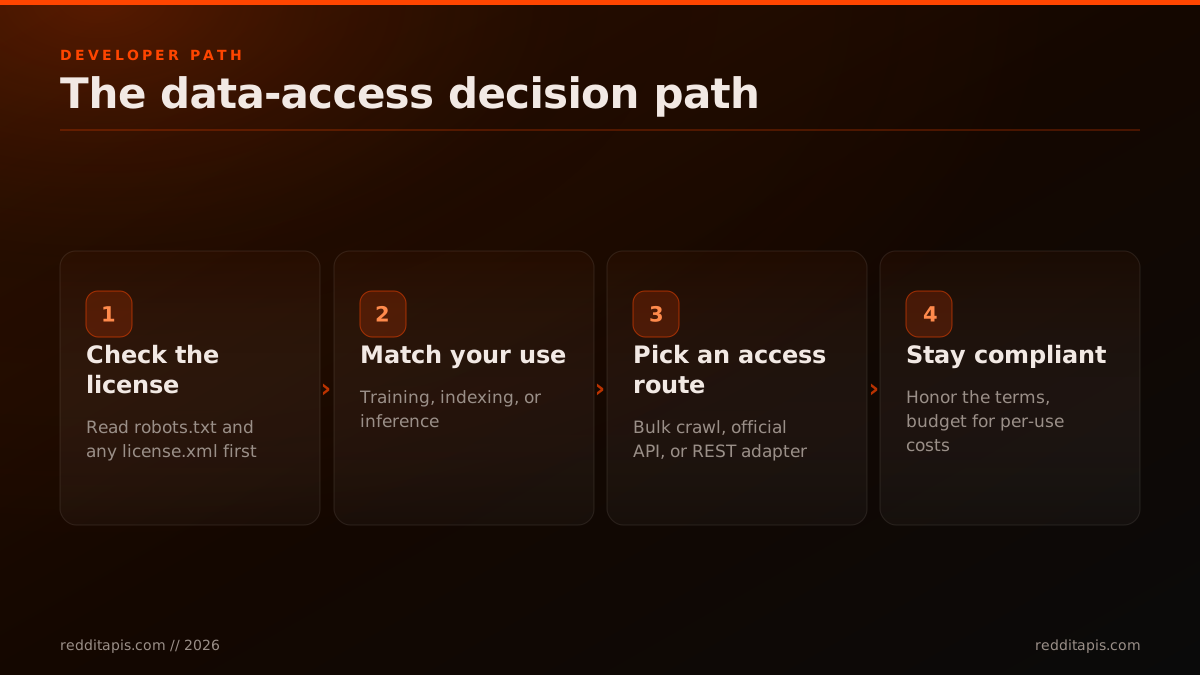
The decision path has four steps. First, check the license: read robots.txt and any license.xml before you crawl, so you are not operating against terms you never looked at. Second, match your use: figure out whether your project is training, indexing, or inference, because those map to different usage categories and different terms. Third, pick an access route: a licensed bulk crawl, the official API, or a REST adapter, depending on your scale and timeline. Fourth, stay compliant: honor the terms you found, and budget for per-use costs rather than assuming a flat fee will cover you.
That fourth step is the planning shift in one sentence. The era where you could assume a single payment bought a year of unmetered access is closing. Build your data pipeline around per-call economics from the start, and a future move to dynamic pricing becomes a tuning exercise rather than a rewrite.
The developer community has been working through these questions in public for a while, often before the headlines caught up. Reddit's own announcement about updating its robots.txt and upholding its public content policy is a good marker for when the crawler-terms conversation moved from theory to practice.
View on RedditYou can see the same thread running through developer questions about whether the rising cost of API access tracks the growing AI demand for Reddit as a data source. The two are the same story viewed from different ends.
View on RedditThe short version from the developer's seat: access is getting more structured and more metered, and the smart move is to design for that structure rather than against it.
Start building with Redditapis
Reads $0.0015, votes $0.005, writes $0.012, DMs $0.025. $0.50 free credits.
Choosing an Access Route
Three routes exist for getting Reddit data in 2026: a licensed bulk crawl for large training corpora, the official API governed by Reddit's Data API Terms for direct product integrations requiring OAuth, and a third-party REST adapter for agents and retrieval pipelines that need per-call billing with minimal setup time. Which one to pick depends on your corpus size, your timeline, and whether you need to ship this sprint or this quarter.
The three routes, summarized before the detail:
- Licensed bulk crawl: for very large corpora; weeks to set up; billed per crawl or inference.
- Official API: for direct integrations; OAuth and app registration; annual tier structure.
- REST adapter: for agents, RAG, and analytics; one bearer token; per-call billing.
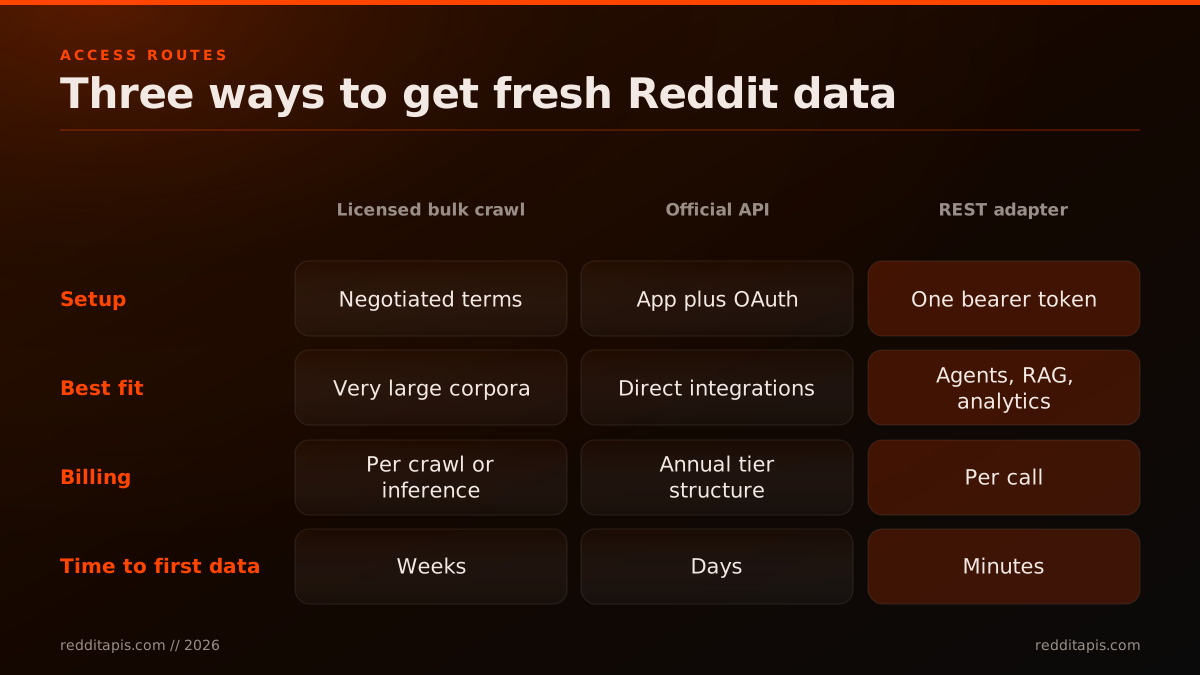
There are three broad routes to fresh Reddit data, and the right one depends on what you are building. A licensed bulk crawl is the route for a very large corpus, the kind of multi-year training dataset the original flat-fee deals were built for. It requires negotiating terms, it bills per crawl or per inference under the new models, and it takes weeks to set up. It is overkill for most application work.
The official API is the route for a direct integration. You register an app, you handle the OAuth flow and token refresh, and you operate inside the published tiers and their annual structure. It suits a product that talks to Reddit directly and can absorb the setup. The friction is the registration queue and the OAuth wiring, both of which have grown more involved as access policy tightened.
A REST adapter is the route for agents, retrieval pipelines, and analytics jobs that need data quickly and at flexible volume. It exposes Reddit reads, writes, and messages over a single bearer token, it bills per call, and it gets you to first data fast because the adapter has already absorbed the registration and the token machinery. redditapis.com is one such independent third-party adapter; it is not affiliated with Reddit Inc, and it exists precisely to collapse the access overhead into one credential.
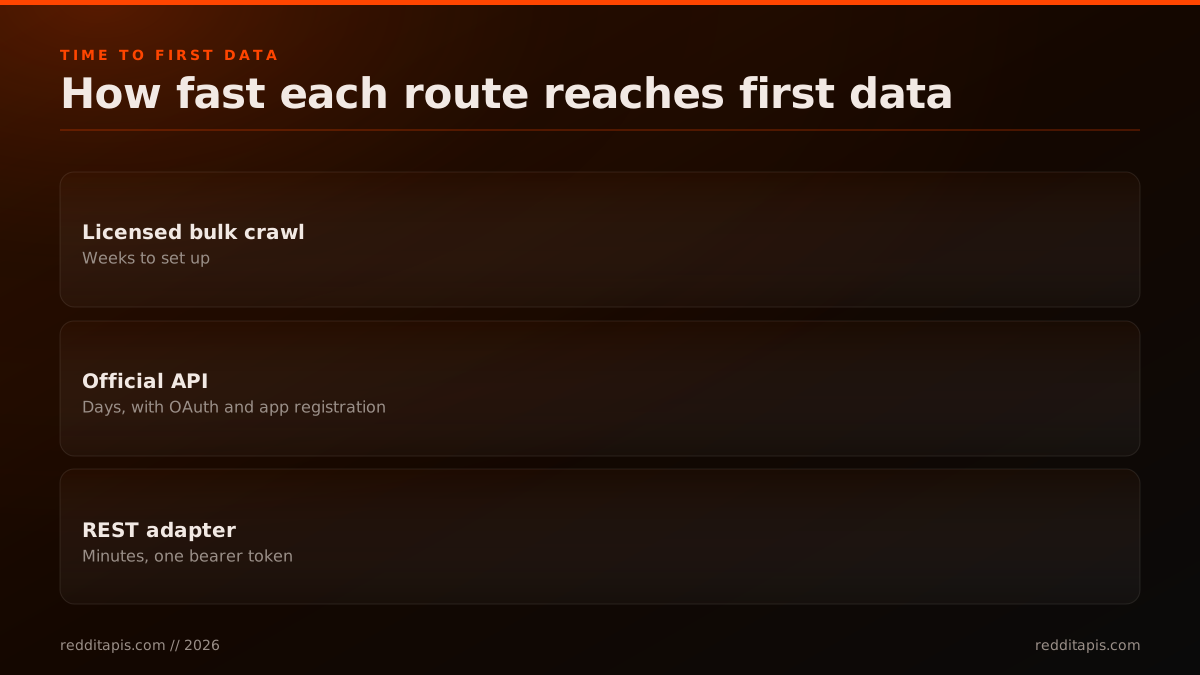
The time-to-data gap is the practical reason builders reach for an adapter. When the goal is to ship an agent or stand up a retrieval index this sprint, weeks of negotiation or days of OAuth setup are the difference between shipping and stalling. Per-call pricing also fits the usage-based world neatly: you pay for the data you actually pull, which is the same logic the upstream licensing market is moving toward. You can see the per-call rate card at /pricing and get a token at /signup.
For a fuller picture of how the AI-data conversation is playing out beyond the licensing mechanics, this short explainer is a useful watch.
The framing in that video and the one in this post agree on the core point: Reddit data has moved from a free input to a priced one, and the pricing is becoming metered.
A Worked Example: Designing a Compliant Pipeline
Suppose you are building a retrieval-augmented assistant that answers questions using current Reddit discussion. Here is how the licensing shift shapes the design, step by step, without any single decision being dramatic.
First, you decide your usage category. Your assistant pulls Reddit content as context at answer time, which is grounding, so you are in ai-input territory and, depending on how you cache, possibly ai-index as well. Knowing the category tells you which terms apply before you write a line of fetch code.
Second, you choose a route by scale and speed. You are not training a foundation model on a billion comments, so a licensed bulk crawl is the wrong tool. You want fresh data at flexible volume with minimal setup, which points to a per-call REST surface. You authenticate once and start pulling.
Third, you design for the meter. Because access is per use, you build a caching layer so you are not re-fetching the same thread for every query, and you set a budget alert tied to call volume. This is ordinary cloud-cost hygiene, and it is exactly the discipline a usage-based world rewards.
Fourth, you keep a compliance note. You record which terms you read, which category your use falls under, and which route you chose. If the terms change, you have a paper trail and a single place to adjust. This is the difference between a pipeline that ages gracefully and one that breaks the next time the upstream license updates.
The result is a pipeline that treats Reddit data as a metered input from day one. When dynamic pricing arrives in full, your design already assumes per-use economics, so adapting is a matter of tuning your cache and your budget, not rebuilding your data layer.
Why This Is an Industry Pattern, Not a Reddit Quirk
It would be easy to read the Reddit story as a one-off, a single large platform squeezing more out of a few big customers. It is not. The same structural move is happening across the content economy, from Cloudflare's pay-per-crawl marketplace to publisher licensing deals, and understanding the pattern makes Reddit's behavior predictable rather than surprising. Three forces drive it:
- Asset value: continuous human-generated content keeps its worth as synthetic text degrades.
- A coordination need: web-scale licensing needs a shared, machine-readable format.
- A dual role: the same data is both training fuel and search demand, which adds leverage.
The standard at the center of this is documented publicly at the RSL standard site and summarized on its Wikipedia entry, both useful primary references if you want the formal spec.
Start with the incentive. Any platform that produces a continuous stream of human-generated content sits on an asset that AI models need and cannot easily synthesize. Synthetic text generated by other models tends to degrade quality when fed back into training, a problem practitioners describe as model collapse, so fresh human writing keeps its value. A platform holding that kind of asset has every reason to move from a one-time sale to a meter, because the meter captures the asset's growing value over time while a flat fee freezes it at the moment of signing.
Now add the coordination problem. If every publisher invents its own licensing format, AI crawlers have to handle a different scheme for every site, which is unworkable at web scale. That is the gap a shared standard fills. The RSL Collective, the nonprofit behind the RSL standard, exists to give publishers a common machine-readable vocabulary and a common way to be compensated, modeled loosely on how music-rights organizations standardized licensing for songs. When a standard like that gains backers across many publishers, an individual platform's pricing change stops being an isolated negotiation and becomes part of a broader market mechanism.
That is why the participant list matters. A standard backed by Reddit alone is a curiosity. A standard backed by Reddit plus Yahoo plus Medium plus, by later reporting, BuzzFeed, USA Today, and Vox Media starts to look like the default way the AI-first web will handle licensing. For a developer, the lesson is to treat machine-readable licensing as a permanent feature of the landscape rather than a temporary obstacle. The sites you crawl today may not all publish a license.xml yet, but the direction is set, and code that already knows how to read those terms will age better than code that assumes an empty robots.txt.
There is also a search dimension worth naming, because it changes the calculus on both sides. Reddit content is not only training fuel; it is also one of the most requested kinds of result in ordinary search, where people deliberately append a site's name to find human opinions rather than generated summaries. That dual role, training input and search demand, gives a platform leverage to negotiate not just for higher fees but for better placement and traffic in return. The pricing conversation and the distribution conversation are becoming the same conversation, which is why public commentary increasingly describes future arrangements as product partnerships rather than plain data sales.
Common Mistakes and a Compliance Checklist
Four mistakes account for most compliance failures in Reddit data pipelines: treating an empty robots.txt as permission, conflating training and indexing as the same usage category, budgeting for a flat cost in a metered billing model, and skipping the paper trail that lets you audit your licensing decisions when terms change. Each is fixable before you write any fetch code.
Developers who get caught out by the licensing shift usually make one of a handful of avoidable mistakes. Walking through them is faster than learning each the hard way.
The first mistake is assuming an empty robots.txt means open season. Under the older web, a missing rule often meant a crawler could proceed. Under the RSL model, the absence of a License directive does not grant a license; it just means the terms are expressed elsewhere or not yet published. The safe default is to look for a license.xml, check the platform's stated content policy, and proceed only on terms you can point to.
The second mistake is treating all AI use as one bucket. A team will get permission, or assume permission, for indexing and then quietly use the same data to train a model, which is a different usage category with different terms. The RSL categories of ai-input and ai-index exist precisely because those uses are not interchangeable. Match your actual use to the right category, and revisit the match whenever your product's behavior changes.
The third mistake is budgeting for a flat cost in a metered world. A pipeline designed around a one-time fee will blow its budget the first month per-call pricing kicks in, because nobody built a cache or a rate ceiling. The fix is ordinary engineering: cache aggressively, deduplicate fetches, and put an alert on call volume. A usage-based model rewards exactly this discipline.
The fourth mistake is skipping the paper trail. When the terms change, a team with no record of which license it read and which category it relied on has to reconstruct everything under time pressure. Keep a short compliance note in the repo. It costs minutes to maintain and saves days when an upstream license updates.
Pulling those into a checklist you can run before any new Reddit data integration ships: confirm you have read the current robots.txt and any license.xml; identify which usage category your project falls under; choose an access route sized to your scale and timeline; design a cache and a budget alert for per-call economics; and write down the terms you relied on so future you can audit the decision. None of these steps is heavy, and together they turn the licensing shift from a risk into a routine.
The cheapest Reddit API. Try it free.
Reads from $0.0015 per call. $0.50 free credits. No credit card required.
What Reddit's Public Content Policy Already Signaled
Reddit's public content policy updates and robots.txt changes since 2023 followed a consistent pattern: automated bulk access would move to agreements, the robots.txt file (standardized as the Robots Exclusion Protocol, RFC 9309) would carry licensing pointers rather than just crawl-rate hints, and AI use would be treated differently from human browsing. Developers who read those as sequential signals rather than one-off events are now well positioned for what comes next.
Long before the renegotiation headlines, Reddit signaled where this was going through its public content policy and its robots.txt updates. The throughline of those moves was consistent:
- Automated bulk access would increasingly run through an agreement rather than open crawling.
- The robots.txt file would carry more than crawl-rate hints; it would point to terms.
- Public, human-facing use and automated AI use would be treated as different things.
Reading those signals in order, the usage-based pricing shift is not a surprise; it is the logical next step after a platform spends two years tightening who may crawl and on what terms. A developer who treated the robots.txt update as a one-time event missed the trend. A developer who read it as the first move in a multi-year repricing is now well positioned, because the planning assumption was correct from the start.
The practical implication is to watch policy pages and robots.txt changes as leading indicators. When a platform updates its content policy or adds a License directive, that is the early warning that pricing and access terms are about to move. Treat those updates as signals to revisit your data pipeline, not as noise.
How the RSL Collective Compares to Music Licensing
The clearest analogy for where AI data licensing is heading is the music industry, and the people behind RSL have made the comparison explicit. In music, organizations standardized how songs get licensed and how royalties flow, so that a venue or a broadcaster did not have to negotiate with every artist individually. RSL aims to do the same for written content and AI.
The parallels are worth spelling out because they predict what comes next:
- A standard contract: just as music has standard licensing terms, RSL gives publishers a common machine-readable license.
- A collective body: a nonprofit organization aggregates rights and simplifies compensation, the way a performing-rights organization does for songs.
- Per-use royalties: pay-per-inference is, in spirit, the streaming-royalty model applied to AI answers.
If the analogy holds, then AI data licensing will end up looking less like a series of bespoke enterprise deals and more like a metered, standardized market. For developers, that is good news in the long run, because standardized markets are easier to build against than one-off negotiations. The interim is messier, with some platforms publishing machine-readable terms and others not, but the destination is a world where a crawler can read a license as routinely as it reads a robots.txt today.
Licensing Is Not the Same as Rate Limits
One source of confusion worth clearing up: licensing and rate limits are different things, and conflating them leads to bad decisions. A rate limit governs how fast you may call an endpoint. A license governs whether and how you may use the data you retrieve. You can be well inside a rate limit and still be outside a license, and vice versa.
Keep the two separate in your head with this split:
- Rate limit: a throughput ceiling, measured in requests per minute or similar.
- License: a usage right, measured in what you may do with the content and at what cost.
The usage-based shift this post describes is about the license layer, not the rate-limit layer. Your code may handle backoff and retry perfectly and still need to account for per-use licensing costs on top. When you design a Reddit data pipeline, budget for both: a technical plan for staying inside throughput limits, and a commercial plan for paying for the data rights under whichever model applies. The two plans live in different parts of your system, and treating them as one is how teams get surprised.
The Verdict
For a developer building on Reddit data in 2026, the planning shift is this: the flat-fee era is closing, read the license before you crawl, match your use to the correct RSL category, and design your pipeline for per-call economics from the start rather than retrofitting it later when a meter turns on.
The headline for a builder, in three lines:
- The flat-fee era is closing; plan for metered, per-use access.
- Read the license before you crawl; match your use to the right category.
- Pick an access route sized to your scale, and design your pipeline for per-call economics.
The flat-fee era of Reddit AI licensing is closing, and a usage-based, increasingly dynamic era is opening in its place. For the large labs, that means renegotiation and a meter that grows with how heavily their models lean on Reddit content. For everyone else, including individual developers and small teams, it means access is becoming purchasable in smaller, metered units, governed by machine-readable terms the RSL standard is helping to standardize.
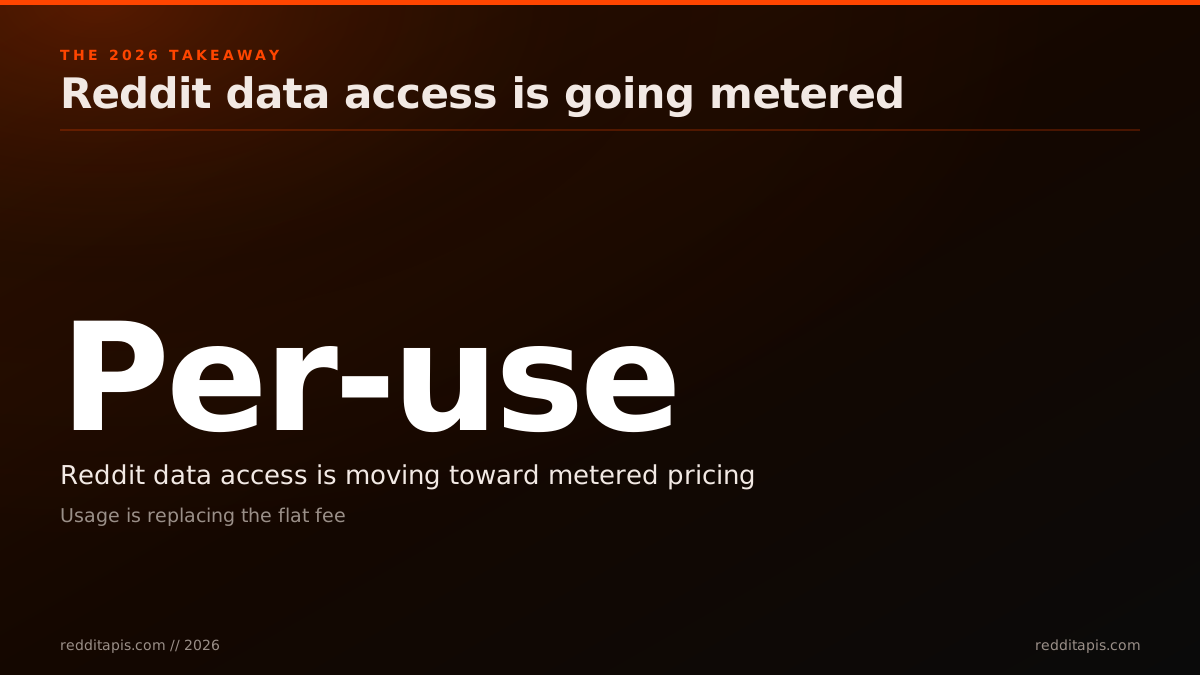
The practical instruction fits in a sentence. Read the license before you crawl, match your use to the right category, choose an access route that fits your scale, and design your pipeline for per-call economics rather than a one-time fee. Do that, and the licensing shift is a planning assumption you have already priced in rather than a surprise that breaks your build.
If you need fresh Reddit data for an agent, a retrieval pipeline, or an analytics job and you want to skip the bulk-licensing negotiation and the OAuth setup, an independent REST adapter is the fastest compliant route. redditapis.com hands you one bearer token, bills per call, and is not affiliated with Reddit Inc. Start with free credit at /signup, check the rates at /pricing, or read the full API documentation to see the endpoints.
Where these numbers come from.
Each row is a figure in this post and the artefact it was read from. Reddit's access rules and the third-party archives around them keep moving, so check the date on a source before you build against it.
- Really Simple Licensing (RSL)
- The machine-readable licensing standard the RSL section explains.
- Reddit Data API Terms
- Reddit's data terms behind the access-route and pricing analysis.
- The Verge: Google-Reddit AI data deal
- Coverage of the Reddit AI-data licensing deals the shift is traced to.
- Reddit Content Policy
- The public-content signal the article says foreshadowed usage-based licensing.
- redditapis.com pricing
- The usage-based managed access route the worked example designs against.
Frequently asked questions.
Reddit's early AI data deals, reported in 2024 at roughly 60 million dollars a year with Google and roughly 70 million a year with OpenAI, were flat annual fees for bulk access. Through 2026, public reporting describes Reddit pushing those arrangements toward usage and dynamic pricing, where compensation scales with how often the content is crawled or how central it is to a generated answer. For a developer, the headline is that Reddit content access is trending toward metered, per-use economics rather than one-time bulk fees. Read the model breakdown below, or start at /signup for a per-call REST path.
RSL, or Really Simple Licensing, is an open standard launched in September 2025 for expressing machine-readable content licensing terms that AI crawlers can read automatically. It defines a License directive you add to robots.txt and a license.xml file that spells out usage categories such as ai-all, ai-input, and ai-index, plus royalty models including free, attribution, pay-per-crawl, and pay-per-inference. Reddit was among the launch backers, alongside Yahoo and Medium, with later participants reported to include BuzzFeed, USA Today, and Vox Media. The RSL section below walks the format, and you can reach a compliant per-call Reddit data path at /signup.
Pay-per-crawl compensates the publisher every time an AI application fetches the content, so the meter runs at ingestion. Pay-per-inference compensates the publisher every time the content is used to generate a response, so the meter runs at output time. The two models price different moments in the AI pipeline. Pay-per-crawl is simpler to measure; pay-per-inference ties payment to actual usage in answers. Both are part of the RSL royalty model menu and both reflect the broader move away from flat fees. For per-call Reddit access that fits this metered world, see /pricing.
It changes the economics and the compliance surface more than the mechanics. You still authenticate and call an endpoint, but you should expect access priced per use rather than bundled into a flat tier, and you should read any robots.txt License directive and license.xml before crawling so you know which usage category your project falls under. If you need fresh Reddit data for an agent or a RAG pipeline without negotiating a bulk deal, a per-call REST adapter is the fastest compliant route. Start at /signup.
Reddit content is governed by Reddit's own terms and any license you obtain, and those terms have tightened as the AI market matured. The practical reality reported through 2026 is that bulk AI use is increasingly expected to run through a license, whether a direct agreement or a machine-readable RSL term. This post is a developer explainer, not legal advice; for anything involving large-scale training data you should review the current terms and, where appropriate, consult counsel. For everyday programmatic reads through a compliant REST surface, see /pricing.
Under RSL, a publisher adds a License directive line to robots.txt that points crawlers to a license.xml file. A compliant crawler reads robots.txt first, follows the directive to the license file, parses the usage categories and royalty terms, and only then decides whether to crawl, request a license, or back off. The flow turns a guessing game into a machine-readable contract. The crawler-read flow diagram in this post lays out the four steps, and a per-call REST path that already handles compliant access is at /signup.
If you are building an agent, a RAG pipeline, or an analytics job and you need data this sprint, the fastest compliant route is usually a REST adapter that already holds Reddit access and exposes it over a single bearer token. You skip the app-registration queue and the bulk-licensing negotiation and pay per call. A licensed bulk crawl is better for very large corpora; the official API suits direct integrations. Compare the three routes in the table below, or get a token at /signup.
Keep reading.
Continue exploring related pages.
Reddit API documentation
The complete 2026 reference: auth, all 73 endpoints, and code.
Get a Reddit API key
Instant bearer token, no waitlist and no enterprise contract.
Reddit Responsible Builder Policy
Why Reddit denies API applications, and the managed REST bypass.
Reddit API use cases
14 use cases from AI training to brand monitoring and DMs.
Reddit Search API
Search posts, comments, users, and communities over one REST endpoint.
Reddit MCP server
Wrap the REST API as MCP tools for Claude, Cursor, and any MCP client.
Reddit MCP hub
Install tabs for every client, the full tool table, pricing and fixes.
Reddit API for AI agents
Live Reddit context for tool calls, MCP servers, and RAG pipelines.
Redditapis pricing
Endpoint-level costs and quick monthly totals - reads from $0.0015 / call.
Reddit API cost calculator
Estimate monthly spend using your request volume.
Reddit API guides and tutorials
Tutorials, walkthroughs, and API deep-dives for developers.
Reddit API alternatives
Evaluate alternatives by cost model, limits, and integration fit.
Cheap Reddit API
The cheapest way to get Reddit data: $0.0015 per call, no contract, no minimum.
Official Reddit API vs Redditapis
Access, setup, rate limits, and pricing, side by side.
PRAW alternative
A hosted Reddit REST API for any language, no app registration or OAuth.
Reddapi alternative
A maintained Reddit REST API with published pricing and write endpoints.
Reddit comment scraper alternative
The raw comment API: search and filter comments, historical and live, clean JSON.
Reddit scraper API
Hosted scraper API vs building your own: no proxies to manage, clean JSON.
RapidAPI Reddit alternative
A direct, maintained Reddit API with published pricing and write endpoints.
Bright Data Reddit alternative
A purpose-built Reddit API vs a general scraping platform: structured JSON, plus writes.
ScraperAPI Reddit alternative
A Reddit-native API vs a generic HTML fetcher: auth and pagination handled, typed JSON.
TikHub alternative
TikHub's Reddit surface is read-only; get comment, vote, and DM endpoints too.
EnsembleData alternative
No $100/month floor: pay per call from $0.0015, plus write, vote, and DM endpoints.
Scrape Creators alternative
7 read-only Reddit endpoints vs a dedicated API with real write, vote, and DM paths.
FetchLayer alternative
Posts, comments, and search only; add vote, comment, and DM over the same REST auth.
PullPush alternative
PullPush is free but volunteer-run and goes offline for reindexing; a maintained REST API that stays up.
Reddit monitoring API
Build your own keyword and brand-mention monitor: search, comment search, and subreddit streams over REST.
F5Bot vs Redditapis
F5Bot's Slack and Discord delivery needs its $49.99/mo Gold tier; Redditapis includes it from $19/mo.
Syften vs Redditapis
Syften caps you at 100 to 500 results a day; Redditapis allows 10,000 a day per monitor at the entry plan.
Octolens vs Redditapis
Octolens meters by mention with overage fees; Redditapis is flat-priced by subreddit slot from $19/mo.
Affiliate program
Earn 20% lifetime commissions - capped at $5,000/yr.
Reddit Vote API tutorial
Upvote and downvote a post programmatically via the REST API.
Reddit Data API: REST, no PRAW
REST endpoints for Reddit data with no PRAW and no OAuth dance.
Reddit scraping benchmarks
Real throughput, error rates, and cost benchmarks for Reddit scraping.
Reddit API answers
Direct answers on cost, access, rate limits, endpoints, and auth.
How much the Reddit API costs
Per-call pricing from $0.0015 a read, with $0.50 in free credits.
Reddit API in Python
One requests call with a bearer token, no PRAW and no OAuth flow.
Reddit shadowban checker
Check if a Reddit account is shadowbanned in seconds, free and no login.
Subreddit stats checker
See any subreddit's live subscriber count, active users, and age, free and no login.
Similar reads.
More guides on the Reddit API, scraping, pricing, and MCP servers.

Reddit for AI Agents: The Complete Guide to MCP, Tool-Use, Function Calling, and Agentic Workflows (2026)
Give an AI agent access to Reddit as a tool: the four paths (function calling, MCP, framework tools, RAG), copy-paste code, and the data-layer decision.

Reddit as a RAG Data Source: The Complete Guide to Ingestion, Chunking, Embeddings, and Retrieval (2026)
Use Reddit as a retrieval source for RAG: batch ingestion through the API, cleaning, chunking the comment tree, embeddings, vector search, and LangChain and LlamaIndex loaders.
How to Estimate Your Reddit API Bill: a Per-Call Cost Model in Python
A per-call Reddit API cost model in Python: price every read, write and DM, then size the monthly bill for a keyword monitor, a RAG refresh and a reply bot.

How to Run the Reddit MCP Server Remotely: Transport, Auth, and What Breaks in Production (2026)
The Reddit MCP server ships stdio only. Here is exactly what changes when you make it network reachable, measured from the published package: the transport, the auth boundary, and the failure modes nobody warns you about.
MCP vs API: What Each One Actually Costs an AI Agent (2026)
We measured MCP against a direct REST call on the same Reddit query: 24,694 tokens of tool schema, 85,534 in one result, 139 ms of latency difference.
Reddit AI Agents Need Live Data: Why an Archive Like Arctic Shift Isn't Enough
An AI agent that reads Reddit needs current state, not a snapshot. What a free archive like Arctic Shift covers, where it breaks for live agent tool calls, and when you need a live API.
How to Send Reddit DMs from an AI Agent: MCP and REST Patterns for Automated Outreach
Wire an AI agent to send Reddit DMs. A working MCP tool, a raw REST pattern, real cost math, and the guardrails that keep the account alive.

Package the Reddit API as an Agent Skill: Give Your AI Agent Live Reddit (2026)
Package the Reddit API as a reusable Agent Skill: a real SKILL.md, a bundled fetch script, one bearer token, and how a skill differs from an MCP server.