
Reddit as a RAG Data Source: The Complete Guide to Ingestion, Chunking, Embeddings, and Retrieval (2026)
Use Reddit as a retrieval source for RAG: batch ingestion through the API, cleaning, chunking the comment tree, embeddings, vector search, and LangChain and LlamaIndex loaders.

Using Reddit as a RAG data source means pulling Reddit posts and comments ahead of time, cleaning and chunking them, embedding the chunks into a vector store, and retrieving the closest matches at query time, so a model answers from real community discussion instead of its frozen training data. It is the batch, retrieval side of giving an LLM Reddit: where a live tool call fetches Reddit during a single turn, a RAG corpus is built once and queried many times. This guide is the full pipeline, ingestion, cleaning, chunking the comment tree, embeddings, vector search, and the LangChain and LlamaIndex loaders, with copy-paste code, real first-party numbers from Reddit threads we pulled, and the one licensing reality you have to know before you ship.
Not affiliated with Reddit Inc. redditapis.com is an independent third-party REST API for Reddit data. This guide is vendor-neutral: it shows the RAG pipeline honestly, names the open-source frameworks, embedding models, and vector stores where they fit, and points at Reddit's own developer terms so you can decide what suits your use.
TL;DR: To use Reddit as a RAG data source you build a corpus once and retrieve from it at query time. Five stages: (1) ingest posts and comment trees through a Reddit data endpoint; (2) clean the markdown, quote blocks, and deleted bodies while keeping metadata; (3) chunk by flattening the comment tree so each chunk is one coherent comment, not a window across three people; (4) embed each chunk into a vector; (5) store and retrieve the closest chunks per query. LangChain and LlamaIndex wrap stages three to five; ingestion is one HTTP call. The decision that makes it reliable is the data layer: a raw call to Reddit from a server returns
403from most datacenter IPs, so point ingestion at an endpoint with an accepted IP pool. Cost scales with items pulled at about $0.002 a call, and the first $0.50 is free at /signup.
What this guide covers:
- What Reddit as a RAG data source is, and how it differs from live tool-use and training data
- Ingesting Reddit posts and the full comment tree at scale, with live-tested code
- Cleaning Reddit text and chunking the tree so retrieval stays clean
- Choosing an embedding model and a vector store for a Reddit corpus
- The LangChain and LlamaIndex loader patterns, retrieval quality, freshness, cost, and the licensing reality
What Is Reddit as a RAG Data Source?
Reddit as a RAG data source is Reddit content pulled, embedded, and stored so a model retrieves from it at query time, rather than reading Reddit live or being trained on it once. There are three ways to feed Reddit into an AI system, and they are easy to confuse: retrieval (RAG), live tool-use, and training data. RAG sits in the middle, a searchable corpus you build ahead of time and query repeatedly, and it is the right shape when the agent needs broad, recurring coverage of a topic rather than a single fresh lookup or a one-time fine-tune.
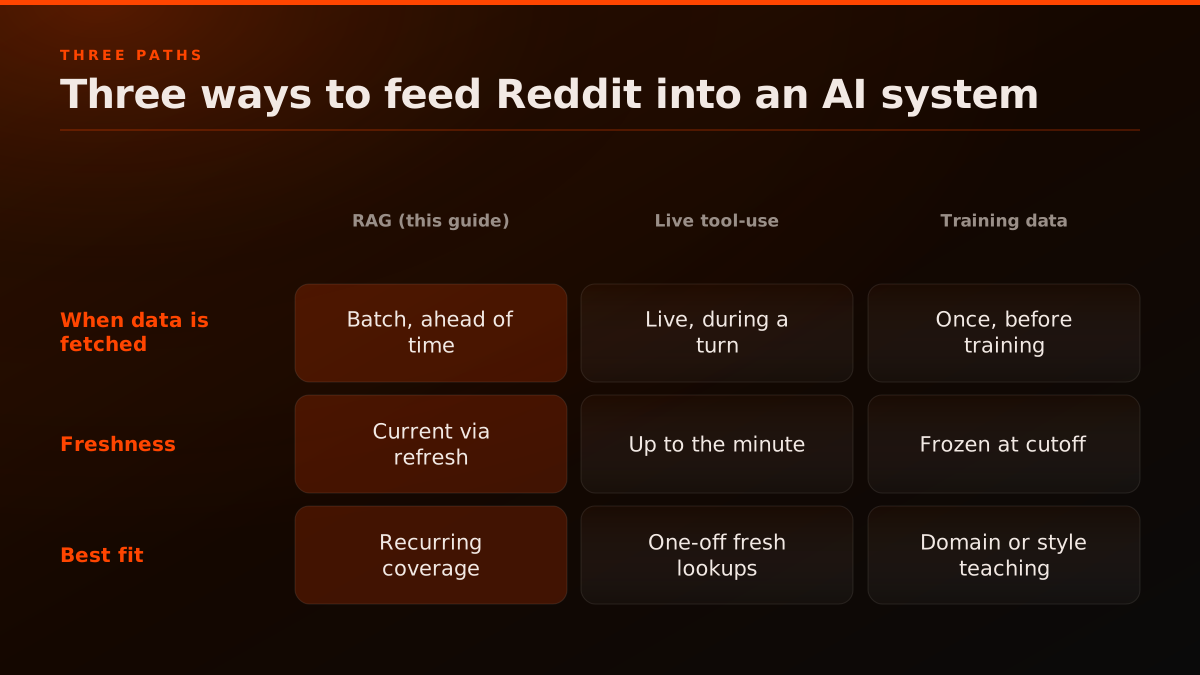 RAG builds a searchable corpus once and retrieves at query time; live tool-use fetches during a turn; training data is a static set. This guide is the RAG column.
The distinction matters because it decides your architecture:
- RAG (this guide): pull Reddit into a vector store once, retrieve the closest chunks per query. Current without retraining, cites real threads, best for recurring topic coverage.
- Live tool-use: the agent calls Reddit mid-task and reasons over the fresh result. Best for one-off, up-to-the-minute lookups, and it is covered in the Reddit for AI agents hub.
- Training data: a static, formatted dataset to fine-tune or evaluate a model. Covered in the Reddit for AI training data guide.
If you are new to retrieval-augmented generation itself, the short version is that RAG puts relevant documents into the model's context at answer time so it responds from those documents instead of guessing from parameters. Reddit is an unusually good body of documents to retrieve from, and an unusually awkward one to prepare, which is what the rest of this guide is about.
Why Is Reddit a High-Signal RAG Corpus (and Where It Fights Back)?
Reddit is a high-signal RAG corpus because it is where people say what they actually think about products, problems, and tools in their own words, which is exactly the kind of candid, specific text a model cannot generate from a stale training set. When an answer engine wants "what do people really say about X," Reddit is frequently the highest-signal source available, and that is why Google now surfaces Reddit threads directly in AI Overviews and why AI companies have paid for licensed access to it. The value of Reddit as AI data is real enough that access to it is now actively contested.
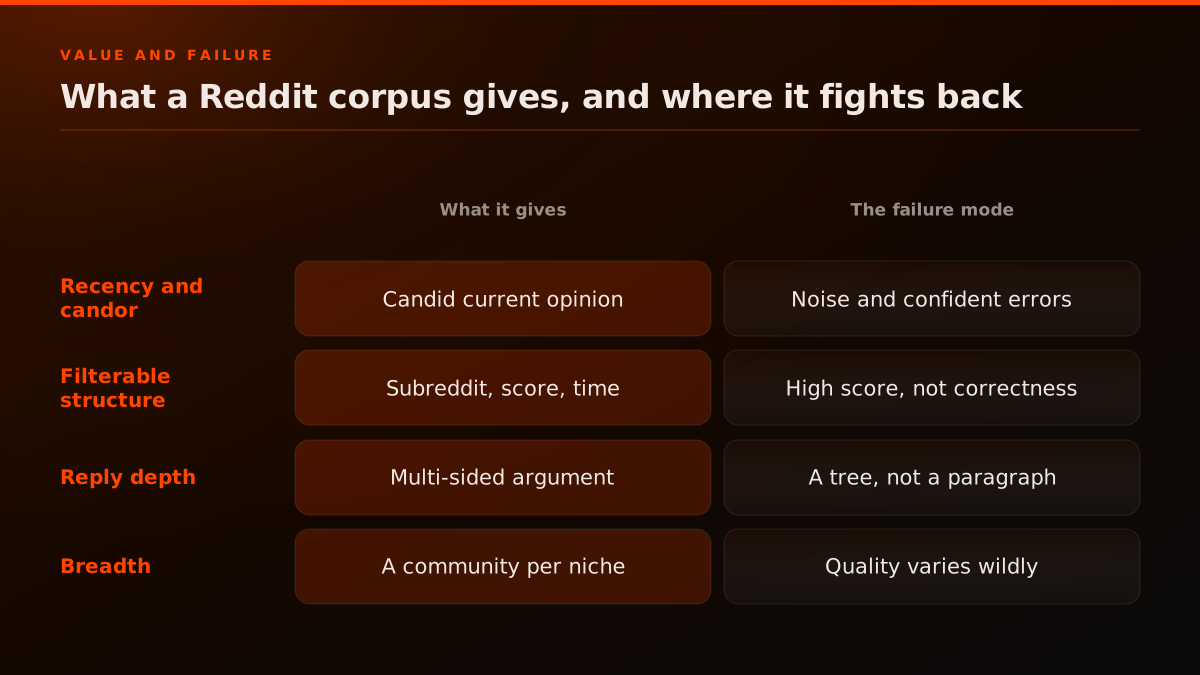 Every strength Reddit brings to a RAG corpus arrives with a matching failure mode. A good pipeline leans on the strengths and designs around the failures.
What a Reddit corpus gives you, and the failure modes it hands you in the same breath:
- Recency and candor: opinions posted to peers this week, not marketing copy up to a cutoff. The failure mode is noise, sarcasm, and confidently wrong comments sitting next to expert ones.
- Structure you can filter on: subreddit, score, and timestamp are strong metadata signals. The failure mode is that a high score means popular, not correct.
- Depth: long reply chains that argue a point from several sides. The failure mode is that the chain is a tree, not a paragraph, so naive chunking shreds it.
- Breadth: a community exists for almost any niche. The failure mode is that quality varies wildly between subreddits, so corpus selection matters more than volume.
The value of Reddit as AI data is real enough that access to it is now openly fought over in public.

Alex Groberman
@alexgroberman
Reddit sued Perplexity and a group of major scraping providers including SerpApi, Oxylabs and AWMProxy. In the process, they revealed how Perplexity, ChatGPT, Claude and Google actually work. The lawsuit also reveals how SEO Stuff has been getting traffic and sales for https://… Show more


The practical read is that Reddit rewards a pipeline that respects its structure and filters on its metadata, and punishes one that treats it like a folder of clean PDFs. Get the ingestion and chunking right and the retrieval quality is excellent; get them wrong and you retrieve fragments of three unrelated arguments. The rest of this guide is about getting them right.
What Does a Reddit RAG Pipeline Look Like, End to End?
A Reddit RAG pipeline has five stages, and only the first is Reddit-specific: ingest the posts and comment trees, clean the text, chunk it along the tree, embed the chunks, then store and retrieve them. The same five stages describe every RAG system; what makes Reddit distinct is that stage one returns a nested tree of short, uneven, human-written comments rather than a tidy document, so the cleaning and chunking stages carry more weight than they do for a corpus of reports or docs.
The five stages, in order:
- Ingest: pull posts and comment trees for your topics through a Reddit data endpoint.
- Clean: strip markdown, quote blocks, and deleted bodies while keeping the metadata.
- Chunk: flatten the comment tree so each chunk is one coherent comment.
- Embed: turn each chunk into a vector with a model that fits short text.
- Store and retrieve: load a vector store and fetch the closest chunks per query.
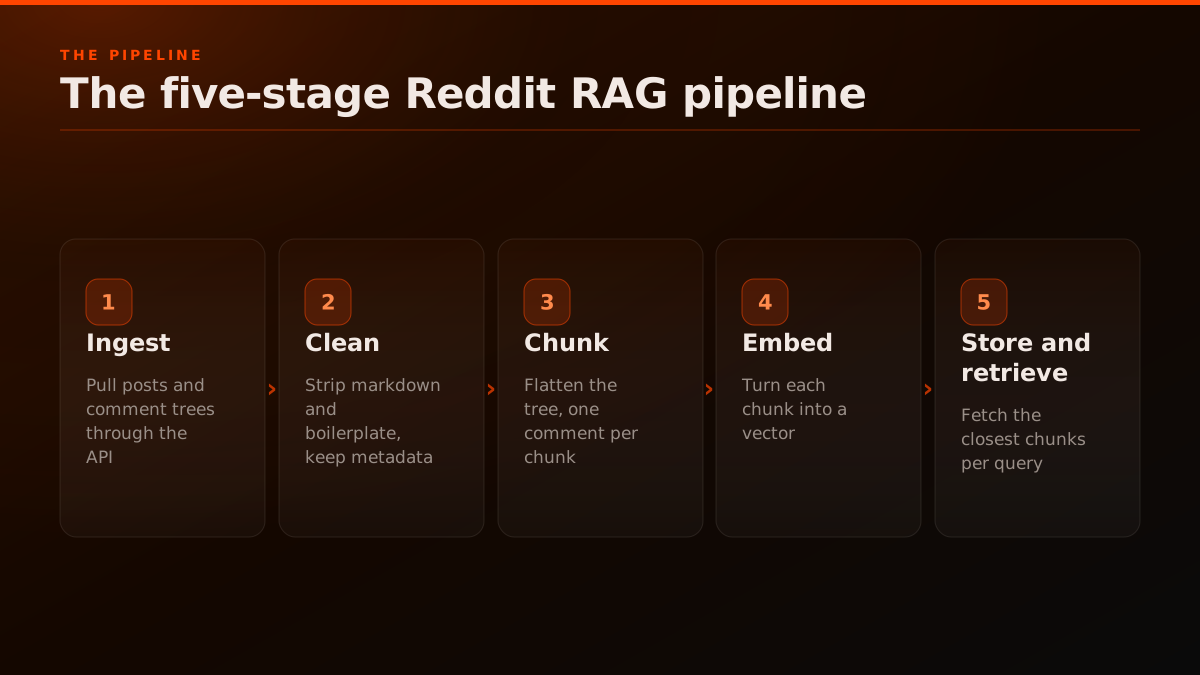 The five stages of a Reddit RAG pipeline. Ingestion is the only Reddit-specific step; cleaning and chunking carry the weight because Reddit is a tree of short comments, not a clean document.
Builders who run RAG in production are candid that the middle stages are where projects live or die, and Reddit's structure makes that doubly true.
My RAG Journey: 3 Real Projects, Lessons Learned, and What Actually Worked
The recurring lesson from teams that have shipped this is that retrieval quality is decided long before the vector store: it is decided by how faithfully you ingest the source and how well you chunk it. A fragile ingestion step that breaks when a page layout changes makes the whole pipeline fragile, which is the first reason to prefer a stable API over collecting Reddit off its web pages. We take the five stages one at a time, starting with ingestion.
How Do You Ingest Reddit Posts and Comment Trees at Scale?
You ingest Reddit for RAG by pulling posts for your chosen subreddits and then pulling the full comment tree for each post, through a Reddit data endpoint that returns clean JSON. The read surface you need is small: a posts endpoint to list a community's threads, and a comments endpoint that returns the nested reply tree for a given permalink. The one thing to plan for is reliability, because ingestion usually runs on a server or a schedule, and a direct call to Reddit from a datacenter IP returns 403 regardless of correct headers, so point ingestion at an endpoint whose IP pool is accepted and add a short retry.
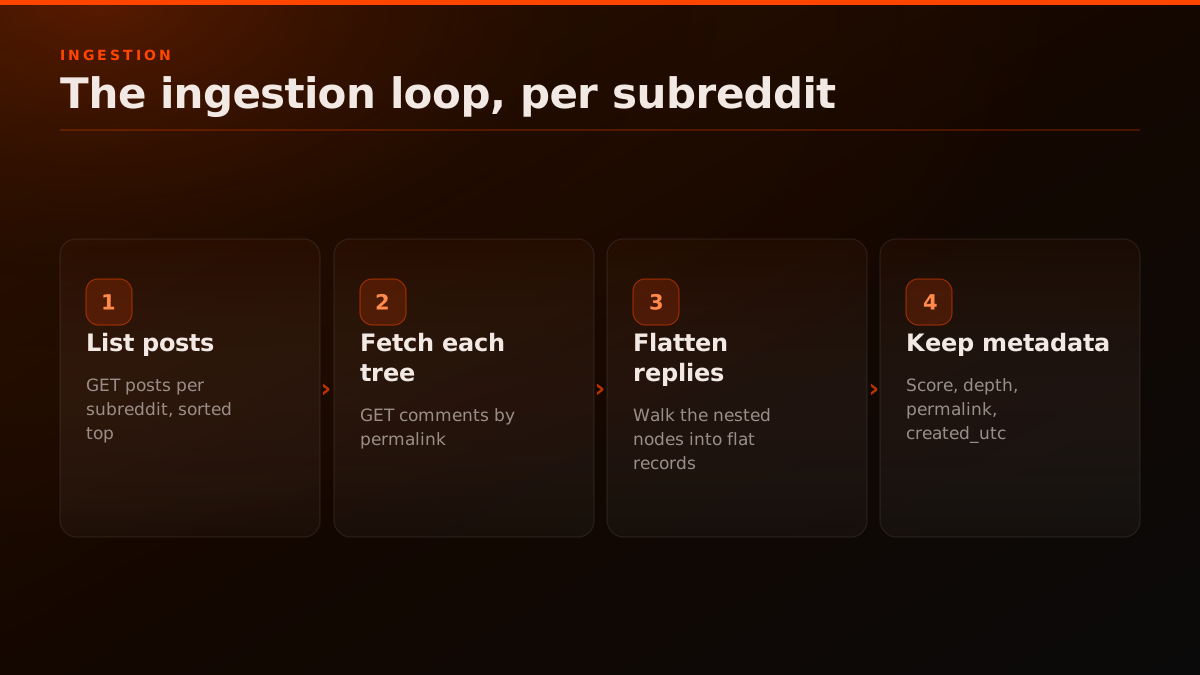 The ingestion loop: list posts per subreddit, pull each comment tree, and flatten the nested reply chains into flat records the next stage can clean.
Here is a working ingestion step in plain Python. It lists top posts for a subreddit, pulls each post's comment tree, and flattens the nested tree into flat records with their depth and score kept as metadata. This runs live against a REST endpoint with one bearer token, no OAuth dance:
import os, requests

API = "https://api.redditapis.com"
KEY = os.environ["REDDIT_API_KEY"]  # free key at redditapis.com/signup
H = {"Authorization": f"Bearer {KEY}"}

def get_posts(subreddit, limit=25):
    r = requests.get(f"{API}/api/reddit/posts",
                     params={"subreddit": subreddit, "sort": "top", "t": "year", "limit": limit},
                     headers=H, timeout=30)
    r.raise_for_status()
    return r.json()["posts"]

def flatten_comments(nodes, depth=0):
    """Walk Reddit's nested t1 comment tree into flat (depth, score, body) records."""
    out = []
    for n in nodes:
        if n.get("kind") != "t1":
            continue
        d = n["data"]
        body = (d.get("body") or "").strip()
        if body and body not in ("[deleted]", "[removed]"):
            out.append({"depth": depth, "score": d.get("score", 0), "body": body})
        replies = d.get("replies")
        if isinstance(replies, dict):  # a nested listing, recurse
            out.extend(flatten_comments(replies.get("data", {}).get("children", []), depth + 1))
    return out

def get_comment_records(permalink):
    r = requests.get(f"{API}/api/reddit/comments",
                     params={"permalink": permalink, "limit": 200}, headers=H, timeout=30)
    r.raise_for_status()
    return flatten_comments(r.json().get("comments", []))

if __name__ == "__main__":
    for post in get_posts("LocalLLaMA", limit=5):
        records = get_comment_records(post["permalink"])
        print(post["id"], len(records), "comment records")
Two ingestion details save you pain later. Keep the metadata (subreddit, score, permalink, created_utc) attached to every record, because you will filter and re-rank on it at retrieval time. And page a large community with the after cursor rather than trying to pull everything in one call; the pagination guide covers the cursor loop, and the comments endpoint reference covers the tree shape in full. For the read side in other languages, the Python tutorial and the Node.js guide are the companion builds.
Start building with Redditapis
Reads $0.002, votes $0.005, writes $0.012, DMs $0.025. $0.50 free credits.
How Do You Clean and Structure Reddit Text for Retrieval?
You clean Reddit text for retrieval by stripping the formatting and non-content that would pollute an embedding, while preserving the metadata you will retrieve and filter on. Reddit bodies are markdown, full of quote blocks, links, edit notes, and bot boilerplate, and every one of those tokens dilutes the semantic signal in a chunk. The goal of cleaning is to leave each record as one clean statement from one author, with its subreddit, score, and link intact, so the embedding captures the meaning and the metadata captures the context.
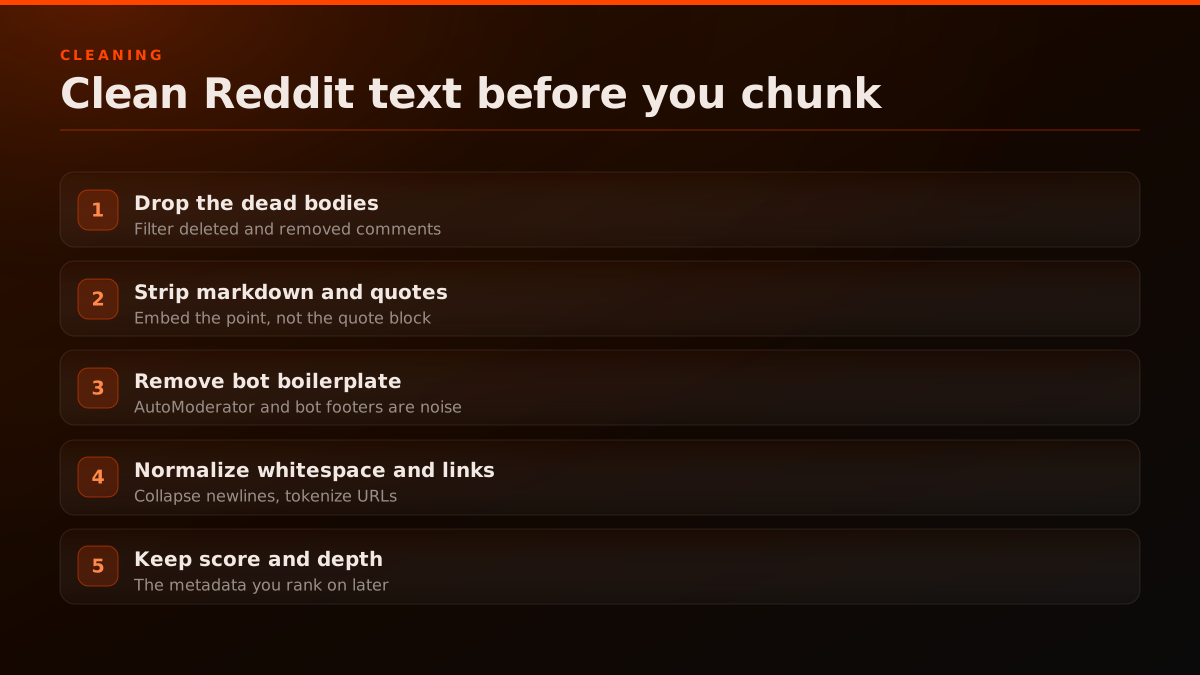 Cleaning is six passes that keep the meaning and drop the noise. The one thing you never strip is the metadata, which powers filtering and re-ranking downstream.
The cleaning passes that matter most for a Reddit corpus:
- Drop the dead bodies:
[deleted]and[removed]comments carry no content, filter them at ingestion. - Strip markdown and quote blocks: a comment that quotes the parent and adds one line should embed as the one line, not the quote.
- Remove bot and boilerplate comments: AutoModerator notices and "I am a bot" footers are pure noise in a retrieval index.
- Normalize whitespace and links: collapse runs of newlines, and either drop bare URLs or replace them with a short token so they do not dominate the embedding.
- Keep the score and depth: a comment with a high score and a shallow depth is usually the community's answer; that is signal you will rank on.
A short, practical cleaner is a few lines of regex over each record's body, and because it is pure Python with no dependencies, it runs anywhere your ingestion runs. The discipline is to be aggressive about noise and conservative about content: when in doubt, keep the text and drop the markup. This is also where dataset assembly for training diverges from RAG, the training-data pipeline formats cleaned records into JSONL, while a RAG pipeline hands them straight to the chunker.
How Do You Chunk Reddit Threads? The Comment-Tree Problem
You chunk Reddit threads by flattening the comment tree and treating each comment as its own chunk, then splitting only the comments that are genuinely long, rather than sliding a fixed-size window across the whole thread. This is the step where a generic RAG tutorial fails on Reddit, because Reddit is not flat prose, it is a tree of short replies at varying depth. In a sample of 18 threads we pulled across r/LocalLLaMA, r/MachineLearning, and r/datascience, the reply trees ran a median of five levels deep and one ran eight levels deep, and flattening them yielded 1,430 comment records from those 18 threads, a median of 92 per thread. A fixed 512-token window across that structure merges the ends of three unrelated arguments into one chunk.
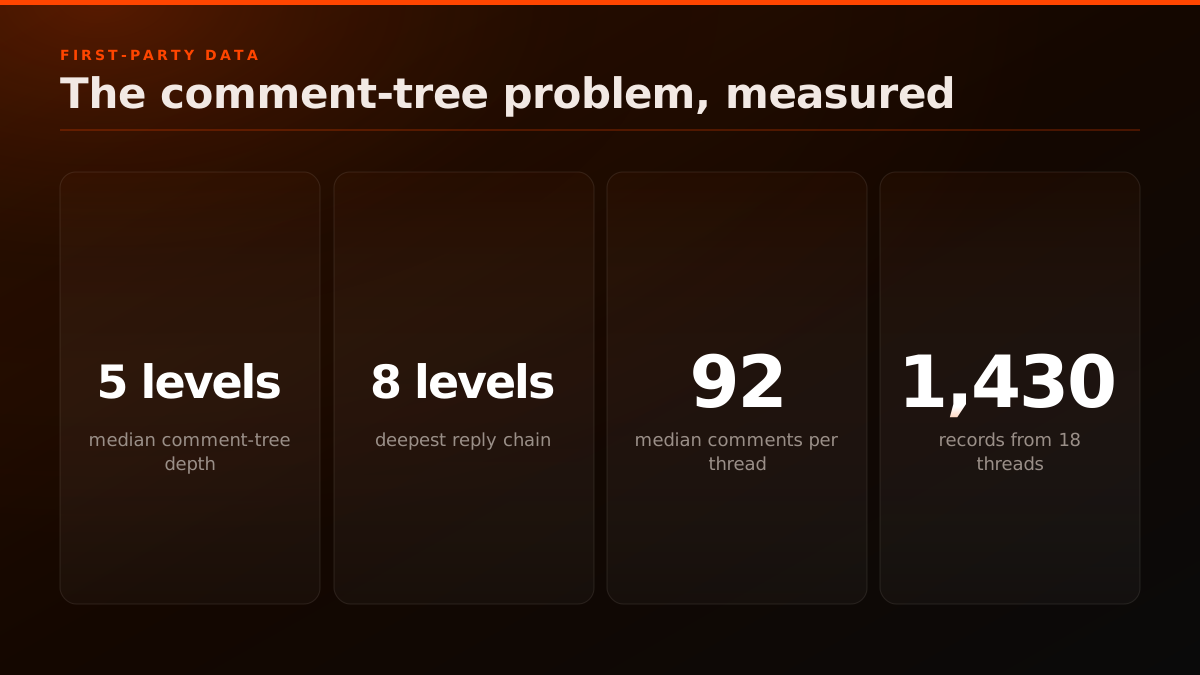 Measured on 18 threads we pulled across r/LocalLLaMA, r/MachineLearning, and r/datascience. Reply trees run deep, which is why a fixed-size window shreds them and per-comment chunking wins.
The strategy that works for Reddit, from worst to best:
- Fixed-size window (avoid): chops across comment boundaries and merges unrelated authors. Simple, and wrong for a tree.
- Per-comment chunks (good): one comment, one chunk. Each chunk is a single coherent statement, which is exactly what an embedding model wants.
- Comment plus parent context (better): prepend a short summary of the parent so a reply like "this is wrong because" is not stranded without its referent.
- Split only the long ones: for the rare comment that is itself an essay, apply a recursive splitter to that comment alone, keeping its metadata on each piece.
Teams building high-accuracy retrieval keep coming back to the same conclusion: chunk boundaries that respect the source structure beat any clever fixed window, and quotes or parent context attached to a chunk lift accuracy noticeably.
Agent RAG (Parallel Quotes) - How we built RAG on 10,000's of docs with extremely high accuracy
The through-line is that Reddit's tree is a feature, not a nuisance: the reply structure tells you which comment answers which, and encoding that in chunks and metadata is what makes a Reddit RAG index retrieve the right thing.
How Do You Choose an Embedding Model for Reddit Chunks?
You choose an embedding model for Reddit chunks by matching the model to your language, your latency budget, and whether you want a local or hosted embedder, and for most Reddit corpora a strong open sentence-transformer model run locally is the sensible default. Embedding is the step that turns each cleaned chunk into a vector, and the choice is less about a leaderboard score than about fit: Reddit text is short, informal, and English-heavy, which plays to compact general-purpose models, and running them locally keeps a large ingestion free of per-token embedding fees.
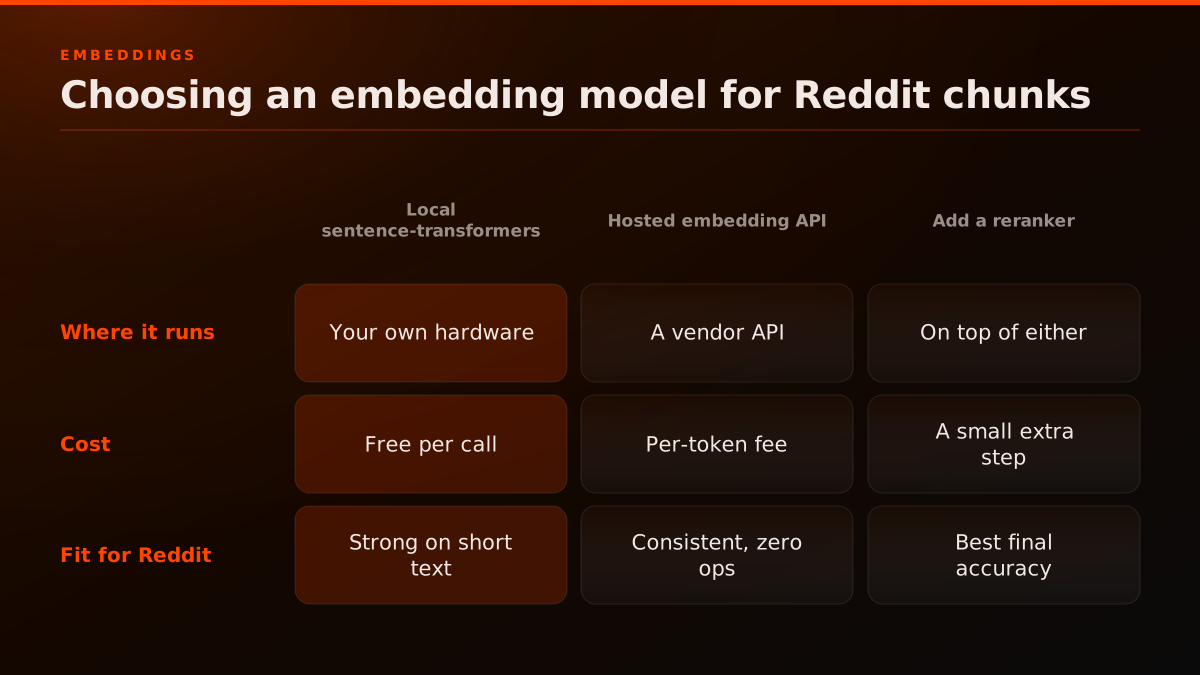 For short, informal Reddit text a compact local sentence-transformer model is the sensible default; hosted APIs buy convenience, and a reranker buys accuracy on top of either.
How to think about the choice:
- Local sentence-transformers: models from the sentence-transformers family run on your own hardware, cost nothing per call, and are strong on short text. The default for a large Reddit corpus.
- Hosted embedding APIs: services like the OpenAI embeddings API trade a per-token fee for zero infrastructure and consistent quality, which suits a smaller corpus or a team that does not want to run models.
- Check the leaderboard, then test on your data: the MTEB leaderboard is a good starting shortlist, but Reddit's informal register means you should embed a few hundred real chunks and eyeball the nearest neighbors before you commit.
A well-viewed walkthrough of building a retrieval pipeline over web-collected text with a local model and an open framework shows the shape of the embedding and retrieval steps end to end.
The one habit that separates a good Reddit index from a mediocre one is testing retrieval on real queries against real chunks before scaling, because an embedding model that looks great on a benchmark can still miss the way your community phrases things.
Which Vector Store Should Hold a Reddit Corpus?
The vector store that should hold a Reddit corpus is whichever one matches your scale and your existing stack, because for a corpus in the tens or low hundreds of thousands of chunks, they all retrieve well and the differences are operational, not about relevance. A Reddit RAG corpus is usually modest by vector-store standards, so the decision is mostly about whether you already run Postgres, want a local file, or want a managed service, plus how well each store supports the metadata filtering that Reddit's subreddit and score fields make so valuable.
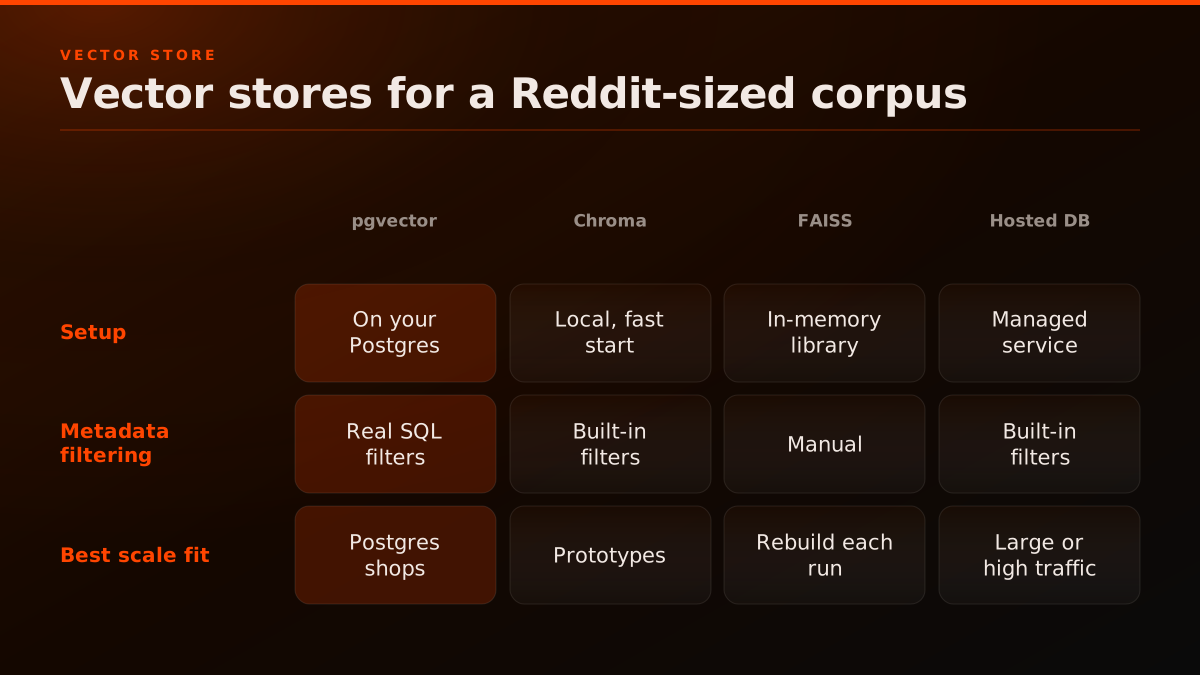 For a Reddit-sized corpus every option retrieves well; pick on operations. Metadata filtering on subreddit and score is the feature that matters most for Reddit.
The honest read of the common options:
- pgvector: adds vectors to Postgres. Best if you already run Postgres, because your Reddit metadata and vectors live in one queryable place with real SQL filtering.
- Chroma: a developer-friendly local store that is fast to stand up for a prototype and handles metadata filters cleanly.
- FAISS: an in-memory library that is extremely fast and has no server, best when you rebuild the index from the corpus on each run.
- Hosted vector databases: managed services remove the ops burden and scale past a single box, worth it once the corpus or the traffic outgrows a local store.
Practitioners who came from data engineering point out that keyword search engines and vector stores overlap more than newcomers expect, and that hybrid retrieval (a keyword filter plus vector similarity) often beats pure vector search on a corpus like Reddit where exact terms matter.
I came from Data Engineering stuff before jumping into LLM stuff, i am surprised that many people in this space never heard Elastic/OpenSearch
Whatever store you pick, index the metadata alongside the vectors, because filtering to a subreddit or a score threshold before or after the similarity search is the single biggest lever on Reddit retrieval quality.
How Do You Load Reddit into LangChain for RAG?
You load Reddit into LangChain by wrapping the ingestion call in a small function that yields Document objects, then handing them to a text splitter, an embeddings model, and a vector store, which is the standard LangChain RAG chain with Reddit as the source. LangChain ships a RedditPostsLoader, but for a real corpus most teams write a thin custom loader over a Reddit data endpoint so they get the comment tree and the metadata, then use LangChain for the parts it does best: splitting, embedding, storing, and retrieving.
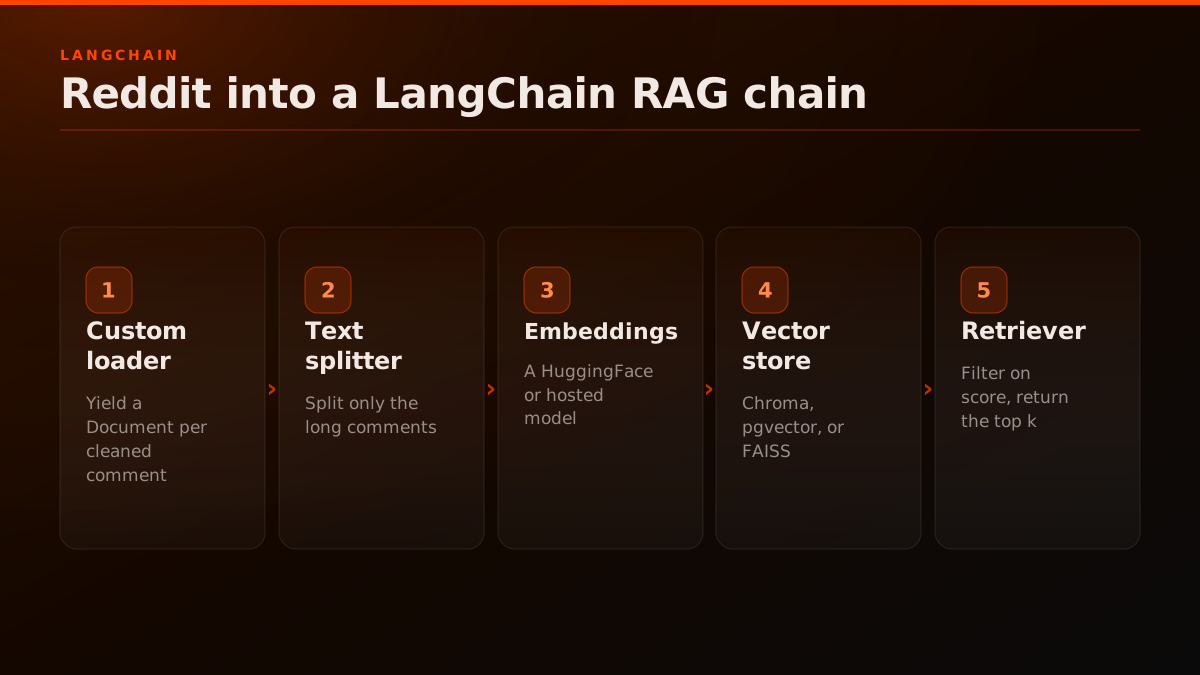 Reddit into LangChain: the loader is a thin wrapper over the same API call, and LangChain does the splitting, embedding, storing, and retrieving from there.
The pattern is short. Turn each cleaned comment record into a Document with its text as page_content and its Reddit metadata attached, then build the index:
from langchain_core.documents import Document
from langchain_text_splitters import RecursiveCharacterTextSplitter
from langchain_huggingface import HuggingFaceEmbeddings
from langchain_chroma import Chroma
from reddit_ingest import get_posts, get_comment_records  # from the ingestion step above

def reddit_documents(subreddit, limit=25):
    docs = []
    for post in get_posts(subreddit, limit=limit):
        for rec in get_comment_records(post["permalink"]):
            docs.append(Document(
                page_content=rec["body"],
                metadata={"subreddit": subreddit, "score": rec["score"],
                          "depth": rec["depth"], "permalink": post["permalink"]},
            ))
    return docs

docs = reddit_documents("LocalLLaMA", limit=25)
chunks = RecursiveCharacterTextSplitter(chunk_size=800, chunk_overlap=100).split_documents(docs)
store = Chroma.from_documents(chunks, HuggingFaceEmbeddings(model_name="sentence-transformers/all-MiniLM-L6-v2"))
retriever = store.as_retriever(search_kwargs={"k": 5, "filter": {"score": {"$gte": 5}}})
Because each Document already holds one cleaned comment, the splitter only has to touch the long ones, and the metadata filter on score in the retriever lets you retrieve only well-received comments. From here the retriever drops into any LangChain chain: pass the retrieved chunks into the prompt and the model answers from real Reddit discussion. LangChain's own concept docs cover the chain end to end; the Reddit-specific part is only the loader.
The cheapest Reddit API. Try it free.
Reads from $0.002 per call. $0.50 free credits. No credit card required.
How Do You Load Reddit into LlamaIndex?
You load Reddit into LlamaIndex the same way, by building Document objects from your ingested records and handing them to a VectorStoreIndex, which then gives you a query engine that retrieves and answers in one call. LlamaIndex is built around exactly this document-to-index-to-query flow, so once your ingestion yields clean records, the LlamaIndex side is a few lines, and its node parsers handle the splitting the way LangChain's text splitters do.
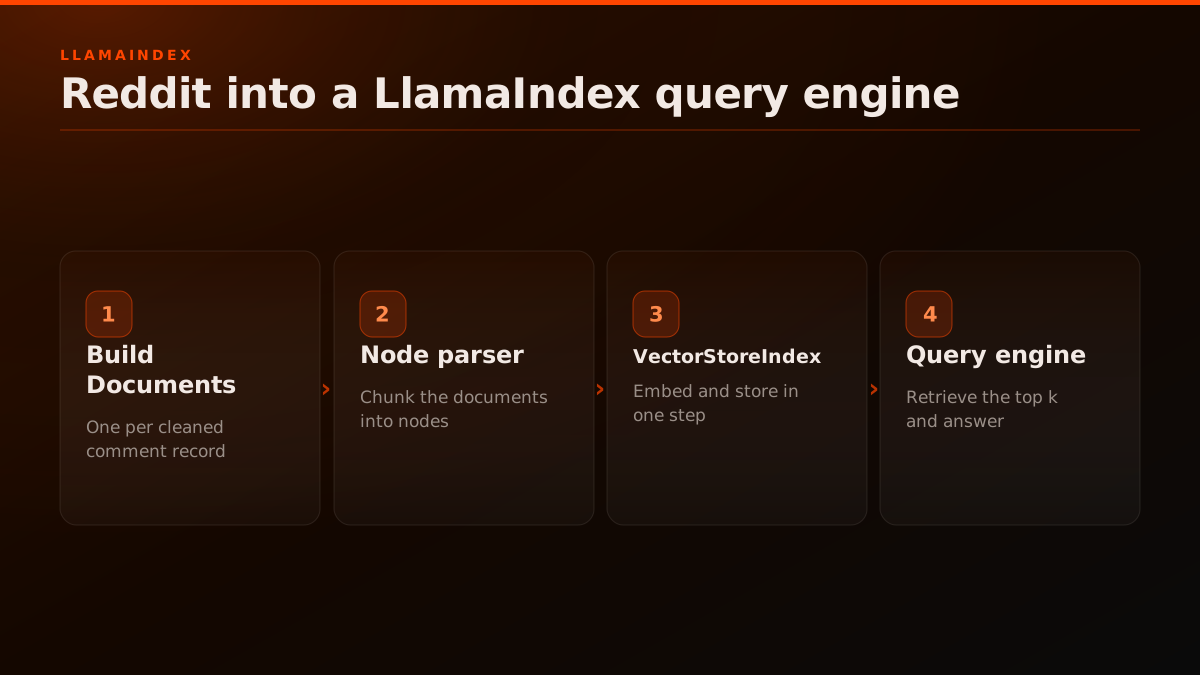 Reddit into LlamaIndex: Documents in, a VectorStoreIndex builds the store, and a query engine handles retrieval and answering together.
The LlamaIndex shape, using the same ingestion functions:
from llama_index.core import Document, VectorStoreIndex
from reddit_ingest import get_posts, get_comment_records

documents = []
for post in get_posts("MachineLearning", limit=25):
    for rec in get_comment_records(post["permalink"]):
        documents.append(Document(
            text=rec["body"],
            metadata={"subreddit": "MachineLearning", "score": rec["score"],
                      "permalink": post["permalink"]},
        ))

index = VectorStoreIndex.from_documents(documents)
query_engine = index.as_query_engine(similarity_top_k=5)
print(query_engine.query("what do people say about running local models for RAG?"))
LlamaIndex will parse the documents into nodes, embed them, and build the index, and the query engine retrieves the top matches and composes an answer. A lecture-style walkthrough of a RAG retrieval pipeline covering document loaders, data cleaning, and the framework wiring is a good companion to see the steps in motion.
The choice between LangChain and LlamaIndex is mostly about which your project already uses; both wrap the same ingestion call and the same embedding and retrieval steps, and both are documented at length in their own LlamaIndex and LangChain docs.
How Do You Keep Retrieval Quality High and Use Reddit Data Responsibly?
You keep Reddit retrieval quality high by filtering on metadata, re-ranking the top results, and refreshing the corpus on a schedule, and you use the data responsibly by scrubbing personal information and keeping a human in the loop on anything the system publishes. Retrieval quality on Reddit is won with the metadata you kept: filter to the right subreddits, threshold on score, and prefer recent threads, then re-rank the survivors so the best answer rises to the top. The responsibility layer sits alongside it, because Reddit comments are written by real people and carry real personal detail.
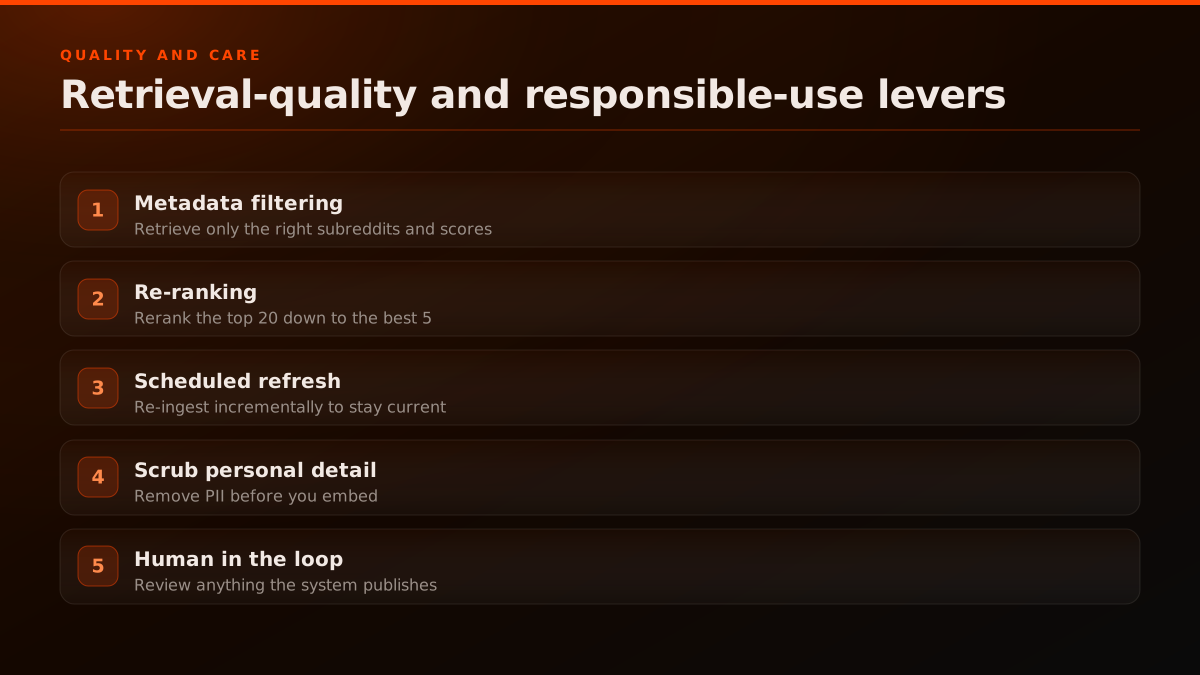 The retrieval-quality levers are metadata filtering, re-ranking, and scheduled refresh; the responsibility levers are PII scrubbing and human review of anything the system publishes.
The levers that matter, in order of payoff:
- Metadata filtering: retrieve only from the subreddits and score range that fit the question. The biggest single quality lever on Reddit.
- Re-ranking: run the top 20 vector hits through a reranker before you keep the top 5, which sharply improves the final context.
- Scheduled refresh: re-ingest incrementally so the corpus stays current; the keyword-monitor pattern is the on-a-schedule building block.
- Freshness weighting: prefer recent threads when the topic moves fast, using the
created_utcyou kept as metadata.
The responsibility point is not optional, and it is worth stating plainly: Reddit text can carry enough detail to identify a person, and models are good at surfacing that.

Alex Veremeyenko
@alex_verem
Your anonymous internet identity can now be unmasked for $1 Not by the FBI. By anyone with access to Claude or ChatGPT and a few of your Reddit comments. ETH Zurich and Anthropic just dropped a paper called “Large-Scale Online Deanonymization with LLMs” and the results are the… Show more

Treat that as a design constraint. Scrub obvious personal information before you embed, do not surface a specific user's identity in an answer, keep a human reviewing anything the system publishes, and treat what the corpus returns as strong signal to reason over, not verified fact. A retrieval system that reads Reddit to inform an answer is a research tool; one that acts or publishes on its own is a participant, and participants are held to each community's rules.
What Is the Data-Licensing and ToS Reality of Reddit for RAG in 2026?
The licensing reality of using Reddit for RAG is that the data is public but its commercial use is governed, and the posture you build with is what matters: pulling data through a documented API under Reddit's terms is a different footing from collecting it off web pages, and redistribution or resale is where the terms bite hardest. This is not legal advice, and none of what follows is a ruling on your situation, but the public facts are clear enough to plan around.
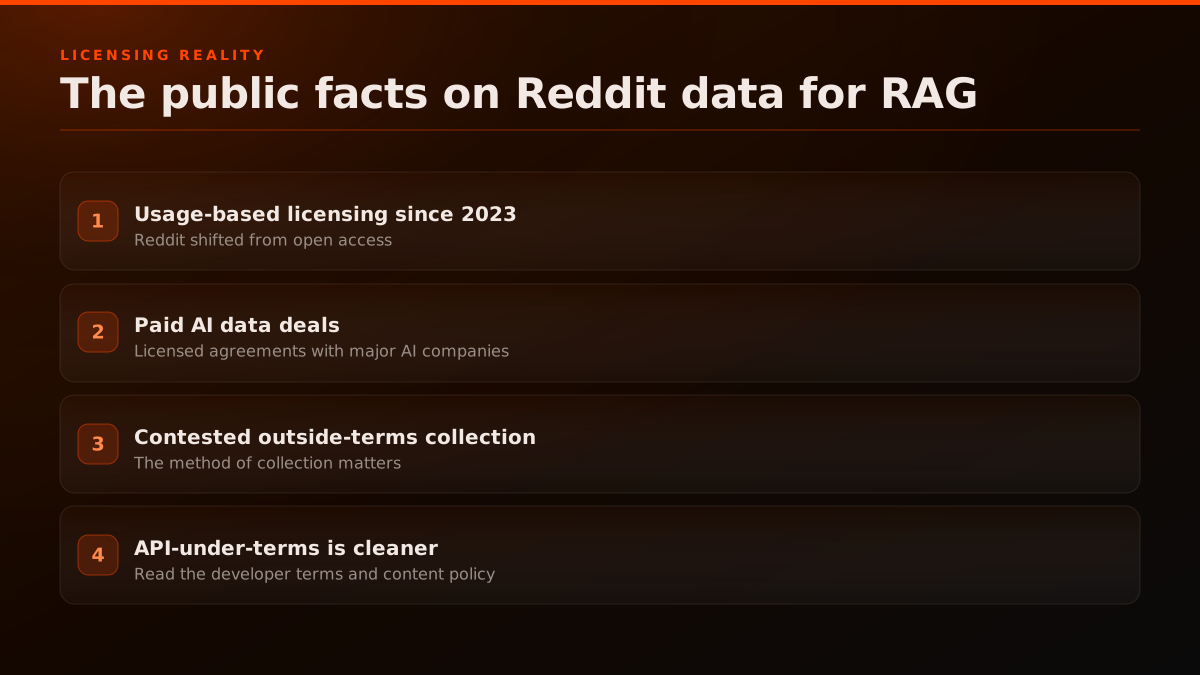 The public, factual picture: Reddit moved to usage-based data licensing in 2023, signed paid AI data deals, and has contested outside-terms collection. Pulling under an API's terms is the cleaner posture.
What is public and worth building around:
- Usage-based licensing since 2023: Reddit shifted from open access to usage-based data licensing, the change that reshaped programmatic access, covered in the usage-based data licensing guide.
- Paid AI data deals: Reddit signed licensed-data agreements with major AI companies, which is the clearest signal of how it values its content for AI.
- Contested outside-terms collection: Reddit has publicly pursued parties it says gathered content outside its terms, so the method of collection matters, not just the fact that data is public.
- API-under-terms is the cleaner footing: using a documented endpoint under its terms, and reading Reddit's own developer terms and public content policy, keeps you on defensible ground.
The end of the free bulk-archive era is part of the same story: the Pushshift alternatives guide covers what replaced the old firehose, and the is it legal to collect Reddit data guide covers the collection question in full. The pragmatic stance for a RAG builder is to pull through a documented API under its terms, keep your use inside those terms, and get advice for anything commercial or redistributed. redditapis.com is an independent third party and is not affiliated with Reddit; treat this section as orientation, not a legal opinion.
Reddit for RAG vs Real-Time Tool-Use: Which Do You Reach For?
You reach for RAG when the agent needs broad, recurring coverage of a Reddit topic and for real-time tool-use when it needs a fresh, one-off lookup, and mature systems use both. This guide has been the RAG, batch-retrieval side: build a corpus once, retrieve many times. Its sibling, the Reddit for AI agents hub, is the real-time tool-use side: the agent calls Reddit live during a single turn. They are complementary, not competing, and knowing which to reach for is the last decision.
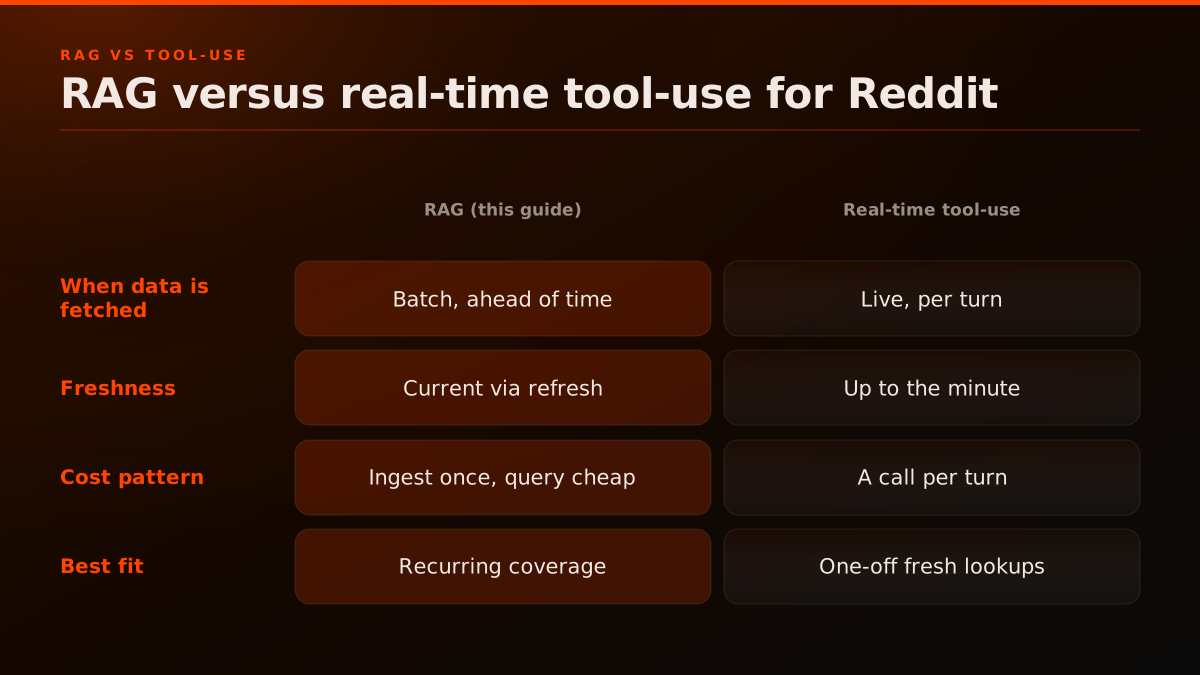 RAG is build-once-query-many for recurring coverage; live tool-use is fetch-per-turn for fresh lookups. Many production systems run both, retrieving from a corpus and falling back to a live call.
The decision in practice:
- Reach for RAG when you need consistent, low-latency coverage of a stable set of topics, want to retrieve over a curated corpus you control, and can refresh on a schedule. This guide.
- Reach for live tool-use when the agent needs up-to-the-minute results, hits Reddit unpredictably, or needs the answer to reflect what was posted an hour ago. The AI agents hub and the MCP server build cover it.
- Use both when a system retrieves from a Reddit corpus for breadth and falls back to a live call for freshness, which is a common and robust production shape.
Both paths call the same underlying Reddit data endpoint; RAG calls it in a batch ahead of time and tool-use calls it live. The reliability of that endpoint is the shared foundation, which the PRAW versus REST comparison and the throughput and error-rate benchmarks cover in depth.
The Bottom Line
Reddit as a RAG data source is a five-stage pipeline: ingest the posts and comment trees through a Reddit data endpoint, clean the markdown and boilerplate while keeping the metadata, chunk along the comment tree so each chunk is one coherent comment rather than a window across three arguments, embed the chunks with a model that fits short informal text, and store them in a vector store you can filter on. LangChain and LlamaIndex wrap the chunk-embed-retrieve steps; the ingestion is one HTTP call, and its reliability is what makes the whole pipeline dependable, because a raw call to Reddit from a server returns 403 from most datacenter IPs. Keep retrieval quality high with metadata filtering and re-ranking, scrub personal information before you embed, and pull through a documented API under Reddit's terms. RAG is the batch, build-once side of giving a model Reddit; its real-time tool-use sibling is the live side, and the training-data guide is the static-dataset side. If you are building the corpus, the Python and Node.js tutorials, the comments and pagination references, and the cost calculator are the pieces you need. Grab a free key and start ingesting Reddit for your RAG pipeline.
Where these numbers come from.
Each row is a figure in this post and the artefact it was read from. Reddit's access rules and the third-party archives around them keep moving, so check the date on a source before you build against it.
- LangChain RedditPostsLoader
- The LangChain document loader used in the ingestion section.
- LlamaIndex Reddit reader
- The LlamaIndex reader used to load Reddit into a RAG index.
- OpenAI embeddings guide
- The embedding-model reference behind the chunk-embedding section.
- pgvector
- The Postgres vector store option discussed for holding the Reddit corpus.
- Reddit Data API Terms
- The data-licensing and ToS reality the article covers for RAG use.
Frequently asked questions.
Using Reddit as a RAG data source means pulling Reddit posts and comments ahead of time, cleaning and chunking them, embedding the chunks into a vector store, and retrieving the closest matches at query time so a model answers from real community discussion instead of its training cutoff. It is the batch, retrieval side of giving an LLM Reddit. Where a live tool call fetches Reddit during one turn, a RAG corpus is built once and queried many times, which fits when you need broad, recurring coverage of a topic. The load-bearing decision is the ingestion layer: a stable API returning clean JSON keeps the pipeline reliable. See the four ways to use Reddit for AI or grab a free key.
Five stages. First, ingest: pull posts and comment trees for your topics through a Reddit data endpoint. Second, clean: strip markdown, quote blocks, and deleted or removed bodies, and keep the metadata (subreddit, score, permalink, timestamp). Third, chunk: flatten the nested comment tree and split long text so each chunk is a coherent unit, not a fragment. Fourth, embed: run each chunk through an embedding model into vectors. Fifth, store and retrieve: load the vectors into a vector store and fetch the closest chunks at query time. LangChain and LlamaIndex wrap stages three through five; the ingestion is a plain API call. See the pipeline end to end.
LangChain ships a RedditPostsLoader, but for a RAG corpus most teams write a small custom loader that calls a Reddit data endpoint and yields Document objects, because it gives you the comment tree, the metadata, and the reliability a production index needs. The pattern is short: fetch posts and comments, build one Document per chunk with page_content and a metadata dict, then hand the list to a text splitter, an embeddings model, and a vector store. LlamaIndex uses the same shape with Document and a VectorStoreIndex. Both are a thin wrapper over the same HTTP call. See Reddit into LangChain and Reddit into LlamaIndex.
Reddit is not flat prose, it is a tree: a post plus nested reply chains, and in a sample we pulled the trees ran a median of five levels deep. Fixed 512-token chunks cut across that structure and merge unrelated replies. The better approach is to flatten the tree while keeping each comment as its own unit, attach the parent context and the score as metadata, and only then split any single comment that is genuinely long. That keeps a chunk to one coherent thought from one author, which retrieves far more cleanly than a window that spans three people arguing. See chunking the comment tree and the comments endpoint guide.
RAG and training data are different uses of the same clean Reddit corpus. RAG keeps the data in a live vector store and retrieves from it at query time, so the model answers from current discussion without retraining. Training data is a static, formatted dataset (often JSONL) you use to fine-tune or evaluate a model once. If you want your model to stay current and cite real threads, you want RAG. If you want to teach a base model a domain or a style, you want a training set. The ingestion and cleaning steps are nearly identical; only the output differs. The training and dataset side is covered in the Reddit for AI training data guide.
This is not legal advice, and the answer depends on your use, your jurisdiction, and how you obtain the data. What is public and factual: Reddit moved to usage-based data licensing in 2023, signed paid data deals with major AI companies, and has pursued parties it says collected content outside its terms. Pulling data through a documented API under its terms is a different posture from collecting it off web pages, and commercial or redistributed use is where the terms matter most. Read Reddit's developer terms and public content policy, and for how the licensing shift happened see the usage-based data licensing guide. redditapis.com is an independent third party and not affiliated with Reddit.
Ingestion cost scales with how many posts and comment threads you pull, not with a subscription. On a usage-priced endpoint at about $0.002 per call, a single-subreddit corpus is a few cents, a ten-subreddit corpus is under a dollar, and a large multi-subreddit corpus in the tens of thousands of items lands in the single-digit dollars, plus a small recurring cost to refresh it on a schedule. Embedding cost is separate and depends on your model: local sentence-transformer models are free to run, and hosted embedding APIs charge per token. Model your ingestion numbers with the cost calculator and the pricing page; the first $0.50 of credit is free at signup.
Keep reading.
Continue exploring related pages.
Reddit API documentation
The complete 2026 reference: auth, all 59 endpoints, and code.
Get a Reddit API key
Instant bearer token, no waitlist and no enterprise contract.
Reddit Responsible Builder Policy
Why Reddit denies API applications, and the managed REST bypass.
Reddit API use cases
14 use cases from AI training to brand monitoring and DMs.
Reddit Search API
Search posts, comments, users, and communities over one REST endpoint.
Reddit MCP server
Wrap the REST API as MCP tools for Claude, Cursor, and any MCP client.
Reddit MCP hub
Install tabs for every client, the full tool table, pricing and fixes.
Reddit API for AI agents
Live Reddit context for tool calls, MCP servers, and RAG pipelines.
Redditapis pricing
Endpoint-level costs and quick monthly totals - reads from $0.002 / call.
Reddit API cost calculator
Estimate monthly spend using your request volume.
Reddit API guides and tutorials
Tutorials, walkthroughs, and API deep-dives for developers.
Reddit API alternatives
Evaluate alternatives by cost model, limits, and integration fit.
Cheap Reddit API
The cheapest way to get Reddit data: $0.002 per call, no contract, no minimum.
Official Reddit API vs Redditapis
Access, setup, rate limits, and pricing, side by side.
PRAW alternative
A hosted Reddit REST API for any language, no app registration or OAuth.
Reddapi alternative
A maintained Reddit REST API with published pricing and write endpoints.
Reddit comment scraper alternative
The raw comment API: search and filter comments, historical and live, clean JSON.
Reddit scraper API
Hosted scraper API vs building your own: managed proxies, clean JSON.
RapidAPI Reddit alternative
A direct, maintained Reddit API with published pricing and write endpoints.
Bright Data Reddit alternative
A purpose-built Reddit API vs a general scraping platform: structured JSON, plus writes.
ScraperAPI Reddit alternative
A Reddit-native API vs a generic HTML fetcher: auth and pagination handled, typed JSON.
TikHub alternative
TikHub's Reddit surface is read-only; get comment, vote, and DM endpoints too.
EnsembleData alternative
No $100/month floor: pay per call from $0.002, plus write, vote, and DM endpoints.
Scrape Creators alternative
7 read-only Reddit endpoints vs a dedicated API with real write, vote, and DM paths.
FetchLayer alternative
Posts, comments, and search only; add vote, comment, and DM over the same REST auth.
PullPush alternative
PullPush is free but volunteer-run and goes offline for reindexing; a maintained REST API that stays up.
Reddit monitoring API
Build your own keyword and brand-mention monitor: search, comment search, and subreddit streams over REST.
F5Bot vs Redditapis
F5Bot's Slack and Discord delivery needs its $49.99/mo Gold tier; Redditapis includes it from $19/mo.
Syften vs Redditapis
Syften caps you at 100 to 500 results a day; Redditapis allows 10,000 a day per monitor at the entry plan.
Octolens vs Redditapis
Octolens meters by mention with overage fees; Redditapis is flat-priced by subreddit slot from $19/mo.
Affiliate program
Earn 20% lifetime commissions - capped at $5,000/yr.
Reddit Vote API tutorial
Upvote and downvote a post programmatically via the REST API.
Reddit Data API: REST, no PRAW
REST endpoints for Reddit data with no PRAW and no OAuth dance.
Reddit scraping benchmarks
Real throughput, error rates, and cost benchmarks for Reddit scraping.
Reddit API answers
Direct answers on cost, access, rate limits, endpoints, and auth.
How much the Reddit API costs
Per-call pricing from $0.002 a read, with $0.50 in free credits.
Reddit API in Python
One requests call with a bearer token, no PRAW and no OAuth flow.
Reddit shadowban checker
Check if a Reddit account is shadowbanned in seconds, free and no login.
Subreddit stats checker
See any subreddit's live subscriber count, active users, and age, free and no login.
Similar reads.
More guides on the Reddit API, scraping, pricing, and MCP servers.

Reddit for AI Agents: The Complete Guide to MCP, Tool-Use, Function Calling, and Agentic Workflows (2026)
Give an AI agent access to Reddit as a tool: the four paths (function calling, MCP, framework tools, RAG), copy-paste code, and the data-layer decision.

How to Estimate Your Reddit API Bill: a Per-Call Cost Model in Python
A per-call Reddit API cost model in Python: price every read, write and DM, then size the monthly bill for a keyword monitor, a RAG refresh and a reply bot.

How to Run the Reddit MCP Server Remotely: Transport, Auth, and What Breaks in Production (2026)
The Reddit MCP server ships stdio only. Here is exactly what changes when you make it network reachable, measured from the published package: the transport, the auth boundary, and the failure modes nobody warns you about.
MCP vs API: What Each One Actually Costs an AI Agent (2026)
We measured MCP against a direct REST call on the same Reddit query: 24,694 tokens of tool schema, 85,534 in one result, 139 ms of latency difference.

Reddit AI Agents Need Live Data: Why an Archive Like Arctic Shift Isn't Enough
An AI agent that reads Reddit needs current state, not a snapshot. What a free archive like Arctic Shift covers, where it breaks for live agent tool calls, and when you need a live API.
How to Send Reddit DMs from an AI Agent: MCP and REST Patterns for Automated Outreach
Wire an AI agent to send Reddit DMs. A working MCP tool, a raw REST pattern, real cost math, and the guardrails that keep the account alive.

Package the Reddit API as an Agent Skill: Give Your AI Agent Live Reddit (2026)
Package the Reddit API as a reusable Agent Skill: a real SKILL.md, a bundled fetch script, one bearer token, and how a skill differs from an MCP server.

How to Build a Reddit MCP Server (for Claude, Cursor, and AI Agents) in 2026
Build a Reddit MCP server in Python so Claude, Cursor, and AI agents can search and read Reddit as tools. Copy-paste FastMCP code, client config, and cost math.