
Reddit API Pricing vs Apify: 2026 Cost and Throughput Guide
Reddit API pricing vs Apify scrapers in 2026, a side by side developer comparison covering per call cost, rate limits, compliance, and per workload guidance.
Not affiliated with Reddit Inc. redditapis.com is an independent third-party REST proxy for Reddit's API.
Reddit API pricing vs Apify is the practical question every developer faces after Reddit started charging for commercial API access. One side is the official Reddit Data API at a documented per-call rate. The other side is a marketplace of Apify actors that scrape Reddit through web rendering, with per-result or per-compute-unit pricing. Both can pull a post body. Neither is obviously the right call until you map your actual workload against each model.
This is a side-by-side reference for developers choosing between the two in production. Real numbers, real rate limits, real failure modes. Code samples on both sides. A recommendation matrix tied to call volume, not vendor preference. For the related throughput math see /blogs/reddit-api-rate-limits-2026 and for the PRAW alternative see /blogs/reddit-data-api-rest-vs-praw-2026.
What Each Platform Actually Sells in 2026
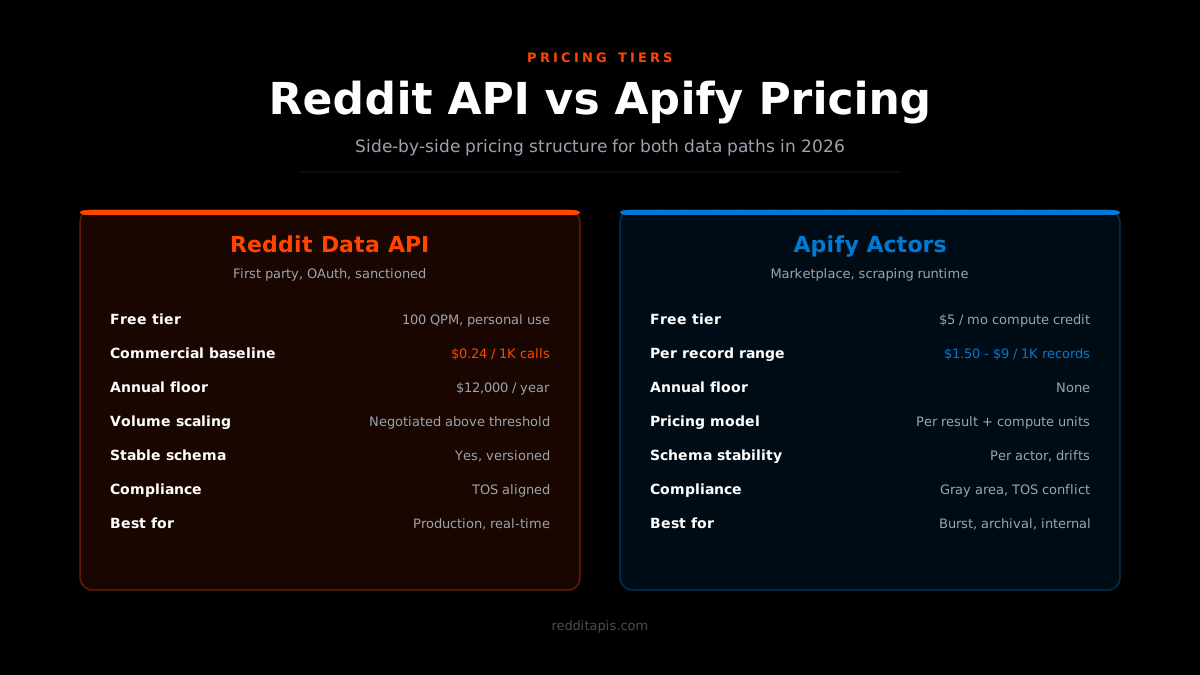
The Reddit Data API and Apify are not the same product wearing different prices. Reddit's Data API is a first-party authenticated API with stable schemas, rate-limit headers, and a commercial agreement with Reddit Inc. Apify is an actor marketplace where independent developers publish Reddit scrapers that simulate browser sessions, with per-result or per-compute-unit pricing that varies by actor and month.
Before any cost math is useful, the two products need to be described in their own terms, because they are not the same product wearing different prices.
The Reddit Data API
Reddit operates a first-party API at oauth.reddit.com. Authentication is OAuth 2.0, transport is JSON over HTTPS, and the access tier is governed by a Reddit-issued data API agreement once you cross the free-use threshold. The endpoints cover listings, comments, search, subreddit metadata, and the authenticated user surface. Write endpoints exist for posts, comments, and votes against the authenticated user. The official Reddit developer docs hold the current request budget and endpoint reference.
Reddit announced commercial pricing in mid-2023. The documented baseline for the commercial tier sits at an estimated $0.24 per 1,000 API calls, with free use capped at 100 queries per minute per OAuth client for non-commercial accounts. The pricing has been a moving target since launch and is negotiated above a threshold, so any production application above small-batch volume needs a direct conversation with Reddit's data team.
What you pay for: structured, canonical Reddit data direct from the source, with stable schemas, rate-limit headers you can read on every response, and access structured in line with Reddit's Data API Terms.
Apify
Apify is an actor marketplace and runtime, not a Reddit-specific product. Actors are containerized scrapers published by independent developers and by Apify itself. Several actors target Reddit, the most-used being trudax/reddit-scraper, pratikdani/reddit-scraper, and epctex/reddit-scraper. Each actor sets its own pricing model. Some charge per result, some charge per compute unit, some bundle both.
Typical Apify Reddit actor pricing in 2026:
trudax/reddit-scraper: subscription model with a free monthly result quota, then a per-result fee for overagepratikdani/reddit-scraper: pay-per-result at an estimated $0.30 to $0.50 per 1,000 records depending on volume tierepctex/reddit-scraper: per-compute-unit pricing in the Apify platform model, where you pay for CPU seconds and memory consumed during the run
Apify itself takes a platform fee through compute-unit consumption on top of the actor fee on most actors. Free tier of the Apify platform covers about $5 of compute usage per month, which is meaningful for testing but evaporates fast in production. The Apify platform pricing page holds the current compute-unit cost.
What you pay for: a hosted runtime, a queue, retry handling, IP rotation, and a developer's actor code that simulates a browser session against Reddit's web frontend.
Pricing Side By Side in 2026
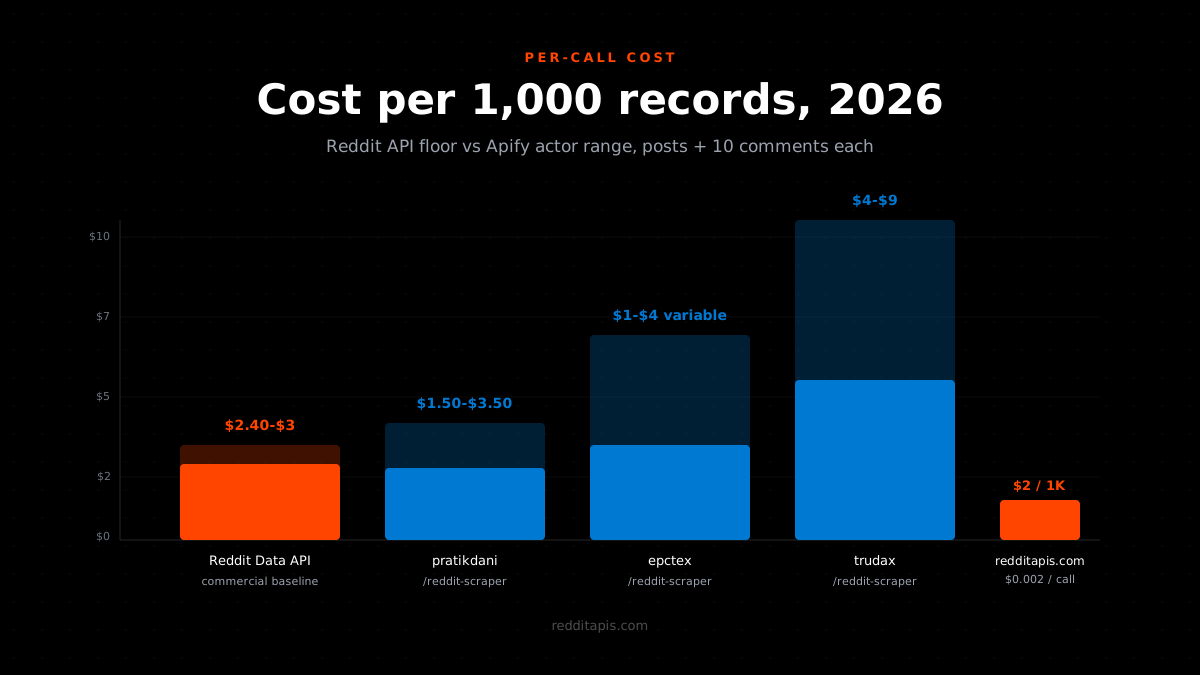
The honest comparison requires fixing a unit of work and pricing each side against it. Take 1,000 Reddit posts, fetched with title, body, score, author, comments count, and the top 10 comments. That is the workload that most RAG pipelines, sentiment dashboards, and lead-gen tools actually run.
| Vendor / actor | Pricing model | Approximate cost per 1,000 posts (with top 10 comments each) | Notes |
|---|---|---|---|
| Reddit Data API (commercial) | $0.24 per 1,000 API calls | $2.40 to $3.00 depending on whether comment fetch is one call per post or batched | Listing call returns the post, then one call per post for comment tree |
trudax/reddit-scraper (Apify) |
Per-result plus platform usage (rental pricing deprecated) | $0.10 per 1,000 results plus platform usage, after $5 of free monthly credit (live listing, 2026-10-17) | Pricing tier dependent, comments often counted as separate results |
pratikdani/reddit-scraper (Apify) |
$0.30 to $0.50 per 1,000 records | $1.50 to $3.50 for posts plus comment records | Comments billed as records; volume tiers exist |
epctex/reddit-scraper (Apify) |
Per compute unit | Variable, often $1 to $4 per 1,000 posts depending on Reddit page weight and concurrency | Pricing volatile with page-size changes on Reddit |
Reddit's figure is the reported $0.24 per 1,000 calls, derived from the roughly $12,000 per 50 million requests that The Verge (2023) reported. Apify actor prices are estimates read from each actor's listing on the Apify Store and change over time.
Two observations before reading too much into the table.
First, Apify pricing varies by actor and by month. Actors are owned by independent developers who can adjust prices. The Apify dashboard shows current numbers; any blog post (this one included) is a snapshot. Always pull live pricing from the actor page before committing to a workload model.
Second, the Reddit API number is the floor, not the ceiling. The estimated $0.24 per 1,000 calls is the baseline. The catch is what Reddit considers a billable call: most listing endpoints return 25 to 100 items per call, but the comment tree for a single post is one call regardless of how many comments come back. A workload that pulls only post listings and never recurses into comment trees gets close to the floor. A workload that fetches every comment for every post does not.
The Apollo developer Christian Selig publicly posted the call he had with Reddit about the new pricing, the same week the policy was announced. His tweet remains the canonical capture of the moment:

Christian Selig
@ChristianSelig
Just got off a call with Reddit about the API and new pricing. Bad news unless I come up with 20 million dollars (not joking). Appreciate boosts. https://t.co/FliuNCinpZ
For high-volume reads, the Reddit API floor is hard to beat on a per-record basis, especially when comment depth is shallow. For low-volume work that needs only the most-recent posts in a subreddit, Apify's free compute tier handles the workload at zero marginal cost.
Rate Limits and Throughput
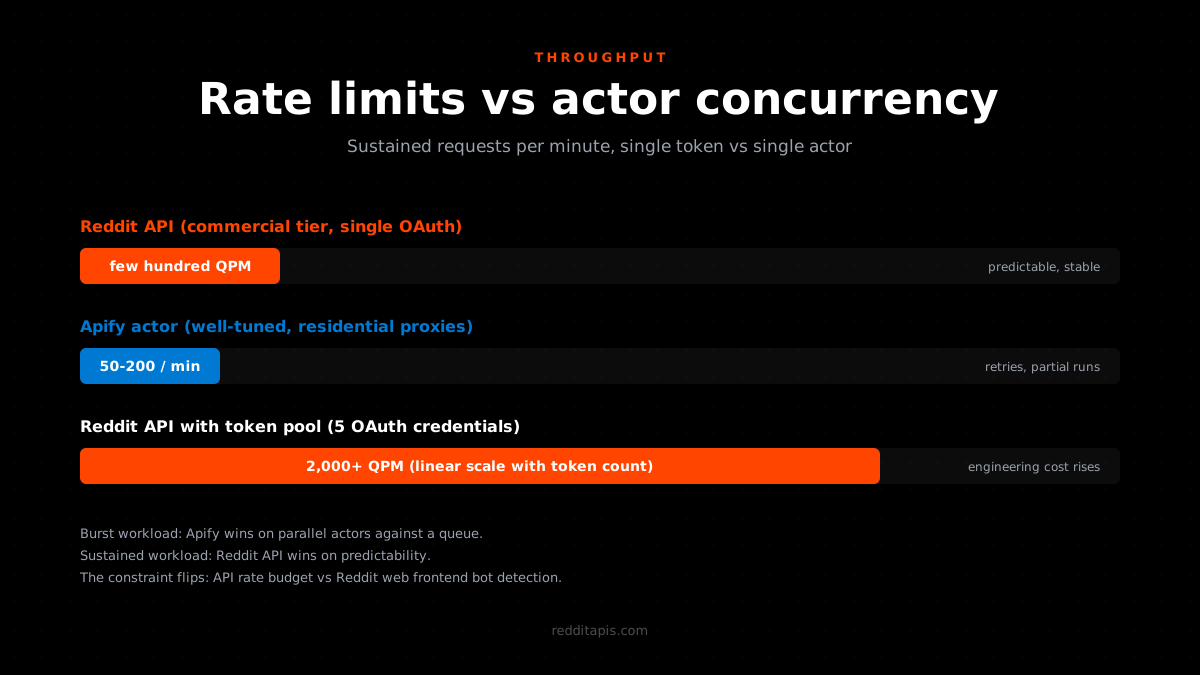
The Reddit Data API free tier caps at 100 queries per minute per OAuth client. The commercial tier is negotiated and typically lands in the low thousands of QPM, trackable via X-Ratelimit-Remaining and X-Ratelimit-Reset headers on every response. Apify actors have no API rate ceiling but are constrained instead by Reddit's bot detection on the web frontend, with a practical throughput of 50 to 200 results per minute on a well-tuned actor.
Cost is half the comparison. Throughput is the other half, and throughput is where the two products diverge sharply.
Reddit API throughput
The free tier ceiling is 100 queries per minute per OAuth client for non-commercial use. The commercial tier is negotiated and typically lands in the low thousands of QPM. The two response headers that matter on every call are X-Ratelimit-Remaining and X-Ratelimit-Reset. Reading those headers and adjusting your request rate is the entire production discipline.
PRAW (the Python Reddit API Wrapper) reads the headers automatically and inserts sleep when the budget thins out. AsyncPRAW does the same with async patterns. If you write to the API with raw HTTP, you handle the headers yourself, which is the common source of 429 errors in pipelines that bypass PRAW. The PRAW rate-limits doc covers the library-side behavior in detail.
In practice, a single OAuth credential at commercial tier supports a sustained throughput of a few hundred QPM safely. Past that, you either negotiate a higher tier with Reddit or you rotate across multiple OAuth clients.
Apify throughput
Apify's throughput is governed by the actor's concurrency setting and the Apify platform's queue. A run can scale to dozens of concurrent browser instances on the paid tier. The constraint is no longer the API rate, it is Reddit's bot detection on the web frontend. Apify actors handle this with residential proxy pools, browser fingerprint rotation, and request pacing. The practical ceiling for a well-configured Apify actor is roughly 50 to 200 results per minute before Reddit's web frontend starts returning empty pages or login walls.
The throughput math:
- Reddit API at commercial tier: stable few hundred QPM, predictable, no scrape failures
- Apify on a well-tuned actor: 50 to 200 results per minute, occasional retries, occasional partial runs
For burst workloads (a one-time pull of 10,000 posts), Apify can be faster end-to-end because it runs many actors in parallel against a queue. For sustained workloads (a Reddit listening pipeline running 24x7), the Reddit API is more predictable because it does not bend to Reddit's anti-bot measures.
A relevant developer thread on Apify Reddit scraper throughput experience:
Here's your snack for today
[removed]
Cost-Per-Record Decision Matrix
The correct choice between the Reddit Data API and Apify depends on volume and freshness, not on a simple per-record comparison. Below 500,000 records per month with daily-or-better freshness, the Reddit API floor is low enough to dominate. Above that, Apify's burst economics can be cheaper for internal workloads that tolerate occasional partial runs. Real-time monitoring within minutes of a post requires the Reddit API; weekly batch sentiment analysis can use Apify effectively.
The pricing and throughput math leads to different conclusions for different workloads. Below is the matrix that actual developer teams use when planning a Reddit data pipeline.
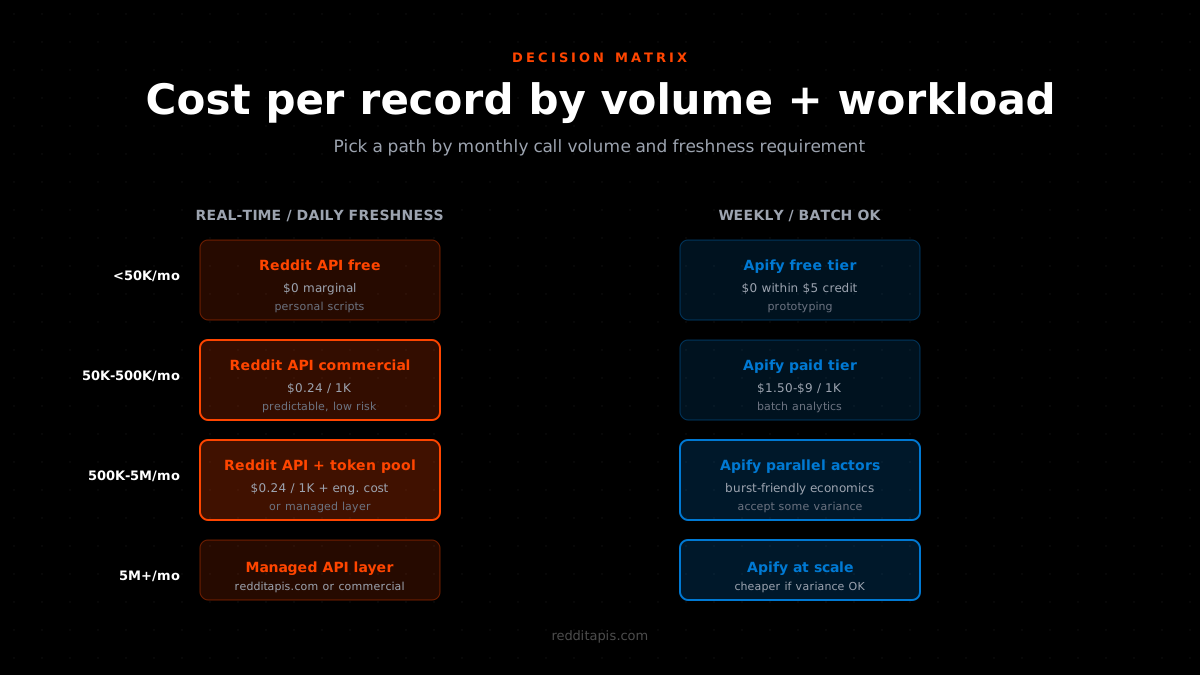
Two patterns are worth pulling out of the matrix.
The lower the volume and the higher the freshness requirement, the more the Reddit API wins. The higher the volume and the more tolerant the workload is of "as of yesterday" data, the more Apify wins.
The cross-over point sits around 500,000 records per month for a workload that needs daily-or-better freshness. Below that line, the Reddit API floor is so low and so predictable that it dominates. Above that line, Apify's burst economics can pull ahead, but only if the workload accepts occasional partial runs and the terms for each access path are reviewed internally.
For the workload-specific cuts:
- Personal scripts and one-off pulls: Reddit API free tier covers it. OAuth setup is one-time cost.
- Internal dashboards at a single team: either works. Apify free credit covers 50K records easily for low-frequency runs.
- RAG context retrieval at hobby-SaaS volume: Reddit API commercial. Predictable cost, predictable throughput, no scrape failures degrading agent quality.
- Production AI agent, multi-tenant: Reddit API commercial with token pooling, or a managed API layer. Per-tenant rate-limit headroom matters more than raw cost at this scale.
- Lead-gen pipeline at sales-tool volume: Apify if data freshness OK at hours, Reddit API if minutes. Apify wins on burst cost; Reddit API wins on freshness and compliance.
- Sentiment dashboard at weekly batch: Apify with parallel actor runs. Burst-friendly, fine if data is "as of last weekend."
- Real-time monitoring within a minute of post: Reddit API only. Apify cannot match the freshness profile of the official listing endpoint.
- Historical archive (pre-2020 posts): Neither, or specialized provider. Pushshift gone; Reddit API does not surface old posts at scale; check Common Crawl or commercial archives.
Reddit API Workload Split: Listings vs Comments
This section matters because most pricing comparisons skip it and get the wrong answer. The Reddit API's estimated $0.24 per 1,000 calls is not the price per record. It is the price per call. The mapping from calls to records depends on the workload shape.
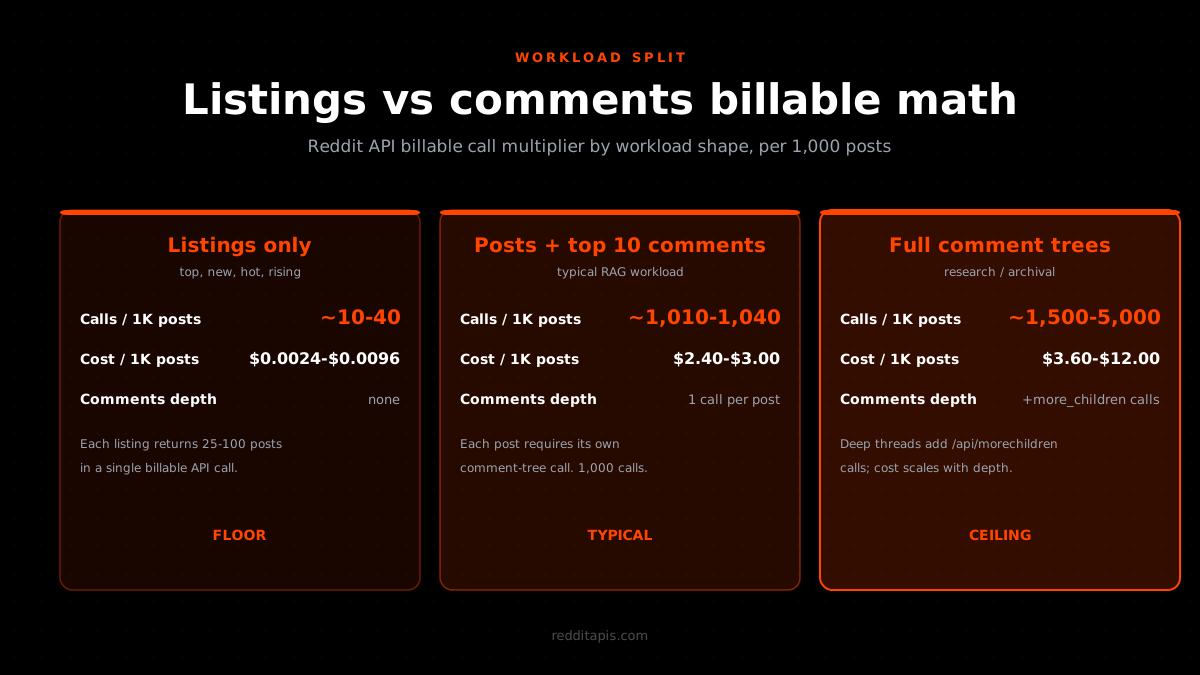
A listings-only workload (top posts in a subreddit, hot, new, rising) returns 25 to 100 posts in a single billable call. The effective rate is an estimated $0.0024 to $0.0096 per 1,000 posts. That is the floor.
A posts-plus-top-10-comments workload (typical RAG pipeline) needs the listing call plus one comment-tree call per post. For 1,000 posts that is roughly 1,010 to 1,040 calls. Cost lands at an estimated $2.40 to $3.00 per 1,000 records.
A full-comment-tree workload (archival, research, sentiment dashboards that need every reply) adds one or more /api/morechildren calls per deep thread. For 1,000 posts with deep threads, expect 1,500 to 5,000 calls and a cost of an estimated $3.60 to $12.00 per 1,000 records.
The cost-per-1K-records range on the Reddit API is therefore an estimated $0.0024 to $12.00 depending entirely on what "a record" means in your workload. Compare that against the Apify per-record pricing band of $1.50 to $9.00 and the answer flips for a listings-only workload but stays competitive for deep comment-tree pulls.
For deeper code patterns on minimising billable calls, see /blogs/reddit-api-python-tutorial.
Start building with Redditapis
Reads $0.0015, votes $0.005, writes $0.012, DMs $0.025. $0.50 free credits.
Compliance and Risk Posture
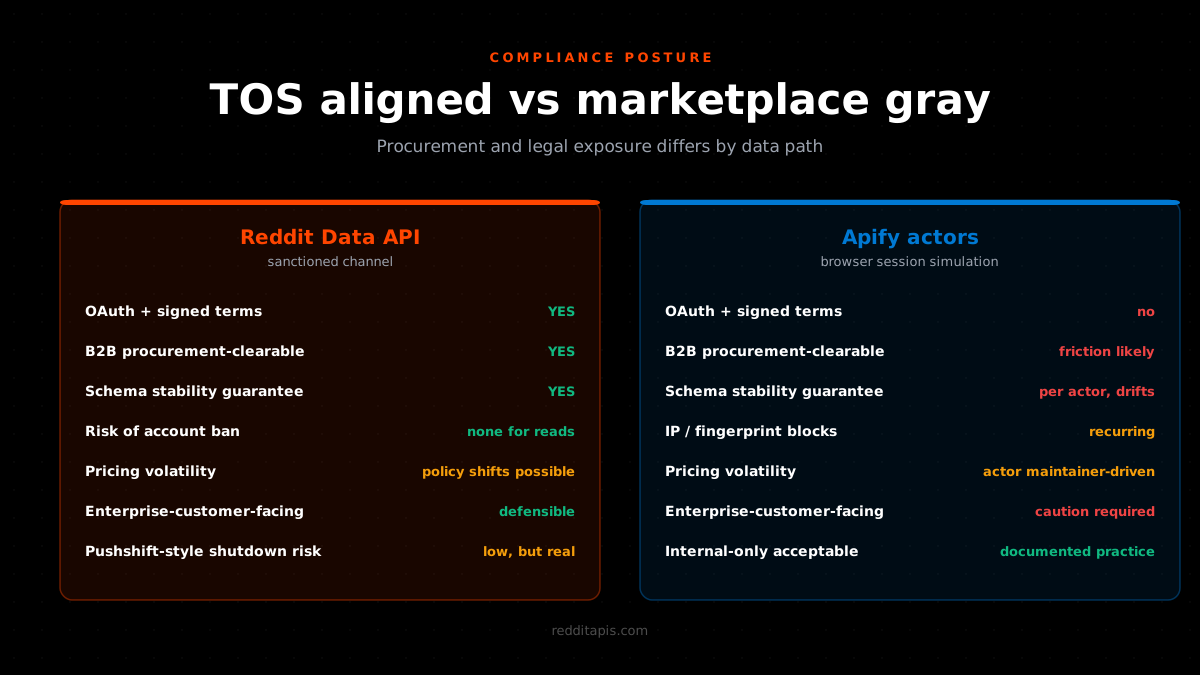
The Reddit Data API is a first-party authenticated channel with stable schemas and a documented data access agreement. Apify actors access Reddit's web frontend through browser simulation rather than API credentials, without a formal data API agreement with Reddit. For enterprise products sold to regulated buyers, the Reddit API is the more defensible path on procurement grounds. For internal analytics and research, the practical risk of Apify is lower but depends on the actor maintainer keeping up with Reddit's bot-detection updates.
This is the section that gets glossed over in most pricing comparisons, and it changes the recommendation for entire categories of use case. The three procurement-relevant dimensions:
- TOS alignment decides whether enterprise procurement clears the data path.
- Schema stability decides whether downstream pipelines break on an upstream change.
- Account-risk surface decides whether your data source can disappear without warning.
Reddit API
The Reddit API is a first-party authenticated channel. You authenticate with OAuth, you accept Reddit's Data API Terms, and you operate inside a stable contractual relationship. The access terms are documented: you are using the API under the agreement Reddit provides. Your account does not get suspended for sustained read activity, your access does not silently degrade, and the data schema is stable.
The trade-off: you operate inside Reddit's pricing and access decisions. Reddit can adjust pricing, raise the floor on what counts as commercial use, or restrict endpoints. The 2023 pricing shift removed Pushshift and broke a generation of Reddit research tools. The next policy shift will land the same way. See the Pushshift access-removal thread for the contemporaneous developer reaction.
Apify
Apify actors operate by simulating browser sessions against Reddit's web frontend rather than using API credentials. Reddit's Developer Terms document the authenticated API as the structured access path; browser simulation sits outside that documented channel. Reddit detects and blocks scraping patterns at the IP, fingerprint, and account level. Most actors include residential proxy rotation specifically because Reddit's data center IP blocks land hard.
The access model: you are accessing Reddit's data outside the authenticated API channel. For internal tools and research, this is a documented common practice and the terms landscape varies by jurisdiction (the hiQ vs LinkedIn litigation is the closest precedent and has gone back and forth on appeal). For products you sell to enterprise customers, review your exposure with legal before building a production dependency on actor traffic.
The 2023 Reddit policy shift hit Apify Reddit actors in a real way. The actors did not stop working, but Reddit hardened its bot detection and several long-running actors had multi-week downtime in the immediate aftermath. The actors that survived are the ones with active maintainers who push fingerprint updates regularly.
A read of the developer-side reaction at the time:
Security camera in outside duct?
Our neighbors have installed a camera on their property, but the placement confuses me. They live in a mobile home and have a duct where their bathroom is, close to the bottom. Is it even possible to set up a camera…
For any workload that depends on stable data flow and that has a customer-facing SLA, the Reddit API path is the lower-risk choice on compliance grounds alone. For internal analytics where occasional gaps are acceptable, Apify is fine.
Failure Mode Timeline
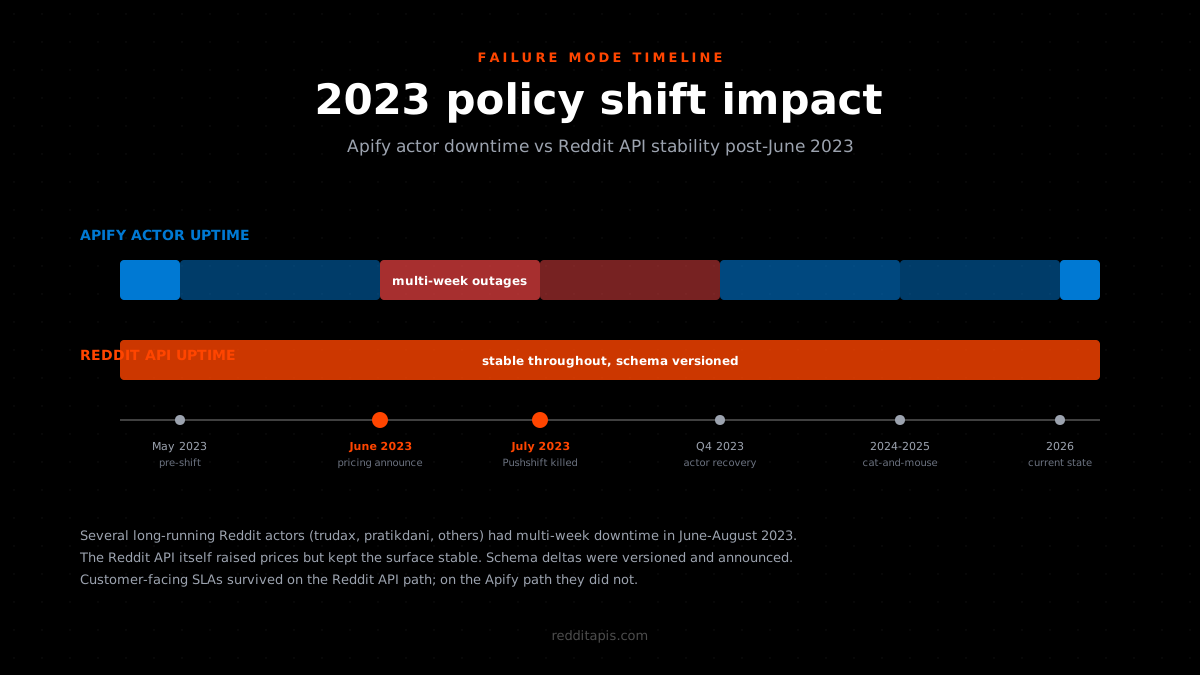
The 2023 Reddit API pricing announcement was not the only event that mattered. The follow-on outages, fingerprint hardening waves, and Pushshift removal all reshaped what each platform could deliver. The failure-mode timeline below summarises the impact on each path. The four events that reshaped 2023-2026 Reddit data engineering:
- June 2023: Reddit announced commercial API pricing at a reported $0.24 per 1,000 calls, about $12,000 for 50 million requests.
- July 2023: Pushshift access was shut down. Historical-backfill tooling broke industry-wide.
- Q3 2023: Apify Reddit actors hit multi-week downtime as Reddit hardened anti-bot fingerprinting.
- 2024-2026: Cat-and-mouse pattern stabilized. Maintained actors recovered; abandoned actors did not.
For the deeper backstory on what the 2023 change meant for developers building on Reddit data, the Apollo developer's video interview with Snazzy Labs is the most-referenced explainer:
The interview walks through the per-user cost math that made the new pricing fatal for third-party Reddit clients, the conversation Christian Selig had with Reddit's team, and the broader implications for any developer building on the Reddit API.
The takeaway for production planning: the Reddit API has had pricing volatility, but the surface itself has been stable. Apify actors have had multi-week downtime windows tied to Reddit's anti-bot updates. Either failure mode is survivable with the right risk mitigation; neither is invisible.
Code Examples: The Same Workload on Both Sides
Two side-by-side examples to make the developer experience concrete. The workload: pull the top 25 posts from r/python from the last 24 hours and return title, score, author, and URL.
PRAW (Reddit API)
import praw

reddit = praw.Reddit(
    client_id="YOUR_CLIENT_ID",
    client_secret="YOUR_CLIENT_SECRET",
    user_agent="reddit-vs-apify-example/1.0 by u/yourusername",
)

posts = []
for submission in reddit.subreddit("python").top(time_filter="day", limit=25):
    posts.append({
        "title": submission.title,
        "score": submission.score,
        "author": str(submission.author),
        "url": submission.url,
    })

print(f"Pulled {len(posts)} posts")
print(f"Remaining budget: {reddit.auth.limits['remaining']}")
That call burns one OAuth request from the budget. The reddit.auth.limits dict gives you { 'remaining': int, 'reset_timestamp': float, 'used': int } so you can plan the next batch against the current window.
For a deeper walkthrough of the PRAW rate-limit handling, see Reddit API rate limits in 2026 and /blogs/reddit-api-python-tutorial.
Apify SDK (Python client)
from apify_client import ApifyClient

client = ApifyClient("YOUR_APIFY_TOKEN")

run_input = {
    "startUrls": [{"url": "https://www.reddit.com/r/python/top/?t=day"}],
    "maxItems": 25,
    "scrollTimeout": 30,
}

run = client.actor("trudax/reddit-scraper").call(run_input=run_input)

posts = []
for item in client.dataset(run["defaultDatasetId"]).iterate_items():
    posts.append({
        "title": item.get("title"),
        "score": item.get("score"),
        "author": item.get("username"),
        "url": item.get("url"),
    })

print(f"Pulled {len(posts)} posts")
The Apify run takes longer wall-clock time because it spins up a browser actor, fetches the page, parses it, and writes to a dataset. A typical run for 25 items lands in 20 to 60 seconds. Compute units consumed are visible in the run summary in the Apify dashboard.
The two snippets compute the same result. The difference is the operating cost and the failure surface. The PRAW call either returns or raises a 429. The Apify call either returns, returns partial, or times out at the actor level, with retries managed by the platform.
For developers running a sustained read pipeline, the PRAW experience is more boring, and boring is the right adjective for a data layer in production.
Hybrid Pipeline Architecture
Most real production teams do not stay on one path forever. The most stable production pattern in 2026 is a hybrid pipeline: Reddit API for the hot path, Apify for the cold path, merged in the warehouse at query time. The hybrid split locks in four design choices:
- Hot path: Reddit API for last 7-30 days. Customer-facing surface reads here.
- Cold path: Apify actors for archival pulls. Analytics warehouse reads here.
- Storage: two warehouse tables, written independently, never joined at ingest.
- Read layer: union view materializes at query time. Downstream consumers see one schema.
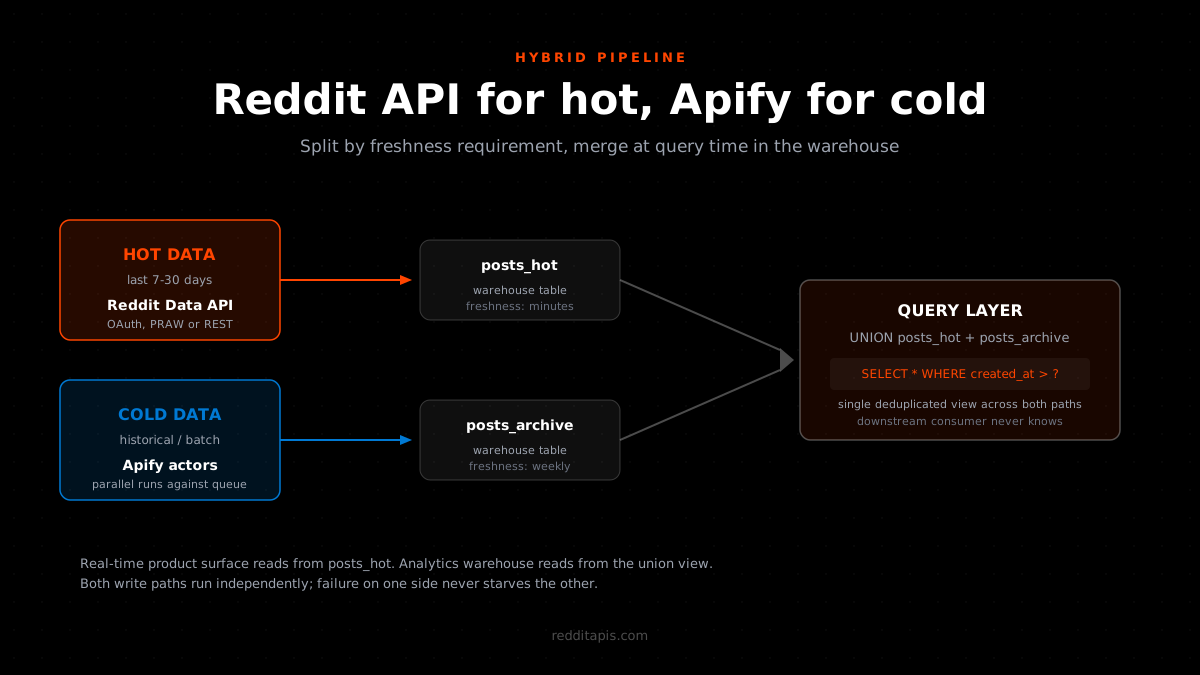
The hot path covers the last 7 to 30 days of Reddit data. Listings, fresh comments, real-time mentions. This feeds the customer-facing surface where freshness matters and compliance is non-negotiable. The Reddit API is the right fit because the schema is stable, the latency is predictable, and the compliance posture is defensible.
The cold path covers historical pulls, weekly aggregations, sentiment-trend backfills, archival research. This feeds the analytics warehouse where occasional gaps are acceptable and burst economics matter more than absolute reliability. Apify is the right fit because parallel actor runs against a queue can move millions of records in a weekend at a per-record cost that beats negotiating a higher Reddit API tier for a one-time job.
The two paths write to different tables in the warehouse. The merge happens at query time inside the BI layer or the application's data API. Downstream consumers see a single deduplicated view across both paths; they never know which path delivered a given record.
This split is the pattern that 2026 production teams converge to once they have run a few production cycles on a single-path setup and felt the limits.
Migration Paths Between the Two
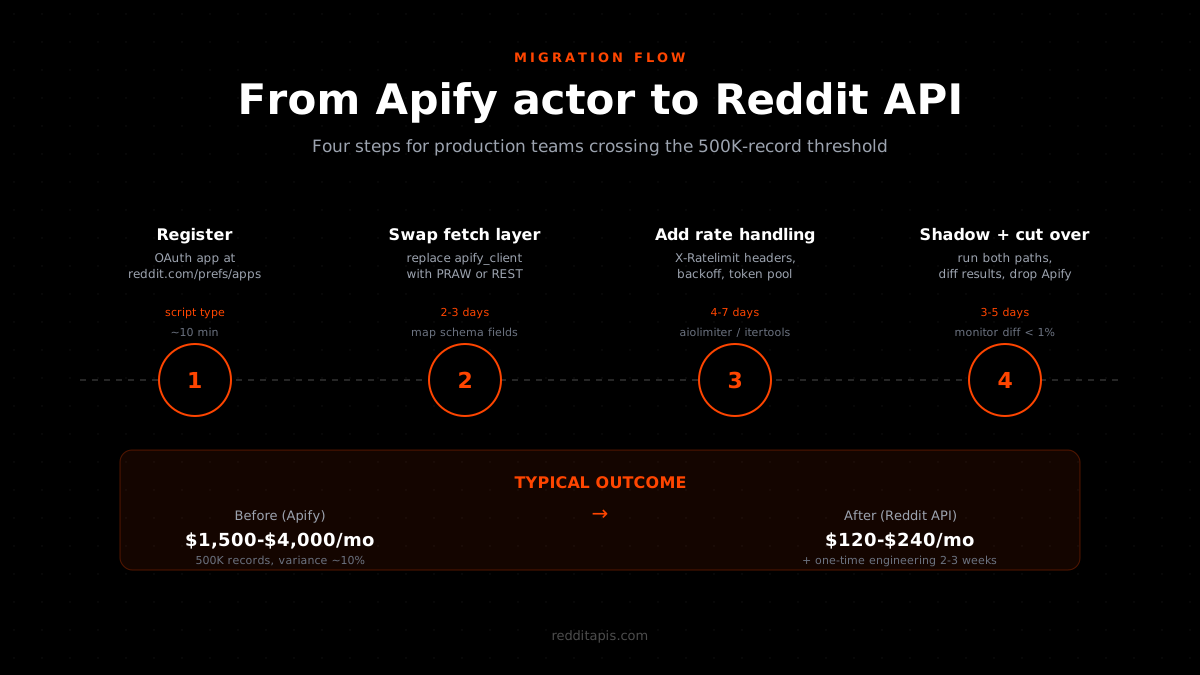
Teams move between the Reddit API and Apify in both directions. Apify-to-Reddit-API migrations are triggered when workloads cross 500K records per month with daily freshness requirements or when a customer-facing SLA is added; the engineering cost is 1-3 weeks. Reddit-API-to-Apify migrations make sense for one-time research bursts or when workloads shift from real-time to weekly batch, dropping the freshness requirement.
Teams move between the two paths often enough that the migration patterns are worth describing as a category.
Apify to Reddit API
Triggered by: workload crosses 500K records per month with daily-or-better freshness requirement, or a customer-facing SLA is added.
Engineering work: OAuth app registration, PRAW or AsyncPRAW integration, rate-limit handling code, token-pool design if concurrent volume warrants it. Most teams budget 1 to 3 weeks of focused engineering time.
Cost shift: typically lower cost per record at high volume, but adds engineering time. Worth it when the workload economics dominate.
The migration steps the diagram above tracks:
- Register an OAuth app at reddit.com/prefs/apps under a script-type app. About 10 minutes.
- Swap the
apify_clientfetch layer for PRAW or a raw-REST adapter. 2 to 3 days, mostly schema field mapping. - Add rate-limit handling: parse
X-Ratelimit-*headers, add backoff with jitter, build a token pool if concurrent volume warrants it. 4 to 7 days. - Run both paths in shadow mode against the same workload, diff the results, drop Apify when the diff is under approximately 1%. 3 to 5 days.
Reddit API to Apify
Triggered by: one-time research workload that does not justify negotiating a higher commercial tier, or a workload moves from real-time to weekly batch and the freshness requirement drops.
Engineering work: Apify account setup, actor selection, input schema authoring, dataset egress integration. Most teams budget a few days for an internal pipeline. Production-grade work scales up.
Cost shift: lower marginal cost per record for burst workloads, but variance is higher. Acceptable for analytics, risky for end-user-facing surfaces.
For a working example of a Reddit pipeline that uses this split, see the REST API vs PRAW breakdown for the Reddit Data API and the Reddit DM API integration guide.
The cheapest Reddit API. Try it free.
Reads from $0.0015 per call. $0.50 free credits. No credit card required.
Total Cost of Ownership at 1K, 100K, 10M Records
The headline pricing numbers do not include the engineering overhead each path imposes. The total cost of ownership at three volume tiers is the truer comparison. TCO breaks into three line items at every volume tier:
- Direct platform cost: per-call or per-record billed by the data source.
- Engineering overhead: OAuth, rate-limit code, token pools, monitoring, maintenance.
- Variance budget: rework when an actor breaks or a Reddit policy shift triggers a rewrite.
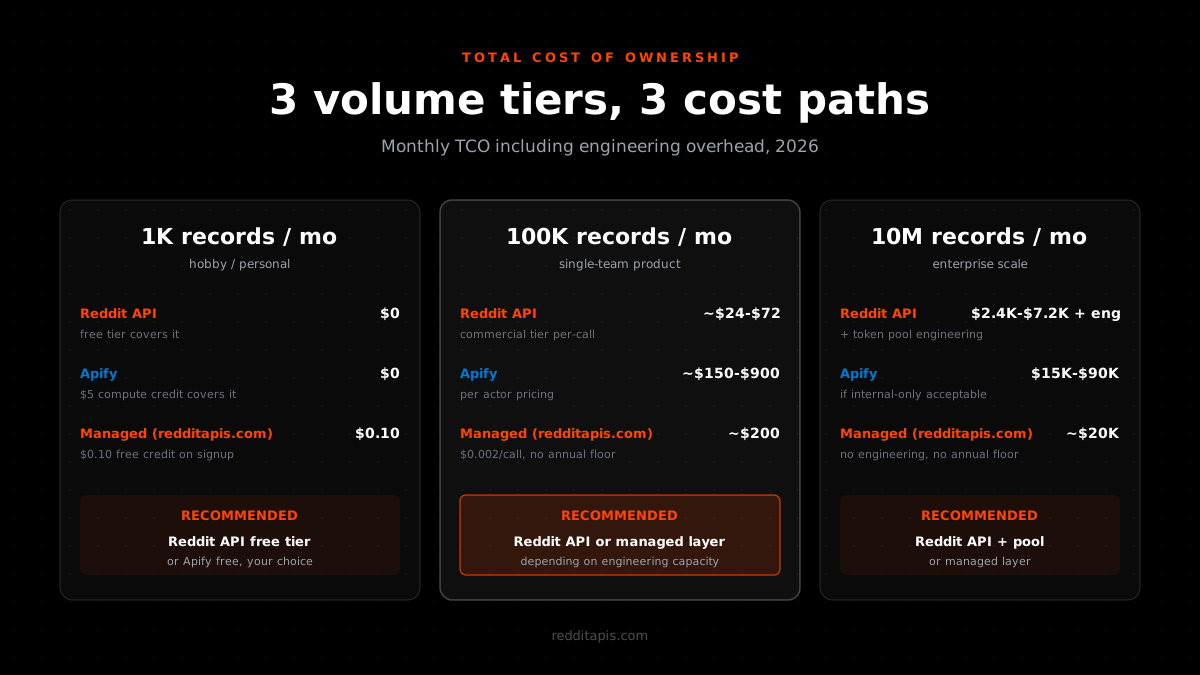
At 1K records per month, the comparison is moot. Free tiers on both sides cover the workload. Reddit API free tier handles personal scripts; Apify's $5 monthly compute credit (Apify pricing) covers a prototype.
At 100K records per month, the Reddit API commercial tier lands at an estimated $24 to $72 per month before engineering overhead. Apify actors land at $150 to $900 per month depending on which actor and how comment-heavy the workload is. The managed redditapis.com path lands around $150 per month at $0.0015 per call with no engineering work needed. The Reddit API direct path wins on absolute cost; the managed path wins on engineering overhead.
At 10M records per month, the Reddit API commercial tier is an estimated $2,400 to $7,200 per month, plus token-pool engineering (1 to 3 weeks of focused dev work upfront, then ongoing maintenance). Apify at this scale runs $15K to $90K per month depending on the actor and the workload mix. The managed redditapis.com path runs around an estimated $15K per month with no engineering work. At this scale the Reddit API direct path is cheapest if you have the engineering capacity; the managed path is competitive if you do not.
The pattern across all three volume tiers: Reddit API direct is the cheapest pure-dollar option but the most engineering-heavy. Apify is the cheapest for burst-tolerant internal workloads. The managed layer is the cheapest in engineering-hours and the most stable in compliance posture.
When the Reddit API Is Not Enough in 2026
There is a real category of use case where the official Reddit API is the right choice but where the rate-limit overhead pushes engineering teams to add a layer on top. These are workloads where per-token budget is the binding constraint, not per-call cost.
The pattern that hits this wall first is the AI agent loop. An agent that takes a user query, searches Reddit for context, fetches several post bodies, and pulls top comments for a few of them issues roughly 10 to 20 API calls per user turn. At 100 concurrent agent sessions, that is 1,000 to 2,000 API calls per minute against a single OAuth token. The free tier ceiling at 100 QPM is gone in the first turn. The commercial tier handles it for a while, then you negotiate a higher tier, then you start pooling tokens.
Token pooling is where engineering cost rises faster than the API bill. You need:
- A pool of OAuth credentials across multiple Reddit accounts
- A round-robin or least-loaded selection layer
- Per-token rate-limit tracking from the response headers
- A retry layer that handles 429 across the pool, not against one token
- Monitoring that flags token degradation before the pool starves
This is the layer that managed Reddit API services exist to provide. Production teams that started with a few PRAW instances and a queue often end up rewriting toward a managed layer once concurrent agent traffic crosses the 10-tenant mark.
The full API documentation at docs.redditapis.com and DM endpoint docs describe a managed surface that handles pooling, retry, and budget distribution at the platform layer. You call one endpoint; the platform handles token rotation behind it. The pricing page lets you run the math against a commercial Reddit API agreement plus internal engineering cost, which is the comparison most teams skip until they are already past the wall.
This is not the right path for every workload. For a personal script or a single-team dashboard, the direct Reddit API path is correct and the managed layer adds cost without benefit. The decision point is the moment your concurrent agent traffic or your multi-tenant read load starts forcing you to build token-pool infrastructure as a side project.
When Apify Is the Right Call
There is also a real category of use case where Apify is the right answer and the Reddit API would be the wrong call. Worth being explicit about this, because Reddit-API-only takes on Apify tend to undersell where Apify wins. The shortlist of conditions under which Apify is the right tool:
- Burst archival pulls. A one-time 10-million-post research workload is faster and cheaper through parallel actor runs than negotiating a single-month commercial Reddit API tier.
- Quick prototypes and proofs of concept. Skip the OAuth app registration and the rate-limit code until you have evidence the product idea is worth it.
- Workloads outside the Reddit API's surface. A small set of Reddit web pages do not have clean API equivalents, including some trending-topic feeds and certain search variants.
- Cost optimization at large internal-only scale. A 50M-record monthly internal-analytics workload can land below Reddit API commercial pricing on a per-record basis if reliability variance is acceptable.
The trade-off in every Apify case is reliability variance. For internal analytics that variance is often acceptable. A weekly aggregation that misses approximately 2% of records is fine for a sentiment dashboard. For customer-facing surfaces it is not.
A r/Python discussion on the actual cost crossover in production:
Love thes colors

What Most Comparisons Get Wrong
Most Reddit API vs Apify comparisons published since 2023 contain three distortions: framing it as free versus paid when both have real costs past the free tier, ignoring the compliance line that matters to enterprise procurement, and treating Apify actor pricing as stable when independent maintainers change prices monthly. The recommendation changes substantially once all three are weighted correctly.
Three patterns to flag because they show up in nearly every Reddit API vs Apify comparison published since 2023, and they distort the recommendation:
- Framing it as a free vs paid choice. The free tier of the Reddit API is real and it is generous for personal scripts. The Apify free tier is real and it is generous for prototypes. Both have free paths. The comparison is not free vs paid; it is which paid model fits your workload past the free tier ceiling. A blog post that opens with "Reddit API is expensive, Apify is free" is selling Apify and skipping the workload math.
- Ignoring the compliance line. If the product you are building has paying enterprise customers, the provenance of scraped data is a real procurement issue. Procurement and security teams ask where data comes from, and "we scrape Reddit through a third-party actor marketplace" is a different answer than "we license commercial Reddit API access." For B2C and internal tools the question rarely matters. For B2B enterprise the question gates the deal.
- Assuming the actor pricing is stable. Apify actors are independent developer code. The maintainer can adjust pricing month over month and has incentive to do so as Reddit's anti-bot measures harden the actor's compute cost. Workloads that depend on a specific actor's price point should track the actor's pricing page and have a fallback actor identified. The Reddit API pricing is more stable simply because Reddit publishes it formally and any change is a public policy event.
How to Decide for Your Workload
The decision between the Reddit Data API and Apify collapses to four workload cuts: freshness in minutes plus customer-facing surfaces point to the Reddit API, daily or weekly internal analytics fit Apify, multi-tenant AI agents need a managed Reddit API layer with token pooling, and one-time research bursts work well on Apify's free tier without commercial-tier negotiation.
The decision rule that holds up across most production teams in 2026 collapses to four cuts:
- Freshness needed in minutes + customer-facing: Reddit Data API direct, or managed layer.
- Daily or weekly freshness, internal analytics: Apify works, manage the variance budget.
- Multi-tenant or AI agent at concurrency: managed Reddit API layer with token pooling baked in.
- One-time research burst: Apify free or paid tier, no commercial-tier negotiation needed.
If your workload needs daily-or-better freshness and you have a customer-facing surface, start with the Reddit API. The access terms are documented, the rate-limit math is predictable, and the cost is competitive on a per-record basis at production volume.
If your workload is internal analytics, batch-tolerant, or a one-time burst, start with Apify. If you have already decided against it and want the migration path rather than the comparison, our Apify alternative for Reddit data covers the swap directly. The free tier covers a lot of prototyping, the per-record economics at burst volume can land below Reddit API pricing, and internal-use workloads commonly accept the provenance trade.
If your workload is multi-tenant, AI-agent-heavy, or your concurrent traffic is forcing you to build token-pool infrastructure as a side project, look at a managed API layer that abstracts the pooling and retry work. The full API documentation covers the managed surface, and /pricing is published transparently. The decision is not Reddit API vs Apify; it is whether you want to spend engineering time on infrastructure or on product.
Sign up to test the managed endpoints directly against your workload before negotiating a commercial Reddit API tier on your own. For the related deep dives on rate-limit code and PRAW alternatives, see /blogs/reddit-api-rate-limits-2026, /blogs/reddit-data-api-rest-vs-praw-2026, and /blogs/reddit-api-python-tutorial.
Where these numbers come from.
Each row is a figure in this post and the artefact it was read from. Reddit's access rules and the third-party archives around them keep moving, so check the date on a source before you build against it.
- redditapis.com pricing
- The $0.0015-per-call figure the cost matrix is built on, read from the managed API's own pricing page.
- Apify pricing
- Apify's compute-unit and platform-plan model, the basis for the per-record cost figures on the Apify side of the comparison.
- Apify usage and resources
- How Apify meters actor runs in compute units, cited when translating throughput into cost per record.
- Reddit Data API Terms
- Reddit's commercial data terms, the compliance and risk posture the article contrasts against a hosted proxy.
- Reddit Data API Wiki
- Reddit's own rate-limit documentation behind the throughput ceilings in the rate-limits section.
Frequently asked questions.
Reddit's commercial Data API tier baseline sits around $0.24 per 1,000 API calls, with the free tier capped at roughly 100 queries per minute per OAuth client for non-commercial use. Apify Reddit actors price per result or per compute unit and typically land between $1.50 and $9 per 1,000 records depending on the actor and the workload mix. For high-volume reads above 500,000 records per month, the Reddit API floor is usually lower on a per-record basis. For low-volume or batch workloads, Apify's free compute tier can cover the work at zero marginal cost. See /pricing for the managed third-party path that prices at $0.0015 per GET read.
For most high-volume read workloads above 500,000 records per month with daily-or-better freshness, the Reddit API floor sits below typical Apify actor costs on a per-record basis. The exact line depends on the specific Apify actor's pricing and how the workload distributes between listing calls and comment-tree calls on the Reddit API side. Workloads that pull only listings hit the Reddit API floor; workloads that recurse into every comment tree push the Reddit API cost up because each post's comment fetch is a separate billable call. See /blogs/reddit-api-rate-limits-2026 for the rate-limit math.
The documented baseline for Reddit's commercial Data API tier sits around $0.24 per 1,000 API calls. Pricing is negotiated above threshold volume, so high-volume buyers often land below the published baseline. The free tier remains available for personal, non-commercial OAuth applications at the documented per-token request budget. Numbers shift; always pull current pricing from Reddit's developer site or your account representative before locking a budget model. See /pricing for the managed pay-per-call alternative.
Actor reliability changes month to month as Reddit hardens bot detection and individual actor maintainers push updates. As of mid-2026, the actively maintained options include trudax/reddit-scraper, pratikdani/reddit-scraper, and epctex/reddit-scraper. Each has trade-offs: trudax is the most-installed with the largest community usage signals, pratikdani tends to have the most aggressive volume pricing, epctex is on per-compute-unit pricing which suits some workloads better. Before committing a production workload, run a 100-result test against each and check the actor's update cadence on the Apify console. See /blogs/reddit-data-api-rest-vs-praw-2026 for the official-API alternative.
Yes, and a meaningful fraction of production Reddit pipelines do exactly this. The common split is Reddit API for hot, real-time data (last 7 to 30 days) and Apify for historical or batch pulls (older posts, archival workloads, weekly aggregations). The split is driven by the freshness requirement and the compliance profile of each segment. Real-time customer-facing data tends to come through the Reddit API; internal analytics that tolerates higher latency comes through Apify. The two paths write to different tables in the warehouse, and the merge happens at query time. See /blogs/reddit-data-api-rest-vs-praw-2026 for the REST adapter alternative.
Limited. Reddit's listing endpoints surface recent posts in standard listings (new, hot, top, rising), and the search endpoint can find older posts by query. There is no firehose, no time-range query that returns every post from 2019, and no efficient way to backfill an archive. Pushshift, which was the historical backfill source for most academic and commercial workloads, shut down as part of the 2023 policy shift. For historical Reddit data at scale in 2026, the options are search-based pulls through the Reddit API, Common Crawl extracts (free, partial, lagging), or commercial Reddit data archive providers (paid, complete coverage, separate license agreement). See /blogs/reddit-api-python-tutorial for the pull-pattern code.
Reddit's Developer Terms document the authenticated API as the structured access path for automated data access. Apify actors operate by simulating browser sessions against Reddit's web frontend rather than using API credentials. Third-party scraping of public web pages remains an active area of debate in courts across jurisdictions (the hiQ vs LinkedIn litigation is the closest reference and has gone through multiple appeals). For internal research and analytics, the practical risk is low and the documented common practice is widespread. For products with enterprise customers, procurement teams often ask about data provenance and the access path changes the calculus. Review Reddit's current Developer Terms for your use case, and consult your legal team before building a product that depends on actor traffic for its data layer. See /signup for an API-credential path.
PRAW (the Python Reddit API Wrapper) is a client library for the Reddit Data API. It handles OAuth, rate-limit headers, and the JSON parsing that you would otherwise write by hand. Apify actors are scrapers that run in Apify's hosted runtime. The two are not directly comparable; they sit at different layers. PRAW plus the Reddit Data API is one stack. Apify SDK plus a Reddit actor is a different stack. PRAW gives you faster developer experience for any Reddit API integration; Apify gives you a managed scraping runtime that does not require API credentials. See /blogs/reddit-data-api-rest-vs-praw-2026 for the REST alternative to PRAW.
The actor stops returning complete data and the actor maintainer pushes a fix. Lag between Reddit's change and the maintainer's fix can be anywhere from hours to weeks depending on the actor's maintenance cadence. During the 2023 policy shift, several long-running Reddit actors had multi-week downtime. For any production workload on an Apify actor, the right risk mitigation is to monitor data completeness daily (record count vs baseline, schema validation, empty-page detection) and to have a fallback actor identified. The Reddit API does not have this failure mode because Reddit owns both the API and the data; schema changes are versioned and announced. See /blogs/reddit-api-rate-limits-2026 for the rate-limit headers reference.
Keep reading.
Continue exploring related pages.
Reddit API documentation
The complete 2026 reference: auth, all 59 endpoints, and code.
Get a Reddit API key
Instant bearer token, no waitlist and no enterprise contract.
Reddit Responsible Builder Policy
Why Reddit denies API applications, and the managed REST bypass.
Reddit API use cases
14 use cases from AI training to brand monitoring and DMs.
Reddit Search API
Search posts, comments, users, and communities over one REST endpoint.
Reddit MCP server
Wrap the REST API as MCP tools for Claude, Cursor, and any MCP client.
Reddit MCP hub
Install tabs for every client, the full tool table, pricing and fixes.
Reddit API for AI agents
Live Reddit context for tool calls, MCP servers, and RAG pipelines.
Redditapis pricing
Endpoint-level costs and quick monthly totals - reads from $0.0015 / call.
Reddit API cost calculator
Estimate monthly spend using your request volume.
Reddit API guides and tutorials
Tutorials, walkthroughs, and API deep-dives for developers.
Reddit API alternatives
Evaluate alternatives by cost model, limits, and integration fit.
Cheap Reddit API
The cheapest way to get Reddit data: $0.0015 per call, no contract, no minimum.
Official Reddit API vs Redditapis
Access, setup, rate limits, and pricing, side by side.
PRAW alternative
A hosted Reddit REST API for any language, no app registration or OAuth.
Reddapi alternative
A maintained Reddit REST API with published pricing and write endpoints.
Reddit comment scraper alternative
The raw comment API: search and filter comments, historical and live, clean JSON.
Reddit scraper API
Hosted scraper API vs building your own: no proxies to manage, clean JSON.
RapidAPI Reddit alternative
A direct, maintained Reddit API with published pricing and write endpoints.
Bright Data Reddit alternative
A purpose-built Reddit API vs a general scraping platform: structured JSON, plus writes.
ScraperAPI Reddit alternative
A Reddit-native API vs a generic HTML fetcher: auth and pagination handled, typed JSON.
TikHub alternative
TikHub's Reddit surface is read-only; get comment, vote, and DM endpoints too.
EnsembleData alternative
No $100/month floor: pay per call from $0.0015, plus write, vote, and DM endpoints.
Scrape Creators alternative
7 read-only Reddit endpoints vs a dedicated API with real write, vote, and DM paths.
FetchLayer alternative
Posts, comments, and search only; add vote, comment, and DM over the same REST auth.
PullPush alternative
PullPush is free but volunteer-run and goes offline for reindexing; a maintained REST API that stays up.
Reddit monitoring API
Build your own keyword and brand-mention monitor: search, comment search, and subreddit streams over REST.
F5Bot vs Redditapis
F5Bot's Slack and Discord delivery needs its $49.99/mo Gold tier; Redditapis includes it from $19/mo.
Syften vs Redditapis
Syften caps you at 100 to 500 results a day; Redditapis allows 10,000 a day per monitor at the entry plan.
Octolens vs Redditapis
Octolens meters by mention with overage fees; Redditapis is flat-priced by subreddit slot from $19/mo.
Affiliate program
Earn 20% lifetime commissions - capped at $5,000/yr.
Reddit Vote API tutorial
Upvote and downvote a post programmatically via the REST API.
Reddit Data API: REST, no PRAW
REST endpoints for Reddit data with no PRAW and no OAuth dance.
Reddit scraping benchmarks
Real throughput, error rates, and cost benchmarks for Reddit scraping.
Reddit API answers
Direct answers on cost, access, rate limits, endpoints, and auth.
How much the Reddit API costs
Per-call pricing from $0.0015 a read, with $0.50 in free credits.
Reddit API in Python
One requests call with a bearer token, no PRAW and no OAuth flow.
Reddit shadowban checker
Check if a Reddit account is shadowbanned in seconds, free and no login.
Subreddit stats checker
See any subreddit's live subscriber count, active users, and age, free and no login.
Similar reads.
More guides on the Reddit API, scraping, pricing, and MCP servers.
We Benchmarked 5 Reddit Data APIs on Latency, Uptime, and Cost
A head-to-head benchmark of RedditAPIs.com, Apify, Bright Data, ScrapingDog, and PRAW plus a residential proxy, measured on p50/p95/p99 latency, 30-day uptime, and real cost per 1,000 records.
Reddit API Pricing 2026: Every Provider Ranked by Cost per 1K
Every Reddit data provider ranked by real cost per 1,000 items in 2026: PullPush, Reddit Data API, data365, redditapis.com, and Apify pricing normalized side by side.

Reddit API Rate Limits in 2026: Complete Guide to Budgets, 429 Errors, and Mitigation
Reddit's API rate limits shifted significantly in 2023 and have evolved since. Here's the complete 2026 state, the four patterns that blow through quotas, exponential backoff code, token rotation, async queuing for MCP servers, and how AI agent loops change the math.
Does the Reddit Search API Support Boolean Queries? Every Operator, Tested
AND, OR, and NOT don't work like SQL against Reddit's search backend. Here's what actually works (subreddit:, author:, exact phrases, exclusion), tested live against the production API, plus why the boolean confusion exists in the first place.
Reddit DM Limits in 2026: Daily Caps, Chat Requests, and What Resets Them
Reddit publishes no number for the daily chat invite cap, but it does publish chat message limits for the Data API. Both sets, verbatim, with what resets each.

How to Scrape Reddit in 2026: Every Method, What Still Works, and What Broke
The undocumented .json trick now returns 403 from most servers and new Reddit is JavaScript-rendered. Every way to scrape Reddit in 2026, tested and ranked.

How to Get Reddit Comments via the API: Fetch the Full Comment Tree (2026)
Fetch Reddit comments by permalink, walk the nested tree, expand the more / morechildren nodes, and flatten replies in Python. Copy-paste code and first-party numbers, 2026.
Reddit's .json Endpoint Is Dead in 2026: Every Way to Still Pull Reddit Data
The old reddit.com/....json scraping trick is rate-limited and blocked in 2026. Here is every current way to still pull Reddit data, the official Data API, your own OAuth app, PullPush and Arctic Shift for history, a managed REST API, data dumps, and headless scraping, with the tradeoffs.