
Subreddit Analytics API: How to Get Subreddit Stats in 2026 (Every Method Compared)
Which API actually returns subreddit analytics: subscribers, active users, post volume, and engagement? A field-by-field comparison of the official Reddit API, PRAW, archives, scraper APIs, and a hosted REST API, with runnable code.

A subreddit analytics API is not one endpoint you call. It is the set of data sources you stitch together to answer four questions about a community: how big is it, how active is it, how much does it post, and how much do those posts land. This guide compares every realistic way to get that data today, the official Reddit Data API, PRAW, the dead-and-archived world of Pushshift, scraper APIs, and a hosted REST API, and it shows exactly which analytics fields each one returns, with code you can run.
TL;DR: There is no single "subreddit analytics" endpoint. Subscriber and active-user counts come from a subreddit's about record (official Reddit API
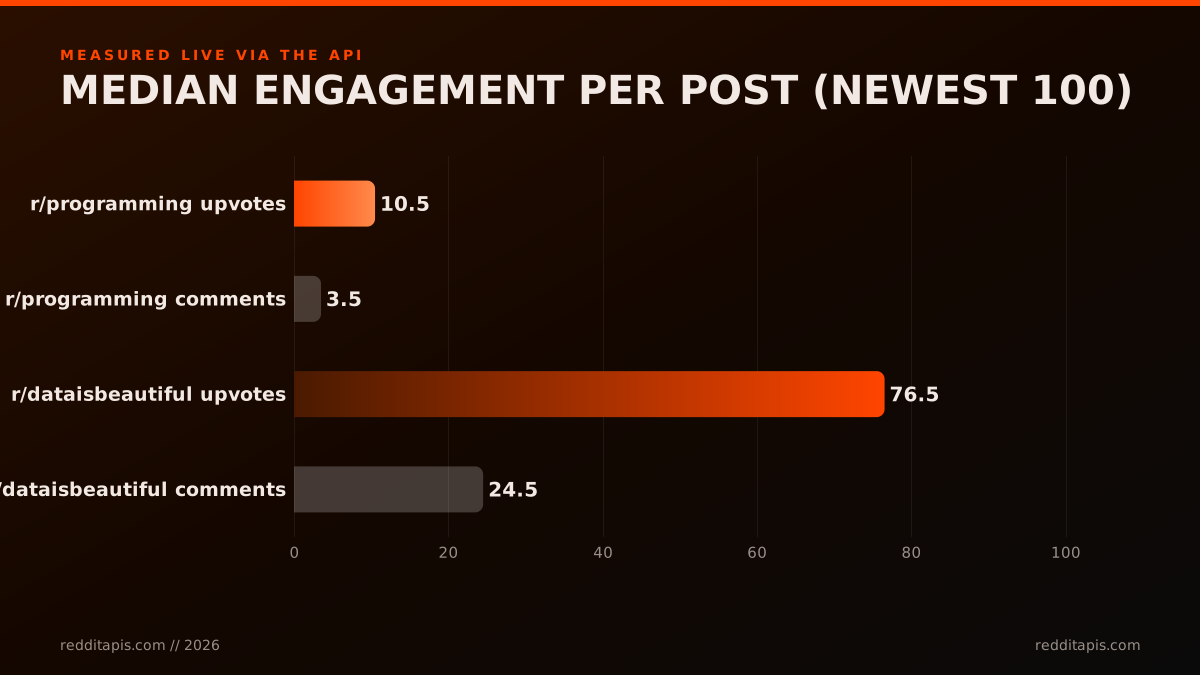
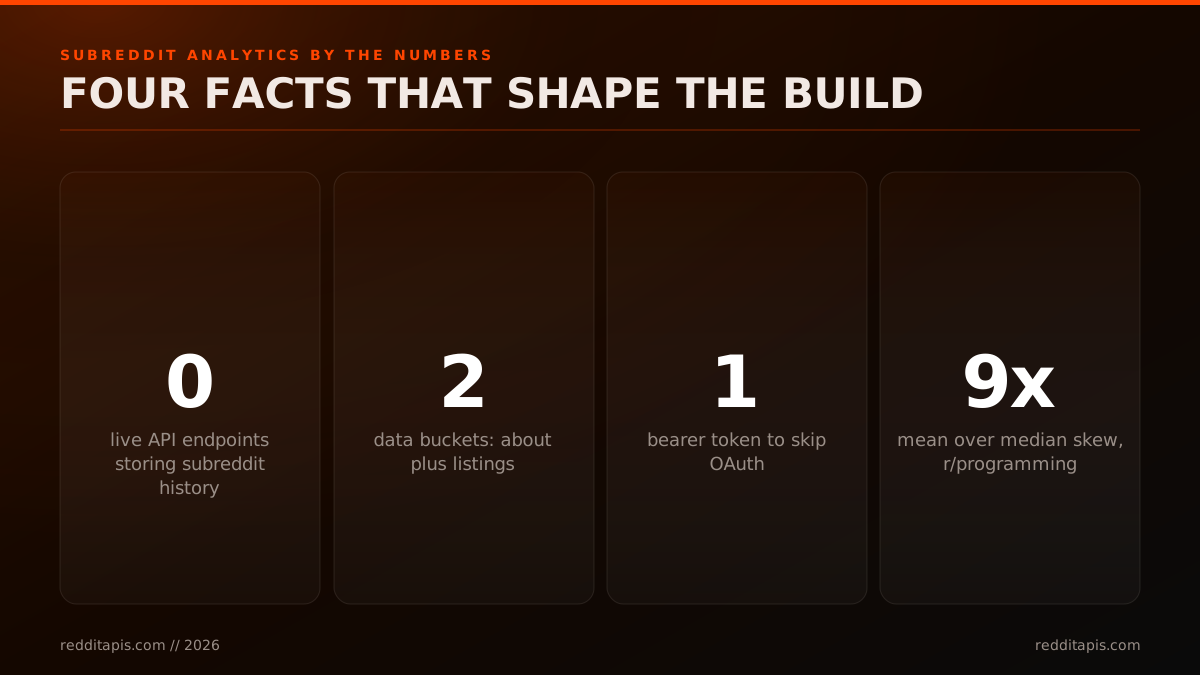
/r/{subreddit}/about, orsubreddit.subscribersin PRAW). Post volume and engagement you compute yourself from post listings. No live API stores history, so growth-over-time needs your own snapshots or an archive like PullPush. The honest comparison is: the official API and PRAW are free and complete but rate-limited and OAuth-gated; scraper APIs are flexible but pricier to run; a hosted REST API like redditapis.com trades the OAuth dance for a bearer token and is the low-maintenance path for engagement analytics across many subreddits. In a live pull while writing this, r/programming ran about 9 posts a day at a median of 10.5 upvotes, while r/dataisbeautiful ran about 15 posts a day at a median of 76.5, the kind of number you get from listings, not a dashboard.
If you have searched for a "subreddit analytics API" you have probably found the same scattered results everyone does: the official docs that describe read and write endpoints but never say the word analytics, a handful of UI tools that show charts without documenting an API, and old forum threads asking the exact question you are asking. None of them lines up the access paths against the actual data fields. That is the gap this guide fills. It pairs with the Reddit OAuth and authentication guide and the Reddit API rate limits breakdown, which cover the auth and budget detail underneath everything here.
What is a subreddit analytics API?
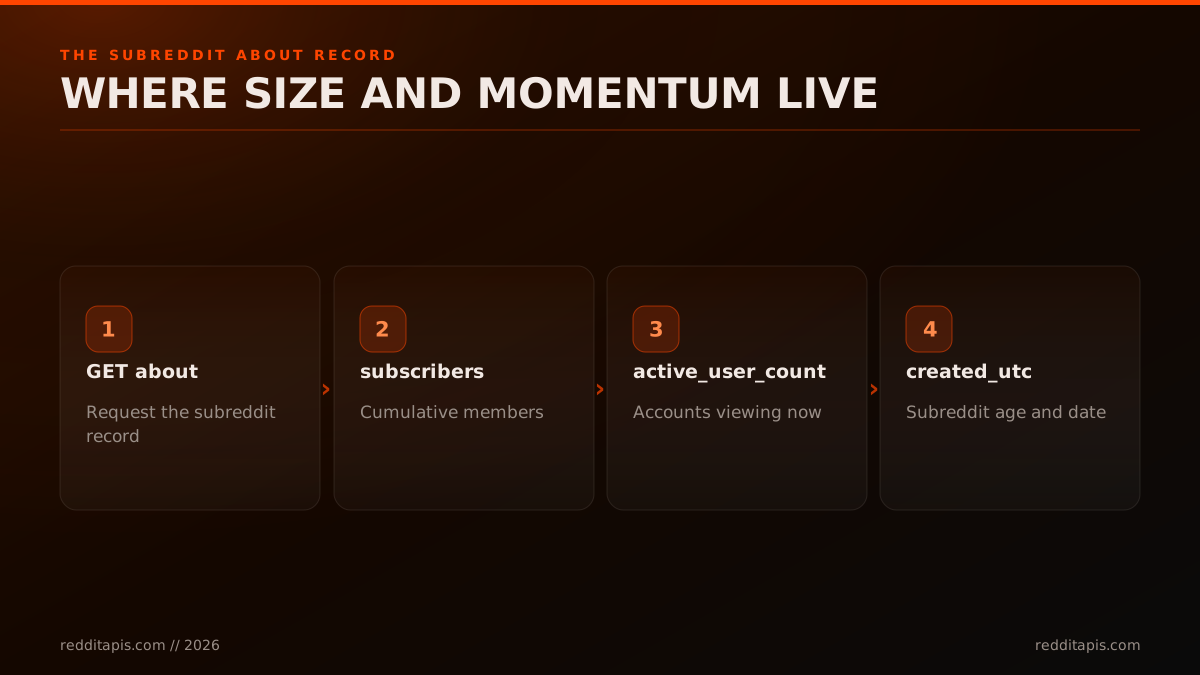
A subreddit analytics API is any programmatic way to read the measurable facts about a subreddit and turn them into metrics. The key thing to internalize before comparing providers is that "analytics" is an assembled view, not a product Reddit ships. You pull raw records, the about object and the post listings, and you derive the numbers yourself. That is true whether you call Reddit directly, go through PRAW, scrape, or use a hosted wrapper. The differences between those paths are not what data exists, because the underlying data is Reddit's either way. The differences are how you authenticate, how fast you can pull, how much you pay, and how much of the assembly the provider does for you.
The four metrics that make up "subreddit analytics" are:
- Size: the cumulative subscriber count, read from the about record.
- Momentum: the live active-user count, also from the about record.
- Volume: how many posts the subreddit produces, computed from listings.
- Engagement: upvotes, comments, and ratios per post, computed from listings.
This matters because most "best subreddit analytics tool" listicles compare dashboards, not data access. A dashboard is a presentation layer; an API is the plumbing under it. If you are building your own product, feeding a model, or running research, you want the plumbing. The Flinque roundup of subreddit analytics tools admits as much in passing: "most platforms rely on Reddit's official API, data providers, or archived exports." In other words, every tool on every roundup is built on one of the four access paths this guide compares. Skip the dashboard and go to the source.
The same realization shows up in open source. Projects like the reddit-subreddit-analytics app on GitHub and the long tail of community scripts all reduce to the same two calls underneath their charts: read the about record, page the listings. And the question predates the current API entirely. One of the most-cited Stack Overflow threads on subreddit statistics asks for "an API to get statistics about subreddits popularity," and the honest answer then and now is that there is no popularity-ranking endpoint; you assemble popularity from subscriber counts and engagement yourself. Knowing that up front saves you from hunting for a feature that was never built.
What subreddit analytics can you actually get from an API?
The data divides cleanly into two buckets, and knowing which bucket a metric lives in tells you which call to make. Bucket one is the subreddit's about record: the cumulative subscribers count, the active_user_count field (which no longer populates, measured null in 20 of 20 communities on 2026-08-31), the creation date, and descriptive metadata. Bucket two is the post listings: every recent post with its score, comment count, upvote ratio, and timestamp. From bucket one you read size and momentum directly. From bucket two you compute everything else, post volume per day, median engagement, the ratio of comments to upvotes, the share of self-posts versus links.
What you cannot get from any live call is history. Both buckets are point-in-time. The about record gives today's subscriber number, not last month's, and listings give you the recent window the API will return, not the full back catalogue. That single limitation drives most of the architectural choices later in this guide.
Developers run into the history wall constantly. On r/redditdev the recurring question is whether richer community stats are even exposed, as in this thread asking whether weekly visitor and contributor counts are available programmatically:
Are weekly visitor and contributor counts available in json or API?
The short answer in that thread and others like it is that the API surfaces a subset of what the Reddit moderator dashboard shows. You get subscribers and active users reliably; the richer weekly-visitor and contributor breakdowns that mods see in their own analytics panel are not consistently exposed to third parties. Plan your metric list around what the API actually returns, not around what the in-app dashboard teases.
Option 1: the official Reddit Data API
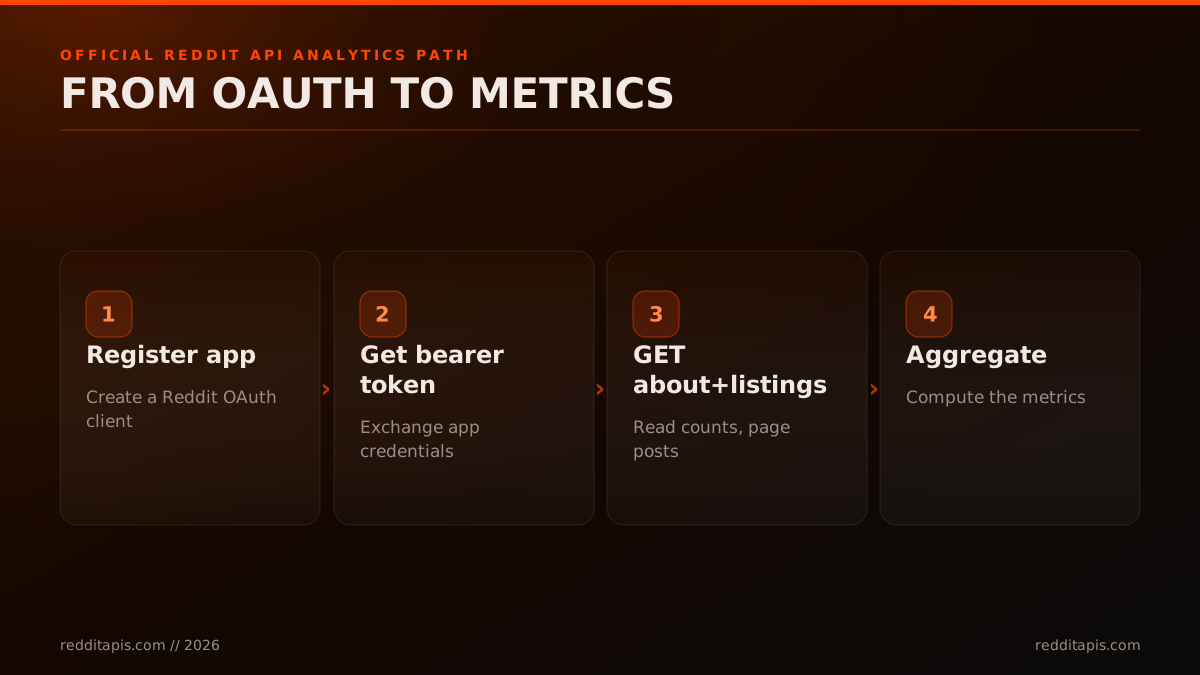
The official Reddit Data API is the source of truth and the baseline every other option is measured against. For analytics you make two kinds of call. The about call, GET /r/{subreddit}/about, returns the JSON object with subscribers and active_user_count. The listing calls, GET /r/{subreddit}/new, /top, or /hot, return pages of posts you aggregate. Both require an authenticated OAuth client; you register an app, exchange credentials for a bearer token, and identify yourself with a clear user agent. The free tier is generous for low-volume non-commercial use, and the rate limit sits around 100 queries per minute averaged over a ten-minute window, which is your ceiling across every call.
Two operational facts shape how you use it. First, access is governed by the Reddit Data API terms, which separate free non-commercial use from paid commercial tiers and require you to identify your client honestly; the access tiers behind the rate limits are documented in Reddit's developer platform help center. Second, the about record's active_user_count is an estimate Reddit rounds and caches, so two calls a minute apart can differ; treat it as a momentum signal, not a precise gauge. Both facts argue for reading the documented fields and not over-interpreting a single sample.
The strength of the official API is completeness and authority: it is the real number, straight from Reddit. The friction is the OAuth setup and the rate-limit bookkeeping, which is exactly what trips up newcomers. The question "how do I get subreddit stats?" has been asked on r/redditdev for years, including this early thread from a team just starting out:
New to Reddit's APIs...how to get subreddit stats?
The answer has not fundamentally changed: read the about endpoint for counts, page the listings for everything else, and respect the budget. If you want the full authentication walkthrough, the Reddit OAuth guide and the how to get a Reddit API key post cover registration end to end, and the REST versus PRAW comparison covers the interface choice.
Option 2: PRAW, the Python wrapper
PRAW is the most popular way Python developers touch Reddit, and for subreddit analytics it is the official API with the HTTP and pagination hidden. You read counts as attributes: reddit.subreddit("programming").subscribers and .active_user_count return the same values the about endpoint carries, and iterating subreddit.new(limit=100) pages the listings for you. Under the hood it is the same OAuth-authenticated Reddit API with the same rate limits, so PRAW changes the ergonomics, not the data or the ceiling. The PRAW documentation and async PRAW cover the full surface.
PRAW is the right call when you are already in Python, working with one or a few subreddits, and happy to manage credentials in your own process. Its limits are the official API's limits: you still register an app, you still authenticate, and you still hit the per-minute budget when you fan out across many subreddits. For a deeper interface comparison and when to drop PRAW for plain REST, see the PRAW alternative breakdown. A minimal analytics read looks like this:
import praw

reddit = praw.Reddit(
    client_id="YOUR_ID",
    client_secret="YOUR_SECRET",
    user_agent="subreddit-analytics by u/yourname",
)

sub = reddit.subreddit("programming")
print("subscribers:", sub.subscribers)
print("active now:", sub.active_user_count)

ups = [p.score for p in sub.new(limit=100)]
print("median upvotes (newest 100):", sorted(ups)[len(ups) // 2])
Start building with Redditapis
Reads $0.002, votes $0.005, writes $0.012, DMs $0.025. $0.50 free credits.
Option 3: historical data, where Pushshift used to live
The hardest subreddit-analytics question is "how did this community grow over time," and no live API answers it. The official API and every wrapper return the current subscriber count, never a back history. For years the workaround was Pushshift, a third-party archive of Reddit posts and comments, but Pushshift's public access wound down and developers migrated to successors like PullPush and Arctic Shift, which preserve historical posts and comments you can pull by date and aggregate into trends. These archives store content, not subscriber snapshots, so you reconstruct growth indirectly: count posts and active authors per month and use that as a proxy for community momentum.
The history options reduce to three:
- Snapshot it yourself: poll the live subscriber count on a schedule and store it, building a timeline from today forward.
- Mine an archive: pull historical posts and comments from PullPush or Arctic Shift and aggregate them by month.
- Accept the gap: for many analytics, current size plus recent engagement is enough and history is a nice-to-have.
The demand for real history is constant and unmet, captured in r/redditdev requests like "Get historic subreddit subscriber counts, per month," which the API simply cannot satisfy. Operators who do have history got it by saving it themselves, like this builder publishing a year of their subreddit's community stats:

Rodrigo Rocco 👨💻📈📗 from JobBoardSearch 🔎
@rrmdp
Some of the JobBoardSearch 🔎 subreddit stats All time: > 326K pageviews drove to JBS > 218K job clicks (Redirecting to job boards in the listing) Last 12 months (the max you can see): > 994K community views > 549K job posts (Coming from feeds from JBS listing) http… Show more

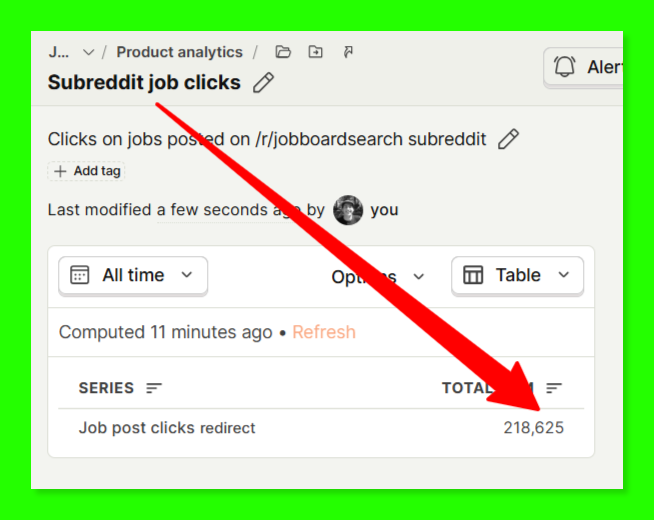

Those 994,000 community views and 549,000 outbound clicks over twelve months are numbers Reddit showed the moderator in the in-app dashboard, not figures any third party could pull on demand. If your analytics need a timeline, decide early: snapshot the live counts yourself on a schedule, or lean on an archive for post-level history. The best Pushshift alternatives guide and the GummySearch alternatives breakdown go deep on the archive options.
Reconstructing growth from an archive is indirect but workable. Because archives store posts and comments with timestamps, you can group them by month and count distinct posts, distinct authors, and total comments per period, then read those curves as proxies for community activity over time. A subreddit producing 200 posts a month from 80 distinct authors two years ago and 900 posts from 400 authors today has a defensible growth story even without a single historical subscriber number. The caveat is coverage: archives capture what they crawled, deletions and removals leave gaps, and the further back you go the spottier the record, so treat reconstructed trends as directionally honest rather than exact. For most analyses, a post-activity trend plus a snapshotted subscriber series you start collecting today is the realistic best of both worlds.
Option 4: scraper APIs
Scraper APIs are commercial services that fetch public Reddit data for you, often without you registering your own Reddit app, and return it as structured JSON. Vendors like EnsembleData, Apify's Reddit actors, and Data365 sit here. For subreddit analytics they give you the same raw material, posts and comments, plus the convenience of not managing OAuth, in exchange for usage-based pricing and a dependency on the vendor keeping their scrapers working as Reddit changes. They are most attractive when you want flexibility across many data shapes, or when the official API's access policy is awkward for your use case.
Scraper APIs trade three things against the official API:
- Convenience: no Reddit app registration or OAuth flow to manage.
- Cost: usage-based pricing that scales with how many posts you pull.
- Durability: reliability depends on the vendor maintaining their scrapers as Reddit changes.
The tradeoffs are cost and durability. Scraper pricing is typically per result or per compute unit, which adds up at analytics scale where you pull thousands of posts per subreddit, and a scraper is only as reliable as the vendor's maintenance against Reddit's anti-bot measures. For measured throughput and error rates across scraping approaches, the Reddit scraping benchmarks post has the numbers, and the pricing comparison against Apify-style actors shows how the per-result model nets out.
Option 5: a hosted Reddit REST API
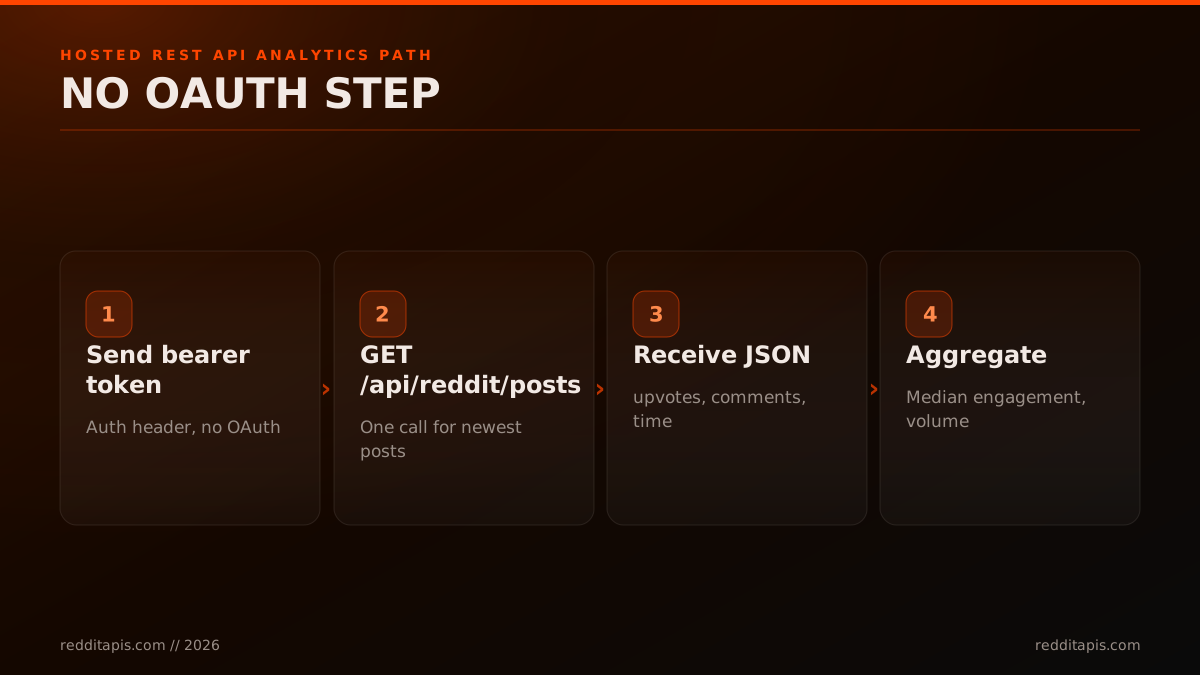
A hosted REST API is the official Reddit data served over a single bearer-token endpoint, with the OAuth flow, session handling, and rate-limit backoff moved server-side. For subreddit analytics this is the lowest-maintenance path when you are computing engagement and volume across many subreddits, because you skip app registration entirely and call one URL. To be precise about the boundary: a hosted wrapper like redditapis.com is excellent for the listings half of analytics, pulling posts and aggregating engagement, and it does not invent data Reddit does not expose, so subscriber and active-user counts still ultimately trace back to Reddit's about record. What changes is that you do not babysit OAuth or 429 handling.
The fetch_posts function below was executed against the live API while writing this guide; it pulls a subreddit's newest posts over a bearer token with no OAuth flow, using the requests library. The structure is identical to PRAW or raw REST; only the auth and rate-limit complexity moves off your machine.
import requests

BASE = "https://api.redditapis.com"
HEADERS = {"Authorization": "Bearer YOUR_API_KEY"}

def fetch_posts(subreddit, limit=100):
    """Pull a page of newest posts for a subreddit, sorted by new."""
    resp = requests.get(
        f"{BASE}/api/reddit/posts",
        params={"subreddit": subreddit, "sort": "new", "limit": limit},
        headers=HEADERS,
        timeout=30,
    )
    resp.raise_for_status()
    return resp.json().get("posts", [])

posts = fetch_posts("programming", limit=25)
print(f"pulled {len(posts)} posts")
for p in posts[:3]:
    print(p["upvotes"], p["comments"], p["title"][:60])
Each post carries upvotes, comments, upvote_ratio, and created_utc, which is everything you need to compute engagement. Pricing is per call, starting at $0.002 per GET read with $0.50 in free credit at signup; see the pricing page for the full rate card.
Subreddit analytics API comparison, side by side (2026)
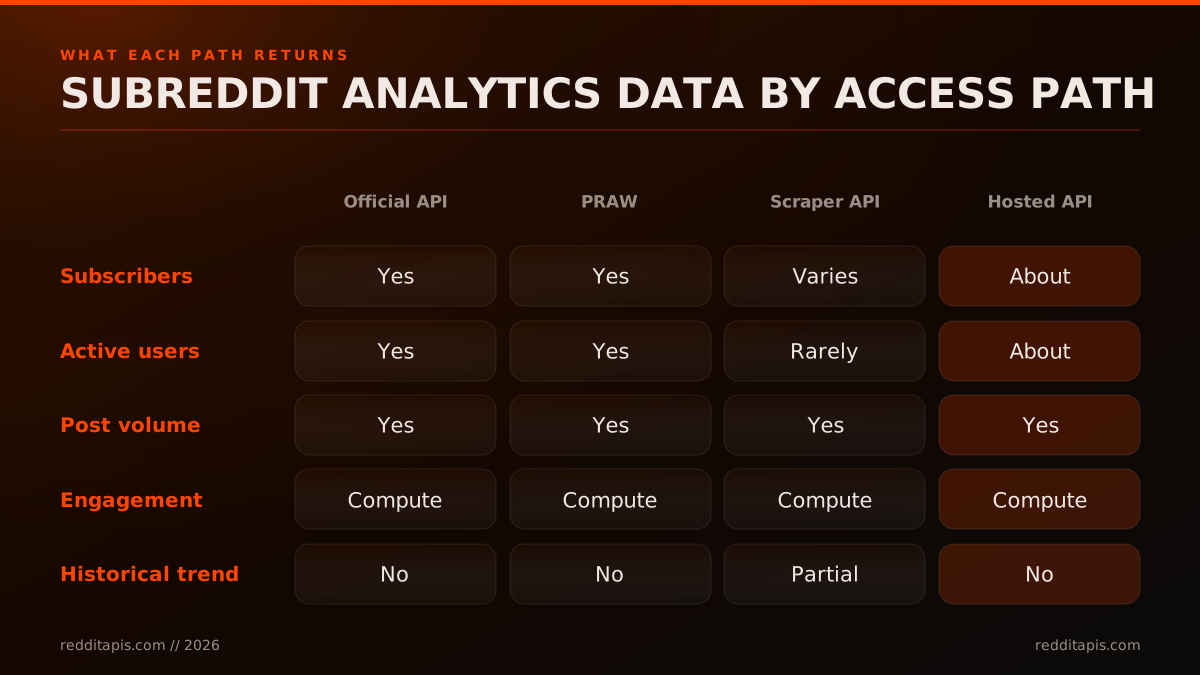
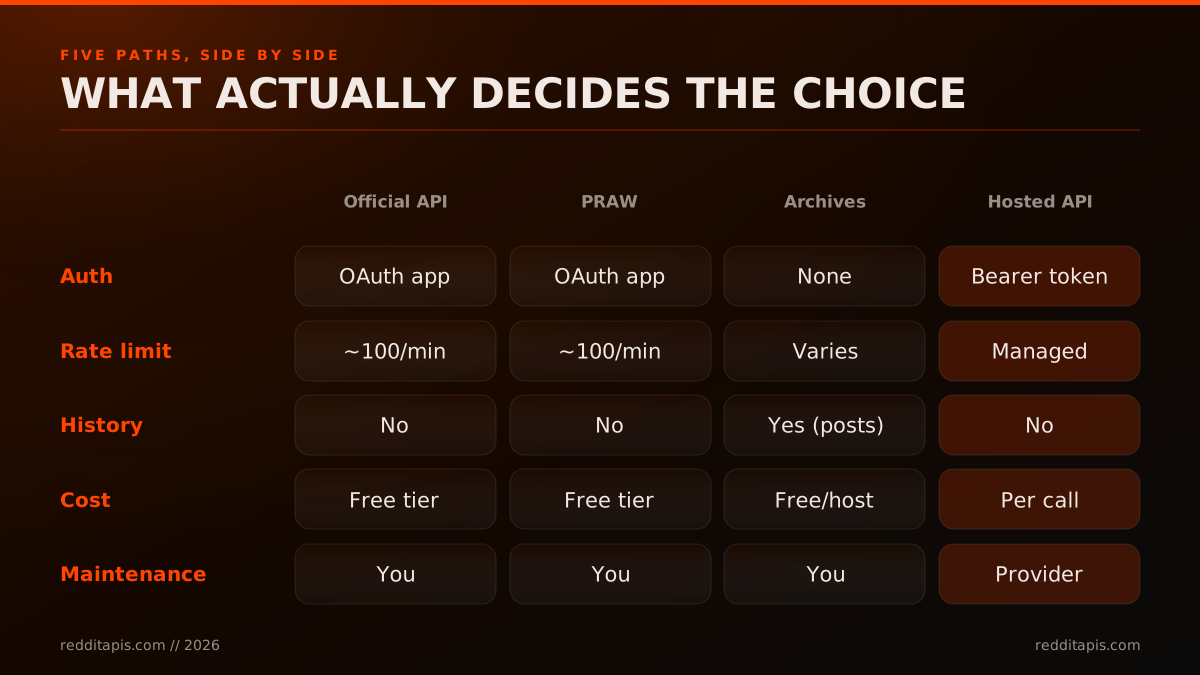
Put the five paths against the dimensions that actually decide the choice and the picture is clear: the data is the same everywhere, so you are choosing on auth, rate limit, history, cost, and maintenance. The official API and PRAW are free and authoritative but gated by OAuth and a per-minute budget. Archives are the only path to real history but carry no live counts. Scraper APIs buy flexibility at a per-result cost. A hosted REST API trades the free tier for a bearer token and managed rate limits. Match the row that hurts you most, OAuth friction, history, or cost at scale, and the column picks itself.
For a clear mental model of pulling subreddit data and analyzing it end to end in Python, this walkthrough of analyzing a subreddit with the Reddit API is a useful watch, even though the specific subreddit is incidental:
One nuance the table cannot capture is that field availability is not all-or-nothing. Every path gives you subscribers and recent listings, so basic size and engagement are universal. Where paths diverge is the edges: the live active_user_count is only as fresh as the about call you make, weekly visitor and contributor breakdowns are not exposed to third parties at all, and historical anything requires an archive or your own snapshots regardless of which live API you pay for. So the realistic decision is rarely "which path has the data," because the common fields are everywhere; it is "which path makes the assembly cheapest for my scale and history needs." Read the table through that lens.
The crossover point between rolling your own and using a managed endpoint usually arrives when you are tracking enough subreddits that staying under the official rate limit requires careful scheduling. Below that line, the free official API or PRAW wins on cost. Above it, the engineering time to maintain a polling and backoff fleet starts to cost more than per-call pricing, which is the same tradeoff covered in the REST versus PRAW at scale and webhooks versus polling guides.
The cheapest Reddit API. Try it free.
Reads from $0.002 per call. $0.50 free credits. No credit card required.
How to compute subreddit engagement from API data
Before computing anything from these fields it is worth knowing which of them still return a value, and what an audience number derived from them can honestly support. That ground is covered in what the API tells you about Reddit demographics, which measures the current state of the about record across twenty communities.
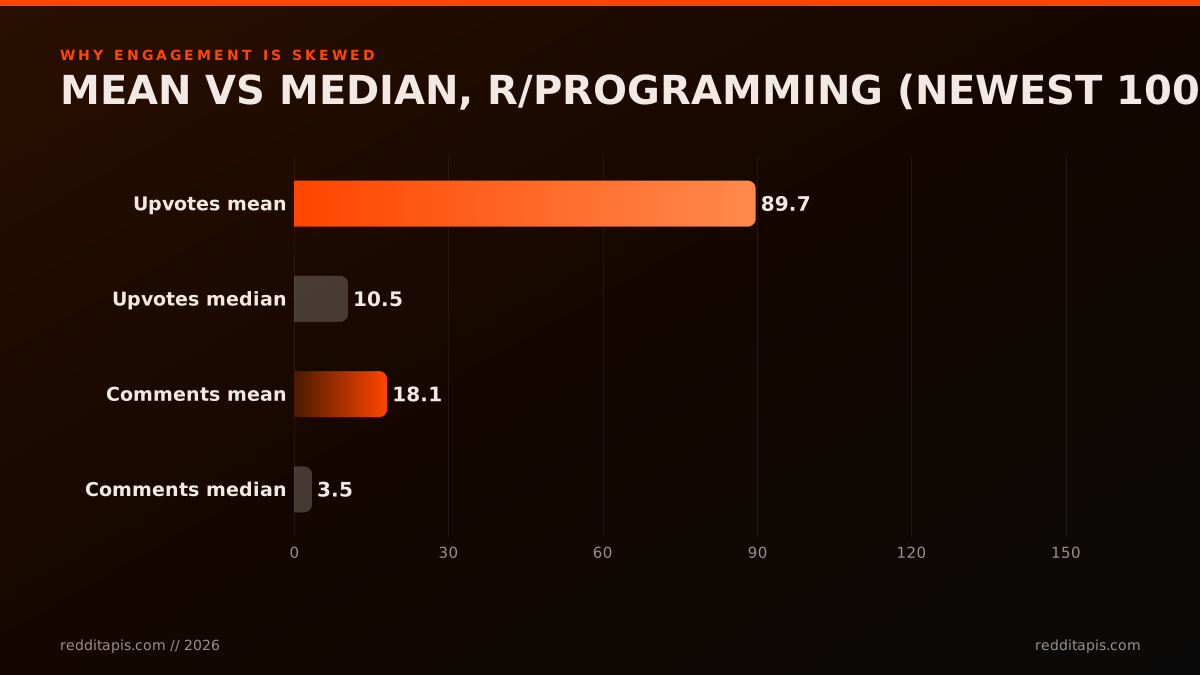
Engagement is the metric people actually want, and you compute it from listings in three steps: pull a batch of recent posts, aggregate the scores and comment counts, and normalize by the time the batch spans. The one rule that separates a useful number from a misleading one is to use the median, not the mean. Subreddit engagement is heavily skewed: a handful of viral posts pull the average far above what a typical post earns. In a live pull of r/programming's newest 100 posts while writing this, the mean was 89.7 upvotes but the median was only 10.5, and the mean comment count was 18.1 against a median of 3.5. Report the mean and you overstate the typical post by roughly nine times. The same pull put r/dataisbeautiful at a median of 76.5 upvotes and 24.5 comments over roughly 15 posts a day, a genuinely more engaged community by the median, which the mean would have flattered on both sides. Skew is the normal state of social engagement data, so the median is the honest default and the mean is worth reporting only alongside it.
Here is the aggregation, built on the fetch_posts primitive above and Python's statistics module. It returns the metrics you would put on a dashboard, computed from raw listings rather than read from one:
import statistics

def subreddit_metrics(subreddit):
    posts = fetch_posts(subreddit, limit=100)
    ups = [p["upvotes"] for p in posts]
    coms = [p["comments"] for p in posts]
    times = sorted(p["created_utc"] for p in posts)
    span_hours = (times[-1] - times[0]) / 3600 if len(times) > 1 else 0
    return {
        "posts_sampled": len(posts),
        "median_upvotes": statistics.median(ups),
        "median_comments": statistics.median(coms),
        "posts_per_day": round(len(posts) / span_hours * 24, 1) if span_hours else None,
    }

print(subreddit_metrics("dataisbeautiful"))
Run that across the subreddits you care about and you have a comparable engagement profile per community, the same shape of data the dashboards sell, assembled from the API in a few lines. For keyword-level monitoring on top of this, the Reddit keyword monitor walkthrough and the Reddit search API tutorial extend the pattern.
Subreddit analytics tools versus building on the API
Packaged analytics tools and a raw API solve different problems, and choosing wrongly wastes either money or engineering time. A tool gives you a dashboard, scheduled refresh, and visualizations with zero code, which is the right call for a marketer tracking a few communities. Building on the API gives you the raw numbers to embed in your own product, feed to a model, or join against other data, which is the right call for a developer or data team. The tools are not magic; as the roundups concede, they sit on the same official API, archives, or scrapers you could call yourself.
If you land on building, the polling cadence, storage schema and the five metric formulas are worked through end to end in building your own Reddit analytics dashboard from the API, including the measured call cost of tracking twenty communities.
The choice is straightforward:
- Buy a tool when you want a dashboard, scheduled refresh, and charts with zero code.
- Build on the API when you need raw numbers in your own product, model, or analysis.
The growth-tooling crowd is candid that "subreddit stats" means surfacing trends rather than exposing an API, as in this description of a stats product built for community tracking:

The OSINT Newsletter
@osintnewsletter
Track how any Reddit community grows, who's driving it, and what they're talking about. 📊 Subreddit Stats surfaces growth trends, top contributors and keyword patterns. Try it out: https://t.co/Tphrx0XHe8 https://t.co/sSsgTAJMt3

That framing, growth trends, top contributors, keyword patterns, is exactly the derived layer you build yourself when you go the API route. If you want the dashboard, buy the tool. If you want the data under the dashboard, the rest of this guide is your build plan, and the how to find subreddits via API post helps you decide which communities to point it at.
Which subreddit analytics option should you pick?
The decision comes down to scale, history, and how much infrastructure you want to own. For a one-off look at a single subreddit, the official API or PRAW is free and complete, so start there. For engagement analytics across many subreddits where OAuth and rate-limit backoff become the real work, a hosted REST API removes that maintenance for a per-call price. For anything that needs a real timeline of growth, you need an archive, because no live API stores history. Scraper APIs are the fallback when you want vendor-managed flexibility and accept the cost. Match your dominant constraint to the path; do not over-engineer a single-subreddit script into a data platform.
The quick rule, by dominant need:
- One subreddit, free: the official API or PRAW.
- Many subreddits, low maintenance: a hosted REST API.
- Real growth history: an archive like PullPush or Arctic Shift.
- Vendor-managed flexibility: a scraper API, priced per result.
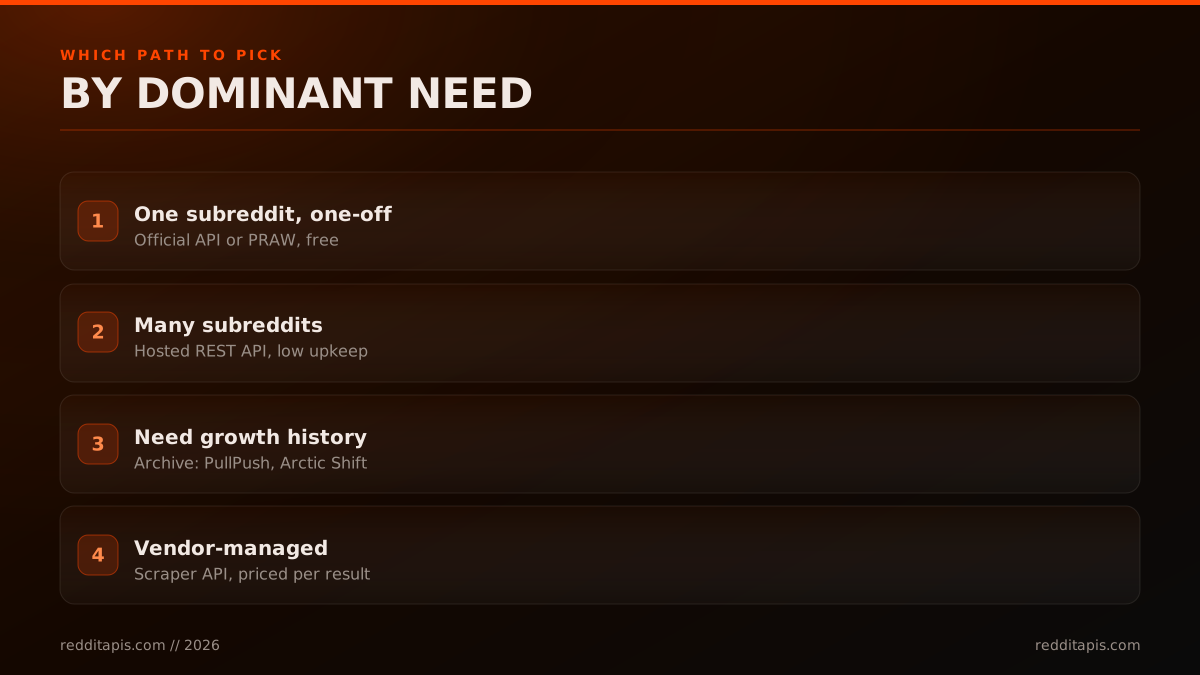
Use the tree as a starting point, not a law. Many teams end up combining paths: the official API or a hosted wrapper for live engagement, plus an archive for the historical backfill they snapshot forward from there. The Reddit data API overview covers which calls combine cleanly, and the rate limits guide tells you how many subreddits you can poll before the budget bites.
Common subreddit analytics mistakes
The failure modes are predictable and they all come from treating an assembled view as if it were a finished product. The big one is expecting history from a live call and discovering, after building around it, that the subscriber number is point-in-time only. The second is reporting the mean engagement, which a few viral posts inflate into a number no typical post will ever match. The third is fanning out across dozens of subreddits on a tight loop and exhausting the official API's per-minute budget into a wall of 429s. Each looks fine on one subreddit and breaks at scale.
The three predictable failures:
- No history handling: treating a point-in-time count as if it were a trend.
- Mean over median: letting a few viral posts inflate the typical-engagement number.
- Budget blindness: looping too tight across too many subreddits until the rate limit returns 429s.
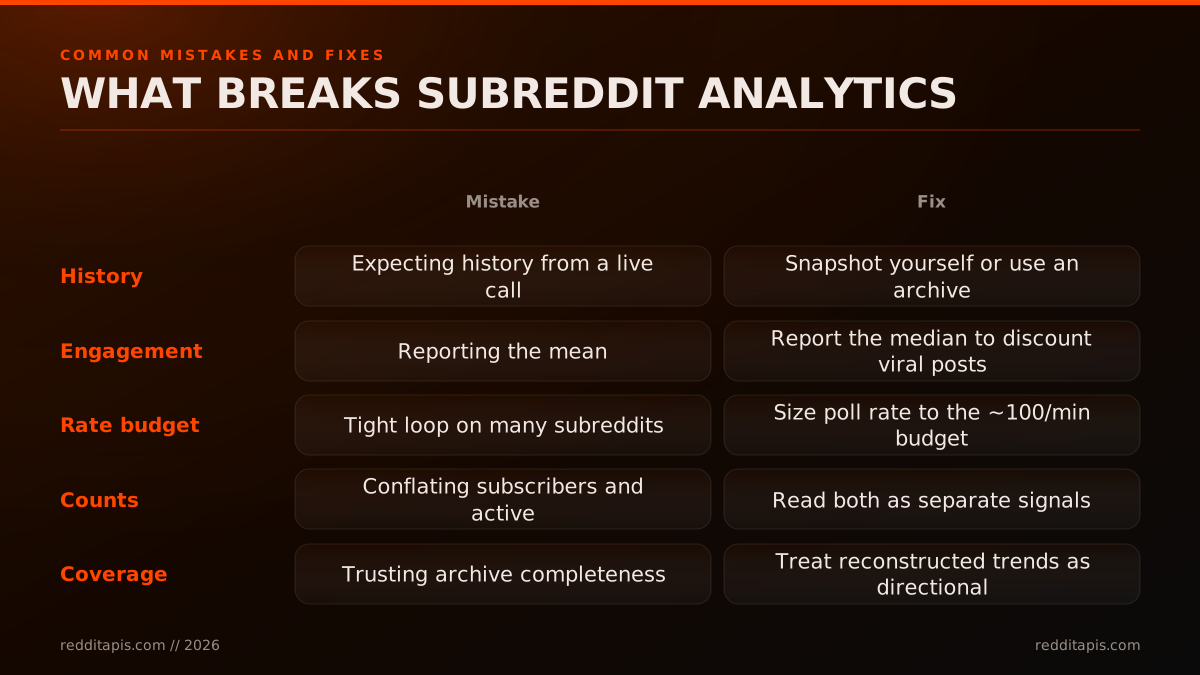
The fixes are the through-line of this whole guide: snapshot counts yourself or use an archive if you need history, report the median for engagement, size your poll rate against the documented budget, and always read subscribers and active users as two separate signals rather than one. None of it is exotic, but skipping any of it produces a chart that quietly lies.
The verdict
"Subreddit analytics API" is a question with a layered answer, because there is no single analytics endpoint. You read subscriber and active-user counts from the about record, you compute volume and engagement from listings, and you reach for an archive when you need history that no live API keeps. The five access paths, official API, PRAW, archives, scraper APIs, and a hosted REST API, all draw on the same Reddit data; they differ on auth, rate limit, history, cost, and how much of the assembly you do yourself.
Pick on your dominant constraint. Free and authoritative for a single community: the official API or PRAW. Low-maintenance engagement analytics across many subreddits without the OAuth dance: a hosted REST API like the one whose fetch_posts call is live in this guide. A real growth timeline: an archive. Whatever you choose, the analytics are something you assemble, so the value is in computing the median engagement correctly, reading both size and momentum, and respecting the budget. Start with the authentication guide, wire up the Python tutorial, or get an API key and point fetch_posts at a live subreddit.
redditapis.com is an independent third-party service and is not affiliated with, endorsed by, or sponsored by Reddit Inc. This guide reflects the publicly documented Reddit API state as of June 2026; verify current fields, limits, and pricing against Reddit's developer documentation and /pricing before you build.
Where these numbers come from.
Each row is a figure in this post and the artefact it was read from. Reddit's access rules and the third-party archives around them keep moving, so check the date on a source before you build against it.
- Reddit API documentation
- The about.json subreddit fields (subscribers, active users) the comparison reads.
- PRAW Subreddit model
- The PRAW Subreddit attributes used in the PRAW option.
- Arctic Shift
- The historical archive used for post-volume trends where Pushshift used to live.
- redditapis.com API docs
- The hosted REST subreddit-stats endpoints in the comparison.
- Reddit Data API Wiki
- Reddit's rate limits that bound the listing-based analytics methods.
Frequently asked questions.
A subreddit analytics API is any programmatic interface that returns measurable facts about a subreddit: its subscriber count, how many users are active, how many posts it produces, and how much engagement those posts get. There is no single endpoint named 'analytics'. Instead you assemble the picture from two kinds of data: the subreddit's about record, which carries subscriber and active-user counts, and its post listings, from which you compute volume and engagement yourself. The official Reddit Data API, PRAW, scraper APIs, and a hosted REST API like redditapis.com all expose some slice of this. See the field-by-field comparison below and /blogs/reddit-data-api-2026.
Partly. The official Reddit Data API exposes a subreddit's about record at /r/{subreddit}/about, which includes the live subscriber count and a rough active-user count, and it exposes post listings you can pull and aggregate into volume and engagement metrics. What it does not give you is a packaged analytics dashboard or any historical time series: every figure is point-in-time as of your request. To track growth over time you have to store snapshots yourself or fall back to an archive. See /blogs/reddit-api-authentication-oauth-2026 for how to authenticate against it.
Request the subreddit's about record. On the official Reddit API that is a GET to /r/{subreddit}/about, and the JSON response carries a subscribers field plus an active_user_count field that stopped populating and returned null in 20 of 20 communities measured on 2026-08-31. PRAW exposes the same values as subreddit.subscribers and subreddit.active_user_count. A hosted REST API can wrap the same call behind a bearer token. The number you get back is a single live reading, not a history, so if you need growth you must poll and store it on a schedule. See /blogs/how-to-find-subreddits-api-2026.
Not directly from any live API. Neither the official Reddit API nor a hosted wrapper exposes a per-month subscriber history; they return the current value only. To get history you either snapshot the count yourself over time, or pull from an archive of Reddit data such as PullPush or Arctic Shift, which preserve old posts and comments you can aggregate by date. This is the single biggest gap in subreddit analytics, and it is why r/redditdev keeps asking for monthly subscriber counts that the API was never built to return. See /blogs/best-pushshift-alternatives-2026.
Subscribers is the total number of accounts that have joined the subreddit, a cumulative figure that only trends up over time. active_user_count, sometimes shown as 'accounts active', is how many users Reddit estimates are looking at the subreddit right now, a volatile figure that swings with the time of day and any viral post. For analytics, subscribers measures reach and active_user_count was intended to measure momentum. UPDATED 2026-08-31: active_user_count no longer returns a value. A live pass across 20 communities returned null for it in 20 of 20, every request answering HTTP 200, so treat subscribers as the only dependable size signal and derive engagement from post listings instead. See /blogs/how-to-find-subreddits-api-2026.
The closest thing to free is the official Reddit Data API itself, which has a no-cost tier for low-volume, non-commercial use once you register an app and authenticate. Free third-party 'subreddit stats' sites exist but most are UI dashboards without a documented API, and the ones that had public endpoints, like the old redditmetrics, have largely shut down. For programmatic access at any real volume you are choosing between the official API's rate-limited free tier, building on archives, or a paid hosted API priced per call. See /pricing for the hosted option.
It depends on what you are measuring and at what scale. For a single subreddit and a one-off look, the official API or PRAW is plenty and free. For engagement analytics across many subreddits without managing OAuth and rate-limit backoff, a hosted REST API that returns listings over a bearer token is the lower-maintenance path. For deep historical analysis you need an archive, because no live API stores history. Scraper APIs sit in between, trading higher cost and maintenance for flexibility. The comparison table in this guide breaks it down field by field. See /blogs/reddit-api-pricing-vs-apify.
Pull a batch of recent posts and aggregate them. Fetch the newest posts for the subreddit, then compute the median upvotes and median comments per post, the post rate over the time the batch spans, and optionally the median upvote ratio. Use the median, not the mean, because subreddit engagement is heavily skewed by occasional viral posts: in a live pull of r/programming the mean was 89.7 upvotes while the median was 10.5, so the mean badly overstates the typical post. The runnable code in this guide does exactly this against a live endpoint. See /blogs/reddit-api-python-tutorial.
Keep reading.
Continue exploring related pages.
Reddit API documentation
The complete 2026 reference: auth, all 59 endpoints, and code.
Get a Reddit API key
Instant bearer token, no waitlist and no enterprise contract.
Reddit Responsible Builder Policy
Why Reddit denies API applications, and the managed REST bypass.
Reddit API use cases
14 use cases from AI training to brand monitoring and DMs.
Reddit Search API
Search posts, comments, users, and communities over one REST endpoint.
Reddit MCP server
Wrap the REST API as MCP tools for Claude, Cursor, and any MCP client.
Reddit MCP hub
Install tabs for every client, the full tool table, pricing and fixes.
Reddit API for AI agents
Live Reddit context for tool calls, MCP servers, and RAG pipelines.
Redditapis pricing
Endpoint-level costs and quick monthly totals - reads from $0.002 / call.
Reddit API cost calculator
Estimate monthly spend using your request volume.
Reddit API guides and tutorials
Tutorials, walkthroughs, and API deep-dives for developers.
Reddit API alternatives
Evaluate alternatives by cost model, limits, and integration fit.
Cheap Reddit API
The cheapest way to get Reddit data: $0.002 per call, no contract, no minimum.
Official Reddit API vs Redditapis
Access, setup, rate limits, and pricing, side by side.
PRAW alternative
A hosted Reddit REST API for any language, no app registration or OAuth.
Reddapi alternative
A maintained Reddit REST API with published pricing and write endpoints.
Reddit comment scraper alternative
The raw comment API: search and filter comments, historical and live, clean JSON.
Reddit scraper API
Hosted scraper API vs building your own: managed proxies, clean JSON.
RapidAPI Reddit alternative
A direct, maintained Reddit API with published pricing and write endpoints.
Bright Data Reddit alternative
A purpose-built Reddit API vs a general scraping platform: structured JSON, plus writes.
ScraperAPI Reddit alternative
A Reddit-native API vs a generic HTML fetcher: auth and pagination handled, typed JSON.
TikHub alternative
TikHub's Reddit surface is read-only; get comment, vote, and DM endpoints too.
EnsembleData alternative
No $100/month floor: pay per call from $0.002, plus write, vote, and DM endpoints.
Scrape Creators alternative
7 read-only Reddit endpoints vs a dedicated API with real write, vote, and DM paths.
FetchLayer alternative
Posts, comments, and search only; add vote, comment, and DM over the same REST auth.
PullPush alternative
PullPush is free but volunteer-run and goes offline for reindexing; a maintained REST API that stays up.
Reddit monitoring API
Build your own keyword and brand-mention monitor: search, comment search, and subreddit streams over REST.
F5Bot vs Redditapis
F5Bot's Slack and Discord delivery needs its $49.99/mo Gold tier; Redditapis includes it from $19/mo.
Syften vs Redditapis
Syften caps you at 100 to 500 results a day; Redditapis allows 10,000 a day per monitor at the entry plan.
Octolens vs Redditapis
Octolens meters by mention with overage fees; Redditapis is flat-priced by subreddit slot from $19/mo.
Affiliate program
Earn 20% lifetime commissions - capped at $5,000/yr.
Reddit Vote API tutorial
Upvote and downvote a post programmatically via the REST API.
Reddit Data API: REST, no PRAW
REST endpoints for Reddit data with no PRAW and no OAuth dance.
Reddit scraping benchmarks
Real throughput, error rates, and cost benchmarks for Reddit scraping.
Reddit API answers
Direct answers on cost, access, rate limits, endpoints, and auth.
How much the Reddit API costs
Per-call pricing from $0.002 a read, with $0.50 in free credits.
Reddit API in Python
One requests call with a bearer token, no PRAW and no OAuth flow.
Reddit shadowban checker
Check if a Reddit account is shadowbanned in seconds, free and no login.
Subreddit stats checker
See any subreddit's live subscriber count, active users, and age, free and no login.
Similar reads.
More guides on the Reddit API, scraping, pricing, and MCP servers.
Reddit Subscriber Counts Disappeared From Subreddits: How to Read Them From the API, and What 120 Subreddits Say About Whether the Number Ever Meant Anything
Reddit replaced the member count with Visitors and Contributions in September 2025. The data API still returns subscribers. We measured 120 subreddits to test Reddit's reason for the swap, and the data agrees with Reddit.
Does the Reddit Search API Support Boolean Queries? Every Operator, Tested
AND, OR, and NOT don't work like SQL against Reddit's search backend. Here's what actually works (subreddit:, author:, exact phrases, exclusion), tested live against the production API, plus why the boolean confusion exists in the first place.
We Benchmarked 5 Reddit Data APIs on Latency, Uptime, and Cost
A head-to-head benchmark of RedditAPIs.com, Apify, Bright Data, ScrapingDog, and PRAW plus a residential proxy, measured on p50/p95/p99 latency, 30-day uptime, and real cost per 1,000 records.
RedditAPIs vs. ScrapingDog: Which Reddit Scraper API Should You Actually Use in 2026?
ScrapingDog is a general-purpose scraping API that can be pointed at Reddit. RedditAPIs is a Reddit-native API. Real 2026 pricing from both vendors, live-tested code, and the volume where each one wins.

How to Get Reddit Comments via the API: Fetch the Full Comment Tree (2026)
Fetch Reddit comments by permalink, walk the nested tree, expand the more / morechildren nodes, and flatten replies in Python. Copy-paste code and first-party numbers, 2026.

Best Time to Post on Reddit in 2026: A Data Study of 6,600 Top Posts
A first-party study of 6,600 top Reddit posts finds the best time to post on Reddit in 2026, with real day and hour tables in US Eastern time.

Webhooks vs Polling for Reddit Data Streams (2026)
Does Reddit have webhooks? No. The Reddit Data API has no push, so every real-time Reddit feed is polling. How to poll well, with runnable Python.

Reddit Search API Tutorial: Query Subreddits by Keyword in Python (2026)
Search Reddit posts by keyword in Python in 2026. Native /search.json, PRAW subreddit.search(), and a managed REST endpoint compared, with copy-paste code, parameters, and the 1,000-result cap explained.