
Reddit Search API Tutorial: Query Subreddits by Keyword in Python (2026)
Search Reddit posts by keyword in Python in 2026. Native /search.json, PRAW subreddit.search(), and a managed REST endpoint compared, with copy-paste code, parameters, and the 1,000-result cap explained.

The Reddit search API is Reddit's public endpoint for querying posts by keyword. You send a GET to https://www.reddit.com/search.json with a q parameter and receive a JSON listing of matching posts. Reddit's Data API wiki says traffic without OAuth is blocked, so production code should send an OAuth token or use a managed key. This tutorial walks through every practical path: native REST, PRAW, and a managed proxy, with copy-paste Python and the 403 and result-cap pitfalls explained plainly.
Not affiliated with Reddit Inc. redditapis.com is an independent third-party REST proxy for Reddit's API. This tutorial is vendor-neutral: it shows the native
/search.jsonendpoint, the PRAW library, and a managed REST option side by side so you can pick what fits.
TL;DR: The Reddit search API is the public
https://www.reddit.com/search.jsonendpoint. Passqfor your keyword,sortandtfor ordering, andrestrict_sr=1to scope to one subreddit. It is free, but Reddit's Data API wiki says traffic without OAuth is blocked, it caps at 1,000 results per query, and it gets 403-blocked from many cloud IPs. PRAW wraps the same endpoint with OAuth at 100 queries per minute per client. For production search at scale, a managed REST endpoint likehttps://api.redditapis.com/api/reddit/searchreturns the same data through a clean IP pool for $0.0015 per call (pricing).
What you will build:
- A working keyword search against
/search.jsonand/api/reddit/searchin Python - Subreddit-restricted search with
restrict_srand the managedsubredditparameter - PRAW
.search()with every validsortandtime_filtervalue - A pagination loop that walks past the first page using the
aftercursor
What Is the Reddit Search API
The Reddit search API is the public endpoint at https://www.reddit.com/search.json. You send a GET request with a q query parameter and Reddit returns a JSON listing of matching posts. Append /r/<subreddit>/search.json and add restrict_sr=1 to scope the search to a single community, or hit the bare /search.json to search across all of Reddit. The response is a standard Reddit listing object: a kind field plus a data.children array, each child wrapping a post with its title, subreddit, score, and permalink. Without OAuth it is not dependable: Reddit's Data API wiki says traffic without OAuth is blocked.
That is the whole contract. Everything else in this tutorial, including PRAW and the managed REST option, is a different wrapper around that same search behavior. Developers in r/redditdev ask the same question constantly: how do I search all of Reddit by keyword, not just one subreddit. The thread below is a clean example of the demand.
View on RedditThis guide does what most ranking pages skip. It hands you copy-paste Python for every path and explains where each one breaks, instead of pitching a product over a search box.
Search Endpoint Parameters: The Reference
The Reddit search endpoint accepts seven parameters that control what you query, how results are sorted, and how you page through them. These parameters apply identically whether you hit the native endpoint directly or route through a managed REST proxy, so learning them once covers every path in this tutorial.
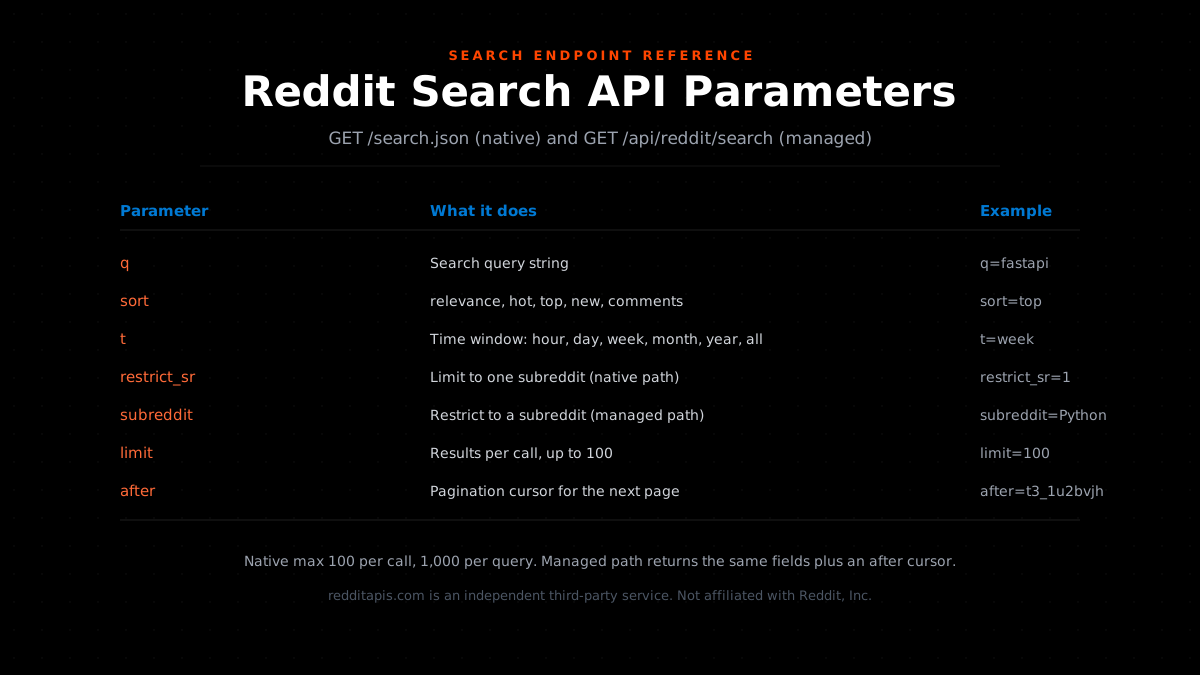
The two parameters that trip people up are t and restrict_sr. The t time window only affects sort=top and sort=comments; it is ignored for relevance and new. And restrict_sr only works when you call a subreddit-scoped URL (/r/python/search.json), not the global /search.json. On the managed path you pass a subreddit parameter instead, which is less error-prone. The full parameter list lives in the Reddit Data API wiki and the managed API documentation.
Native /search.json in Python
The native path calls https://www.reddit.com/search.json directly using nothing but the requests library and a descriptive User-Agent header. No OAuth app, no library beyond requests. It is the fastest way to start querying Reddit by keyword from Python. Here is a global keyword search across all of Reddit:
import requests

URL = "https://www.reddit.com/search.json"
HEADERS = {"User-Agent": "reddit-search-tutorial/1.0 (by u/your_username)"}

params = {
    "q": "python web scraping",
    "sort": "new",
    "limit": 25,
}

resp = requests.get(URL, params=params, headers=HEADERS, timeout=20)
resp.raise_for_status()
data = resp.json()

for child in data["data"]["children"]:
    post = child["data"]
    print(f"r/{post['subreddit']} | {post['score']:>5} | {post['title']}")

print("next page cursor:", data["data"].get("after"))
The response is a listing object. data.children is the array of posts, each wrapped in a {"kind": "t3", "data": {...}} envelope. The data.after field is the pagination cursor; pass it back as an after parameter to fetch the next page.
To scope to one subreddit, change the URL and add restrict_sr:
import requests

URL = "https://www.reddit.com/r/Python/search.json"
HEADERS = {"User-Agent": "reddit-search-tutorial/1.0 (by u/your_username)"}

params = {
    "q": "asyncio",
    "restrict_sr": 1,
    "sort": "top",
    "t": "year",
    "limit": 25,
}

resp = requests.get(URL, params=params, headers=HEADERS, timeout=20)
posts = resp.json()["data"]["children"]
print(f"Found {len(posts)} matches in r/Python")
A note on query syntax, because it changes your results more than people expect. Reddit's search supports field operators in the q string: title:keyword matches only the title, selftext:keyword matches the body, subreddit:python scopes without a separate URL, and author:username filters by poster. These field operators DO stack in the same string, q=title:fastapi selftext:async is a valid, working query, but AND is not doing that work: tested live against the production endpoint, q=title:fastapi AND selftext:async returns the identical result set as the same query with AND removed, because AND is silently dropped rather than parsed as boolean logic. OR and NOT behave the same way, as literal search tokens, not logic. See Does the Reddit Search API Support Boolean Queries? for the full live-tested breakdown, including why this confusion is so common (Reddit's search backend did briefly support real boolean logic in 2012, since broken). Quote multi-word phrases, q="background tasks", to match the phrase rather than the two words independently, this one is a real, working operator. URL-encoding is handled for you when you pass params as a dict to requests, so write the raw string and let the library encode it. These operators work identically on the native endpoint and through a managed proxy, since both forward the same q to Reddit's search index.
One honest warning, because it is the single most common failure in 2026. Reddit filters a large share of cloud and datacenter IP ranges. The code above runs perfectly from a laptop or a residential connection, but the same script on an AWS, GCP, or DigitalOcean box frequently returns 403 Forbidden no matter how correct your headers are. That is not a bug in your code. It is Reddit refusing the source IP. The next section shows what developers actually hit, and the 403 section covers the fix.
The Developer Reality: 403s and Result Caps
Two hard limits define almost every "why isn't this working" Reddit search thread: a 403 that blocks your call before it starts, and a result count that stops well short of what you expected. Both are platform constraints, not bugs in your code. Understanding them before you write more code saves hours of debugging later.
Before the next code path, it helps to name the two walls developers hit most, because they shape which option you should pick:
- The 403 wall. A search call that reads correctly still returns
403 Forbidden. Usually a host, header, or IP problem, not a logic bug. - The result-cap wall. A query that should return thousands of posts quietly stops at a few hundred or at exactly 1,000. That is Reddit's pagination ceiling, not your loop.
Two real threads capture both. First, the 403 on a search call that looks correct:
View on RedditSecond, the discovery that PRAW search quietly stops returning results well before you expect it to. One developer reported getting "around 241 results which is fine," then realizing the query was not exhaustive at all:
View on RedditBoth are real limits, not user error. The 403 is usually an IP or User-Agent problem. The truncated result set is Reddit's hard pagination ceiling. Understanding both is what separates a search script that works in a demo from one that holds up in production.
Searching Reddit with PRAW
PRAW (Python Reddit API Wrapper) exposes search through subreddit.search(). It handles OAuth token management and rate-limit backoff for you, which is the main reason teams use it. The search method targets any subreddit by name, or use the synthetic all subreddit to search across all of Reddit. Here is the standard call:
import praw

reddit = praw.Reddit(
    client_id="YOUR_CLIENT_ID",
    client_secret="YOUR_CLIENT_SECRET",
    user_agent="reddit-search-tutorial/1.0 (by u/your_username)",
)

results = reddit.subreddit("all").search(
    "machine learning",
    sort="relevance",
    time_filter="week",
    limit=25,
)

for submission in results:
    print(f"r/{submission.subreddit} | {submission.score} | {submission.title}")
The exact method signature, straight from the PRAW documentation, is:
search(query, *, sort="relevance", syntax="lucene", time_filter="all", **generator_kwargs)
Valid values, per praw.readthedocs.io: sort accepts relevance, hot, top, new, comments. time_filter accepts all, day, hour, month, week, year. syntax accepts cloudsearch, lucene, plain. PRAW handles the OAuth flow and rate-limit backoff for you, which is its main advantage over raw requests. Its main constraint is the same 1,000-result ceiling the native endpoint carries, because PRAW is calling that same endpoint underneath. If you are weighing PRAW against a plain REST approach, the REST vs PRAW comparison and the PRAW vs managed REST breakdown go deeper.
Start building with Redditapis
Reads $0.0015, votes $0.005, writes $0.012, DMs $0.025. $0.50 free credits.
The Managed REST Path: One Authenticated GET
The managed option trades the IP and OAuth machinery for a bearer token and a flat per-call price. It is the path to reach for when search has to run from a server, run concurrently, or never get 403-blocked. Here is the exact call, live-tested against the production endpoint:
import os
import requests

API_KEY = os.environ["REDDITAPI_KEY"]
BASE = "https://api.redditapis.com"

resp = requests.get(
    f"{BASE}/api/reddit/search",
    params={"q": "machine learning", "sort": "top", "t": "week", "limit": 25},
    headers={"Authorization": f"Bearer {API_KEY}"},
    timeout=60,
)
resp.raise_for_status()
data = resp.json()

for post in data["posts"]:
    print(f"r/{post['subreddit']} | {post['upvotes']:>5} | {post['title']}")

print("next page cursor:", data.get("after"))
The response shape is a top-level posts array plus an after cursor for pagination. Each post object carries id, name, title, author, permalink, url, text, subreddit, upvotes, comments, upvote_ratio, over_18, stickied, locked, is_self, created_utc, and more. Note the field names: the managed path uses upvotes and comments rather than the native score and num_comments, so map them once in your code.
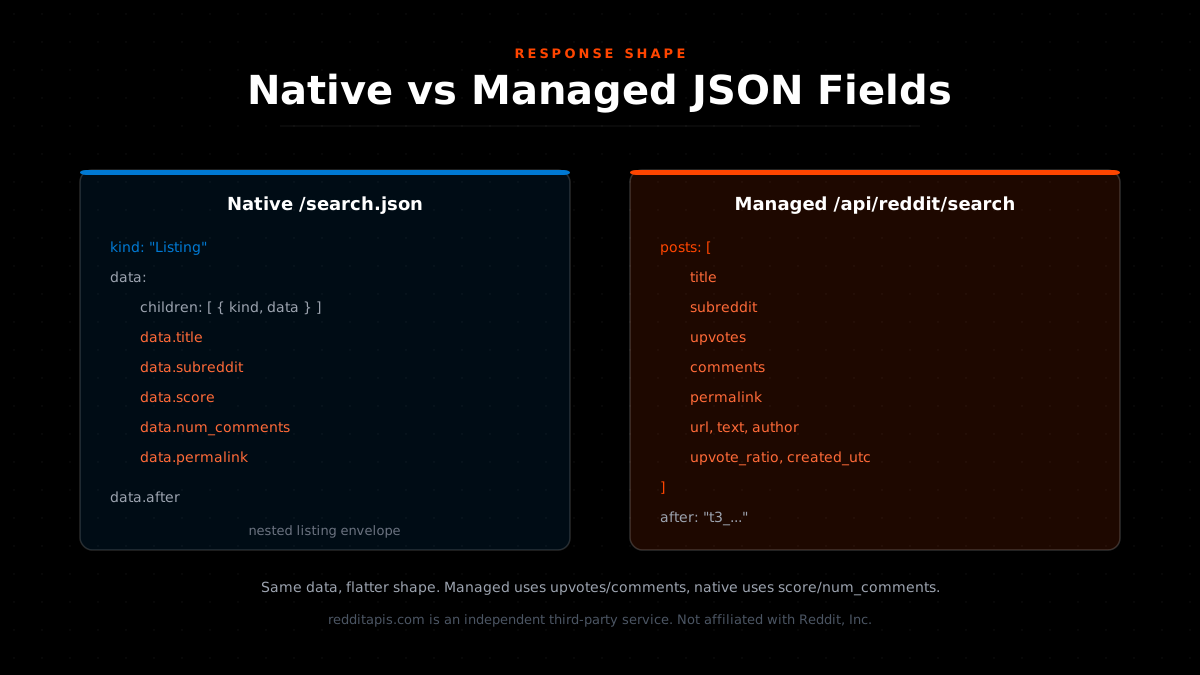
The flatter shape is the practical difference at integration time. The native endpoint nests every post under data.children[i].data, which means a lot of bracket-walking before you reach a title. The managed path hands you a plain posts list where each element is the post object directly, so iterating is for post in data["posts"] with no envelope to peel. If you are normalizing both into one internal model, the only field rename you need is score to upvotes and num_comments to comments. Everything else (title, subreddit, permalink, created_utc) lines up.
To scope to a single community, pass subreddit instead of fiddling with restrict_sr:
import os
import requests

API_KEY = os.environ["REDDITAPI_KEY"]
BASE = "https://api.redditapis.com"

resp = requests.get(
    f"{BASE}/api/reddit/search",
    params={"q": "fastapi", "subreddit": "Python", "limit": 25},
    headers={"Authorization": f"Bearer {API_KEY}"},
    timeout=60,
)
posts = resp.json()["posts"]
for p in posts:
    print(f"r/{p['subreddit']} | {p['title']}")
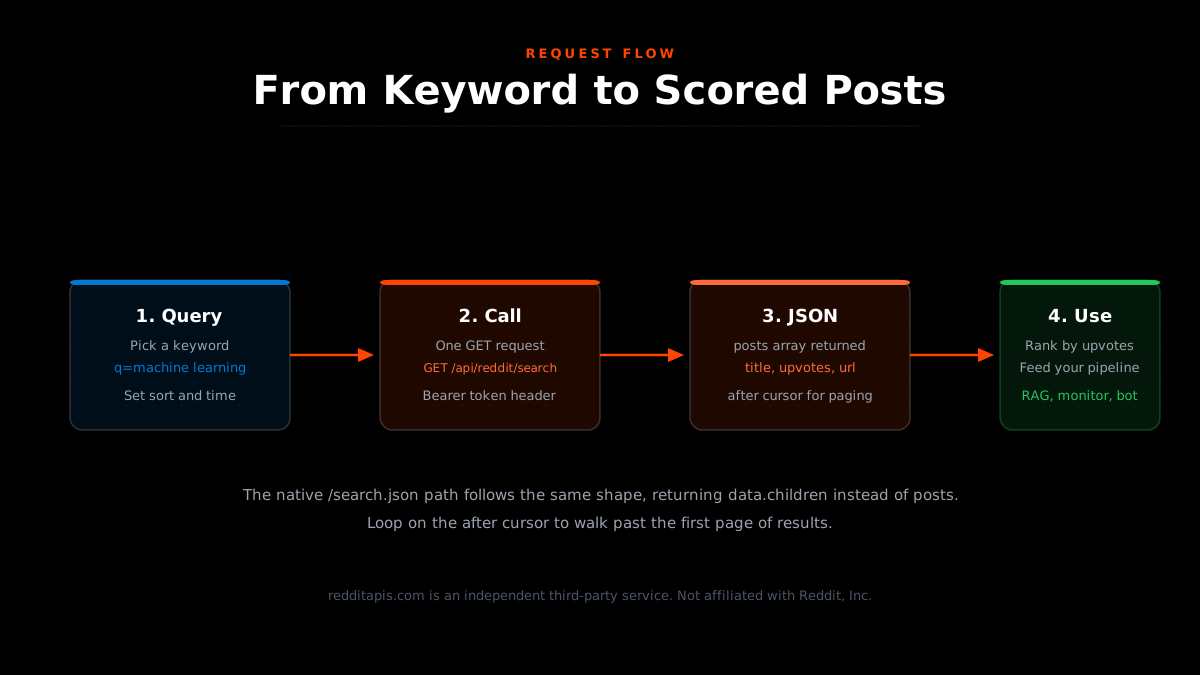
Both calls above were run against https://api.redditapis.com/api/reddit/search with a live bearer token while writing this tutorial; both returned HTTP 200 with a populated posts array. The first $0.50 of credit is free at signup, so you can paste this and watch it return real posts without a card.
Native vs PRAW vs Managed vs PullPush
Four paths cover the space of Reddit keyword search in 2026: the raw /search.json endpoint, PRAW, a managed REST proxy, and PullPush for historical data. Each one makes a different tradeoff across auth complexity, rate limits, result caps, and cost. There is no single best answer across all of them, only the best fit for your specific constraints.
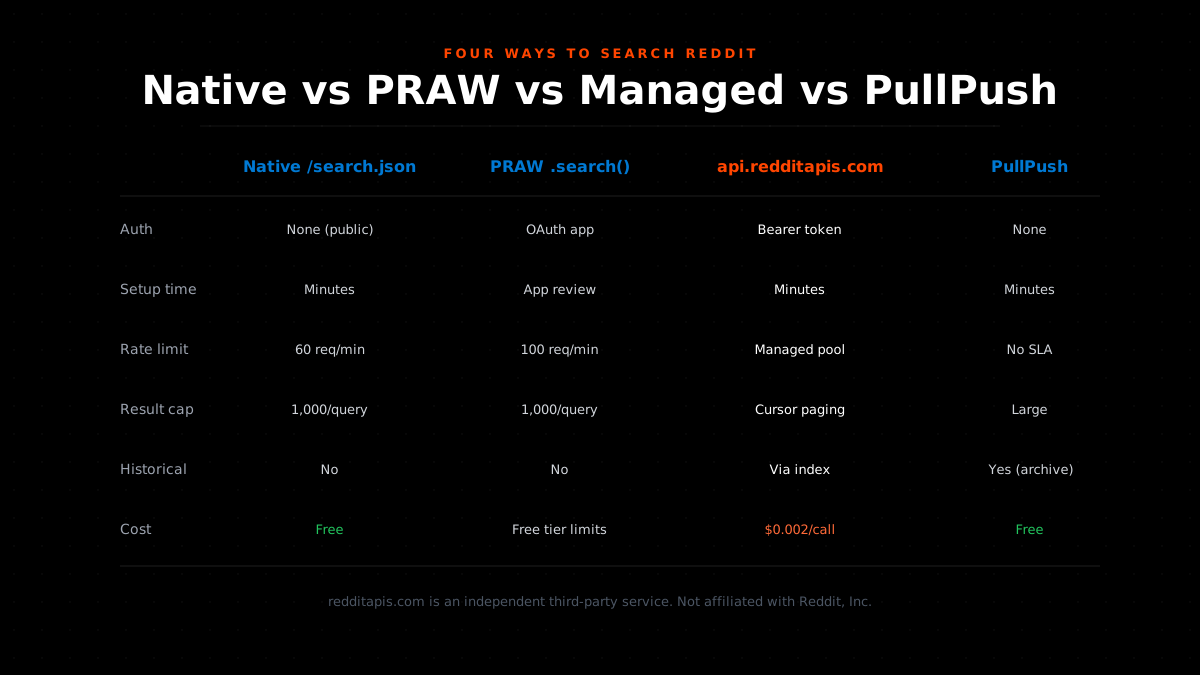
A quick read on each. Native /search.json is free and zero-setup, ideal for a quick test on your own machine, but Reddit's Data API wiki says traffic without OAuth is blocked and it gets IP-filtered from cloud hosts. PRAW (praw.readthedocs.io) is the right call if you are already in the PRAW ecosystem and want OAuth and backoff handled, accepting the 100 req/min and 1,000-result ceilings; it is published on PyPI and maintained on GitHub. PullPush (pullpush.io) is the free successor to the shut-down Pushshift project, useful for historical archive search but with no uptime guarantee. A managed REST API abstracts the IP pool, auth, and rate limiting for a per-call fee, which is the trade that makes sense once search is load-bearing in production. Reddit's own access terms are described in the official developer API docs and the Reddit Data API wiki.
For a sense of how teams are now wiring multi-source search into AI agents, this thread on an open-source skill that fans out across Reddit, X, YouTube, and Hacker News in parallel is a good snapshot of where the demand is heading:
@
The 1,000-Result Cap and What to Do About It
Here is the limit that surprises people most. Both the native endpoint and PRAW are bounded by Reddit's pagination: you can page through at most 1,000 posts per search query, 10 pages of 100 results each. Reddit does not expose an exhaustive full-text index, so "give me every post ever made about X" is not a request the search API can satisfy.
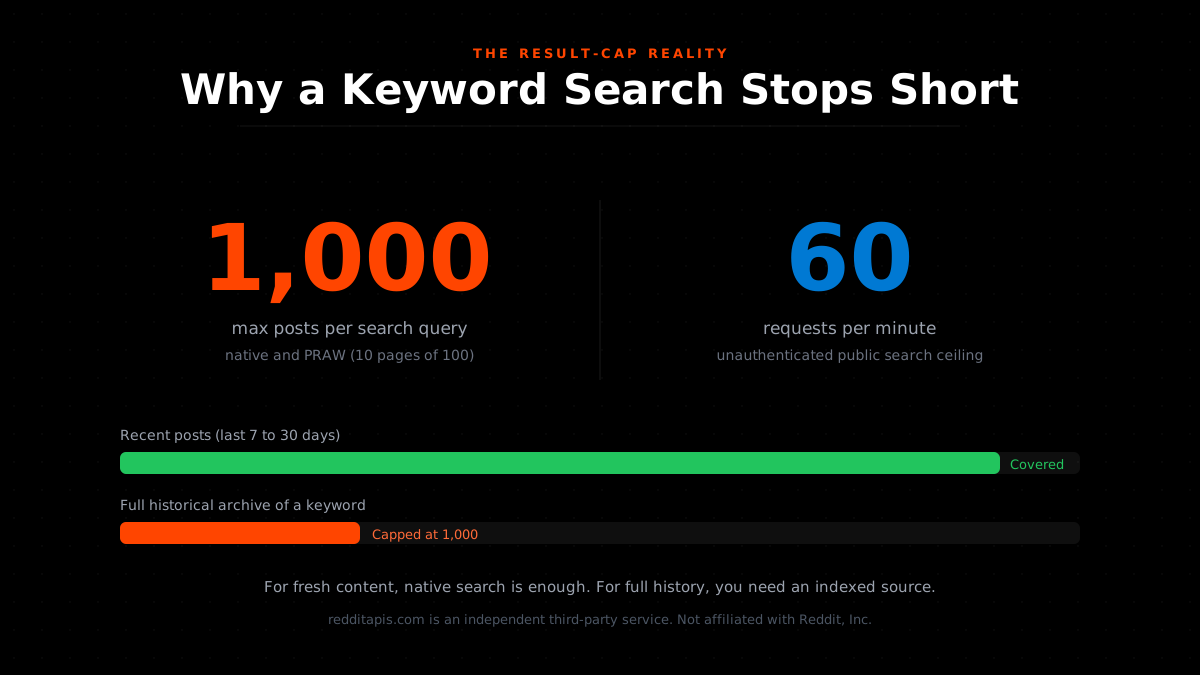
For most use cases this is fine. Brand monitoring, trend tracking, and RAG pipelines care about recent posts, and the last 7 to 30 days fit comfortably inside 1,000 results for all but the highest-volume keywords. When you genuinely need the full archive, you have two routes. PullPush exposes /reddit/search/submission/ and /reddit/search/comment/ over community-archived data, free but unreliable. A managed search API maintains its own index and paginates past the native ceiling with a cursor. Pick based on whether reliability or zero cost matters more for your job. The historical pattern is documented across r/redditdev, where the old advice to "use Pushshift" still circulates even though Pushshift shut down in May 2023.
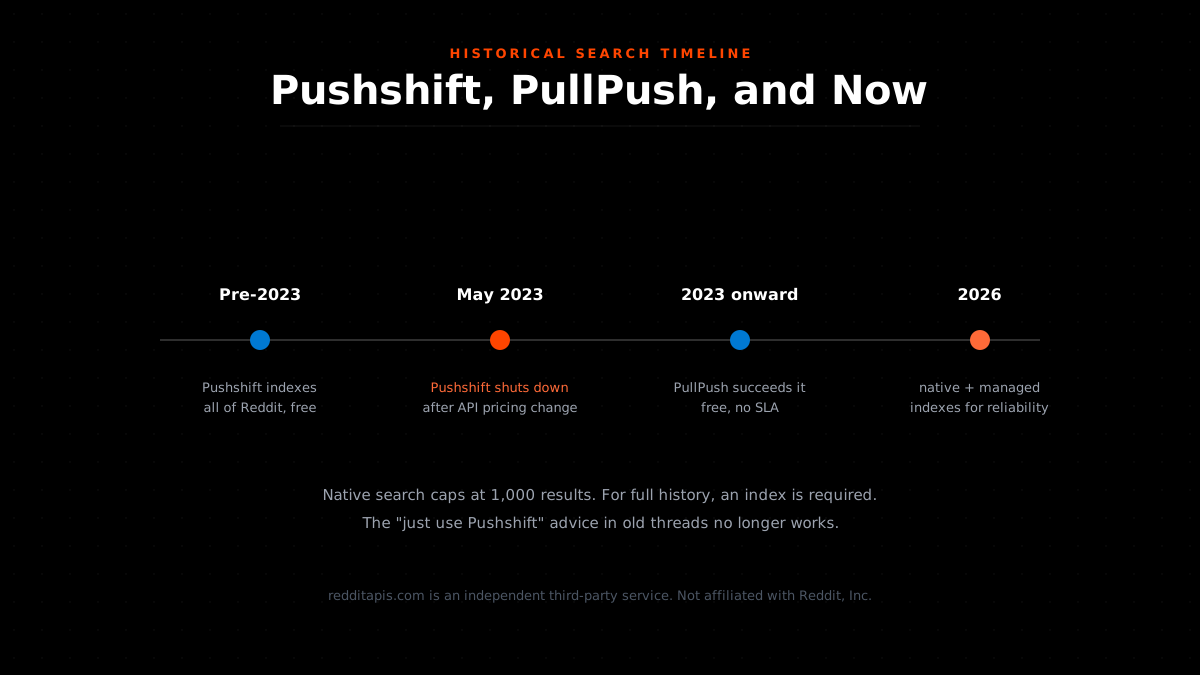
That timeline matters because so much of the search advice online predates it. A 2022 thread will confidently tell you to "just use Pushshift," and the answer was correct then and is dead now. When you read an older tutorial or StackOverflow answer about exhaustive Reddit search, check the date. Anything before mid-2023 assumes a free, complete index that no longer exists. The 2026 reality is narrower: native search for the last 1,000 results, PullPush for best-effort history, and a maintained index when you need history with a reliability guarantee. The Reddit data licensing context explains why the free-archive era ended and what replaced it.
Capturing comments alongside posts
When your workload needs the discussion under a matched post, not just the post itself, you can fetch comments by permalink rather than running a second search. The managed path exposes a comments endpoint that takes a permalink and returns the post plus its comment tree, which is cheaper and more complete than a comment search for a known thread:
import os
import requests

API_KEY = os.environ["REDDITAPI_KEY"]
BASE = "https://api.redditapis.com"

# first find posts by keyword
search = requests.get(
    f"{BASE}/api/reddit/search",
    params={"q": "fastapi background tasks", "subreddit": "Python", "limit": 5},
    headers={"Authorization": f"Bearer {API_KEY}"},
    timeout=60,
).json()

# then pull the comment tree for the top match
top = search["posts"][0]
comments = requests.get(
    f"{BASE}/api/reddit/comments",
    params={"permalink": top["permalink"]},
    headers={"Authorization": f"Bearer {API_KEY}"},
    timeout=60,
).json()

print(f"{top['title']} has a tree with keys: {list(comments.keys())}")
This two-step pattern (search for matches, then fetch the tree for the ones you care about) is the standard shape for research and monitoring jobs. It keeps your call volume proportional to the posts you actually act on instead of paging through comments you will discard.
Pagination: Walking Past the First Page
A single call returns one page. To collect more, loop on the after cursor. Here is the pattern on the managed path, which is the same idea on the native path with data.after:
import os
import requests

API_KEY = os.environ["REDDITAPI_KEY"]
BASE = "https://api.redditapis.com"
HEADERS = {"Authorization": f"Bearer {API_KEY}"}

def search_all(query, max_pages=5):
    collected = []
    after = None
    for _ in range(max_pages):
        params = {"q": query, "sort": "new", "limit": 50}
        if after:
            params["after"] = after
        resp = requests.get(f"{BASE}/api/reddit/search", params=params,
                             headers=HEADERS, timeout=60)
        resp.raise_for_status()
        data = resp.json()
        collected.extend(data["posts"])
        after = data.get("after")
        if not after:
            break
    return collected

posts = search_all("local llm", max_pages=2)
print(f"Collected {len(posts)} posts across pages")
Set max_pages deliberately. Remember the hard ceiling: 10 pages of 100 is the most Reddit will give you for any single query, so chasing more than max_pages=10 on one keyword wastes calls. If you need more coverage, vary the query (add a subreddit scope, narrow the t window, or split the keyword into variants) rather than paging deeper on the same one.
Why Search Returns 403, and How to Fix It
A 403 on Reddit's search endpoint has three root causes, and each has a specific fix. The most important thing to know before debugging: a 403 from a cloud server is usually an IP filter, not a code problem. The same script that 403s on AWS may work perfectly from your laptop, because Reddit blocks many datacenter IP ranges regardless of headers or auth.
- Wrong host. Calling
https://oauth.reddit.com/searchwithout a valid bearer token returns 403. For public search usehttps://www.reddit.com/search.json, which does not require OAuth. - Missing or banned User-Agent. Reddit rejects requests with no User-Agent or with a generic library default. Send a descriptive one:
myapp/1.0 (by u/yourusername). - Filtered IP. This is the 2026 reality. Reddit blocks many cloud and datacenter IP ranges, so a correct script on a server can still 403 while the identical script on your laptop works. There is no header that fixes a filtered IP.
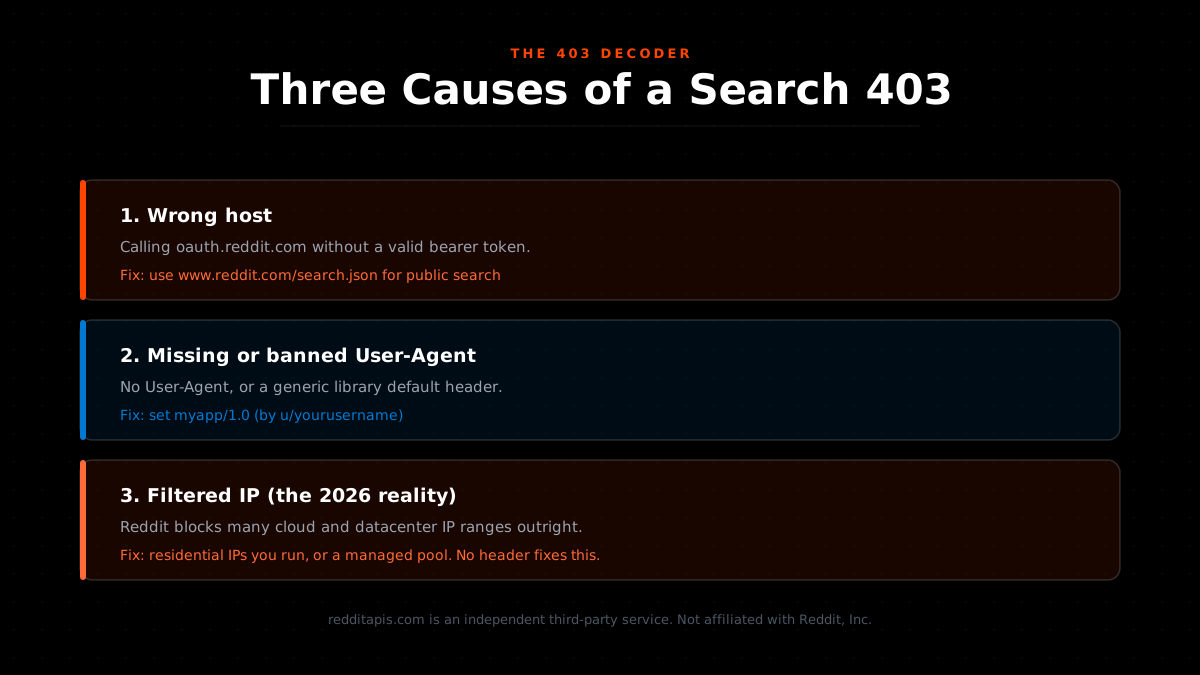
Causes 1 and 2 are easy. Cause 3 is the one that pushes teams off the native endpoint in production: you either run from residential IPs you maintain yourself, or you route through a managed API whose IP pool Reddit accepts. A quick way to diagnose which cause you have hit: run the exact same script from your laptop. If it works locally but 403s on the server, you have an IP filter (cause 3), not a code bug. If it 403s everywhere, check the host and the User-Agent first. For the broader 2026 access picture, see the Reddit API authentication and OAuth guide and the no-PRAW Python tutorial for the full read and write endpoint set. The competitor benchmark on scraping throughput and error rates shows how often that IP filter actually bites at volume.
Here is a short, practical walkthrough of scraping and searching Reddit posts and comments that complements the code above:
The cheapest Reddit API. Try it free.
Reads from $0.0015 per call. $0.50 free credits. No credit card required.
Searching Comments, Not Just Posts
Post search covers most needs, but comment search comes up constantly for research and monitoring. This thread is a typical ask: find comments containing a keyword and trace back to their submission.
View on RedditOn the native path, add type=comment to a subreddit search URL. Reddit's own comment search is shallower than post search and is mostly within-subreddit. For cross-Reddit historical comment search, PullPush's /reddit/search/comment/ endpoint or a managed index is the realistic route. If you only need the comments under a known post, fetch them by permalink rather than searching at all, which is cheaper and complete.
What Developers Actually Build on Reddit Search
Keyword search is rarely the goal on its own; it is the first step in a larger job. Four patterns cover most of what gets built on top of it, and each one nudges your parameter choices in a specific direction.
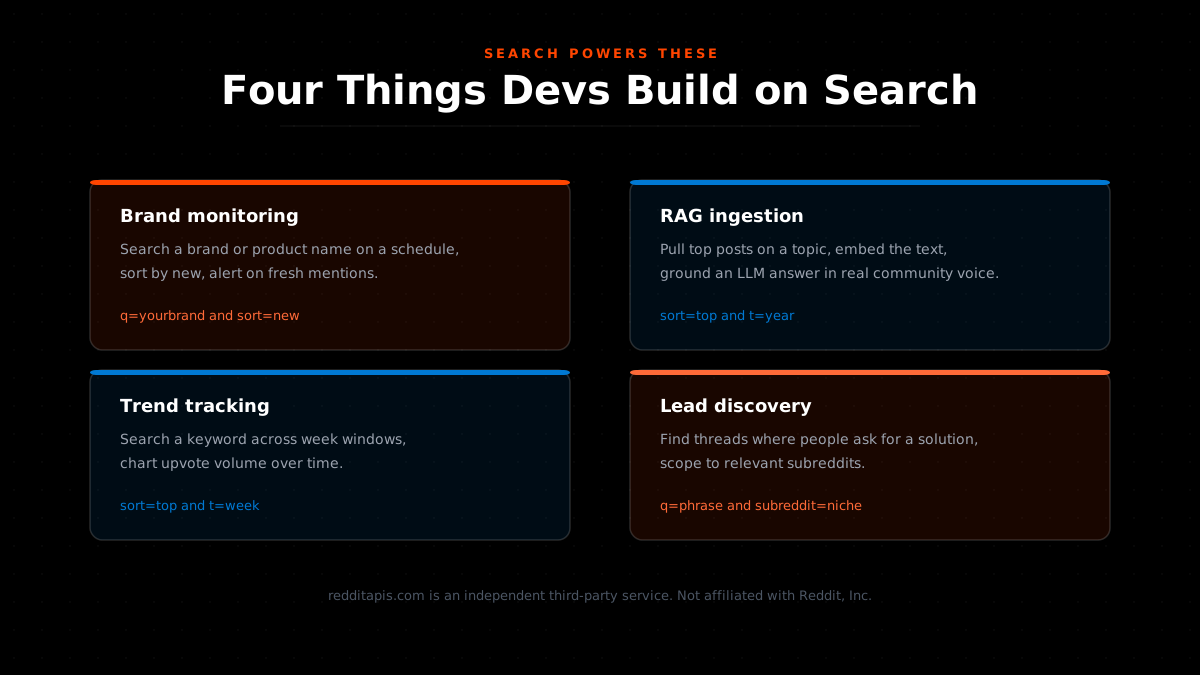
Brand monitoring wants the freshest mentions, so it leans on sort=new and runs on a short schedule, alerting when a new match appears. RAG ingestion wants the highest-signal posts to ground an LLM answer, so it favors sort=top with a t=year window and pulls the post text for embedding. Trend tracking repeats the same query across rolling t=week windows and charts upvote volume over time. Lead discovery scopes a phrase to relevant subreddits with the subreddit parameter and watches for people asking for a solution. The same endpoint serves all four; the parameters are what specialize it. If you are wiring search into an agent or a pipeline, the no-PRAW Python tutorial covers the surrounding read and write calls you will likely pair with it.
Reddit Search in the Age of AI Overviews, 2026
Reddit search demand keeps climbing in 2026 because AI systems now treat Reddit content as a primary citation source, not just a discussion forum. Google's AI Overviews surface Reddit threads directly, and LLM-powered assistants cite Reddit when answering questions about real-world experience. That changes what the search API is for: it is increasingly a retrieval layer for AI pipelines, not just a tool for finding threads to read yourself. Two structural shifts drive this:
- AI Overviews cite Reddit. Google's AI Overviews surface Reddit threads, and several assistants cite Reddit directly when answering "what do people think about X."
- Agents need a bridge. Each platform is walled off behind its own API and auth, so an agent that wants to read what people actually said has to query Reddit search itself rather than relying on the model's training memory.
This widely-shared thread frames the gap plainly:

Awais
@drawais_ai
Look at how broken modern search is. Google indexes editors. ChatGPT has a Reddit deal but no X or TikTok. Gemini has YouTube but no Reddit. Claude has none of them natively. Each platform is a walled garden with its own auth, its own tokens, its own API. So the AI agent reading… Show more

The practical takeaway for a developer is that Reddit search is no longer just a way to find threads for a human to read. It is increasingly a data feed into an AI system: a retrieval step that grounds a model in real community discussion rather than a model's training memory. That use case rewards two things, reliability and freshness, which is exactly where the native endpoint's IP filtering and 1,000-result cap start to chafe. If your search is feeding a model that users see, an intermittent 403 is not a logging nuisance; it is a hole in the answer. This is the structural reason production search workloads drift toward a managed index even when the hobby path technically works. For how this connects to Reddit's broader data strategy, see the usage-based AI data licensing breakdown.
How Much Reddit Search Costs at Volume
Reddit search costs depend on which path you choose, and the pricing axes are different enough that comparing them requires mapping your actual query volume first. Native /search.json and PRAW are free in dollars but cost engineering time to manage IP pools and OAuth. A managed REST path prices per call at $0.0015 per GET (pricing) with no infrastructure to maintain. Here is how the three options compare:
- Native
/search.json: free in dollars, but you pay in an IP pool to dodge filtering and in maintenance time. - PRAW free tier: free in dollars, but you pay in OAuth app review and rate-limit backoff you maintain.
- Managed REST: no infrastructure work; priced per call at $0.0015 per GET instead (pricing).
Native and PRAW are free in dollars but cost you engineering time and infrastructure. A managed path is free of that work and prices per call instead.
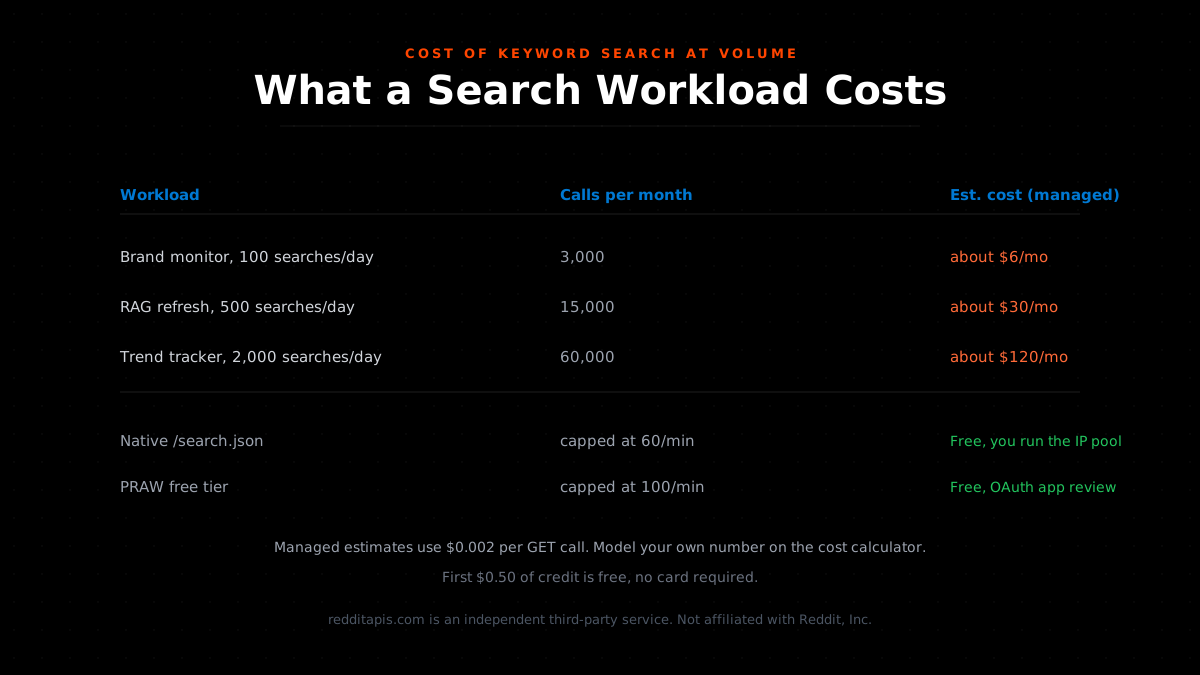
The numbers above are estimates at $0.0015 per GET call; model your own with the cost calculator once you know your real query volume. The honest framing: at low volume, free wins, because the per-call cost of a managed path is real and the engineering tax of the native path is small when you are running a few hundred searches a day from your laptop. At production volume, the math flips. Maintaining a residential IP pool and OAuth plumbing for tens of thousands of monthly searches costs more in engineering time than the per-call fee, and a 403 that breaks a customer-facing feature costs more than both. Decide on your actual numbers, not on the sticker price. The pricing page and the rate-limits reference have the per-operation detail.
Choosing Your Path
To close the loop, map your situation to a path. Beginners on r/learnpython asking how to "search for specific keywords in ALL of reddit" want the native /search.json snippet from this tutorial: it is free and runs in minutes. Teams already on PRAW should use subreddit.search() and live within the 1,000-result cap. Anyone running search from a server, at concurrency, or where a 403 is unacceptable should move to a managed REST endpoint.
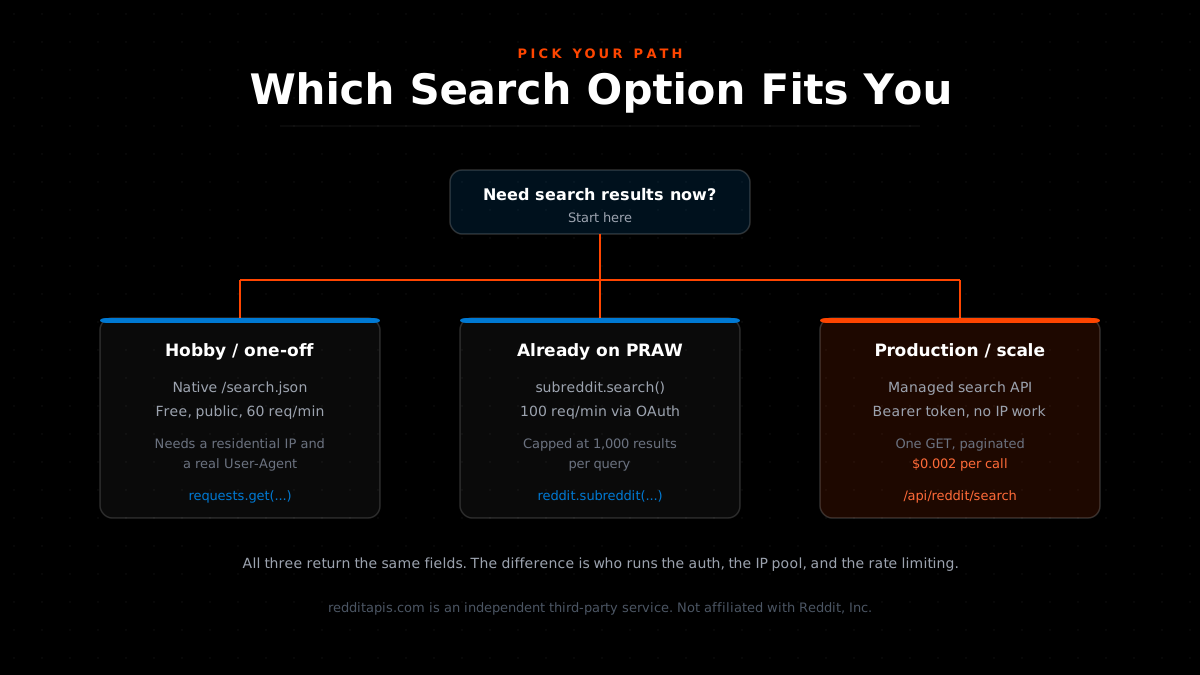
The data is identical across all three; what differs is who runs the auth, the IP pool, and the rate limiting. For native and PRAW, that is you. For the managed path, it is the provider, for $0.0015 per call with $0.50 free at signup. Model your own volume against the rate-limits reference before you decide.
Verdict
For a notebook or a hobby project, the native /search.json endpoint is the right answer: free, no OAuth, and you can paste the snippet above and have results in two minutes from your own machine. The moment search has to run from a server, page past the first 1,000 results reliably, or survive Reddit's IP filtering, the native path turns into IP-pool and backoff plumbing you have to maintain. PRAW handles the OAuth and backoff but inherits the same result ceiling. A managed REST endpoint like https://api.redditapis.com/api/reddit/search returns the exact same posts through a clean pool for a flat per-call price, which is the trade most production teams end up making. Start free, measure your real volume, and upgrade only when the native limits actually bite. Grab a key and run the code.
Where these numbers come from.
Each row is a figure in this post and the artefact it was read from. Reddit's access rules and the third-party archives around them keep moving, so check the date on a source before you build against it.
- Reddit API documentation
- The search endpoint and query parameters the reference table is drawn from.
- PRAW Subreddit model
- The subreddit.search() method shown in the PRAW section.
- redditapis.com API docs
- The managed single-GET search path in the article.
- PullPush API
- The historical search source used to get past the 1,000-result cap.
- Requests: HTTP for Humans
- The HTTP client behind the native /search.json Python example.
Frequently asked questions.
Reddit exposes a public search endpoint at https://www.reddit.com/search.json. Pass your query with the q parameter, order results with sort (relevance, hot, top, new, comments), and set a time window with t (hour, day, week, month, year, all). Add restrict_sr=1 on a subreddit URL to limit results to that community, or search all of Reddit by omitting it. The endpoint returns up to 100 results per call (limit=100) and uses after for pagination. Reddit's Data API wiki says traffic without OAuth is blocked, so plan on OAuth or a managed key. See the parameter reference or sign up for a free key.
You have three options. (1) Direct REST: GET https://www.reddit.com/search.json?q=your+keyword&sort=new&limit=25 with the requests library and a descriptive User-Agent. (2) PRAW: call reddit.subreddit('all').search('your keyword', sort='relevance', time_filter='week'), which returns a generator of Submission objects. (3) Managed REST API: send one authenticated GET to https://api.redditapis.com/api/reddit/search and get a posts array plus an after cursor back. Each path returns the same underlying data with different setup and rate-limit tradeoffs. The full read and write endpoint set is in the no-PRAW Python tutorial.
A 403 on search almost always means one of three things: (1) you are calling the OAuth host oauth.reddit.com without a valid bearer token, (2) your User-Agent header is missing or matches a blocked bot pattern, or (3) you are querying a private or quarantined subreddit. For public subreddits use https://www.reddit.com/search.json (not the OAuth host) and set a descriptive User-Agent like myapp/1.0 (by u/yourusername). Reddit also blocks many datacenter and cloud IP ranges outright, so a 403 can mean your server IP is filtered even when the code is correct. See the authentication and OAuth guide; a managed REST API routes through a clean pool and sidesteps this entirely.
Not reliably. https://www.reddit.com/search.json and https://www.reddit.com/r/<sub>/search.json may still answer an anonymous call, but Reddit's Data API wiki says traffic without OAuth is blocked, so treat any anonymous result as a fallback that can stop at any moment. With OAuth the free limit is 100 queries per minute per OAuth client. The catch in 2026 is the IP filter: unauthenticated calls from cloud or datacenter hosts frequently return 403 regardless of headers. The REST vs PRAW comparison walks through the access tradeoffs.
PRAW's .search() is bounded by Reddit's own pagination: you can retrieve up to 1,000 posts per query (10 pages of 100 results). Reddit's API does not expose an exhaustive full-text index, so you cannot pull every post ever made about a keyword. For recent content (the last 7 to 30 days) PRAW search is fine. For full historical coverage you need an indexed source like PullPush (free, no SLA) or a managed Reddit search API that maintains its own index with higher caps. See the result-cap section.
Pushshift was a community-built Reddit search index shut down in May 2023 after Reddit's API pricing changes. PullPush (pullpush.io) is its community-maintained successor, built on Pushshift's archived data. It exposes /reddit/search/submission/ for posts and /reddit/search/comment/ for comments, with q, subreddit, after, before, and size parameters. PullPush is free but has no uptime guarantee. For production search where reliability matters, a managed REST API is the more dependable option. See the PRAW vs managed REST breakdown.
Reddit's Data API wiki says traffic without OAuth is blocked. OAuth apps on free access get 100 queries per minute per OAuth client, averaged over 10 minutes. Use beyond that needs a separate agreement with Reddit. PRAW reads the rate-limit headers and backs off automatically when you approach the ceiling. If you need to run search concurrently past 100 req/min, a managed API with its own infrastructure pool abstracts the limit away. See Reddit API rate limits in 2026.
Yes. On the native path, add type=comment to a subreddit search URL (/r/<sub>/search.json?q=keyword&type=comment) or use PullPush's /reddit/search/comment/ endpoint for historical comment search. Reddit's own comment search is shallower than post search and is restricted to within-subreddit queries in most cases. For cross-Reddit comment search at scale, an indexed third-party source is the practical route. This is a common research use case raised repeatedly in r/redditdev. The no-PRAW Python tutorial covers fetching a comment tree by permalink when you already know the post.
Keep reading.
Continue exploring related pages.
Reddit API documentation
The complete 2026 reference: auth, all 74 endpoints, and code.
Get a Reddit API key
Instant bearer token, no waitlist and no enterprise contract.
Reddit Responsible Builder Policy
Why Reddit denies API applications, and the managed REST bypass.
Reddit API use cases
14 use cases from AI training to brand monitoring and DMs.
Reddit Search API
Search posts, comments, users, and communities over one REST endpoint.
Reddit MCP server
Wrap the REST API as MCP tools for Claude, Cursor, and any MCP client.
Reddit MCP hub
Install tabs for every client, the full tool table, pricing and fixes.
Reddit API for AI agents
Live Reddit context for tool calls, MCP servers, and RAG pipelines.
Redditapis pricing
Endpoint-level costs and quick monthly totals - reads from $0.0015 / call.
Reddit API cost calculator
Estimate monthly spend using your request volume.
Reddit API guides and tutorials
Tutorials, walkthroughs, and API deep-dives for developers.
Reddit API alternatives
Evaluate alternatives by cost model, limits, and integration fit.
Cheap Reddit API
The cheapest way to get Reddit data: $0.0015 per call, no contract, no minimum.
Official Reddit API vs Redditapis
Access, setup, rate limits, and pricing, side by side.
PRAW alternative
A hosted Reddit REST API for any language, no app registration or OAuth.
Reddapi alternative
A maintained Reddit REST API with published pricing and write endpoints.
Reddit comment scraper alternative
The raw comment API: search and filter comments, historical and live, clean JSON.
Reddit scraper API
Hosted scraper API vs building your own: no proxies to manage, clean JSON.
RapidAPI Reddit alternative
A direct, maintained Reddit API with published pricing and write endpoints.
Bright Data Reddit alternative
A purpose-built Reddit API vs a general scraping platform: structured JSON, plus writes.
ScraperAPI Reddit alternative
A Reddit-native API vs a generic HTML fetcher: auth and pagination handled, typed JSON.
TikHub alternative
TikHub's Reddit surface is read-only; get comment, vote, and DM endpoints too.
EnsembleData alternative
No $100/month floor: pay per call from $0.0015, plus write, vote, and DM endpoints.
Scrape Creators alternative
7 read-only Reddit endpoints vs a dedicated API with real write, vote, and DM paths.
FetchLayer alternative
Posts, comments, and search only; add vote, comment, and DM over the same REST auth.
PullPush alternative
PullPush is free but volunteer-run and goes offline for reindexing; a maintained REST API that stays up.
Reddit monitoring API
Build your own keyword and brand-mention monitor: search, comment search, and subreddit streams over REST.
F5Bot vs Redditapis
F5Bot's Slack and Discord delivery needs its $49.99/mo Gold tier; Redditapis includes it from $19/mo.
Syften vs Redditapis
Syften caps you at 100 to 500 results a day; Redditapis allows 10,000 a day per monitor at the entry plan.
Octolens vs Redditapis
Octolens meters by mention with overage fees; Redditapis is flat-priced by subreddit slot from $19/mo.
Affiliate program
Earn 20% lifetime commissions - capped at $5,000/yr.
Reddit Vote API tutorial
Upvote and downvote a post programmatically via the REST API.
Reddit Data API: REST, no PRAW
REST endpoints for Reddit data with no PRAW and no OAuth dance.
Reddit scraping benchmarks
Real throughput, error rates, and cost benchmarks for Reddit scraping.
Reddit API answers
Direct answers on cost, access, rate limits, endpoints, and auth.
How much the Reddit API costs
Per-call pricing from $0.0015 a read, with $0.50 in free credits.
Reddit API in Python
One requests call with a bearer token, no PRAW and no OAuth flow.
Reddit shadowban checker
Check if a Reddit account is shadowbanned in seconds, free and no login.
Subreddit stats checker
See any subreddit's live subscriber count, active users, and age, free and no login.
Similar reads.
More guides on the Reddit API, scraping, pricing, and MCP servers.

How to Get Reddit Comments via the API: Fetch the Full Comment Tree (2026)
Fetch Reddit comments by permalink, walk the nested tree, expand the more / morechildren nodes, and flatten replies in Python. Copy-paste code and first-party numbers, 2026.
Does the Reddit Search API Support Boolean Queries? Every Operator, Tested
AND, OR, and NOT don't work like SQL against Reddit's search backend. Here's what actually works (subreddit:, author:, exact phrases, exclusion), tested live against the production API, plus why the boolean confusion exists in the first place.

Advanced Reddit Search Filters API (2026)
Filter Reddit search by score, comment count, media type, and NSFW over one authenticated GET. Every filter parameter, the response meta, and real Python.

Reddit Bulk Fetch by ID: Hydrate Posts in One API Call
Fetch many Reddit posts in one call with the by_id API. Hydrate t3_ fullnames from a stream, backfill archives, and dedup at scale, with copy-paste Python for 2026.

Reddit Subreddit Rules API: Pull Posting Rules as JSON
Pull any subreddit's posting rules as structured JSON with the rules API. Build pre-submit validation, compliance checks, and automod-aware bots, with copy-paste Python for 2026.

Reddit User API: Fetch Profile, Karma, and History
Fetch a Reddit user's profile, karma, and full comment plus submission history from one API. Real request and response JSON, copy-paste Python, and pagination for 2026.

Reddit API Pagination: The after Cursor and Getting Past the 1000-Item Ceiling (2026)
How Reddit API pagination works: the after cursor, the 100-per-page cap, and getting past the ~1000-item ceiling. Copy-paste Python and first-party numbers, 2026.

How to Find Subreddits Programmatically: A Subreddit Finder API Guide (2026)
Find subreddits by keyword at scale in 2026. Discover communities with the search/communities API, rank them by real activity, and compare the native reddit.com/search.json path with copy-paste Python.