
Reddit API Authentication in 2026: OAuth, Tokens, and the No-OAuth Path
How Reddit API authentication works in 2026. Register an app, get a client ID and secret, exchange them for an access token, refresh it, and the simpler bearer-token REST path that skips the OAuth dance entirely.

Reddit API authentication is OAuth2 end to end: you register an app, exchange your client ID and secret for a short-lived access token, and refresh that token every hour. The access token is the credential that goes on every request, not the client ID. App approval can take days and sometimes fails silently.
TL;DR: Reddit API authentication is OAuth2 end to end. You register an app to get a client ID and a client secret, exchange that pair for a short-lived access token, and refresh the token before it expires every hour. App approval under the current policy can take days and sometimes fails silently. The access token, not the client ID, is the credential you send on requests, and a 401 almost always means it expired. If the OAuth setup is the blocker, a bearer-token REST adapter moves the token exchange server-side and hands you one long-lived token at signup, with no developer app and no refresh loop.
There is no field on Reddit called "API key" that you copy once and paste forever. That mental model is the single biggest reason new developers get stuck. What Reddit actually gives you is a chain: an app, a client ID and secret, and a short-lived access token that the first two produce. Get the chain right and every request works. Get one link wrong and you stare at a 401 with no idea which step failed.
This guide walks the full official path, names every credential, shows the token exchange and the refresh loop in runnable code, and gives you a 401 checklist in the order failures actually happen. Then it covers the no-OAuth alternative: how a REST adapter collapses the chain into one bearer token, and when that tradeoff is worth it.
Why does any of this matter more in 2026 than it did three years ago? Because the cost and the friction of Reddit access both went up at the same time. When Reddit closed the open API era, every integration that used to be a casual unauthenticated fetch became an OAuth project with an approval queue attached. The developer who first made that consequence concrete was Christian Selig, whose call with Reddit about the new pricing kicked off the whole shift.

Christian Selig
@ChristianSelig
Just got off a call with Reddit about the API and new pricing. Bad news unless I come up with 20 million dollars (not joking). Appreciate boosts. https://t.co/FliuNCinpZ
That tweet is the dividing line. Everything in this guide, the app registration, the token dance, the approval wait, exists because of the policy era it announced. The fallout was not abstract: third-party clients with millions of users shut down rather than pay the new rates, and the developer community watched it happen in real time.

rohan
@lets_dig_deeper
Reddit, Inc. killed Apollo, an app with more than 1.5 million active users Here's the background story 👇🏻 Before everything, what is Apollo? 1. It's a third-party app that uses Reddit content and shows it in a fantastic UI. 2. People love using Apollo ❤️ 3. So much so that… Show more
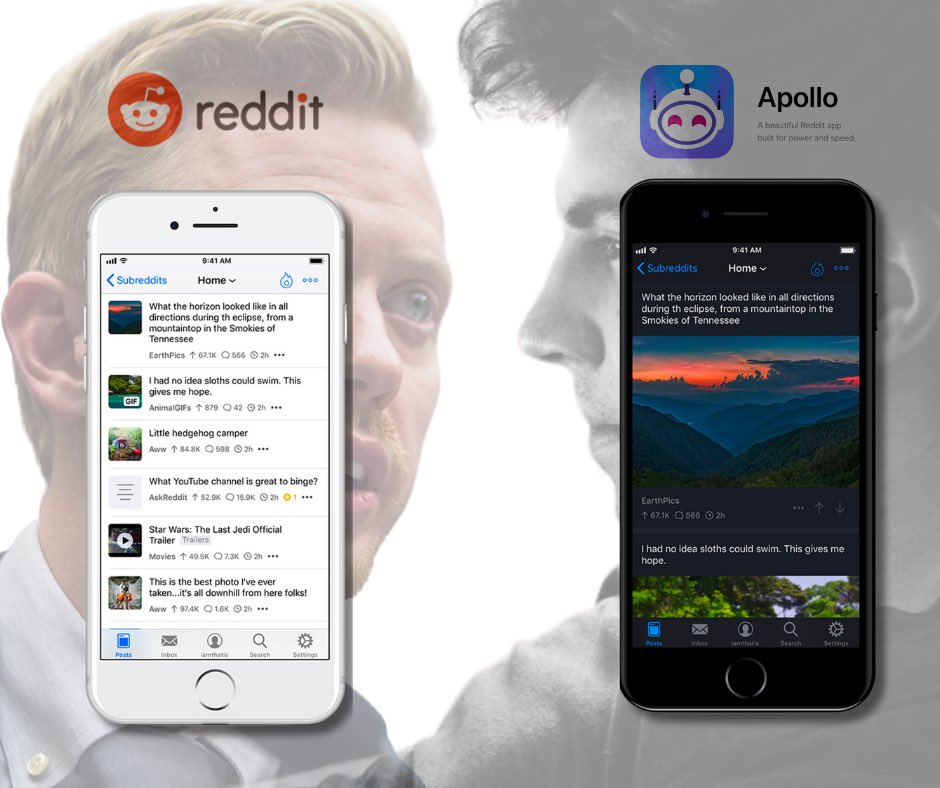
So the question is not whether to authenticate, it is how much of that complexity you carry yourself versus push onto a service that already absorbed it.
A Map of Every Credential You Will Touch
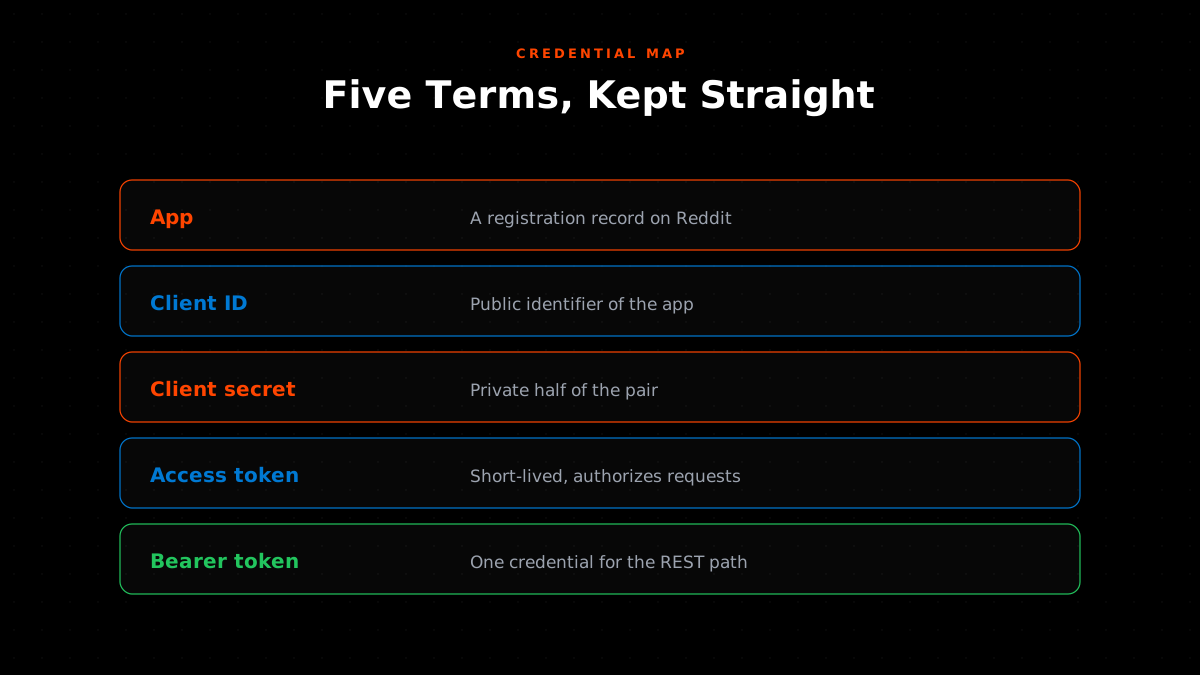
Before the steps, fix the vocabulary, because half of all auth questions on the developer forums are really vocabulary questions in disguise:
app: a record you create on Reddit, with a name, a type, and a redirect URI.client_id: the public identifier of that app, a short string under the app name.client_secret: the private half of the pair; anyone who has it can act as your app.access_token: the short-lived string, minted from the pair, that authorizes requests.bearer token: the single credential that stands in for the whole chain on the REST path.
Keep those five terms straight and nothing below will surprise you.
The Reddit Auth Chain, at a Glance
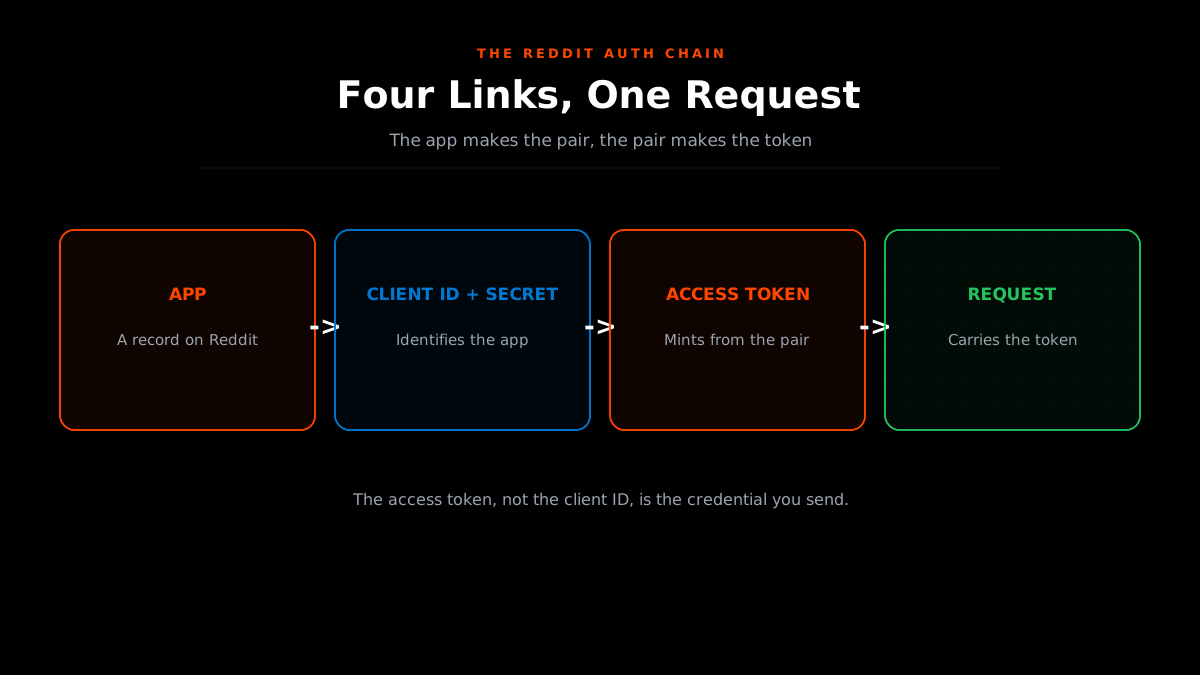
Most authentication confusion comes from collapsing three distinct things into one word. Keep these three separate:
- The app, a registration record on Reddit with a type and a redirect URI.
- The credential pair, the
client_idandclient_secretthat identify the app. - The access token, the short-lived string you actually send on requests.
The app makes the pair, the pair makes the token, the token makes the request. Keep those three boxes separate in your head and the rest of this guide reads like plumbing.
Step One: Register an App and Get Your Client ID
The official credential starts at the developer apps page. You create an app, pick a type, and Reddit hands back a client ID and a client secret. The app type matters because it changes which OAuth grant you use later.
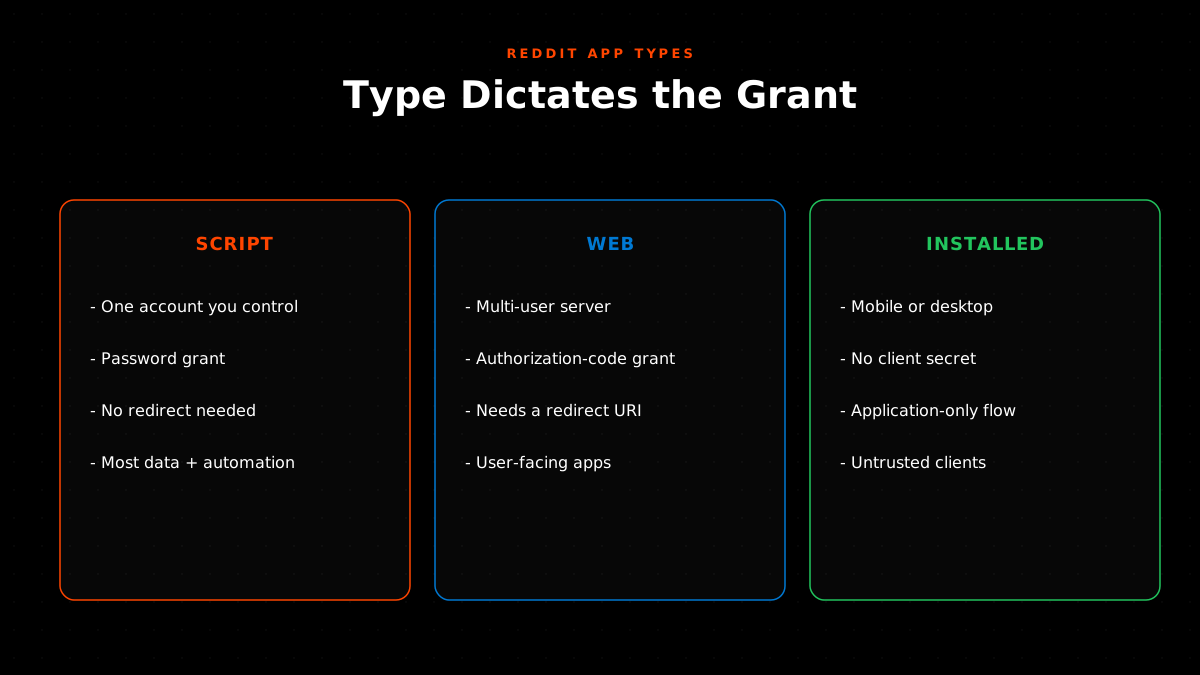
There are three app types, and choosing the wrong one is a quiet source of later 401s because the type dictates the OAuth grant:
- A
scriptapp is for a single account you control, the common backend case; it uses thepasswordgrant. - A
webapp authenticates other users through a redirect; it uses theauthorization_codegrant and needs a redirect URI. - An
installedapp is for mobile or desktop clients that cannot keep a secret; it has no secret and uses an application-only flow.
For most data and automation work you want a script app, because it is the simplest grant and needs no redirect.
Once the app exists, the client ID sits under the app name and the secret is labeled. Treat the secret like a password, because it is one. The single most common security mistake new developers make is committing the client secret to a public repository; rotate it immediately if that happens, because a leaked secret lets anyone impersonate your app against Reddit. Store it in an environment variable or a secrets manager, never in source. The reference for app types and the registration screen lives in Reddit's official API documentation, and the OAuth2 grant details are spelled out in the Reddit OAuth2 wiki.
View on RedditThat thread is worth reading before you start, because the app-creation step itself has become a frequent failure point. Developers report the create-app button silently failing, HTTP 500s from the apps page, and CAPTCHA loops that never resolve. None of that is your code. It is the registration surface, and it is the first place a 2026 setup stalls.
Step Two: Exchange the Credentials for an Access Token
The client ID and secret are not request credentials. You send them once, with HTTP Basic auth, to the access token endpoint, and Reddit returns an access token. For a script app the grant type is password, so you also send the username and password of the account the app runs as. These grant types come straight from the OAuth 2.0 specification (RFC 6749); Reddit implements the standard authorization-code and password flows rather than anything proprietary.
Here is the token exchange for a script app, in curl. Replace the placeholders with your own app credentials.
curl -s -X POST "https://www.reddit.com/api/v1/access_token" \
  -u "YOUR_CLIENT_ID:YOUR_CLIENT_SECRET" \
  -H "User-Agent: my-app/1.0 by u/your_username" \
  -d "grant_type=password" \
  -d "username=YOUR_REDDIT_USERNAME" \
  -d "password=YOUR_REDDIT_PASSWORD"
The response is a JSON object. The piece you care about is access_token, and the piece that bites you later is expires_in, which is the lifetime in seconds. It is almost always 3600, one hour. Note that the User-Agent header is mandatory. Reddit rejects requests with a generic or missing User-Agent, and a wrong User-Agent is a classic cause of an early 401.
The Anatomy of the Token Response
The token endpoint returns a JSON object with five fields. Each field has a specific job, and mixing them up is the most common cause of 401s on the first authenticated request.
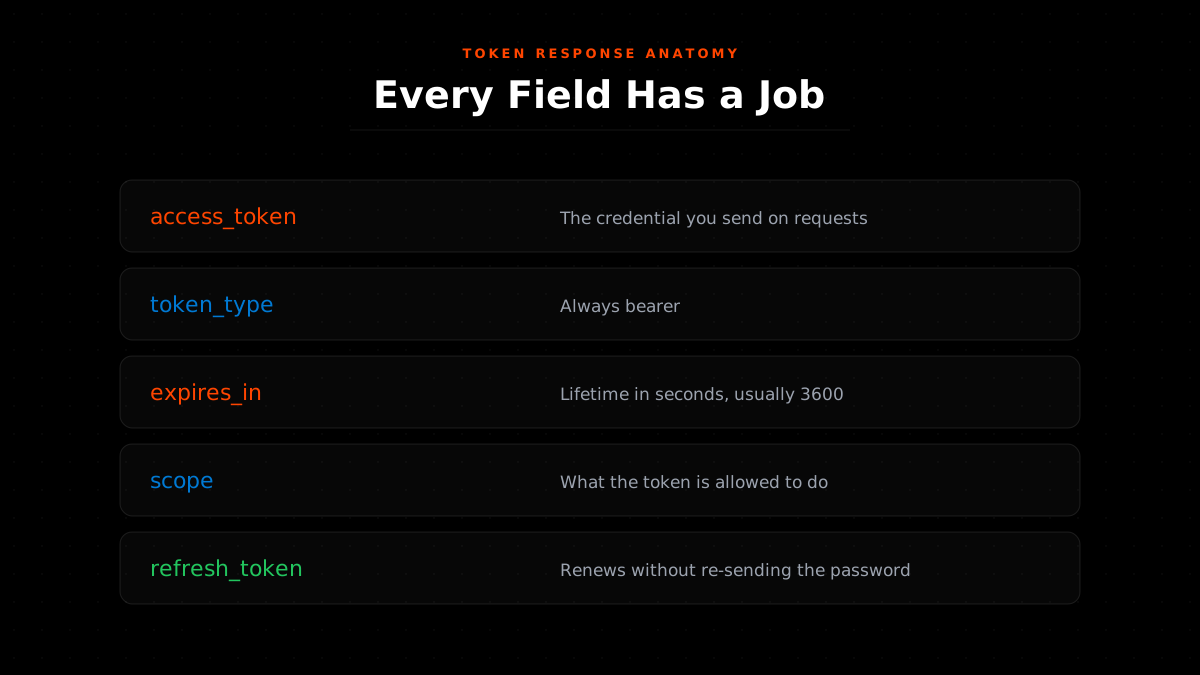
Every field in that response has a job. The access_token is the only one that goes on a data request, in an Authorization header as bearer <token>. The token_type confirms it is a bearer token. The expires_in is your refresh timer; treat it as a deadline, not a suggestion. The scope lists what the token can do, which matters when you later ask for write or DM access. And if you requested it, the refresh_token is the long-lived string that buys you a new access token without re-sending the password.
The mistake that produces the most 401 reports is sending the client ID or the credential pair on the data request instead of the access token. The pair authenticates you to the token endpoint only. The token authenticates you to everything else.
Scopes: What Your Token Is Allowed to Do
A token is not all-powerful. When you request it, you ask for a set of scopes, and the token can only perform actions inside those scopes. The full scope list and the endpoints each one unlocks are documented in Reddit's API wiki. Ask for too little and a write call fails with a 403 even though the token itself is valid. Ask for too much and you are carrying permissions you do not use, which is poor hygiene.
The scopes you reach for most are read for fetching posts and comments, submit for creating posts, edit for editing your content, vote for upvoting and downvoting, privatemessages for the inbox and direct messages, and identity for reading the authenticated account. A read-only data pipeline needs only read. A bot that posts and replies needs submit and edit. A token requested with read alone will return a 403, not a 401, the moment it tries to vote, and that distinction matters: a 401 is an authentication failure, a 403 is an authorization failure. If your token works for reads but fails on writes, check the scope before you touch anything else.
The annoyance is that scopes are fixed at mint time. If you under-scoped a token and need a new permission, you mint a fresh token with the wider scope; you cannot upgrade a token in place. That is one more reason a long-running service tends to request the full set of scopes it will ever need up front, rather than minting narrowly and re-minting on every new action.
Start building with Redditapis
Reads $0.0015, votes $0.005, writes $0.012, DMs $0.025. $0.50 free credits.
Step Three: Make an Authenticated Request
With a token in hand, a data request sets one header. The Authorization: bearer <token> format follows the Bearer Token Usage standard (RFC 6750). Note the host changes: token exchange happens on www.reddit.com, but authenticated data calls go to oauth.reddit.com.
curl -s "https://oauth.reddit.com/r/redditdev/new?limit=5" \
  -H "Authorization: bearer YOUR_ACCESS_TOKEN" \
  -H "User-Agent: my-app/1.0 by u/your_username"
If that returns posts, your auth chain is correct end to end. If it returns a 401, the token is the problem, and the checklist later in this post tells you which link broke.
Step Four: Refresh Before the Token Dies
Reddit access tokens expire after one hour. Every long-running job needs a refresh loop that tracks the expires_in value and mints a new token before the current one dies, not after the first 401 tells you it already did.
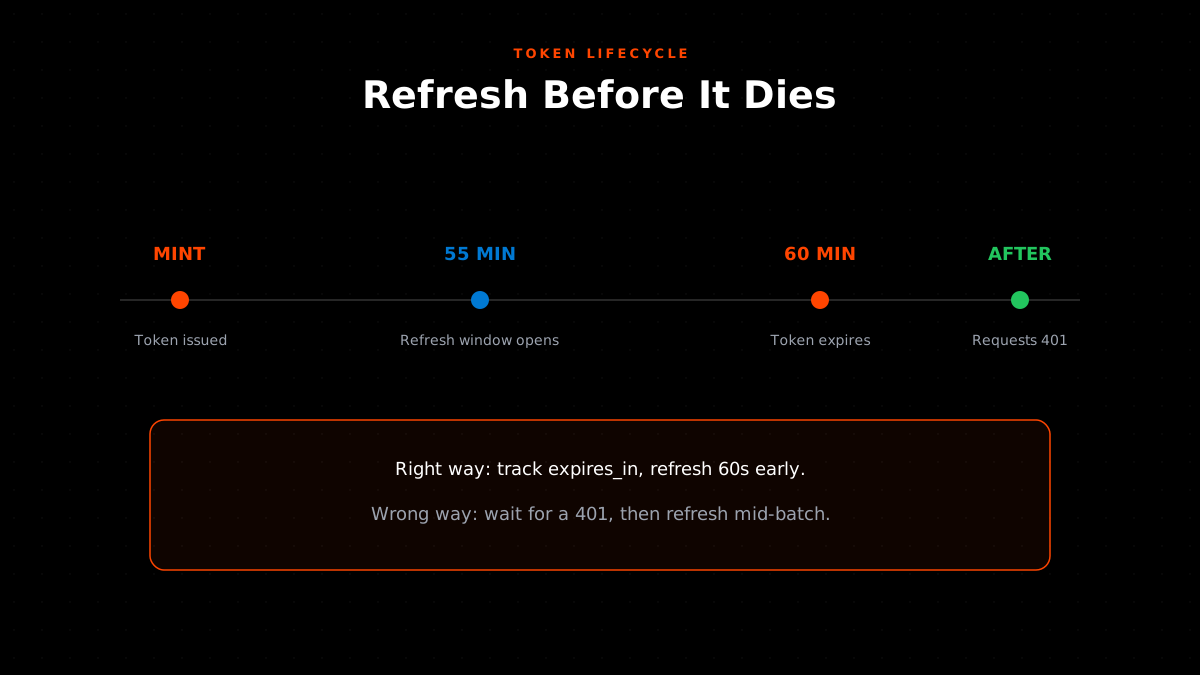
A one-hour token means a long-running job re-authenticates roughly every hour, forever. The wrong way to handle this is to wait for a 401 and then refresh, because by then requests are already failing and you are racing the clock mid-batch. The right way is to track expires_in and refresh a minute or two early.
For a script app the simplest correct pattern is to request a fresh token from the password grant when the current one is near expiry. Here is a self-contained Python refresher that mints a token, then re-mints it when it is close to expiring.
import time, base64, json, urllib.request, urllib.parse

CLIENT_ID = "YOUR_CLIENT_ID"
CLIENT_SECRET = "YOUR_CLIENT_SECRET"
USERNAME = "YOUR_REDDIT_USERNAME"
PASSWORD = "YOUR_REDDIT_PASSWORD"
UA = "my-app/1.0 by u/your_username"

def mint_token():
    body = urllib.parse.urlencode({
        "grant_type": "password",
        "username": USERNAME,
        "password": PASSWORD,
    }).encode()
    basic = base64.b64encode(f"{CLIENT_ID}:{CLIENT_SECRET}".encode()).decode()
    req = urllib.request.Request(
        "https://www.reddit.com/api/v1/access_token",
        data=body,
        headers={"Authorization": f"Basic {basic}", "User-Agent": UA},
    )
    with urllib.request.urlopen(req, timeout=20) as r:
        d = json.load(r)
    return d["access_token"], time.time() + d["expires_in"] - 60

def use_token(token, expires_at):
    """Usage sketch: fetch a fresh token when the current one is near expiry."""
    if time.time() >= expires_at:
        token, expires_at = mint_token()
    return token, expires_at

print("Refresh pattern defined: mint, track expiry, re-mint 60s early")
That block is illustration, not a live call, because it needs your real Reddit app credentials. The point is the shape: track the deadline, refresh early, never let a request fly with a dead token.
There is a subtle trap inside the refresh loop that catches teams running many workers. If ten processes each notice the token is near expiry at the same moment and each mints a new one, you can stampede the token endpoint and trip a rate limit on authentication itself. The fix is to mint tokens in one place, a small auth service or a shared cache, and have workers read the current token from there rather than each minting their own. On a single-process job the naive loop is fine. On a fleet, centralize the mint. This is exactly the kind of plumbing a server-side REST adapter removes, because the token you hold does not expire on the hourly cadence that forces the loop in the first place.
Authentication and Rate Limits Are the Same Problem
It is tempting to treat authentication and rate limiting as separate chapters, but on Reddit they are the same chapter. Your rate-limit budget is tied to the authenticated identity, the OAuth access_token, not to your IP address. That has two consequences that surprise people:
- Rotating IPs does nothing for your quota; the budget follows the token, not the address.
- Minting many tokens to spread load means running many identities, exactly the pattern the policy discourages.
The honest, supported way to get more throughput is a higher tier, not more tokens. The relationship between your token and your throughput ceiling is covered in depth in the companion guide on Reddit API rate limits, which picks up where this auth guide ends.
The practical upshot for an auth design is this: build one well-managed token with a clean refresh loop and proper backoff, rather than a pool of tokens you hope adds up. A REST adapter handles the throughput question on its side, so the bearer token you hold is one identity with managed backoff behind it, and you never juggle a token pool to chase quota.
The Reality of App Approval in 2026
The setup above assumes you have an approved app. Getting one has become the slowest and least predictable part of the whole process. Under the Responsible Builder policy, app creation and access approval are gated, and the developer community has been vocal about how long it takes and how often it stalls. The recurring complaints fall into three buckets:
- Multi-day waits with no acknowledgement and no service-level commitment.
- Silent failures at the
/prefs/appscreate-app step, including HTTP 500s and CAPTCHA loops. - Approvals that never resolve to a clear yes or no, leaving projects in limbo.
Reading that thread, the pattern is consistent: developers submit, wait, and hear nothing for days. Some never get a clear yes or no. If you are building a hobby project on a timeline you control, the wait is an annoyance. If you are shipping a feature this sprint, a multi-day approval queue with no SLA is a real risk, and it is the single most common reason teams look for an alternative path.
The 401 Checklist, in the Order Failures Happen
A 401 from the Reddit API almost always comes from one of five causes. Work through them in frequency order: expired token first, missing User-Agent second, then credential confusion, then grant mismatch, then scope or host issues.
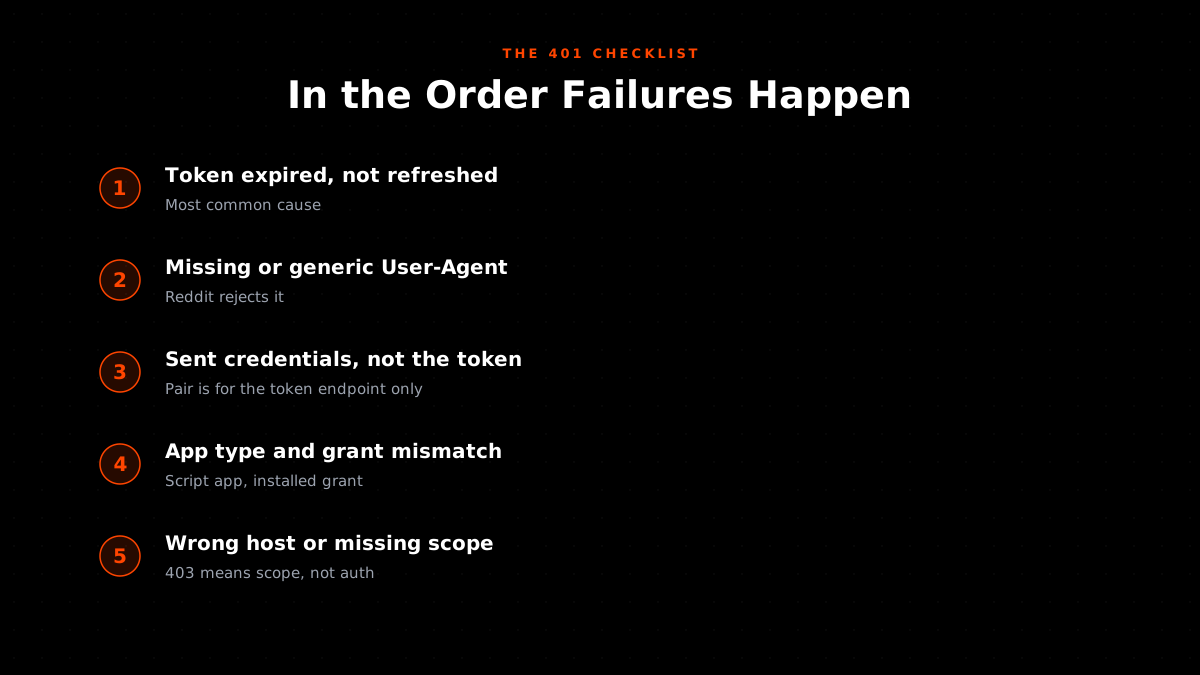
When a 401 hits, do not guess. Walk the causes in frequency order:
- The
access_tokenexpired and you did not refresh, the most common case by a wide margin. - The
User-Agentheader is missing or generic, which Reddit rejects outright. - You sent the
client_idand secret on the data request instead of the access token. - An app-type and grant mismatch, for example a
scriptapp trying an installed-app grant. - The token was minted against the wrong host or its
scopedoes not cover the action.
That discussion captures how much of the 401 pain is upstream of code: people with correct requests still blocked because their app access itself is in limbo. When the credential chain is correct and you still get errors, the problem may not be your auth at all, it may be access that was never fully granted.
A Visual Walkthrough of the Credential Steps
For developers who would rather watch the app-registration and credential steps once before doing them, this short tutorial walks the exact screens. Video is most useful for the parts that change:
- The
/prefs/appsregistration UI, which Reddit redesigns often and where written screenshots go stale. - The exact location of the
client_idandclient_secreton the app card after creation.
Video helps most on the registration UI, which changes often and is where screenshots in written guides go stale. The token exchange and refresh logic, though, are stable, and those are what the code blocks above lock down.
The cheapest Reddit API. Try it free.
Reads from $0.0015 per call. $0.50 free credits. No credit card required.
The No-OAuth Path: Move the Dance Server-Side
The no-OAuth path does not skip authentication. It moves the token exchange, app registration, and refresh loop behind a third-party REST adapter, so you authenticate once against the adapter with a single long-lived bearer token rather than managing the full OAuth chain yourself. In Python, libraries like PRAW automate the same chain client-side, and its authentication guide walks through the identical client-ID, secret, and token-refresh steps; the adapter path removes even that from your codebase.
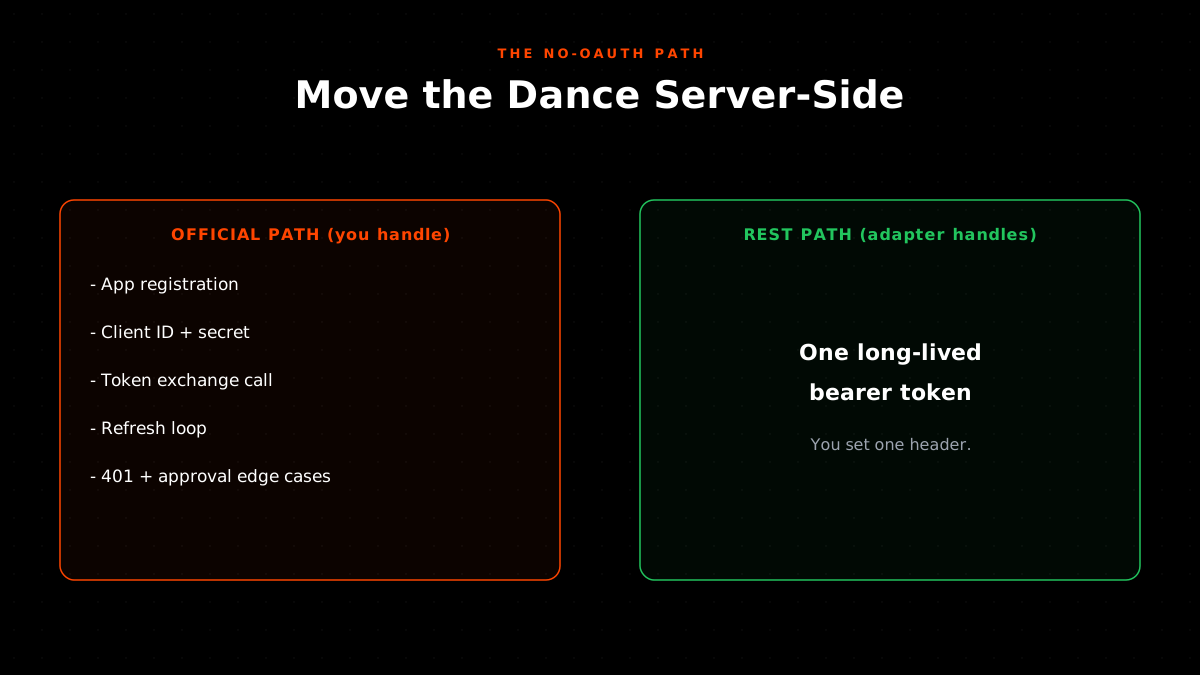
Here is the key reframe: the alternative to OAuth is not skipping authentication, it is relocating it. A third-party REST adapter performs the app registration, the credential management, and the token refresh on its own infrastructure, then exposes Reddit data over its own authenticated surface. You authenticate once, against the adapter, with a single long-lived bearer token.
The same listing you fetched through the official OAuth path becomes one header and one host, with no token endpoint and no refresh timer.
curl -s "https://api.redditapis.com/api/reddit/posts?subreddit=redditdev&limit=5&sort=new" \
  -H "Authorization: Bearer YOUR_BEARER_TOKEN"
In Python, with nothing but the standard library and one token, the whole auth chain disappears.
import urllib.request, json

TOKEN = "YOUR_BEARER_TOKEN"
url = "https://api.redditapis.com/api/reddit/posts?subreddit=redditdev&limit=5&sort=new"
req = urllib.request.Request(url, headers={"Authorization": f"Bearer {TOKEN}"})
with urllib.request.urlopen(req, timeout=20) as r:
    data = json.load(r)

for post in data["posts"]:
    print(post["upvotes"], post["title"])
No client ID and secret pair. No access_token endpoint. No expires_in to babysit. No refresh loop. The token you get at signup is the credential, full stop. Full endpoint reference lives in the API documentation.
The Two Paths, Step for Step
The official OAuth path and the REST adapter path differ in the number of steps you own. The official path has nine distinct things to get right before the first request works. The adapter path has two: sign up and set one header.
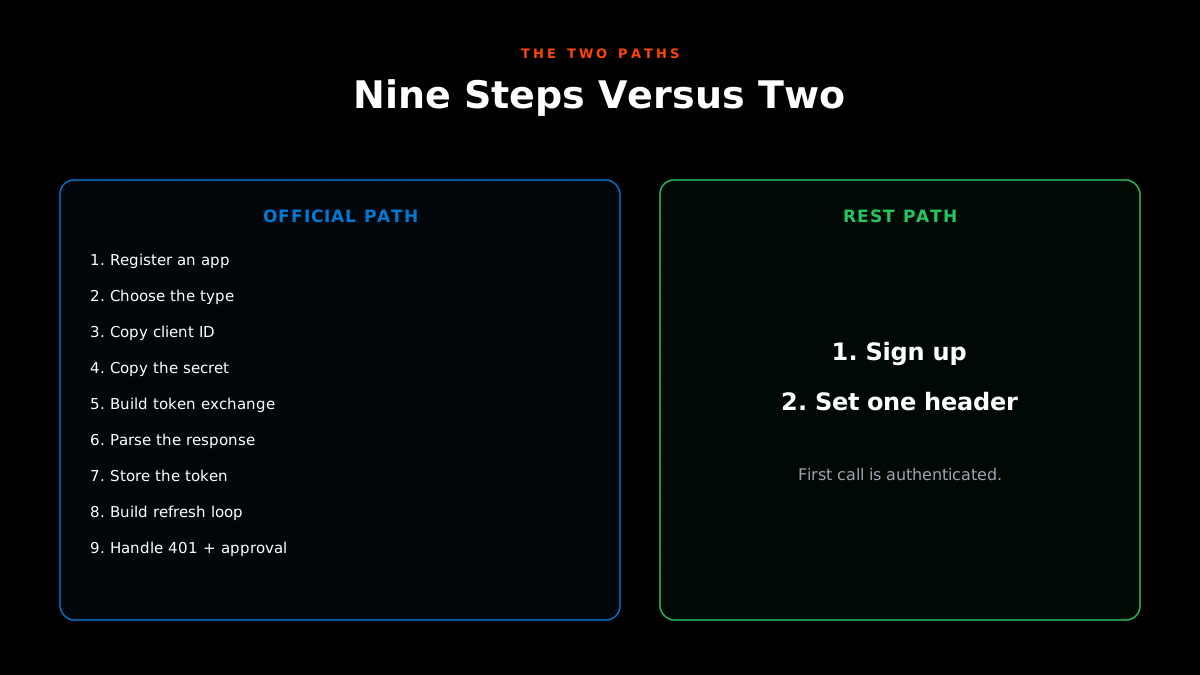
Laid side by side, the difference is not subtle. The official path is, in order, nine discrete things to get right:
- Register an app, choose the type, copy the
client_id, copy theclient_secret. - Build the token-exchange call, parse the response, store the
access_token. - Build the refresh loop, then handle the 401 and app-approval edge cases.
A mistake at any one of them produces an error that looks identical to a mistake at any other one, which is why debugging it is slow.
The REST path is two things: sign up, then set one header. The first request you ever make is an authenticated data request, because authentication already happened at signup. There is no intermediate token-exchange step to debug, because there is no token exchange in your code at all.
This is why teams under deadline pressure reach for the second path. It is not that OAuth is hard in some abstract sense; the individual steps are each simple. It is that there are nine of them, they fail opaquely, and one of them, app approval, is outside your control entirely. Collapsing nine fallible steps to two removes most of the surface where a setup goes wrong. For the full read-pipeline walkthrough on the REST path, see the Reddit data API guide.
When Each Path Is the Right Call
Choosing between OAuth and a REST adapter comes down to three factors: whether you already have an approved app, how your volume maps to Reddit's tier pricing, and whether you have time to maintain a refresh loop. Neither path is universally correct, and the right call depends on where you are on each of those three axes.
Neither path is universally correct, and a guide that pretended otherwise would not be worth trusting. Stay on official OAuth when all of these hold:
- You already have an approved app and no pending approval to wait on.
- Your volume sits inside the free tier with room to spare.
- You are comfortable maintaining a refresh loop and handling
expires_inyourself.
That describes a lot of hobby and research work, and for it the official path is the natural fit.
Move to the bearer-token REST path when any of three things is true. First, you are blocked on app approval and need data this sprint, because the adapter already holds access and you authenticate against it instead of waiting on Reddit. Second, you are crossing into commercial volume and want per-call billing instead of an annual Standard-tier floor, which the pricing page lets you model exactly. Third, your stack is not built around the OAuth refresh loop and you would rather treat Reddit like any other REST API with a static key. Any one of those tips the decision; all three together make it obvious.
The wrong reason to switch is the belief that the REST path skips authentication or bends a rule. It does neither. It authenticates fully, against Reddit, on its own servers, and exposes the result over an authenticated surface of its own. You are choosing where the OAuth complexity lives, in your codebase or behind an API, not whether it happens.
What You Trade Away, Honestly
Using a REST adapter removes the OAuth chain from your code, but it introduces three tradeoffs you should go in knowing: third-party uptime dependency, per-call billing instead of a flat quota, and one layer of indirection between your app and Reddit's rate-limit headers. None of these are hidden; they are the direct cost of the simplicity you gain.
A server-side auth model is not free of tradeoffs, and pretending otherwise would be dishonest. The honest debits are:
- You trust a third party to hold Reddit access and to stay up.
- You bill per call instead of against a flat quota.
- You sit one layer removed from Reddit's own rate-limit headers, though a good adapter handles backoff for you so you never see them.
What you gain is everything the chain above costs you: no app-approval queue, no hourly refresh, no client-secret handling, and a 401 cause list that drops from five items to roughly one. For a team that needs Reddit data on a deadline, that trade is usually worth it. For a hobby script with an already-approved app and no time pressure, staying on official OAuth is perfectly reasonable.
The Cost Side of the Auth Decision
Reddit's credential is free but the data rights at commercial volume are not. The official free tier covers personal use, and commercial scale pushes you into a negotiated agreement, reported at about $12,000 per 50 million requests, roughly $0.24 per 1,000 calls (The Verge, May 2023), behind an app review. A per-call adapter inverts that structure entirely, charging only for the requests you actually make, with nothing to negotiate first.
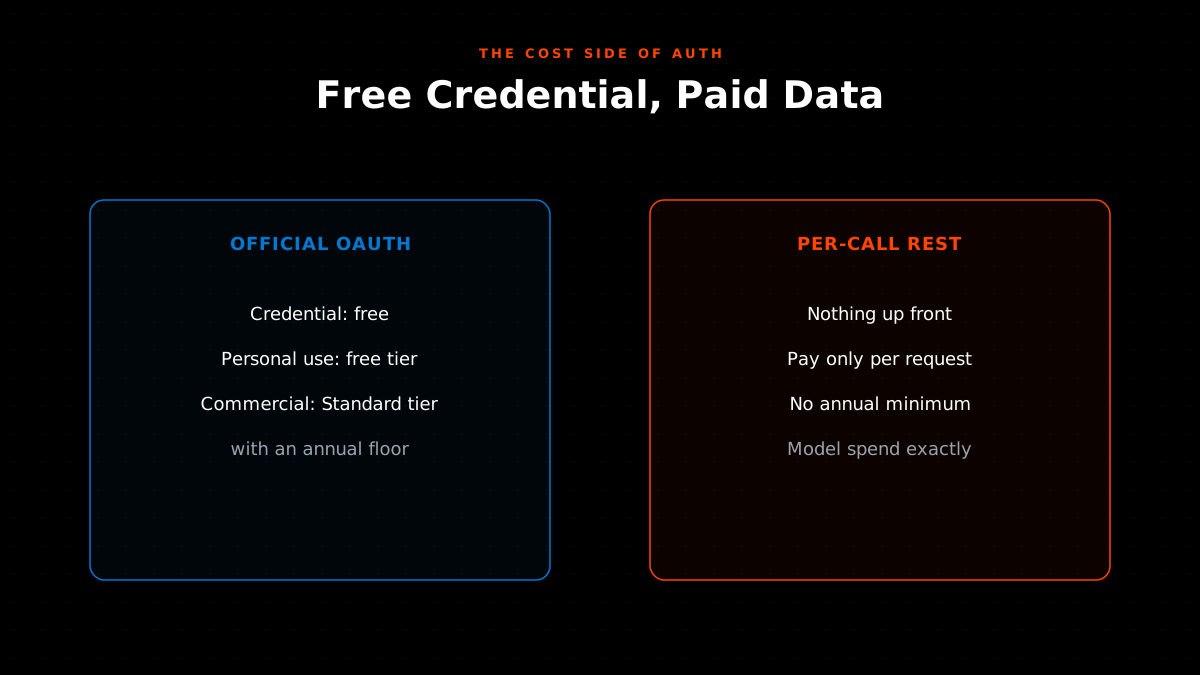
Authentication and cost are tangled together on Reddit, because the credential is free but the data rights at volume are not:
- The official free tier is generous for personal use, but commercial use at scale pushes you into a negotiated agreement behind an app review.
- A per-call adapter inverts that: nothing up front, no contract, only the requests you make, which wins on time to first call rather than on unit price.
Run your own numbers against the pricing page before you commit to either model.
The Verdict: Match the Auth Model to the Job
Reddit API authentication is OAuth2 on the official path and a single bearer token on the adapter path. The right choice is not about which is better in the abstract; it is about which fits your approval status, your deadline, and your tolerance for maintaining a refresh loop.
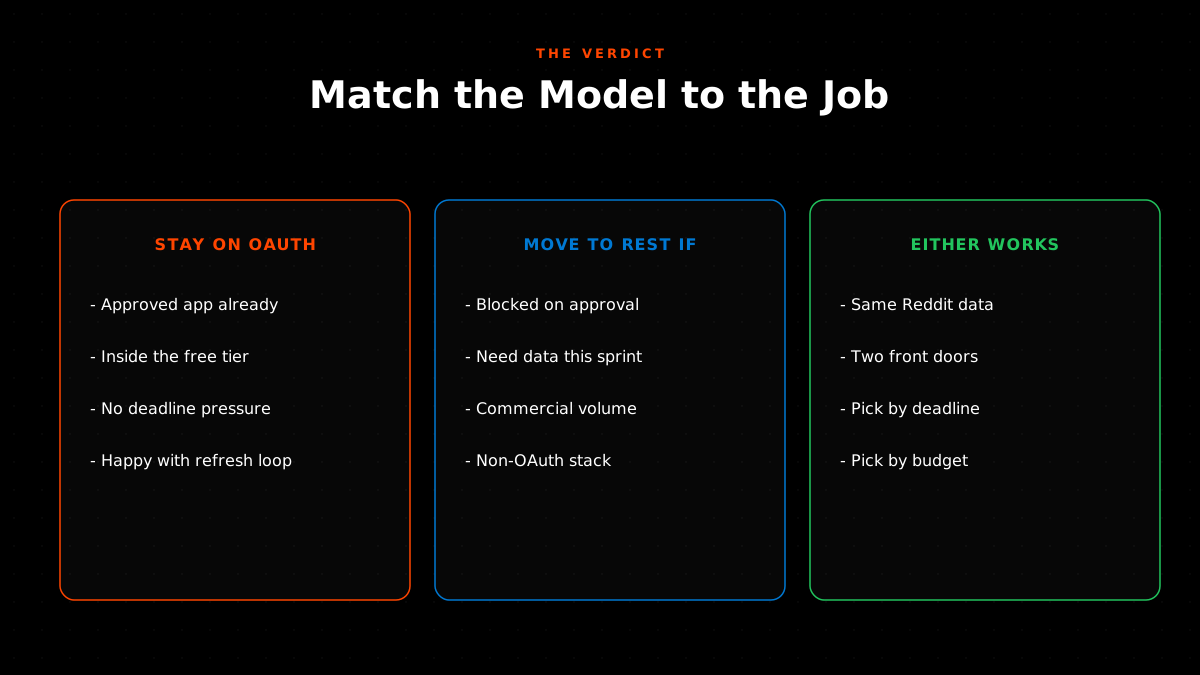
Reddit API authentication today is OAuth2, and the official path works once you understand it is a chain, not a key:
appproduces theclient_idandclient_secret.- the pair exchanges for a short-lived
access_token. - the token, refreshed hourly, carries every request.
If you are a hobby developer with an approved app and time on your hands, that path is fine, and this guide gives you the token exchange, the refresh loop, and the 401 checklist to run it cleanly.
If the app-approval queue, the hourly refresh, or the client-secret handling is what stands between you and shipping, the no-OAuth path is the unblock. A REST adapter moves the entire dance server-side and hands you one bearer token, so authentication becomes a single header you set once. You can have a working token in the time it takes to read this sentence twice.
The honest framing is not OAuth versus no-OAuth as good versus bad. It is the same Reddit data behind two different front doors, and you pick the door that matches your deadline, your stack, and your budget. Get your token at signup, read the API documentation, and model the cost on the pricing page.
One last note for anyone arriving here mid-incident, with a 401 in production and a deadline behind them. Do not start by rewriting your auth code. Start by walking the five-item checklist above in order, because four times out of five the answer is an expired token or a missing User-Agent, and both are one-line fixes. If the chain is correct and you are still blocked, the problem has moved upstream to app access, and no amount of code will fix an approval that has not landed. That is the moment the second path earns its place: not as a clever trick, but as the way to keep shipping while a registration queue you cannot influence does whatever it is going to do. Authentication should be the boring part of a Reddit integration. Pick the path that makes it boring for you.
Where these numbers come from.
Each row is a figure in this post and the artefact it was read from. Reddit's access rules and the third-party archives around them keep moving, so check the date on a source before you build against it.
- Reddit OAuth2 wiki
- Reddit's own OAuth2 documentation for the app, credential pair, and token exchange this guide details.
- Reddit API documentation
- Reddit's API reference for the authenticated requests the access token authorizes.
- Reddit Data API Wiki
- Reddit's Data API access wiki behind the current approval step.
- Reddit Data API Terms
- The commercial terms that govern approved API access.
Frequently asked questions.
There is no single Reddit API key. The official path issues a client ID and a client secret, which you create by registering an app at the developer apps page, then you exchange that pair for a short-lived access token over OAuth2. The access token is what you actually send on requests. App approval can take days under the current policy, and the token expires hourly, so you also build a refresh loop. A third-party REST adapter collapses all of this into one long-lived bearer token you get at signup. Start at /signup for free credit, or read the full token walkthrough below.
Registering an app and getting a client ID is free, and low-volume personal use stays inside the free quota. The cost shows up at commercial volume, where Reddit gates higher usage behind its Standard tier with an annual minimum. So the credential is free but the data rights at scale are not. A per-call REST adapter like redditapis.com charges per request with no annual floor, which is cheaper below the crossover volume. See /pricing for the per-call rate card.
The client ID and client secret identify your app, like a username and password for software. They never go on a normal API request. You send them once to the token endpoint, which returns an access token, and the access token is the credential you put in the Authorization header of every data request. The access token expires, typically in one hour, so you refresh it. The field-by-field breakdown is in the token-anatomy section of this post, and the bearer-token alternative that removes the pair entirely is at /signup.
A 401 means the access token is missing, malformed, or expired. The four common causes are an expired token you forgot to refresh, a wrong User-Agent header, sending the client ID and secret instead of the access token, and an app type mismatch where a script app expects a password grant. Walk the 401 checklist in this post in order. On a bearer-token REST path the token does not expire hourly, which removes the most frequent cause entirely. Start at /signup for a token that does not expire on the hourly cadence.
For the official Reddit Data API, yes, every call rides OAuth2 and there is no public unauthenticated path that survives at scale. The old unauthenticated .json endpoints now return 403 or get rate limited almost immediately. The alternative is not skipping authentication, it is moving the OAuth complexity server-side: a third-party REST adapter performs the token exchange for you and hands you one bearer token. You authenticate once at signup instead of wiring the dance into your code. Read the no-OAuth section below.
Under the current Responsible Builder policy, app creation and approval have become slower and less predictable than they were before 2023. Developers report waits of several days and silent failures at the app-creation step. If you are blocked waiting on approval and need data this sprint, a REST adapter that already holds Reddit access is the unblock, because you authenticate against the adapter rather than waiting on Reddit. Start at /signup to skip the queue entirely; the approval-reality section covers the timeline.
Script and web apps that requested a refresh token send that refresh token back to the token endpoint with grant_type set to refresh_token, and Reddit returns a fresh access token. Installed apps without a refresh token simply request a new token with their credentials. The safe pattern is to refresh before expiry, not after a 401, by tracking the expires_in value. The refresh code is in this post. A bearer-token REST path removes the refresh loop because the token is long-lived; get one at /signup.
Not on the official path. Reddit requires a registered app to issue OAuth credentials, and there is no supported way around app registration. The only way to call Reddit data without registering your own app is to use a service that has already done the registration and exposes the data over its own authenticated REST surface. That is the model a REST adapter uses. Sign up at /signup and you get a working token without touching the developer apps page.
Keep reading.
Continue exploring related pages.
Reddit API documentation
The complete 2026 reference: auth, all 59 endpoints, and code.
Get a Reddit API key
Instant bearer token, no waitlist and no enterprise contract.
Reddit Responsible Builder Policy
Why Reddit denies API applications, and the managed REST bypass.
Reddit API use cases
14 use cases from AI training to brand monitoring and DMs.
Reddit Search API
Search posts, comments, users, and communities over one REST endpoint.
Reddit MCP server
Wrap the REST API as MCP tools for Claude, Cursor, and any MCP client.
Reddit MCP hub
Install tabs for every client, the full tool table, pricing and fixes.
Reddit API for AI agents
Live Reddit context for tool calls, MCP servers, and RAG pipelines.
Redditapis pricing
Endpoint-level costs and quick monthly totals - reads from $0.0015 / call.
Reddit API cost calculator
Estimate monthly spend using your request volume.
Reddit API guides and tutorials
Tutorials, walkthroughs, and API deep-dives for developers.
Reddit API alternatives
Evaluate alternatives by cost model, limits, and integration fit.
Cheap Reddit API
The cheapest way to get Reddit data: $0.0015 per call, no contract, no minimum.
Official Reddit API vs Redditapis
Access, setup, rate limits, and pricing, side by side.
PRAW alternative
A hosted Reddit REST API for any language, no app registration or OAuth.
Reddapi alternative
A maintained Reddit REST API with published pricing and write endpoints.
Reddit comment scraper alternative
The raw comment API: search and filter comments, historical and live, clean JSON.
Reddit scraper API
Hosted scraper API vs building your own: no proxies to manage, clean JSON.
RapidAPI Reddit alternative
A direct, maintained Reddit API with published pricing and write endpoints.
Bright Data Reddit alternative
A purpose-built Reddit API vs a general scraping platform: structured JSON, plus writes.
ScraperAPI Reddit alternative
A Reddit-native API vs a generic HTML fetcher: auth and pagination handled, typed JSON.
TikHub alternative
TikHub's Reddit surface is read-only; get comment, vote, and DM endpoints too.
EnsembleData alternative
No $100/month floor: pay per call from $0.0015, plus write, vote, and DM endpoints.
Scrape Creators alternative
7 read-only Reddit endpoints vs a dedicated API with real write, vote, and DM paths.
FetchLayer alternative
Posts, comments, and search only; add vote, comment, and DM over the same REST auth.
PullPush alternative
PullPush is free but volunteer-run and goes offline for reindexing; a maintained REST API that stays up.
Reddit monitoring API
Build your own keyword and brand-mention monitor: search, comment search, and subreddit streams over REST.
F5Bot vs Redditapis
F5Bot's Slack and Discord delivery needs its $49.99/mo Gold tier; Redditapis includes it from $19/mo.
Syften vs Redditapis
Syften caps you at 100 to 500 results a day; Redditapis allows 10,000 a day per monitor at the entry plan.
Octolens vs Redditapis
Octolens meters by mention with overage fees; Redditapis is flat-priced by subreddit slot from $19/mo.
Affiliate program
Earn 20% lifetime commissions - capped at $5,000/yr.
Reddit Vote API tutorial
Upvote and downvote a post programmatically via the REST API.
Reddit Data API: REST, no PRAW
REST endpoints for Reddit data with no PRAW and no OAuth dance.
Reddit scraping benchmarks
Real throughput, error rates, and cost benchmarks for Reddit scraping.
Reddit API answers
Direct answers on cost, access, rate limits, endpoints, and auth.
How much the Reddit API costs
Per-call pricing from $0.0015 a read, with $0.50 in free credits.
Reddit API in Python
One requests call with a bearer token, no PRAW and no OAuth flow.
Reddit shadowban checker
Check if a Reddit account is shadowbanned in seconds, free and no login.
Subreddit stats checker
See any subreddit's live subscriber count, active users, and age, free and no login.
Similar reads.
More guides on the Reddit API, scraping, pricing, and MCP servers.

How to Get a Reddit API Key in 2026 (And What to Do When You Can't)
Get a Reddit API key in 2026: register a script app, read the client ID, client secret, and User-Agent, and handle the new manual-approval wall. Plus the no-approval REST alternative when your request gets rejected.

How to Run the Reddit MCP Server Remotely: Transport, Auth, and What Breaks in Production (2026)
The Reddit MCP server ships stdio only. Here is exactly what changes when you make it network reachable, measured from the published package: the transport, the auth boundary, and the failure modes nobody warns you about.
MCP vs API: What Each One Actually Costs an AI Agent (2026)
We measured MCP against a direct REST call on the same Reddit query: 24,694 tokens of tool schema, 85,534 in one result, 139 ms of latency difference.
Does the Reddit Search API Support Boolean Queries? Every Operator, Tested
AND, OR, and NOT don't work like SQL against Reddit's search backend. Here's what actually works (subreddit:, author:, exact phrases, exclusion), tested live against the production API, plus why the boolean confusion exists in the first place.

PRAW vs Reddit REST API in 2026: When to Switch
A decision matrix for moving off PRAW to a REST plus bearer-token model. Feature parity, a field-name map, a one-hour migration plan, and what the official commercial path really costs.

Reddit Data API in 2026: REST Endpoints, No PRAW, No OAuth
Pull Reddit posts at $0.0015 per call with a third-party REST API. Bearer token, no PRAW, no OAuth flow. Python examples, real endpoints, real pricing.

Reddit API Rate Limits in 2026: Complete Guide to Budgets, 429 Errors, and Mitigation
Reddit's API rate limits shifted significantly in 2023 and have evolved since. Here's the complete 2026 state, the four patterns that blow through quotas, exponential backoff code, token rotation, async queuing for MCP servers, and how AI agent loops change the math.

How to Send a Reddit DM via REST API in 2026 (with Code)
Send Reddit DMs via REST API. Bearer token, JSON body, $0.025 per call. Working code in curl, Python, and Node.js. PRAW alternative for AI agents.