
Reddit Monitoring in 2026: How Alerts Actually Work, What They Miss, and How to Cut the Noise
Reddit has no push, so every Reddit alert is somebody's polling loop. What that means for speed, what monitoring silently misses, and how to make the output usable.
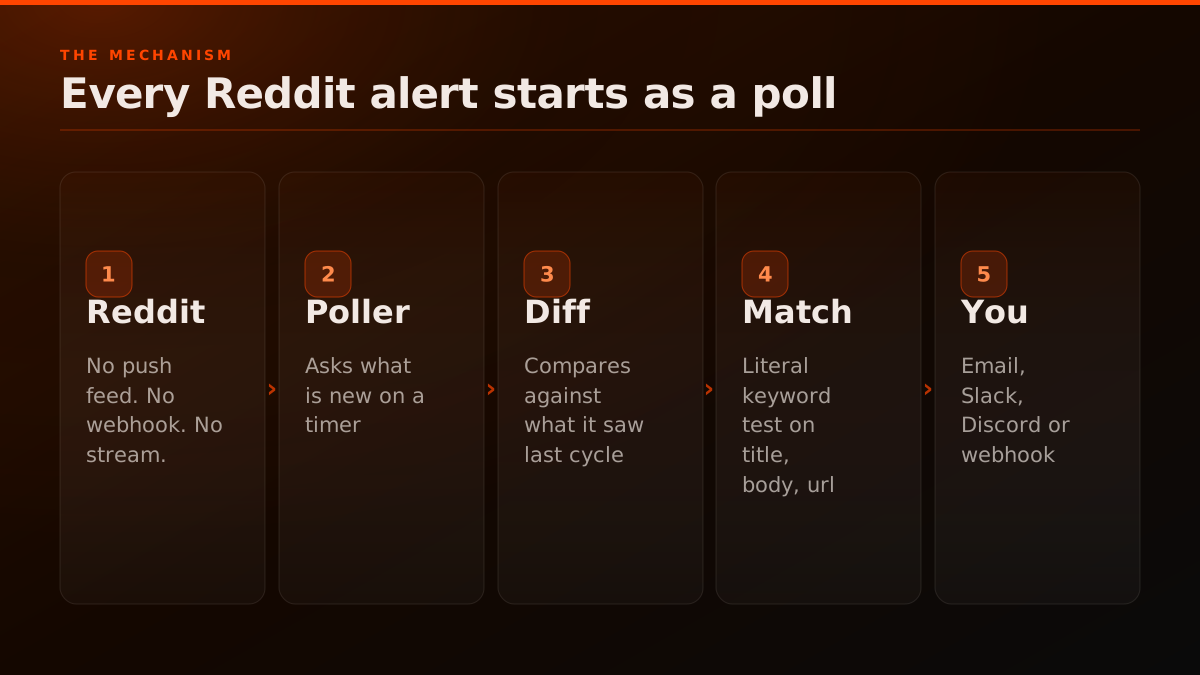
Reddit monitoring is the practice of watching Reddit for posts and comments that match terms you care about, usually a brand name, a competitor, or a problem your product solves, and getting told when one appears. The mechanism underneath is not what most buyers assume. Reddit publishes no push feed, so every Reddit alert in existence is produced by something polling Reddit on a timer and diffing the result against what it saw last time. That single fact explains most of what is confusing about this category: why alerts have a speed floor, why vendors price the way they do, and why the output is noisier than the demos suggest.
TL;DR: Reddit has no webhook and no push. Every Reddit alert is somebody's polling loop, so cadence sets your speed floor and any advertised latency below that floor is describing delivery, not discovery. The real product problem is not speed, it is noise: literal keyword matching against a very large corpus, which is fixed by keyword discipline rather than by switching tools. Monitoring also silently misses things, and Reddit mentions are perishable, so a slow digest reports on threads that may already be gone. Most vendors meter by mention volume, which means your bill moves with how much Reddit talks about you.
This guide is the mechanism, not a tool ranking. If you want to know which product to buy, the vendors' own comparison pages are one search away and every one of them concludes that you should buy theirs. What follows is the layer underneath that: how the alerts are produced, what they systematically fail to catch, and the small number of configuration decisions that decide whether a monitor is useful or muted within a week.
What is Reddit monitoring, and how does it differ from social listening?
Reddit monitoring is keyword-triggered observation of a single platform. You give a system one or more terms, it watches Reddit for new content containing those terms, and it notifies you through email, Slack, Discord, or a webhook when something matches. Three things have to be true for that to be useful:
- The terms have to be specific enough that most matches are about you.
- The scope has to cover the communities your buyers actually use.
- Somebody has to be willing to act when an alert fires. Social listening is the same job described at enterprise scale and across many platforms at once, usually bundled with sentiment scoring, share-of-voice charts and reporting for a marketing team. The distinction matters commercially rather than technically: the words select which vendors show up and at what price, not what the software does.
The reason the distinction is worth naming is that the two terms lead you to very different price points for a very similar core function. Vendors optimising for social listening tend to sell breadth across a dozen platforms with Reddit as one of them, at several hundred dollars a month, which is the shape of Brand24, whose published ladder starts at 199 dollars a month and runs past 1,499 for enterprise, and Awario, which publishes 29, 89 and 249 dollar tiers. Vendors optimising for Reddit monitoring tend to sell Reddit depth, at a fraction of that. If Reddit is where your buyers actually are, paying a breadth premium buys you channels you will not read.
It is also worth being precise about what monitoring is not. It is not analytics: it tells you that something was said, not how your traffic or conversions moved. It is not research: it surfaces what appears from now onward, and says nothing about the years of discussion already sitting in the archive, which is a search problem. And it is not moderation or reputation management, which are the human processes that a monitor feeds rather than replaces. Teams that buy a monitor expecting any of those three end up disappointed by a tool that is working correctly.
There is a third framing appearing in 2026 that is worth separating out, which is AI-visibility tracking: whether an answer engine names your brand when someone asks it a question. That is a genuinely different measurement with different instrumentation, and it is not what a Reddit monitor does, even though several vendors now bundle both. Reddit monitoring tells you what humans posted. AI-visibility tracking tells you what a model said. Conflating them produces a report nobody can act on.
Does Reddit send alerts when someone mentions you?
No, and this is the fact the rest of the category is built on top of. The absence is total rather than partial:
- No webhook registration surface.
- No subscription endpoint.
- No server-sent event or streaming feed in the official API. The Reddit Data API exposes no mechanism for registering a callback URL and having Reddit notify you when content appears. There is no webhook surface, no subscription endpoint, and no server-sent event stream in the official API, and Reddit's own Data API wiki describes access purely in terms of request budgets against endpoints you call. If you search the official API documentation for a way to be told about new content, you will not find one, because it does not exist.
What this means practically is that every alerting product in this category has the same architecture at its core: a process that repeatedly asks Reddit what is new, holds a record of what it has already seen, and emits a notification when something arrives that matches your terms and has not been seen before. The differences between vendors sit in cadence, matching, delivery and reporting, not in access to some privileged feed. Nobody has one.
This also explains a common source of confusion for developers. PRAW, the long-standing Python wrapper, offers stream helpers that feel like a subscription. They are not. As the PRAW documentation describes, those helpers poll listing endpoints on a loop and yield new items as they appear, which is a convenient abstraction over polling rather than an escape from it. The subreddit stream reference is explicit that it works by repeatedly fetching new items, and the reply-bot tutorial shows the same loop written out by hand. The same is true of the Reddit triggers inside automation platforms. The webhooks versus polling comparison covers this distinction in more depth.
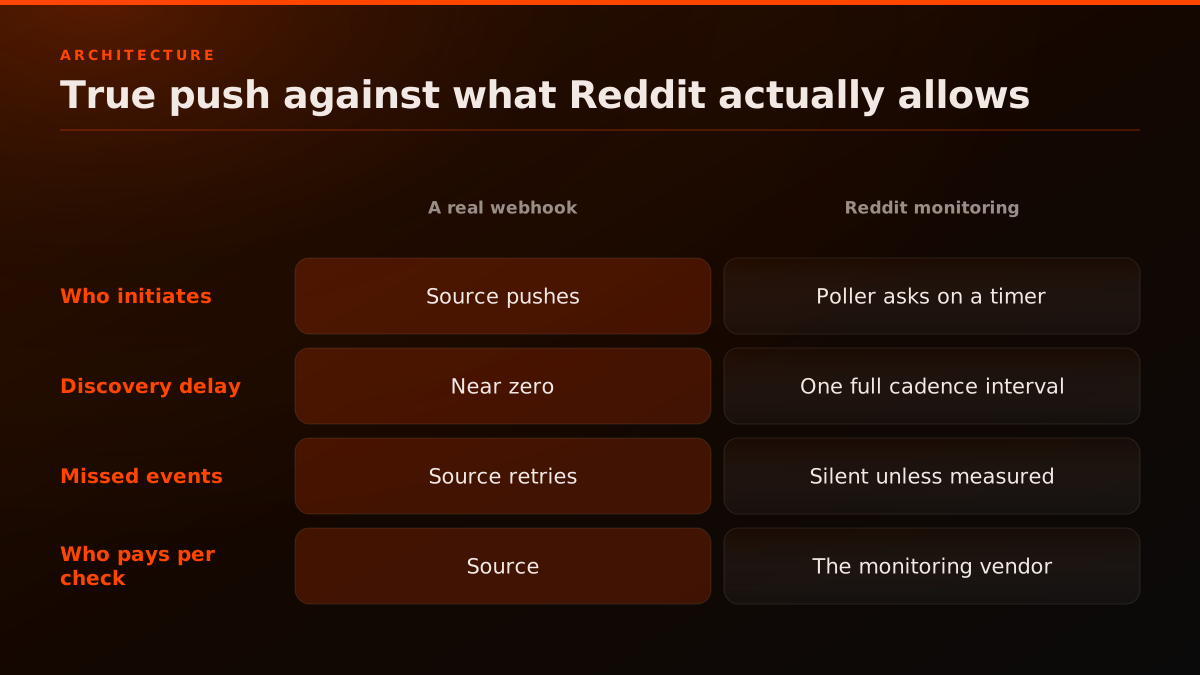
The push you experience is real, it just originates one step further along. A hosted monitor pushes to your endpoint. Reddit pushed nothing to the monitor. Understanding where the push begins is what lets you evaluate a latency claim honestly.
How fast does a Reddit alert actually arrive?
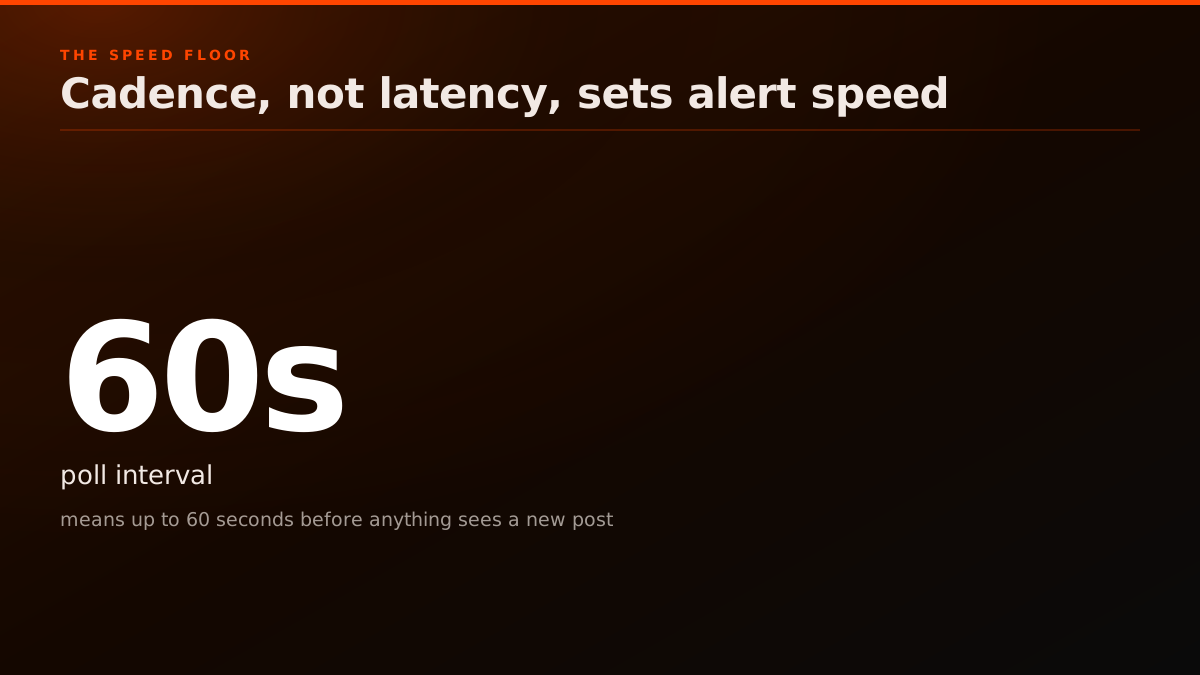
An alert cannot arrive faster than the cadence of the poller that found it. If a service checks a subreddit once every 60 seconds, then a post created 1 second after a check completes will sit undiscovered for roughly 59 seconds before anything looks again. At a 300 second cadence the same post waits up to 299 seconds, and on a 3,600 second hourly cycle it waits up to an hour. Add matching time and delivery time on top. The floor is set by cadence, and everything else is rounding.
This is why cross-vendor latency comparisons in this category tend to be meaningless. A vendor advertising very low latency is usually describing the time between their system matching your keyword and their system calling your endpoint, which is the fast part and the part they control. The slow part is discovery, and discovery is bounded by how often they are willing to poll, which is a function of what they are willing to spend on API calls. A vendor that publishes a latency number but not a cadence has told you about the cheap half.
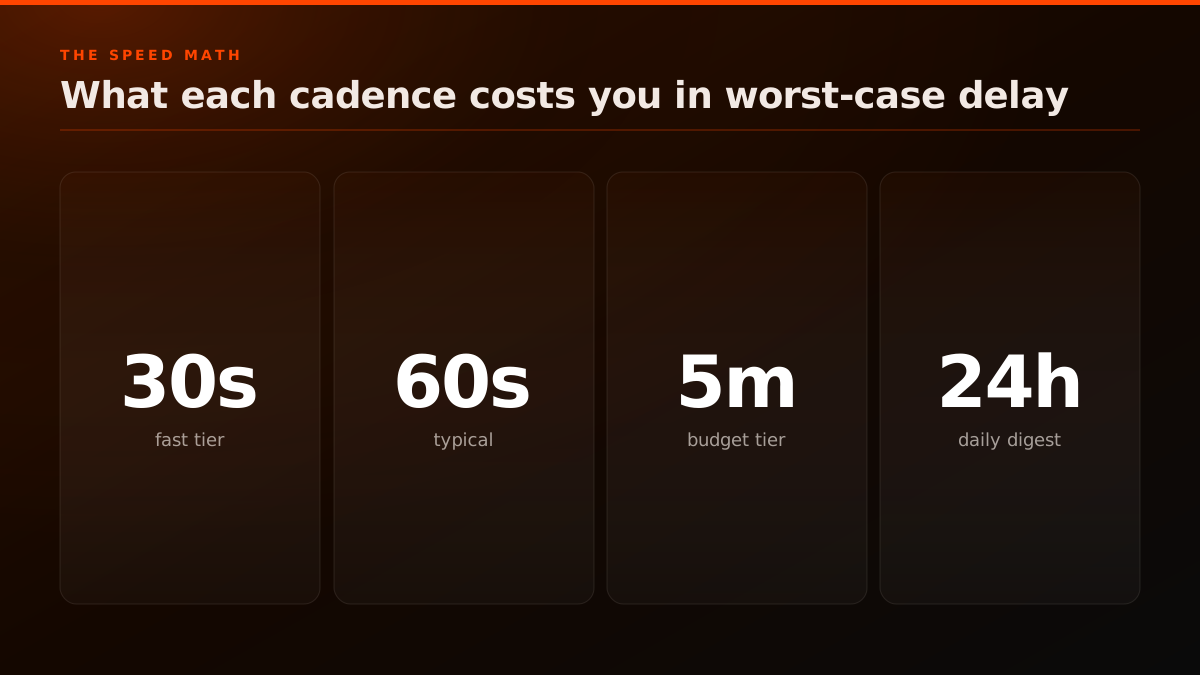
The arithmetic is worth stating as a list, because it is the whole of the speed question:
- A 30 second poll means up to about 30 seconds before anything sees a new post.
- A 60 second poll means up to about a minute, which is what most alerting tiers actually offer.
- A 5 minute poll means up to about 5 minutes, which is fine for reputation work and poor for lead generation.
- An hourly digest is hourly reporting, not alerting, whatever it is called on the pricing page.
- A daily digest is reporting, and on a platform where content is frequently deleted it is often reporting on threads that no longer exist.
What polling cadence does to your worst-case alert delay
| Polling cadence | Interval in seconds | Worst case before discovery | Honest description | Source |
|---|---|---|---|---|
| Every 30 seconds | 30 | about 30 seconds | under a minute | derived |
| Every 60 seconds | 60 | about 60 seconds | about a minute | derived |
| Every 5 minutes | 300 | about 5 minutes | a few minutes | derived |
| Every 15 minutes | 900 | about 15 minutes | quarter hourly | derived |
| Hourly digest | 3600 | about 60 minutes | hourly, not alerting | derived |
| Daily digest | 86400 | about 24 hours | reporting, not alerting | derived |
Cadence also interacts with scope in a way that is easy to miss. Watching one named subreddit at a fast cadence is cheap, because one listing request covers it. Watching all of Reddit at the same cadence is a fundamentally larger job, because the volume of new content across the whole platform is far greater than any single community. This is why sitewide watches almost always run at a slower cadence than scoped ones, on every product that offers both, and why a vendor quoting one cadence for both should be asked which one it applies to.
What each scope decision costs in poll volume
| Scope | Listing requests per cycle | Practical cadence | Coverage confidence | Source |
|---|---|---|---|---|
| One named subreddit | 1 | fast, 30 to 60 seconds | high | derived |
| Ten named subreddits | 10 | fast, 60 seconds | high | derived |
| Named subreddits, comments too | 10 or more, higher volume | slower | medium | derived |
| All of Reddit | many, volume dependent | slowest | ask the vendor | unknown |
If you are running your own loop, cadence is also where you meet Reddit's rate limits. Polling more aggressively is not free, and the failure mode when you exceed your budget is that requests start being refused, which quietly turns your fast monitor into a slow one. The article on what to do when Reddit says your request has been rate limited covers the recovery path.
Why do Reddit keyword alerts drown you in noise?
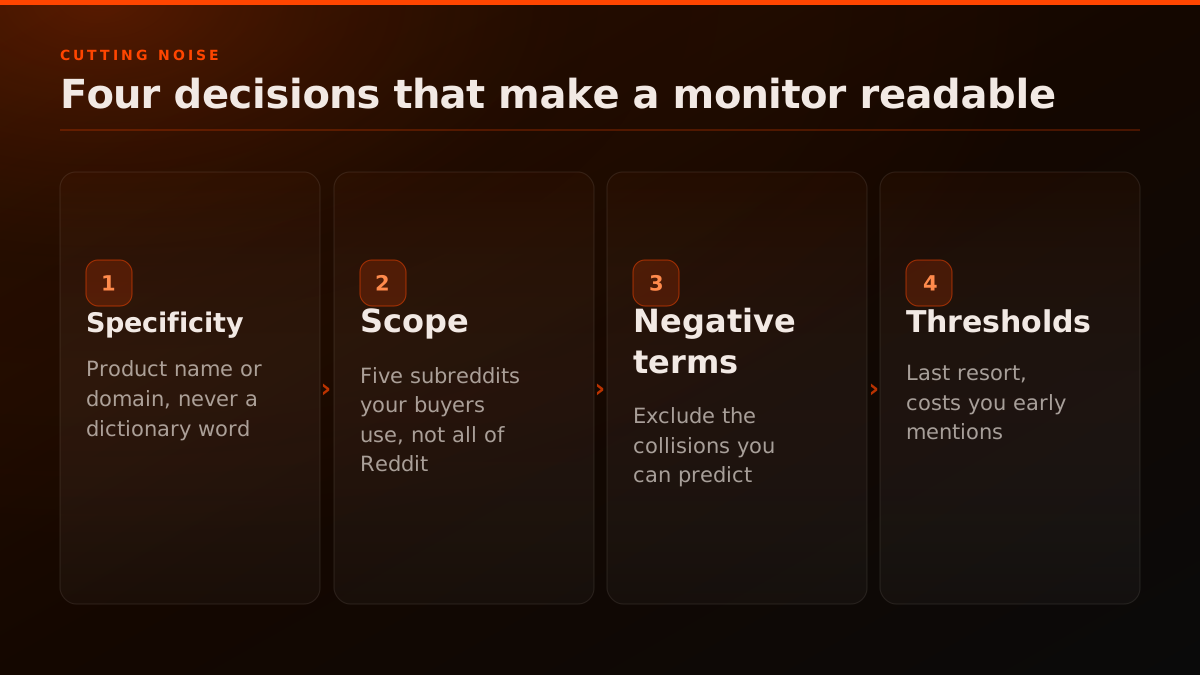
Because matching is literal and Reddit is enormous. The four things that actually reduce noise, in the order worth trying them:
- Specificity: watch a product name or domain, never a dictionary word.
- Scope: watch the subreddits your buyers use, not the whole platform.
- Negative terms: exclude the collisions you can already predict.
- Thresholds: a blunt last resort that costs you early mentions. A monitor takes your keyword and looks for it as a string inside the fields it searches, typically the title, the body and sometimes the URL. It has no model of what you meant. If your product shares a name with a common word, a band, a place, or a piece of slang, every one of those uses matches, and the monitor cannot tell them apart.
This is by a wide margin the most common complaint from people who actually run these tools, and it is worth reading it in their own words rather than taking my summary for it. One operator put the problem plainly in r/AskMarketing:
View on RedditThe instinct when this happens is to look for a better tool. That is usually the wrong move, because every tool in the category performs the same literal match against the same corpus. What separates a monitor people keep from one they mute is configuration, and specifically four decisions.
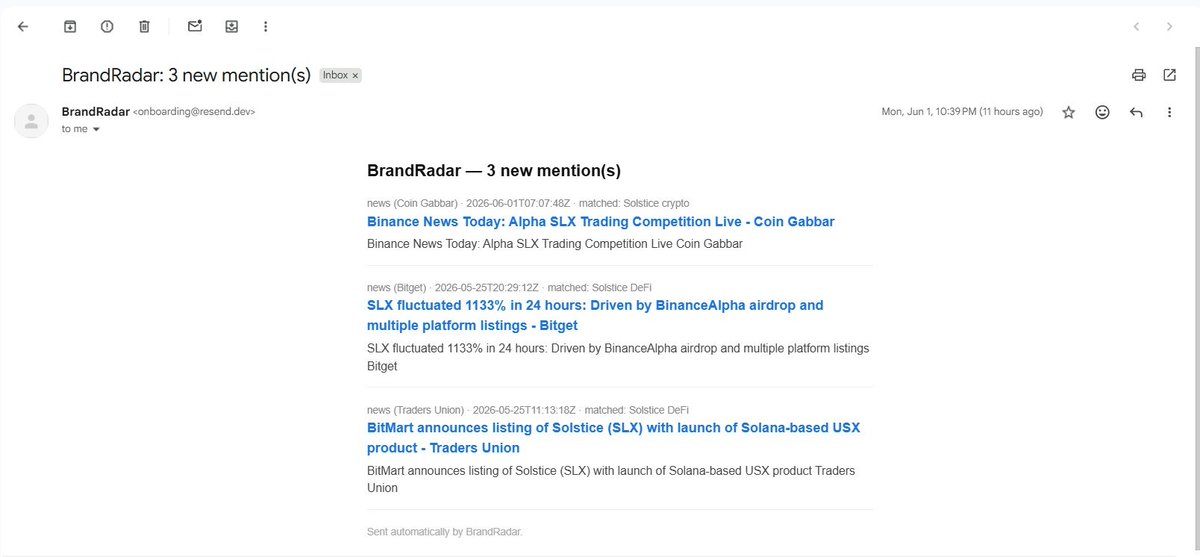
The first is keyword specificity. Watch strings that are distinctive to you: a product name that is not a dictionary word, your domain, a support email address, a founder's handle. Watching a generic category term is how you end up with a thousand daily matches, none of which are about you. An operator who built his own digest described exactly this discipline as the thing that made the difference:

Foxy
@just4rxxy
built a small machine that watches the internet for me. 8am every day, it emails me only what's new without forgetting nothing. why it exists? - brand monitoring tools want $80/mo - manually checking reddit/hn/google news is not a morning routine how my tool works: - scans htt… Show more

The second is scope. Watching all of Reddit is the default in most tools and it is almost never what you want on day one. Pick the 5 or 10 subreddits where your buyers demonstrably are, watch those, and expand only when you have proved the terms are clean. Going from 10 scoped communities to all of Reddit is not a 2 times increase in volume, it is closer to 3 or 4 orders of magnitude. Scoped watches are faster, cheaper and dramatically quieter.
The third is negative terms, where the tool supports them. If you know your brand name collides with a video game, excluding the gaming subreddits or the collision term removes a predictable category of false positive in one edit. Not every product offers this and it is worth asking about before you buy, because it is the single most effective noise control that exists.
The fourth is thresholds. Some tools let you require a minimum score or comment count before alerting. This is a blunt instrument and it will lose you genuine early mentions, so it is a poor default, but on a very high-volume term it is the difference between a channel you read and one you archive.
Why does a monitor never fire on a long natural phrase?
This is the mirror image of the noise problem and it catches people who over-correct. The distinction to hold onto:
- A monitor asks whether your string appears verbatim, right now, in new content.
- A search asks what has been said, across everything already published.
- Long natural phrasing works in the second and fails silently in the first. Having been buried in irrelevant matches, the natural response is to make the keyword much more specific by making it longer, for example a whole sentence describing the situation you want to hear about. That monitor will never fire, and it will look completely reasonable in the settings screen while doing nothing.
The reason is the same literal matching described above. A monitor is asking whether your string appears verbatim in the text. Real people do not write the same long sentence you imagined, so the string never appears, so nothing matches. Short distinctive terms fire because they genuinely recur verbatim; long conversational phrases do not because no two people phrase a thought identically.
The instrument for a question shaped like a sentence is search, not a push monitor. Reddit search supports boolean operators and field qualifiers that let you express a compound question, and advanced search filters let you constrain by subreddit, author and time. Search is something you run when you want an answer. A monitor is something that runs when you are not looking. Using one for the other is the most common configuration mistake in this category.
What does Reddit monitoring silently miss?
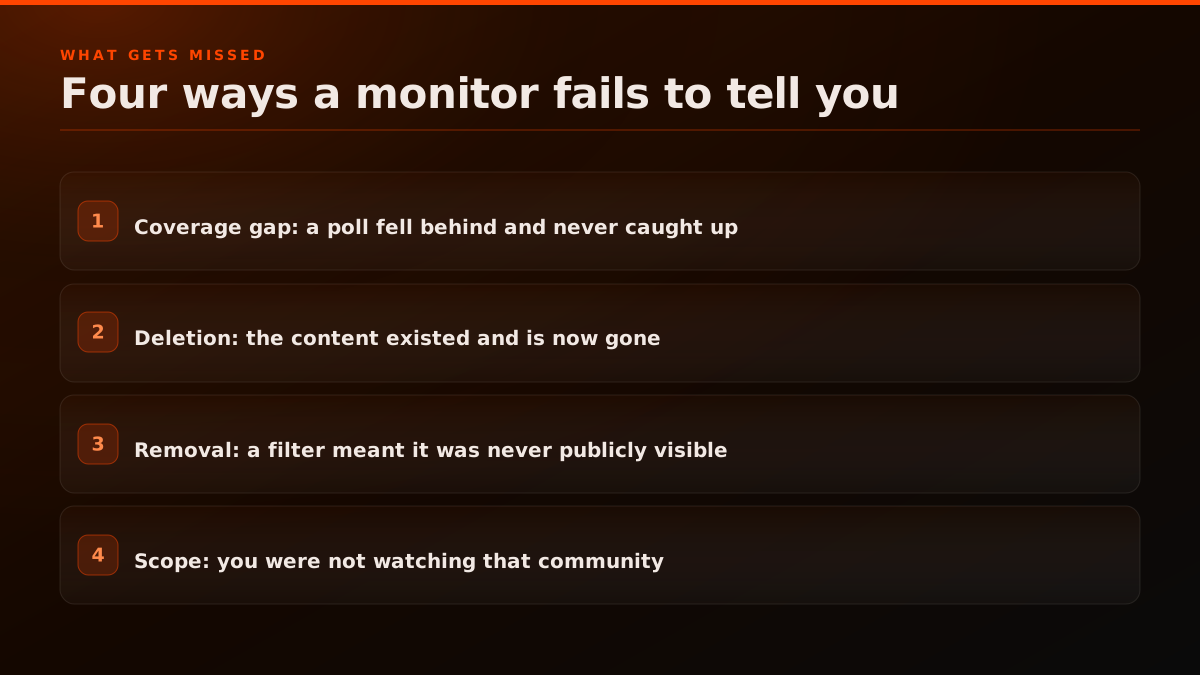
Every monitor misses things, and the honest question is not whether but how much and whether it tells you. There are four distinct causes and they fail differently:
- Coverage gaps, where a poll fell behind and never caught up.
- Deletion, where the content existed and is now gone.
- Removal, where a filter meant it was never publicly visible.
- Scope, where you simply were not watching that community. There are four distinct failure modes and they have different causes.
The first is coverage gaps from a poll falling behind. If a subreddit produces more new posts between two polls than a single request can return, the poller has to page backwards to catch up. If it does not page far enough, the posts in between are never seen, and nothing about the resulting alert stream indicates that anything is missing. This is unrecoverable loss and it is invisible unless the vendor measures and reports it, which most do not. The delivery contract article goes into how coverage reporting works when it exists.
The second is deletion, and it is larger than most people expect. Reddit content is routinely removed by its authors, and a mention that existed when the poller ran may not exist when you read the alert. We have not measured the rate ourselves and will not quote a number we cannot stand behind, but the direction is not controversial among people who track mentions at volume, and it is visible in what operators report when they compare a monitor's output against what they can still find days later:
View on RedditThe consequence is that a daily digest is structurally late for some share of what it reports, because a portion of those mentions will already be gone by the time anyone reads the email. It is also the strongest argument for why cadence matters more for reputational monitoring than for lead generation: a deleted thread you never saw is a conversation you could not join, and no amount of retrospective search recovers it.
The third is removal and moderation. A post caught by a subreddit filter may never become publicly visible, so a monitor reading public listings never sees it. This is not the monitor failing, it is the content genuinely not being public, but the effect on your awareness is identical. Related, an account whose posts are being suppressed may be generating content nobody sees, which is the shadowban situation and a different problem again.
The fourth is scope. A monitor watching five subreddits cannot see the sixth. This sounds obvious and is regularly forgotten, particularly after someone tightens scope to fix a noise problem and never revisits it. Scope tightening trades recall for precision, and the recall you gave up is invisible by construction.
Start building with Redditapis
Reads $0.0015, votes $0.005, writes $0.012, DMs $0.025. $0.50 free credits.
Can a Reddit monitor watch comments as well as posts?
Yes, and essentially every serious tool in the category does, so this is not a feature to pay a premium for. What changes when you turn it on:
- Match volume rises sharply, because comments outnumber posts by a wide margin.
- Delivery ceilings arrive faster on the same plan.
- Scoping to named subreddits usually becomes mandatory rather than optional. What is worth understanding is the cost profile, because comments behave differently from posts in three ways that affect whether comment monitoring helps you or buries you.
Comment volume is much higher than post volume on an active subreddit, commonly 5 to 10 times higher and more on a large community. A post monitor producing 8 matches a day can become a comment monitor producing 60 or 80 on the same keyword. That means a comment monitor produces far more matches for the same keyword, reaches any delivery ceiling faster, and amplifies whatever keyword-discipline problem you already had. A term that produces a manageable trickle on posts can produce an unusable flood on comments.
Comment watching also usually has to be scoped to named subreddits rather than run across all of Reddit. The reason is mechanical: the volume of new comments platform-wide is high enough that paginating them fast enough to make an honest coverage claim is difficult at any affordable cadence. A vendor offering unscoped comment monitoring should be asked directly what its coverage guarantee is, and the answer is more informative than the feature.
The upside is real though. Comments are where buying intent actually surfaces. A recommendation thread where someone asks which tool to use will have your category named in the comments far more often than in any title, and comment search is the retrospective version of the same capability.
How do Reddit monitoring tools price this, and why does it matter?
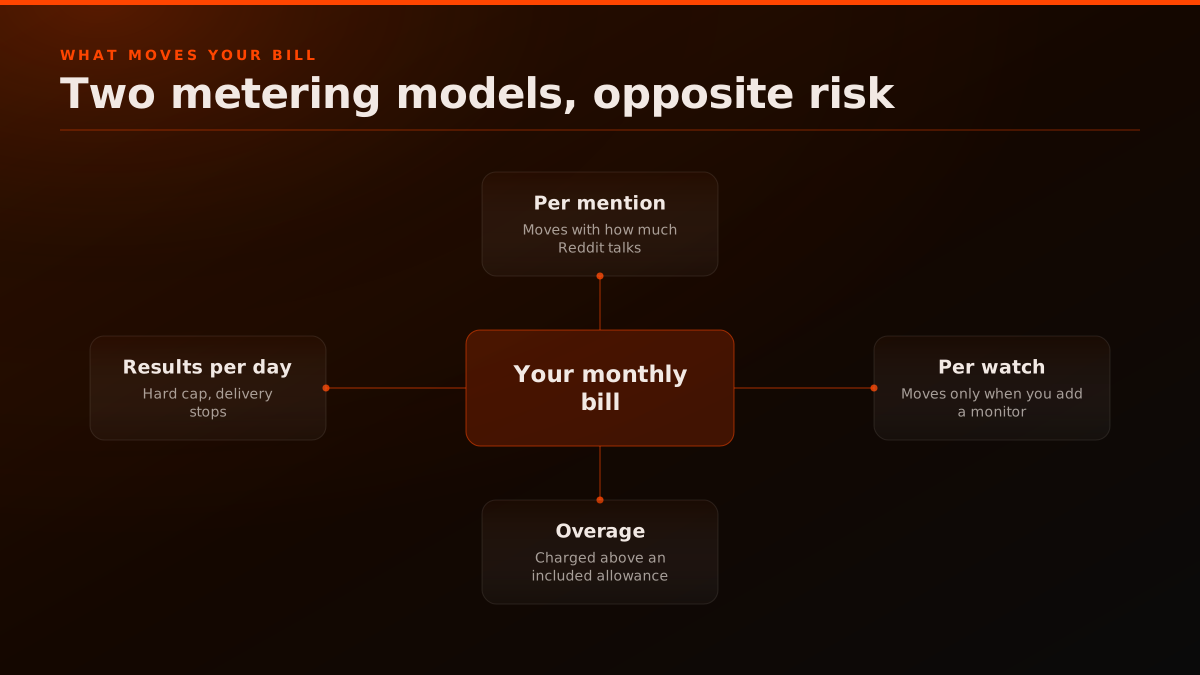
Most vendors in this category meter by mention or result volume. The two models in one line each:
- Volume metering charges for what Reddit produces, so your bill moves with how much people talk about your keyword.
- Watch metering charges for what you asked to watch, so your bill moves only when you add a monitor.
- Overage sits on top of volume metering and is where an unusually busy month becomes an unusually large invoice.
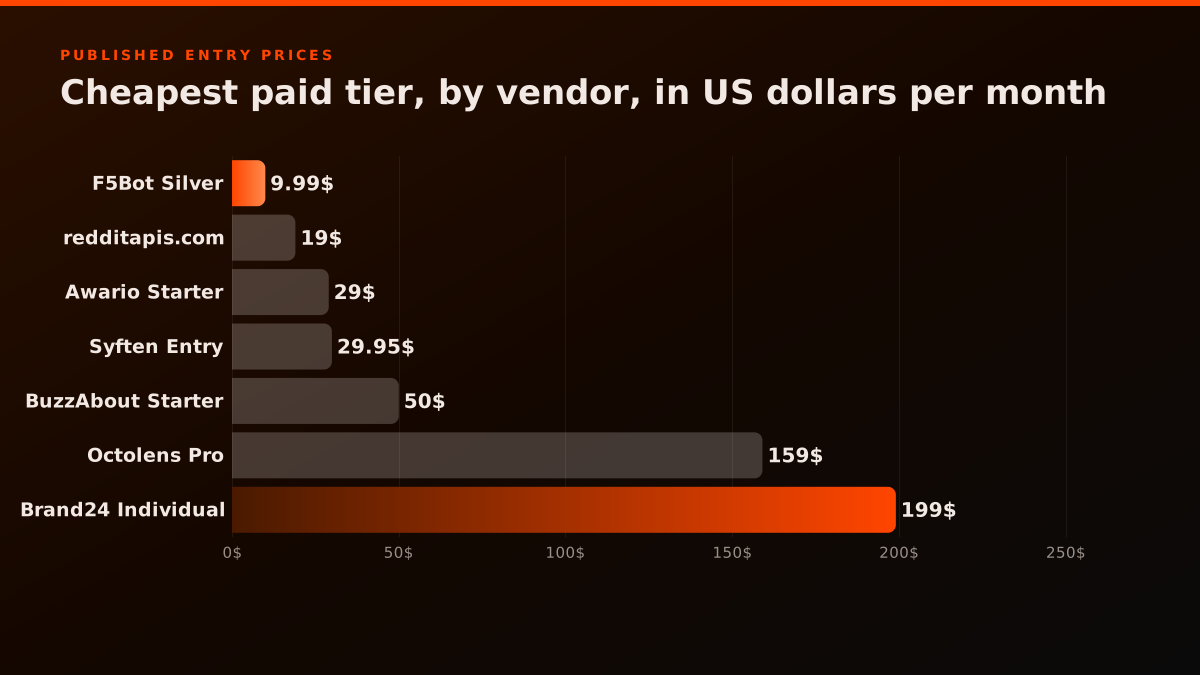
You buy a tier that includes some number of mentions or results per period, and exceeding it either costs more or stops delivery. Syften publishes a results-per-day cap at 100, 200 and 500 across its 29.95, 49.95 and 119.95 dollar tiers, and Octolens publishes 15,000 mentions at 159 dollars and 50,000 at 499, with overage charged at 0.01 per mention above that. Those are the two clearest published examples of the model. A smaller number of products meter by what you are watching instead: keywords, monitors, or subreddits. F5Bot is the long-running example of keyword-count pricing: a free tier, then 9.99 US dollars a month for 20 keywords and 49.99 for 200, per its own published plans. Its free tier is why it remains most people's first Reddit alerting experience.
This is not a detail. Metering model decides which party carries the risk of a busy month, and the two models fail in opposite directions. Volume metering means your bill tracks how much Reddit talks about your keyword, which is precisely the variable you least control. A competitor launching, a viral thread, or simply choosing a term that turns out to be more common than you thought will move your costs without you changing anything. Watch-count metering means your bill tracks how many things you asked to watch, which is a decision you make deliberately and can forecast.
How monitoring vendors meter, and their published entry price
| Vendor | What is metered | Cheapest paid tier, USD per month | What makes the bill move | Source |
|---|---|---|---|---|
| F5Bot | keywords watched | 9.99 | adding keywords | published |
| Awario | mention volume by tier | 29 | how much Reddit talks | published |
| Syften | results per day | 29.95 | how much Reddit talks | published |
| BuzzAbout | mentions, plus per-mention fee | 50 | how much Reddit talks | published |
| Octolens | mentions, 0.01 per mention overage | 159 | how much Reddit talks | published |
| Brand24 | seats and mention volume | 199 | how much Reddit talks | published |
| redditapis.com | monitor slots and cadence | 19 | adding monitors | derived |
Neither model is dishonest and volume metering is a defensible way to price infrastructure whose cost genuinely scales with volume. But you should know which one you signed, and you should price the busy month rather than the average one. The buyer instinct here is visible in the market: people ask about cost before they ask about features, which is not what the vendor comparison pages assume.
The lead-generation framing is where this gets expensive fastest, because a lead-gen watch is broad by nature and broad watches are exactly what volume metering punishes. One operator describes the appeal plainly:

RedRover ✦
@TryRedRover
Reddit monitoring is a potent lead generation tool. Just tracking competitor mentions daily for 3 weeks improves ALL marketing metrics, some by ~50%. Reddit primarily works by capturing high-intent prospects actively researching solutions. Curious to know your experience with
Read that alongside the metering table above. A watch that tracks every competitor mention daily is precisely the configuration whose cost is least predictable under per-mention billing, which is worth pricing before committing to it rather than after the first busy month.
PUBLISHED ENTRY PRICES
Cheapest paid tier by vendor, US dollars per month
| Point | Value (USD/mo) |
|---|---|
| F5Bot Silver | 9.99 USD/mo |
| redditapis.com | 19 USD/mo |
| Awario Starter | 29 USD/mo |
| Syften Entry | 29.95 USD/mo |
| BuzzAbout | 50 USD/mo |
| Octolens Pro | 159 USD/mo |
| Brand24 | 199 USD/mo |
It is worth seeing how far the published ladders actually stretch, because the entry price is the least informative number on any of these pages. Brand24 publishes tiers at 199, 299, 399 and 599 US dollars a month before enterprise pricing starts around 1,499. Awario publishes 29, 89 and 249. Octolens publishes 159 for 15,000 mentions and 10 keywords, then 499 for 50,000 mentions and 40 keywords, with 0.01 per mention and 5 dollars per extra keyword above that. Syften publishes 29.95, 49.95 and 119.95 against caps of 100, 200 and 500 results a day. BuzzAbout publishes 50, 150 and 350 with per-mention fees of 0.02, 0.015 and 0.007 respectively. Read those as a spread from roughly 10 dollars to over 1,400, where the top of the range is buying breadth and seats rather than better Reddit coverage.
There is a second-order effect worth naming. Under volume metering, your incentive is to keep your keywords narrow to control cost, which is the same direction keyword discipline pushes you anyway. Under watch metering, your incentive is to keep the number of monitors small while letting each one be as broad as you like. Neither is wrong, but they shape configuration differently, and a setup migrated from one pricing model to the other usually needs rethinking rather than copying.
Our own current figures for watches, cadence and delivery live on the pricing page rather than in this article, and you should read them there. A price quoted inside a blog post is the most expensive thing on the page to let go stale.
Should you build your own Reddit monitor or buy one?
Build if the matching logic is the thing that makes your use case special, or if you already run the operational furniture that a reliable alerting system needs. The parts people underestimate are not the loop:
- Deduplication, so one post does not alert five times.
- A retry ladder, so a brief outage does not drop matches silently.
- A delivery record you can audit when someone asks what was sent.
- Coverage measurement, so you know when the poller fell behind. A polling loop that watches a handful of named subreddits, holds seen IDs in a small database and posts matches to Slack is genuinely a short afternoon of work, roughly 50 lines of Python, and costs a few dollars a month in API calls at a 60 second cadence across 5 subreddits. The build your own Reddit keyword monitor guide walks through exactly that path with working code.
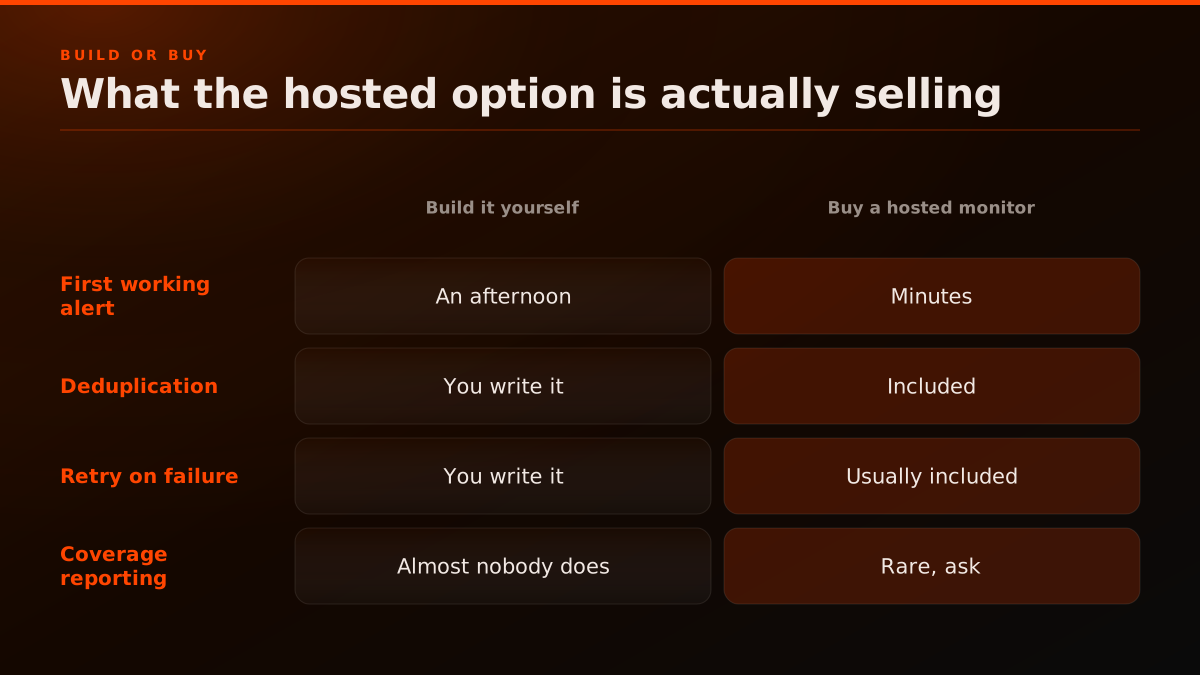
What takes months rather than an afternoon is everything surrounding the loop. Deduplication so that one post does not alert you five times as it is re-fetched. A retry ladder so a brief outage on your endpoint does not silently drop matches. A delivery record you can audit when someone asks whether an alert was sent. Coverage measurement so you know when the poller fell behind. Signature verification so you can trust that an incoming delivery is genuinely from your monitor. None of those are hard individually, and collectively they are the actual product.
BUILD OR BUY
Building a Reddit monitor against buying one
| Build it yourself | Buy a hosted monitor | |
|---|---|---|
| Time to first working alert | an afternoon | minutes |
| Matching logic | entirely yours | whatever the vendor ships |
| Deduplication | you write it | included |
| Retry on delivery failure | you write it | usually included |
| Audit trail of what was sent | you write it | varies, ask |
| Coverage reporting | almost nobody does | rare, ask specifically |
| Ongoing cost shape | API calls plus your time | subscription |
The pragmatic answer for most teams is that the build is worth doing when you want to learn the mechanics or when your matching needs are genuinely unusual, and the buy is worth doing when you want the alert to be somebody else's operational problem. If you already have a loop that works, keep it. Replacing working software because a vendor page is persuasive is not a strategy.
One thing that changes the calculation is API access. Both paths need it, and getting Reddit API credentials in 2026 is materially harder than it was, with a manual approval step that not everyone clears. The guide to getting a Reddit API key covers the current process and what to do when approval does not arrive.
How do you set up a Reddit monitor that is actually useful?
Start narrow and widen, rather than starting wide and filtering. The sequence that works:
- Begin with one unambiguous term, usually the product name or domain.
- Scope it to the subreddits you already know your buyers use.
- Read every alert for a week before widening anything.
- Widen one dimension at a time, and stop the moment precision drops. The failure pattern is universal: someone configures a broad watch on day one, receives hundreds of irrelevant alerts, loses confidence in the whole channel, and stops reading it within a week. A monitor you do not read has negative value, because it creates the impression of coverage while providing none.
A working sequence looks like this. Begin with 1 unambiguous term, usually your exact product name or your domain, watched across the 5 or 10 subreddits you already know your buyers use. If you are not sure which those are, Reddit's own community search is the cheapest starting point. Run it for 7 days and read every alert. If more than about 3 in 10 are irrelevant, the term is wrong rather than the tool. If they are all relevant, widen: add a competitor name, add the problem phrase, add a subreddit. If a meaningful share are irrelevant, do not widen, fix the term first.
Route alerts where you will actually see them, which for most teams is a dedicated channel rather than email. A dedicated channel matters more than it sounds: mixing monitoring alerts into a general channel guarantees they are skimmed, and mixing them into email guarantees they are batched with everything else competing for attention.
Decide in advance what you will do when one fires. This is the step most setups skip and it is the one that decides whether monitoring produces value. An alert with no owner and no intended response is a notification, not a process. For reputation watching the response might be a decision about whether to reply publicly. For lead generation it is a decision about whether the thread is a genuine fit and who takes it. Reddit reacts badly to unsolicited promotion, so a lead-gen monitor without a considered response policy tends to produce activity that damages the brand it was meant to protect.
Finally, revisit the configuration on a schedule. Terms that were clean six months ago drift as language changes and as your product name collides with something new. A monitor is a living configuration, not a setup step.
A worked example makes the sequence concrete. Suppose you sell a scheduling tool called Cadence. Watching the bare word "cadence" is hopeless: it is a common English noun, a cycling term and a company name several times over, and it will match hundreds of unrelated posts a week. Watching your domain instead matches only people who actually linked to you, which is a small, high-value set and a sensible day-one term. Adding "cadence app" and "cadence scheduling" catches the people discussing you by name without catching cyclists. Scoping all three to the handful of subreddits where scheduling tools get discussed removes most of what remains. That configuration will produce a handful of alerts a week, every one of which is worth reading, and it took four decisions rather than a different vendor.
The same logic applies in reverse when you widen. Adding a competitor name is usually safe because product names are distinctive. Adding a category phrase such as "scheduling tool" is where volume explodes, because that is what everyone writes when they are asking for a recommendation. It is also, not coincidentally, where the most valuable threads are, which is why the right move is to add it scoped to two or three subreddits first and see what comes back before letting it run across the platform.
Is Reddit monitoring worth it for a small business?
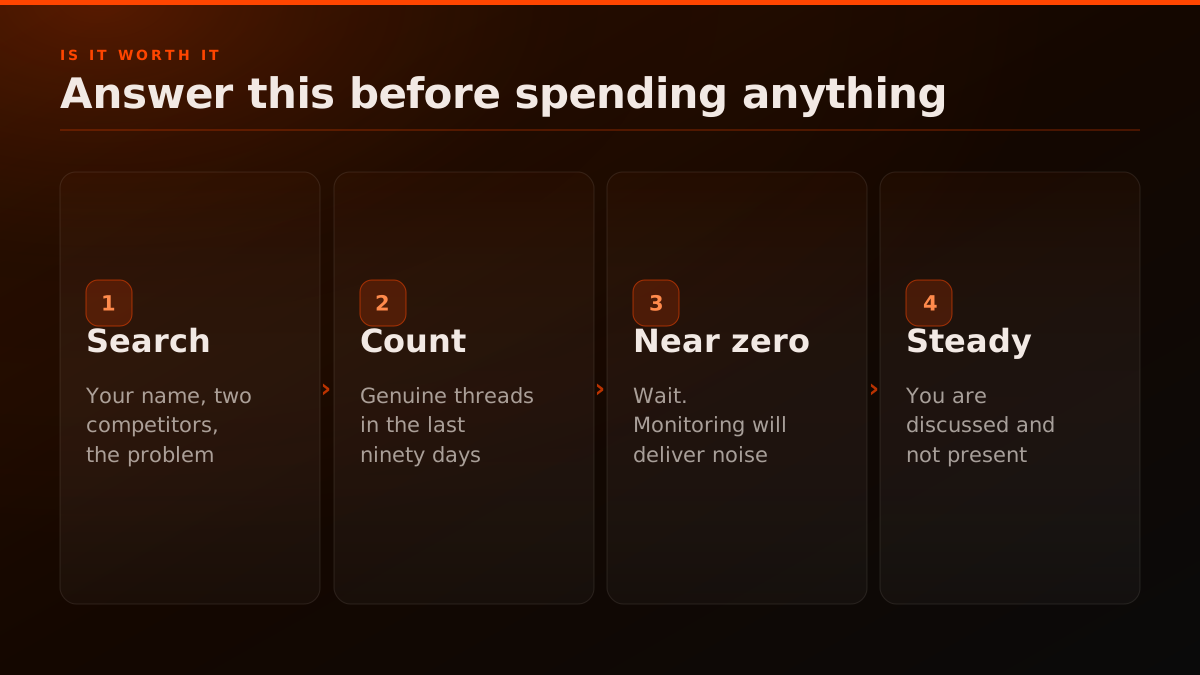
The honest answer is that it depends on whether your category is discussed on Reddit at all, and you can establish that in an afternoon before spending anything. The test is three searches and a count:
- Your product name.
- Two or three close competitors.
- The problem you solve, phrased the way a buyer would phrase it. Search your product name, two or three competitors, and the problem you solve. Count the genuine threads from the last 90 days. If that number is close to zero, monitoring will mostly deliver noise and the correct decision is to wait. If there is steady discussion, you are already being talked about and simply are not present for it.
The assumption that this is a big-brand activity is common and worth questioning. The recurring counter-example, raised repeatedly by small operators, is the local or niche business that keeps surfacing in recommendation threads it never knew existed. Recommendation threads are exactly where a small business benefits most, because the barrier is awareness rather than budget.
There is a real cost beyond the subscription, which is attention. Every alert asks someone to make a judgement. A setup producing 20 alerts a day that nobody triages is worse than no setup at all, because it converts a monitoring budget into a background source of guilt. Size the configuration to the attention you actually have.
What does Reddit monitoring look like in 2026 specifically?
Three things have changed about this category recently and they are worth separating from the evergreen mechanics above:
- Access to Reddit data got harder, pushing the category toward hosted products.
- Vendors consolidated and at least one widely used tool closed outright.
- AI-visibility measurement arrived alongside mention tracking, bundled but not the same thing.
The first is that access to Reddit data got harder and more expensive, which pushed the whole category toward hosted products. Running your own loop still works, but it now requires clearing an approval process that did not exist a few years ago, and the developer platform migration signals further restriction of the public data API. The practical consequence is that the build option, while still viable, has more upfront friction than it did.
The second is consolidation and churn among vendors. A widely used Reddit research tool closed on 30 November 2025, and its own site now routes former users to a list of 7 named alternatives. Another product that once published self-serve tiers has folded into a larger suite and now publishes none at all, which took the category from 8 obvious self-serve options to 6 inside a year. Another established listening product has been folding into a larger suite. This matters for buyers because a monitoring configuration is switching-cost that accumulates quietly: keywords, scopes, negative terms and integrations all have to be rebuilt when a vendor exits.
The third is the arrival of AI-visibility measurement alongside mention tracking. Because Reddit content is heavily cited by answer engines, several vendors now bundle a report on whether models mention your brand. This is a genuinely useful adjacent measurement and it is not the same product. A Reddit monitor tells you what a human posted and when. An AI-visibility tracker tells you what a model said when asked. Keep them separate in your head, because a single dashboard showing both invites the conclusion that they are the same signal.
For the underlying trend data on what is being discussed rather than who mentioned you, trending topic detection is a different lens on the same corpus, and sentiment analysis is the layer people usually mean when they ask whether mentions are positive or negative.
What should you check before trusting any Reddit monitor?
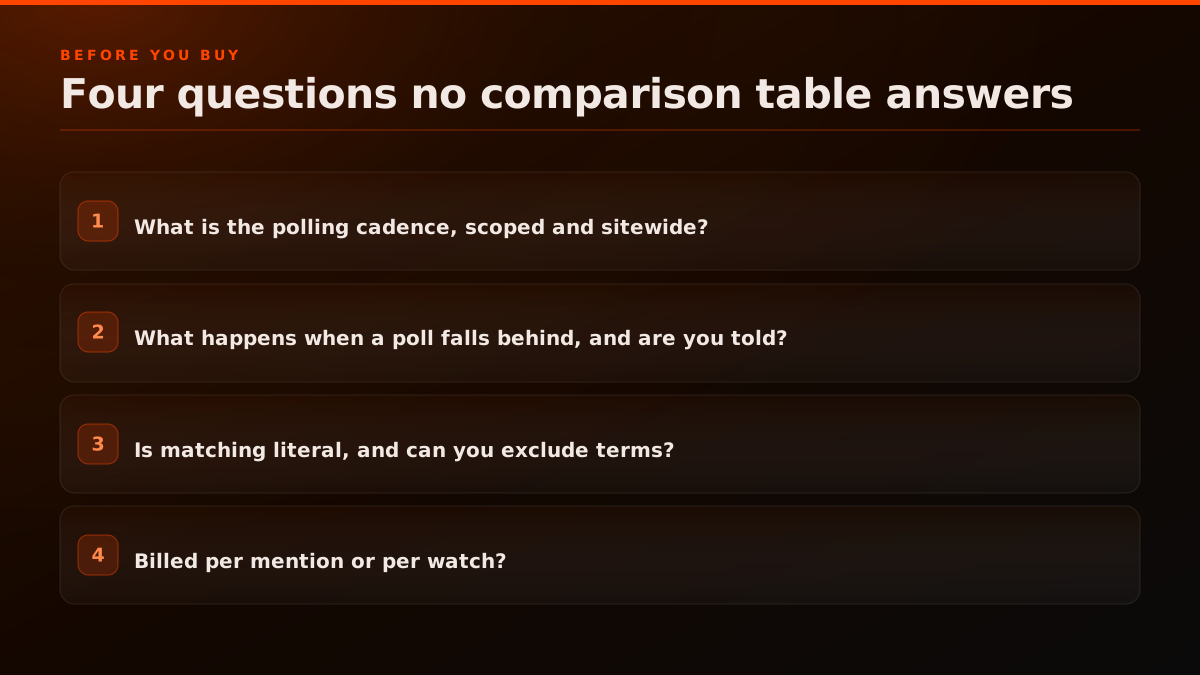
Four questions, in order of how much they tell you, and none of them appear on a typical vendor comparison table:
- What is the polling cadence, scoped and sitewide?
- What happens when a poll falls behind, and are you told?
- Is matching literal, and can you exclude terms?
- Are you billed per mention or per watch?
What is the polling cadence, and does it differ between a scoped watch and a sitewide one? This sets your speed floor and it is the number least often published. A vendor that answers this plainly is telling you something real; one that answers with a latency figure instead has answered a different question.
What happens when a poll fails or falls behind, and are you told? Silent loss is the default in this category. A vendor that measures and exposes coverage is unusual and it is worth asking specifically, because the alternative is an alert stream that looks identical whether it is complete or not.
How is matching performed, and can you exclude terms? Literal matching is the norm. Negative terms are the most effective noise control available and support for them varies. Ask before you buy rather than after.
How are you billed, per mention or per watch? This decides whether an unusually busy month is a cost surprise, and it shapes how you will end up configuring the tool.
A short video walkthrough of what mention tracking and sentiment analysis look like in practice on Reddit, if you prefer to see the workflow before evaluating it:
The cheapest Reddit API. Try it free.
Reads from $0.0015 per call. $0.50 free credits. No credit card required.
How does monitoring fit with the rest of the Reddit data stack?
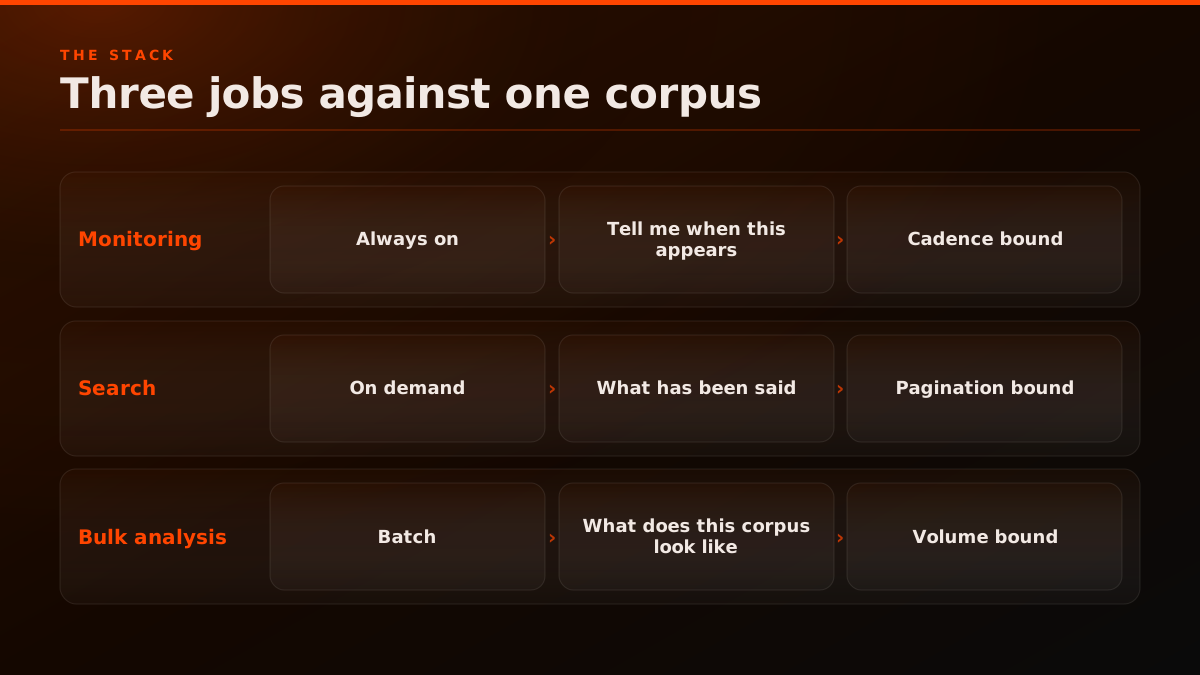
Monitoring is the always-on layer, and it is one of three distinct jobs people run against Reddit data:
- Monitoring answers "tell me when this appears" and runs continuously.
- Search answers "what has been said about this" and runs when you ask.
- Bulk analysis answers "what does this corpus look like" and runs as a batch. Knowing which one you actually need prevents buying the wrong instrument.
Monitoring answers "tell me when this appears" and runs continuously in the background. Search answers "what has been said about this" and runs when you ask, which is what the Reddit search API is for and what pagination governs when the answer is large. Bulk analysis answers "what does this whole corpus look like" and is a batch job over historical data rather than a live watch.
These have different cost profiles and different failure modes, and using one where you needed another is the most expensive mistake in this area. Running a monitor to answer a research question means waiting for the world to produce the data you could have queried. Running repeated searches to approximate a monitor means paying for redundant queries and still missing things between runs.
If your job is genuinely all three, the practical architecture is a monitor for the always-on watch, search for the investigations that monitor results trigger, and a periodic bulk pull for reporting. The Reddit data API overview covers how those surfaces relate and what each one is priced against, and the monitoring API reference covers the watch layer specifically. For teams evaluating whether a research tool or a monitor is the right purchase, the comparison of Reddit research tools by data depth is the closer look.
One legal note worth stating plainly rather than burying: what you may do with Reddit data depends on how you obtained it and what you do next, and the analysis of whether scraping Reddit is legal covers the distinction between reading public content through the API and republishing it. Monitoring for awareness sits comfortably inside normal use. Building a redistributable dataset out of monitoring output is a different question.
What does a Reddit monitoring alert actually contain?
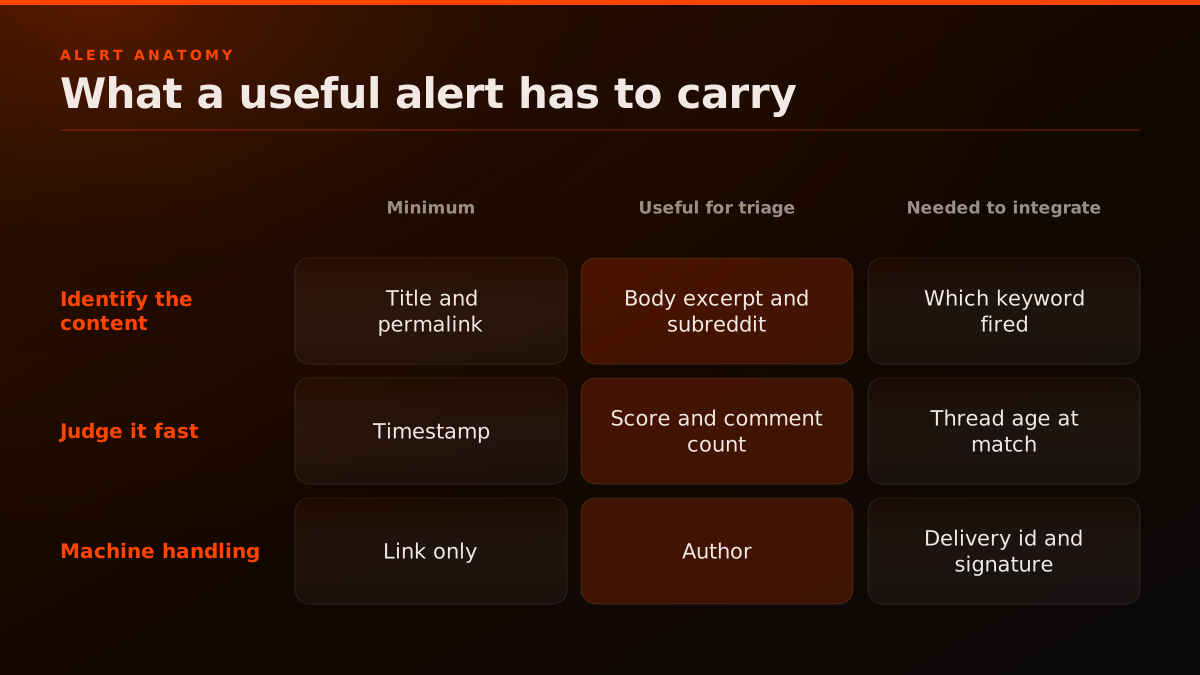
An alert is a notification that a piece of content matched your term, plus enough context to decide what to do about it without leaving the notification. The fields that actually change a decision:
- The permalink, without which the first action is a search.
- The subreddit, which sets the social rules for any reply.
- Which of your keywords fired, which tells you brand from competitor.
- The timestamp, because a thread's age decides whether replying is still useful. What "enough" means in practice is a short list, and the difference between tools is mostly whether they give you all of it or make you click through to find out.
The content itself is the minimum: the title, the body or an excerpt of it, and a permalink. An alert without a permalink is nearly useless, because the first thing anyone does is open the thread to read the surrounding conversation. Beyond that, the fields that change your decision are the subreddit, the author, the timestamp, and whichever of your keywords matched. That last one sounds minor and is not: when you watch several terms, knowing which one fired tells you immediately whether this is your brand being discussed or a competitor, and it is the field most often omitted.
Engagement context is the next tier and it is genuinely useful for triage. A match on a thread with two upvotes and no comments is a different situation from a match on one with four hundred, and the response you owe each is different. Some tools include a score at the time of the match, which is worth understanding: an alert fires quickly by design, so the score at alert time is almost always near zero regardless of where the thread eventually lands. A score in an alert is a snapshot of a thread's first minutes, not a verdict on it.
What a Reddit monitoring alert carries
Fields that change a triage decision
4
Worst-case delay at a 60s cadence
60s
Headers needed to integrate safely
2
An illustrative alert shape, not a screenshot of any vendor's output. Without the permalink the first action is a search; without the matched keyword you cannot tell your brand from a competitor when watching several terms.
The last piece is delivery metadata, which matters only if you are integrating rather than reading. A stable delivery identifier lets you deduplicate on your side when the same match is delivered more than once, which is normal behaviour for any at-least-once system. A signature lets you verify that an incoming request genuinely came from your monitor rather than from anyone who guessed your endpoint; the conventions are the standard ones catalogued at webhooks.fyi, and the underlying primitive is the keyed hash defined in RFC 2104. Both are covered in the delivery contract article, and if you are building an integration rather than reading a Slack channel, they are the two fields that decide whether your receiver is correct or merely working.
How do you monitor competitors on Reddit without it backfiring?
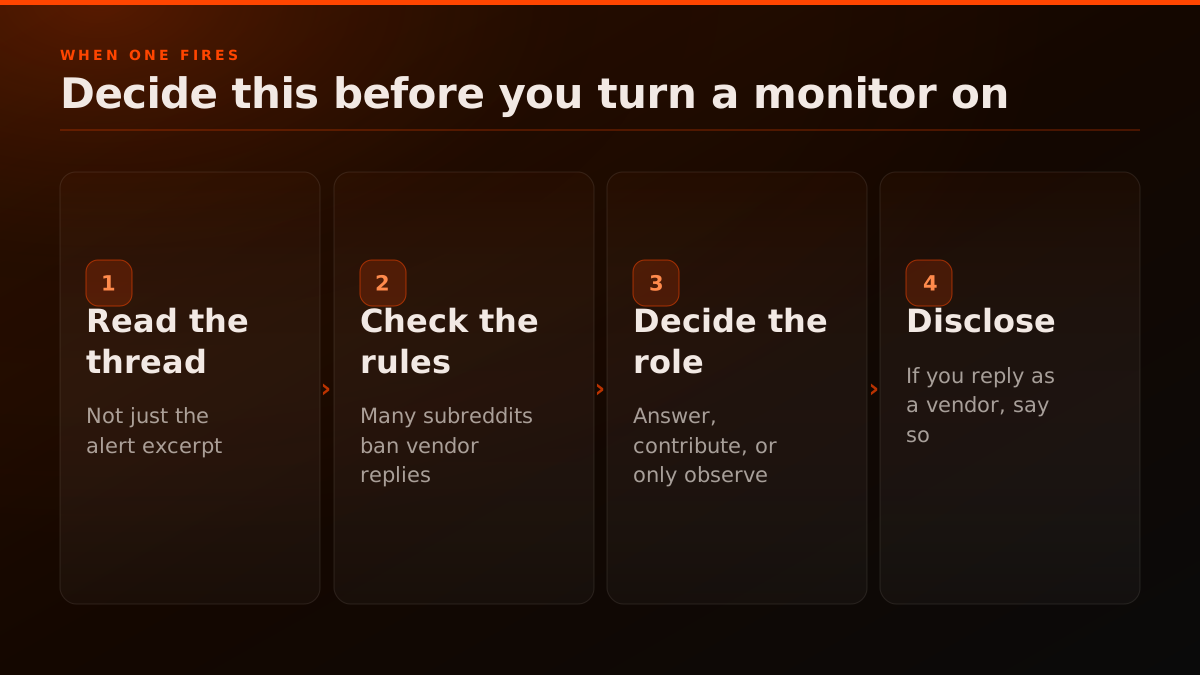
Competitor monitoring is the most common second use case after watching your own name, and it is the one most likely to cause damage if the response policy is wrong. What works, in descending order of safety:
- Read the thread as research and never reply at all.
- Contribute something useful without mentioning your product.
- Answer a direct request for alternatives, with your affiliation disclosed.
- Anything else, which is usually how a vendor gets removed. The monitoring part is trivially easy: add the competitor's product name as a term and scope it to the communities where your category is discussed. The judgement is entirely in what happens next.
Reddit communities are unusually good at detecting and punishing vendor behaviour that reads as opportunistic. A representative from one product appearing in a thread about a competitor to explain why the competitor is worse is the single most reliable way to be downvoted, reported and in many subreddits removed under self-promotion rules. This is not a hypothetical risk, it is the default outcome, and it does more damage than the thread was worth because the exchange stays visible and searchable.
What works is narrower and slower. Answering a direct question when someone explicitly asks for alternatives, with a disclosed affiliation, is generally accepted in most communities and is often welcomed. Contributing something useful to a thread without mentioning your product at all builds the standing that makes the first thing possible later. Reading competitor threads purely as product research, and never replying at all, is the highest-value use of competitor monitoring for most teams and carries no risk whatsoever.
Before you configure any of this, read the rules of the subreddits you intend to watch, because self-promotion policies vary enormously between communities and several ban vendor participation outright. Those rules are machine-readable, which means you can check them programmatically rather than by hand across a list of communities; the subreddit rules endpoint guide covers how. A competitor watch that produces threads you cannot legitimately participate in is still useful as intelligence, but you should know that going in rather than discovering it after a bad reply.
The intelligence value is genuinely high and underrated. Competitor threads tell you which objections come up unprompted, what language real buyers use for your category, and which features people complain about, all of which is worth more than the occasional lead. Treating a competitor watch as a research feed rather than a lead feed also removes the incentive that causes the bad behaviour above.
How do you tell whether your Reddit monitoring is actually working?
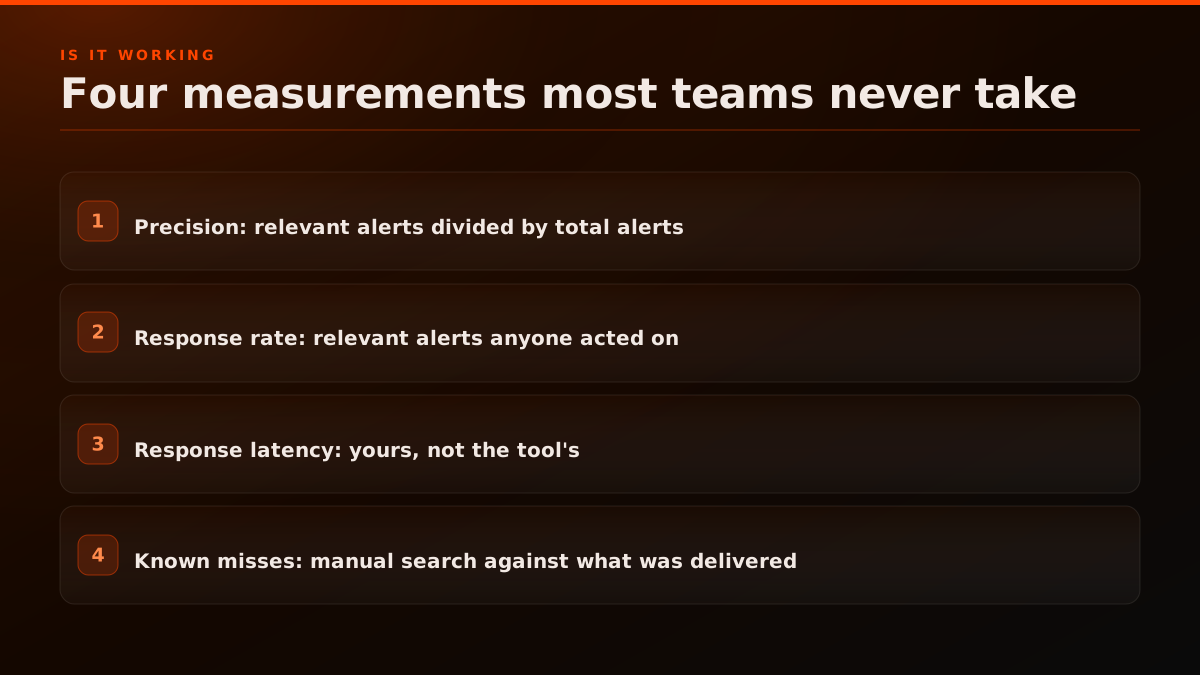
Most teams never evaluate this, which is why so many monitoring subscriptions quietly become unread channels. Four measurements, none of which need a tool you do not already have:
- Precision: relevant alerts divided by total alerts.
- Response rate: relevant alerts anyone actually acted on.
- Response latency: yours, which is usually the slow half.
- Known misses: a manual search compared against what was delivered. There are four measurements worth taking, and none of them require a tool beyond what you already have.
The first is precision, and it is the one that matters most. Over a fixed window, count the alerts you received and the ones you judged relevant. That ratio is your signal quality. Anything below roughly 50% means your terms need work, and the fix is keyword specificity and scope rather than a different vendor. Tracking this over time also catches drift, where a term that was clean six months ago starts colliding with something new.
The second is response rate. Of the relevant alerts, how many did anyone actually act on? A high precision score with a zero response rate means the monitoring is fine and the process around it does not exist. This is a much more common failure than bad matching and it is invisible unless you look, because the alerts keep arriving and everything appears healthy.
WHERE ALERTS GO
Alert attrition, as a share of everything delivered
| Point | Value (% of delivered) |
|---|---|
| Delivered | 100 % of delivered |
| Judged relevant | 45 % of delivered |
| Acted on | 12 % of delivered |
| Acted on within an hour | 4 % of delivered |
The third is latency to response, which is distinct from alert latency. Alert latency is the tool's problem and is bounded by cadence. Response latency is yours, and on Reddit it matters more than most channels because threads move fast and a reply twelve hours after a question has largely missed the conversation. If your alerts arrive in a minute and your responses take a day, buying a faster cadence solves nothing.
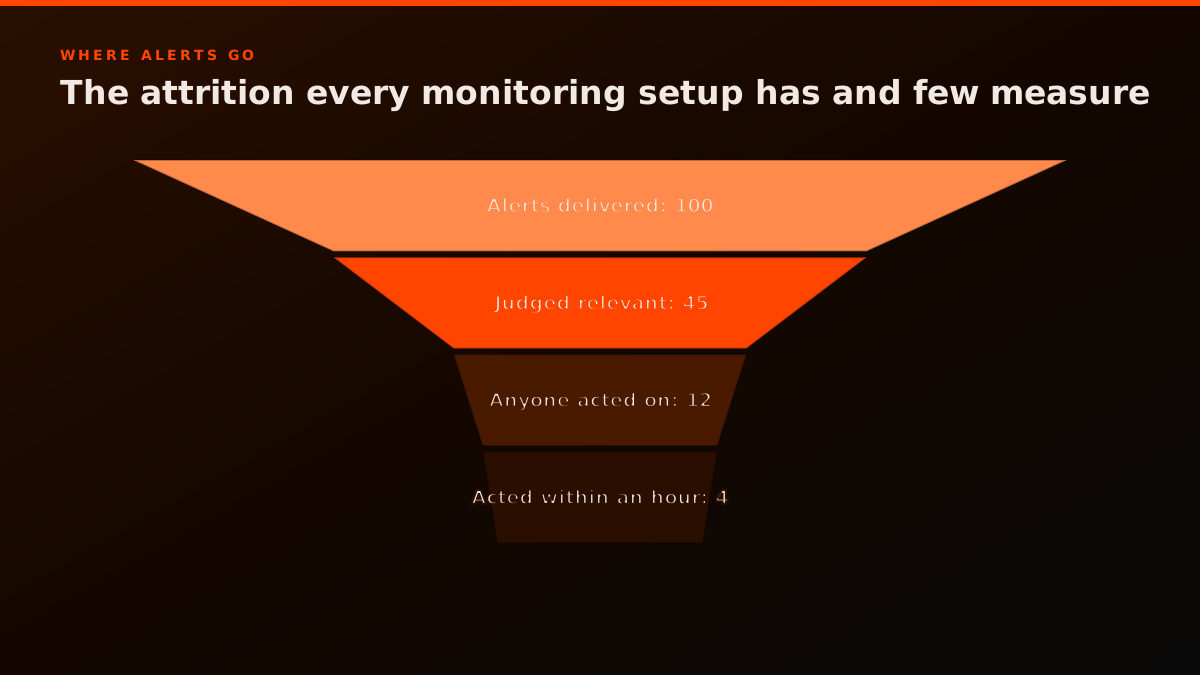
The fourth is known misses, which is the hardest and most valuable. Once a month, search manually for your terms over the 30 days you were monitoring and compare against what the monitor delivered. Anything the search finds that the monitor did not is a gap, and the cause is usually scope, a term that does not match how people actually write, or a coverage failure. This is the only way to measure recall from the outside, and doing it 2 times a year is enough to catch a monitor that has been quietly degraded for months.
Together these four turn monitoring from a subscription into something you can actually manage. A setup with high precision, a real response process and a known and acceptable miss rate is working. A setup where nobody can answer any of the four questions is a channel that will be muted within a quarter, whatever it cost.
What happens to your monitoring when Reddit rate-limits the poller?
This is the failure mode nobody demos and it is worth understanding because it degrades quietly rather than breaking loudly. The sequence is always the same:
- The poller exceeds its request budget.
- Requests start being refused rather than returning data.
- The monitor keeps running and keeps alerting, on less.
- Nothing in the alert stream indicates that coverage dropped. Reddit enforces request budgets, and a poller that exceeds its budget starts receiving refusals instead of data. The monitor does not stop. It simply sees less, and the alert stream that reaches you looks exactly the same as a healthy one, only thinner.
For a self-built loop this is the most common reason a monitor that worked for a month stops catching things. The loop is still running, the process is still alive, the logs may even look normal if refusals are being swallowed by a broad exception handler, and yet coverage has collapsed. The tell is usually indirect: someone mentions a thread you should have seen and did not. The article on Reddit API rate limits covers the budgets themselves, and the piece on what to do when a request is refused covers the recovery pattern, which is to back off rather than retry immediately. The standard shape is exponential backoff, and Reddit's own Data API terms set the boundaries you are backing off inside.
For a hosted monitor the same physics apply, they are just somebody else's problem, and whether you ever learn about it depends entirely on whether the vendor measures and reports coverage. This is the single most useful question you can ask a monitoring vendor and it is the one least often answered on a pricing page. A product that can tell you what share of the promised window it actually polled is giving you something genuinely rare. A product that cannot answer is not necessarily worse at polling, but you have no way to know either way.
The practical mitigation on your side is the same in both cases: watch fewer things more carefully. Every additional subreddit and every additional keyword consumes budget, and budget consumed on a term you do not read is budget unavailable for the term you do. This is another reason the noise problem and the coverage problem are the same problem wearing different clothes, and why keyword discipline pays twice.
How is monitoring Reddit different from monitoring other platforms?
Teams often arrive at Reddit monitoring with habits formed on other channels, and three differences matter enough to reset expectations:
- Reddit content is durable and indexed, so a mention is worth more and lasts longer.
- Reddit is community-governed, so vendor participation is socially constrained.
- Reddit offers no push, so cadence is a hard floor no vendor choice removes.
The first is that Reddit content is durable and highly indexed, which makes a mention worth more and worth longer than an equivalent mention elsewhere. A thread from 3 years ago still ranks, still gets read, and still shapes what a buyer concludes about your category. That changes the calculation on whether to respond: on a fast-moving feed a bad comment scrolls away, and on Reddit it is a permanent search result. It also means the value of catching a thread early is not only about joining the conversation, it is about being present in something that will be read for years.
The second is that Reddit is pseudonymous and community-governed, which makes vendor participation socially fraught in a way it is not on most professional networks. Every subreddit sets its own rules and many restrict or ban self-promotion outright, on top of the site-wide norms described in reddiquette and the Reddit content policy. This is why a monitoring workflow that works fine as a lead engine on another channel produces backlash here, and why the response policy matters more than the alerting mechanics.
The third is structural and it is the one this whole article rests on: Reddit gives you no push, so everything is polling and cadence is the binding constraint. Several other platforms offer genuine streaming or webhook access, so a team that has built monitoring elsewhere often assumes real-time is available and is surprised by the floor. It is not a limitation of any particular tool, it is a property of the platform, and no amount of vendor selection changes it.
One consequence worth stating plainly: because Reddit content is frequently deleted and because the platform is heavily cited by answer engines, the gap between catching a mention and missing it is wider here than the raw volume suggests. A mention you catch is durable and may be quoted by a model for a long time. A mention you miss may be gone entirely within days. That asymmetry is the strongest argument for treating cadence as a real purchasing criterion rather than a specification detail.
The bottom line
Reddit monitoring is a simpler product than the category's marketing suggests and a harder configuration problem than its demos suggest. If you take four things from this article:
- There is no push, so cadence sets your speed and a latency claim without a cadence is incomplete.
- The product problem is noise, and noise is fixed by keyword discipline rather than by switching vendors.
- Monitoring misses things silently unless the vendor measures and reports coverage.
- Metering model decides whether a busy month is a cost surprise. There is no push feed, so everything is polling, so cadence sets your speed and any latency claim without a cadence behind it is incomplete. The product problem is not speed anyway, it is noise, and noise is solved by keyword discipline and scope rather than by changing vendors. Monitoring misses things, sometimes silently, and Reddit mentions are perishable enough that a slow digest is often reporting on threads that no longer exist.
One last framing that helps. Monitoring is an availability problem disguised as a data problem. The data is public, the tooling is commoditised, and every vendor is polling the same endpoints. What actually determines whether monitoring produces value is whether a human is available and willing to act when something fires, and whether the thing that fires is worth their attention. Both of those are configuration and process decisions rather than purchasing decisions, which is why two teams paying the same vendor the same amount routinely get completely different results from it.
That is also the honest reason this article does not end with a tool recommendation. The variance between outcomes in this category is dominated by how narrowly you scope, how quickly you respond, and whether anyone owns the channel. Vendor choice matters, but it matters considerably less than the vendor comparison pages imply, and a team that gets the configuration right will do better on a cheap tool than a team that gets it wrong on an expensive one.
The practical advice is short. Start with one unambiguous term in the subreddits your buyers already use. Read every alert for a week before widening anything. Ask any vendor what its cadence is, what happens when a poll falls behind, whether you can exclude terms, and whether you are billed per mention or per watch. Decide what you will do when an alert fires before you turn it on.
If you want the layer below this one, the delivery contract article measures what actually happens between a Reddit post appearing and an alert reaching your endpoint, including retries and coverage reporting. If you would rather build than buy, the Python keyword monitor guide is the working code. If you want to see the watch layer we operate, it is documented at the monitoring API, priced on the pricing page, and you can sign up to try it. Full endpoint reference lives in the API documentation.
Where these numbers come from.
Each row is a figure in this post and the artefact it was read from. Reddit's access rules and the third-party archives around them keep moving, so check the date on a source before you build against it.
- Reddit Data API Wiki
- Reddit's own access and rate-limit documentation, the reason every Reddit feed is poll based rather than push based.
- Reddit API documentation
- The official endpoint reference. It carries no webhook or callback registration surface of any kind.
- PRAW documentation
- The stream helpers whose polling implementation is the reason PRAW streaming is not push.
- r/SaaS, manual keyword-mention tracking thread
- An operator manually tracking several hundred keyword mentions in a week and reporting the signal-to-noise problem first hand.
- r/automation, what tools people actually keep using
- Thread distinguishing the tools people recommend from the tools they still use months later.
- r/SaaS, is social listening a viable growth strategy
- Founders debating whether monitoring produces enough signal to justify the attention it consumes.
- Reddit Data API request budgets
- Reddit's published access terms, the reason polling cadence is a cost decision rather than a free choice.
- @just4rxxy on X
- An operator building a personal monitoring digest and naming keyword discipline, not tooling, as the thing that made it usable.
- F5Bot
- The long-running free Reddit keyword alerting service, cited for its published plan structure.
- Syften pricing
- Published tier structure metered by results per day, cited as an example of volume-based metering.
- Octolens pricing
- Published per-mention metering with overage, cited as an example of volume-based metering.
- redditapis.com pricing page
- The deployed source for every monitoring price, watch count and cadence referenced in this article.
Frequently asked questions.
No. Reddit exposes no push mechanism at all: there is no endpoint where you register a callback and have Reddit notify you when a post appears. Every Reddit alert you have ever received, from any tool, was produced by something polling Reddit on a timer and comparing what it found against what it saw last time. That includes the stream helpers in PRAW and the Reddit triggers inside automation platforms. The push you see is the tool pushing to you, not Reddit pushing to the tool. See webhooks versus polling for Reddit data for the underlying mechanics.
No faster than the polling cadence of whatever is watching, plus the time to match and deliver. If a tool polls a subreddit every 60 seconds, a post created one second after a poll finishes waits nearly a full cycle before anything sees it, so the honest description of that tool is not real time but up to about a minute. This is why comparing advertised latency numbers across monitoring vendors is mostly meaningless: the number that governs is cadence, and cadence is a function of what the vendor is willing to spend on API calls. Anyone claiming sub-second Reddit alerts is describing their own delivery step, not the discovery step. The measured end-to-end path is broken down in the delivery contract article.
Because keyword matching on a push monitor is literal, not semantic, and Reddit is enormous. A common word matches thousands of posts that have nothing to do with you, and the monitor has no idea which ones you meant. The fix is not a better tool, it is keyword discipline: watch short distinctive strings such as a product name or a domain, scope to named subreddits where your buyer actually is, and add negative terms for the collisions you can predict. Operators consistently report this is the difference between a monitor they keep and one they mute. See cutting the noise.
Because a monitor matches your keyword as a literal string against the fields it searches, usually title, body and URL. A short distinctive term like a product name appears verbatim in real posts and fires reliably. A long conversational sentence almost never appears verbatim in anything a human wrote, so the monitor matches nothing while looking perfectly sensible in the configuration screen. Use short exact terms for push monitors, and save long natural phrasing for a search query with boolean operators, which is a different instrument answering a different question.
Frequently enough that it should change how you configure a monitor. Reddit posts and comments are deleted by their authors routinely, so a mention that existed when a poller ran may be gone by the time a digest reaches you. We have not measured the rate and will not quote one we cannot stand behind. The practical consequence is that a daily digest is structurally late for some share of what it reports, and that cadence matters more for reputation work than for lead generation. Cadence and its cost are covered in the Reddit data API overview.
It depends on whether people discuss your category on Reddit at all, which is a question you can answer in an afternoon before spending anything. Search your product name, your close competitors and the problem you solve, and count how many genuine threads come back in the last ninety days. Zero or a handful means monitoring will mostly deliver noise and the honest answer is not yet. Steady discussion means you are already being talked about without knowing it. Small businesses often assume this is a big-brand activity, and the recurring counter-example is the local business that keeps appearing in recommendation threads it never saw. If the answer is not yet, trending topic detection is the cheaper way to watch a category.
Because mentions are what their infrastructure scales with, so metering them transfers the variable cost to you. The practical consequence is that your bill moves with how much Reddit talks about your keyword, which is the thing you least control. A busy subreddit or a viral thread can turn a predictable subscription into an unpredictable one, and several vendors bill overage per mention on top. A flat per-monitor price is a structurally different bet: the vendor absorbs the volume risk and you get a bill you can forecast. Neither model is dishonest, but they fail in opposite directions and you should know which one you signed. Our own current figures are on the pricing page.
Build if matching logic is your differentiator or you already have the operational furniture. A polling loop that watches a few subreddits is genuinely about fifty lines of Python and costs a few dollars a month in API calls. What takes months rather than an afternoon is everything around it: signed delivery, a retry ladder, a delivery ledger you can audit, deduplication so one post does not alert five times, and an honest account of what the poller failed to fetch. See the build your own keyword monitor guide for the build path and the delivery contract for what the buy path is actually selling.
Yes, and most tools do, so this is not a differentiator worth paying a premium for. It is worth understanding the cost though. Comment volume runs several times post volume on an active subreddit, so a comment monitor generates far more matches, hits delivery ceilings faster, and amplifies any keyword-discipline problem you already had. Comment watching also usually has to be scoped to named subreddits rather than all of Reddit, because an unscoped comment stream cannot be paginated fast enough for anyone to make an honest coverage claim about it. The retrospective equivalent is comment search.
Four things, in order. What is the polling cadence, since that sets your speed floor and is the number vendors are least eager to publish. What does it do when a poll fails or falls behind, and does it tell you. How is matching performed, literal or semantic, and can you add negative terms. And how are you billed, per mention or per monitor, because that decides whether a busy month is a cost surprise. A vendor that answers all four plainly is more trustworthy than one advertising a latency number with no cadence behind it. What a hosted watch layer commits to is documented at the monitoring API.
Keep reading.
Continue exploring related pages.
Reddit API documentation
The complete 2026 reference: auth, all 74 endpoints, and code.
Get a Reddit API key
Instant bearer token, no waitlist and no enterprise contract.
Reddit Responsible Builder Policy
Why Reddit denies API applications, and the managed REST bypass.
Reddit API use cases
14 use cases from AI training to brand monitoring and DMs.
Reddit Search API
Search posts, comments, users, and communities over one REST endpoint.
Reddit MCP server
Wrap the REST API as MCP tools for Claude, Cursor, and any MCP client.
Reddit MCP hub
Install tabs for every client, the full tool table, pricing and fixes.
Reddit API for AI agents
Live Reddit context for tool calls, MCP servers, and RAG pipelines.
Redditapis pricing
Endpoint-level costs and quick monthly totals - reads from $0.0015 / call.
Reddit API cost calculator
Estimate monthly spend using your request volume.
Reddit API guides and tutorials
Tutorials, walkthroughs, and API deep-dives for developers.
Reddit API alternatives
Evaluate alternatives by cost model, limits, and integration fit.
Cheap Reddit API
The cheapest way to get Reddit data: $0.0015 per call, no contract, no minimum.
Official Reddit API vs Redditapis
Access, setup, rate limits, and pricing, side by side.
PRAW alternative
A hosted Reddit REST API for any language, no app registration or OAuth.
Reddapi alternative
A maintained Reddit REST API with published pricing and write endpoints.
Reddit comment scraper alternative
The raw comment API: search and filter comments, historical and live, clean JSON.
Reddit scraper API
Hosted scraper API vs building your own: no proxies to manage, clean JSON.
RapidAPI Reddit alternative
A direct, maintained Reddit API with published pricing and write endpoints.
Bright Data Reddit alternative
A purpose-built Reddit API vs a general scraping platform: structured JSON, plus writes.
ScraperAPI Reddit alternative
A Reddit-native API vs a generic HTML fetcher: auth and pagination handled, typed JSON.
TikHub alternative
TikHub's Reddit surface is read-only; get comment, vote, and DM endpoints too.
EnsembleData alternative
No $100/month floor: pay per call from $0.0015, plus write, vote, and DM endpoints.
Scrape Creators alternative
7 read-only Reddit endpoints vs a dedicated API with real write, vote, and DM paths.
FetchLayer alternative
Posts, comments, and search only; add vote, comment, and DM over the same REST auth.
PullPush alternative
PullPush is free but volunteer-run and goes offline for reindexing; a maintained REST API that stays up.
Reddit monitoring API
Build your own keyword and brand-mention monitor: search, comment search, and subreddit streams over REST.
F5Bot vs Redditapis
F5Bot's Slack and Discord delivery needs its $49.99/mo Gold tier; Redditapis includes it from $19/mo.
Syften vs Redditapis
Syften caps you at 100 to 500 results a day; Redditapis allows 10,000 a day per monitor at the entry plan.
Octolens vs Redditapis
Octolens meters by mention with overage fees; Redditapis is flat-priced by subreddit slot from $19/mo.
Affiliate program
Earn 20% lifetime commissions - capped at $5,000/yr.
Reddit Vote API tutorial
Upvote and downvote a post programmatically via the REST API.
Reddit Data API: REST, no PRAW
REST endpoints for Reddit data with no PRAW and no OAuth dance.
Reddit scraping benchmarks
Real throughput, error rates, and cost benchmarks for Reddit scraping.
Reddit API answers
Direct answers on cost, access, rate limits, endpoints, and auth.
How much the Reddit API costs
Per-call pricing from $0.0015 a read, with $0.50 in free credits.
Reddit API in Python
One requests call with a bearer token, no PRAW and no OAuth flow.
Reddit shadowban checker
Check if a Reddit account is shadowbanned in seconds, free and no login.
Subreddit stats checker
See any subreddit's live subscriber count, active users, and age, free and no login.
Similar reads.
More guides on the Reddit API, scraping, pricing, and MCP servers.

Build a Reddit Keyword Monitor in Python (2026): No Per-Minute Quota, No SaaS Fee
Build your own Reddit keyword monitor in Python in 2026. A copy-paste polling loop on a managed REST search endpoint, with dedup, email and Slack alerts, scheduling, and why polling beats PRAW streaming on rate limits.
Reddit RSS Feeds End November 13, 2026: What Breaks and What Replaces Them
Reddit stops supporting RSS feeds on November 13, 2026. What breaks, what Reddit offers moderators instead, the 2027 API dates, and how to replace a feed.
How to Estimate Your Reddit API Bill: a Per-Call Cost Model in Python
A per-call Reddit API cost model in Python: price every read, write and DM, then size the monthly bill for a keyword monitor, a RAG refresh and a reply bot.
Reddit Monitoring Over Webhooks: The Delivery Contract, Measured
Reddit has no push. A hosted monitor is a poller somebody else runs. Here is what it guarantees, HMAC signing, the retry ladder, and how to prove it works.
How to Detect Trending Topics on Reddit With an API
Detect trending topics on Reddit with an API: snapshot hot and top listings, compute score and comment velocity, and surface rising posts, subreddits, and topics.
Reddit Sentiment Analysis With an API: A 2026 Guide
Build a Reddit sentiment analysis pipeline: pull posts and comments for a keyword through an API, score them with a model, and track brand sentiment over time.
Reddit Comment IDs Are Now 13 Characters and Out of Order: What Breaks in Your Code
Reddit's new comment IDs are 13 characters and no longer increasing. When the change went live, what it breaks in your code, and the fix for each case.
Reddit Stops New Data API Requests on October 31: What to Do If You Have Not Applied
Reddit stops accepting new Data API requests on October 31, 2026. What closes, why the request form keeps failing, and how a new project reads Reddit after.