
Reddit Comment Search API: the Camas and Pushshift-Live Alternative (2026)
Reddit's API has no comment-search endpoint, its type=comment mode returns parent posts, not comment bodies. Here is why, what died with Camas and Pushshift, and how to search Reddit comment bodies by keyword over REST in 2026.

If you have ever tried to search Reddit for a word inside the comments, not the post titles, and come up empty, you are not doing it wrong. Reddit's official API has no comment-search endpoint. Its search accepts a type=comment mode, but that mode returns the parent posts whose comments matched, never the comment text itself. The tools that used to fill this gap, Camas and the Pushshift archive behind it, went dark for the public in 2023. This guide explains exactly why comment search is missing, what replaced Pushshift, and how to search Reddit comment bodies by keyword over a plain REST call in 2026.
Not affiliated with Reddit Inc. redditapis.com is an independent, third-party REST layer built on Reddit's official API.
Last updated 2026-08-02.
TL;DR: Reddit's own API cannot return comment bodies from a search. The
type=commentparameter matches comment text but hands back the parent posts, so you get threads with no comment text. Camas and Pushshift, the old public comment-search stack, closed to non-moderators in 2023. In 2026 you have three paths: PullPush (a free historical archive with a/reddit/search/commentendpoint and no reliability promise), a do-it-yourself pass on Reddit's API (search for matching posts, fetch each comment tree, filter the bodies), or a managed REST API that does that step for you with/search/comments/deepand returns the actual matching comments with body, score, author, and permalink. Use /signup to test the endpoints or read the pricing guide.
- Reddit's
type=commentsearch returns parent posts, not comment bodies - Camas and Pushshift, the old comment-search stack, closed to the public in 2023
- PullPush is the free historical archive; a managed API is the live-search path
/search/commentsfinds the threads;/search/comments/deepreturns the comments
Is there a Reddit comment search API in 2026?
There is no comment-search endpoint in Reddit's official API. Reddit exposes post search, subreddit search, and user search through its documented search endpoint, and that route accepts a type=comment value, but that value is a matching mode rather than a result type. Reddit matches your keyword against comment text and then returns the posts those comments belong to, so you can find that a discussion mentioned your term, but you cannot read the comment that mentioned it. This is the single most confusing thing about Reddit search, and it is why the question keeps resurfacing in the developer community.
The gap is not theoretical. Developers hit it constantly and land in the same place, asking where the comment-search endpoint went after Pushshift closed.
Is comment search supported API? I can't find the endpoint
How can I use the API to run a search across all comments? E.g., give me all comments within the last 24H that have the word "dog" I don't see a direct endpoint for this...PushShift had one but it's no longer alive, so…
The three ways to search Reddit split cleanly by what they return, and only one of them gives you comment text.
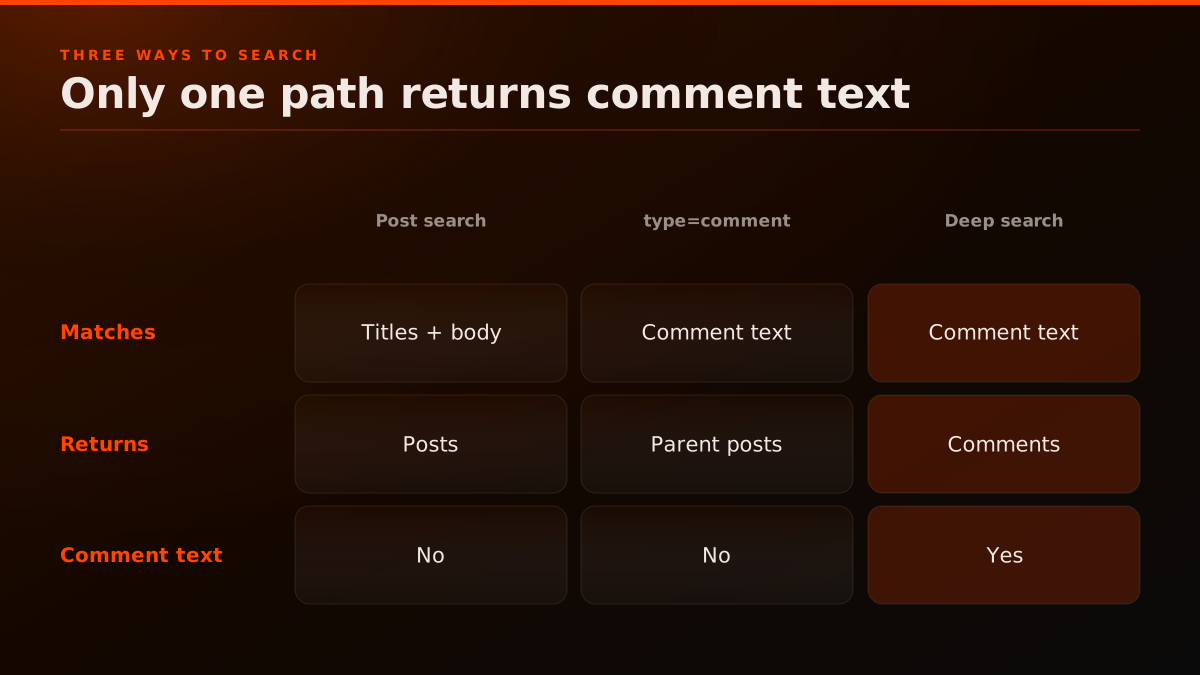
The practical takeaway is that "search Reddit comments" is really two jobs. Finding the threads where a term comes up is one job, and Reddit's own comment-search mode does that, as does our /search/comments endpoint. Reading the comments that matched is a separate job that Reddit's API never finishes for you. The rest of this guide is about closing that second gap, and about the history that opened it.
Why comment search disappeared: Camas, Pushshift, and 2023
Comment search used to be easy, and then it was not. For years, Pushshift maintained a full-history archive of Reddit posts and comments, and Camas was a fast search UI built on top of it that let anyone search comment text, filter by author, and scope to a subreddit. In 2023, Reddit's Data API changes cut Pushshift off from the public, restricting it to verified moderators, and Camas lost the data source it depended on. Overnight, the most common way to search Reddit comments simply stopped working, and the official API had no equivalent to replace it.
The shutdown removed a specific stack of capabilities at once.
- Pushshift: the full-history archive of posts and comments, closed to the public and restricted to verified moderators
- Camas: the fast comment-search UI that read from Pushshift, left with no data source to query
- The gap: Reddit's own Data API still exposes no comment-search endpoint to replace either
The reaction in the developer community was immediate, and it has not really stopped since. The recurring thread is someone with a legitimate need looking for comment search after the archive closed.
Searching for comments after PushShift
Is there a way to search or monitor for Reddit *comments* containing specific keywords now that Pushshift is no longer open (to non-moderators)? I've experimented with the live streaming a given subreddit but am…
Part of why this hurt is that Reddit comment data turned out to be quietly valuable, especially for AI. Pushshift's archive had become a standard corpus for training and research, which is part of why access tightened in the first place.

kalomaze
@kalomaze
while this is funny to say for the meme i think you guys fail to realize just how barren/absent natural conversation would be in the data w/o reddit in pretraining one of the smartest things Mistral pretraining team did was stockpiling the pushshift api data
The API changes touched a whole cluster of tools at once, and the community kept a running map of which parts of the ecosystem were affected and where the surviving pieces, including the Pushshift community, had moved.

Fed 🐻
@foliofed
Subreddits to watch regarding the Reddit API drama r/reddit - official announcements from Reddit r/redditdev - sub for 3rd party developers r/Save3rdPartyApps - sub organizing protest r/apolloapp - sub for Apollo (RIP) r/ModCoord - angry moderators coodinating r/pushshift -
There is a reasonable argument, made loudly at the time, that relying on a single volunteer-run archive for critical infrastructure was always fragile. That view has merit. But it does not change the practical problem a developer faces today: the convenient comment search is gone, and you need a path that works now. The death of the free JSON endpoint is a related chapter of the same story.
Why Reddit's own search returns posts, not comments
When you add type=comment to a Reddit search request, Reddit does match your keyword against comment bodies, but the objects it returns are posts. A post object carries a title, selftext, score, and comment count, so the fields that populate look reasonable, which is exactly why the behavior is so easy to miss. What you never get back is the comment that matched, its text, or which comment it even was. Reddit does not expose that in the search response, so inventing a field for it is not an option.
Developers discover this the hard way, usually after appending the parameter and getting the same title-only results they got without it.
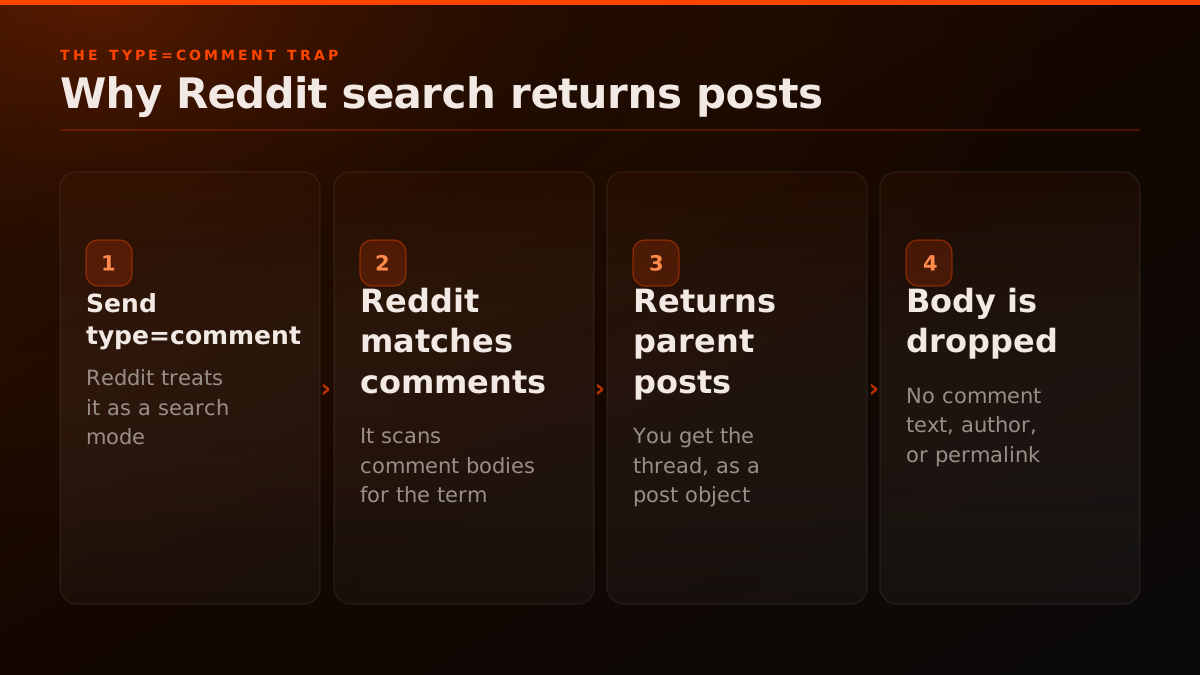
You can see the exact behavior by calling the parent-posts endpoint, which mirrors Reddit's own comment-search mode. A first-party call to GET /api/reddit/search/comments?q=pushshift&limit=5 on 2026-08-02 returned a comments key whose values were posts, each carrying id, title, author, subreddit, upvotes, num_comments, selftext, url, link_url, and created, with an after cursor that was a t3_ post fullname. The response key is named comments for backward compatibility, but every value is a post. There is no body, no comment permalink, and no marker of which comment triggered the match.
That is the whole reason a dedicated comment-search step exists: to take those matching posts and actually pull the comments out of them. Reddit's search API stops one step short of the data most people searching comments actually want.
The two comment-search endpoints: parent posts vs real bodies
Because "search comments" is two jobs, a comment-search API is cleanest when it exposes two endpoints. The first, /search/comments, does exactly what Reddit's own mode does: it returns the parent posts whose comments matched, at the standard single-read price, which is ideal when you only need to find the threads. The second, /search/comments/deep, finishes the job: it expands each matching post's comment tree and returns the actual matching comment bodies. The split lets you pay for depth only when you need it.
Seen side by side, the difference between the two is the difference between a lead and the answer.
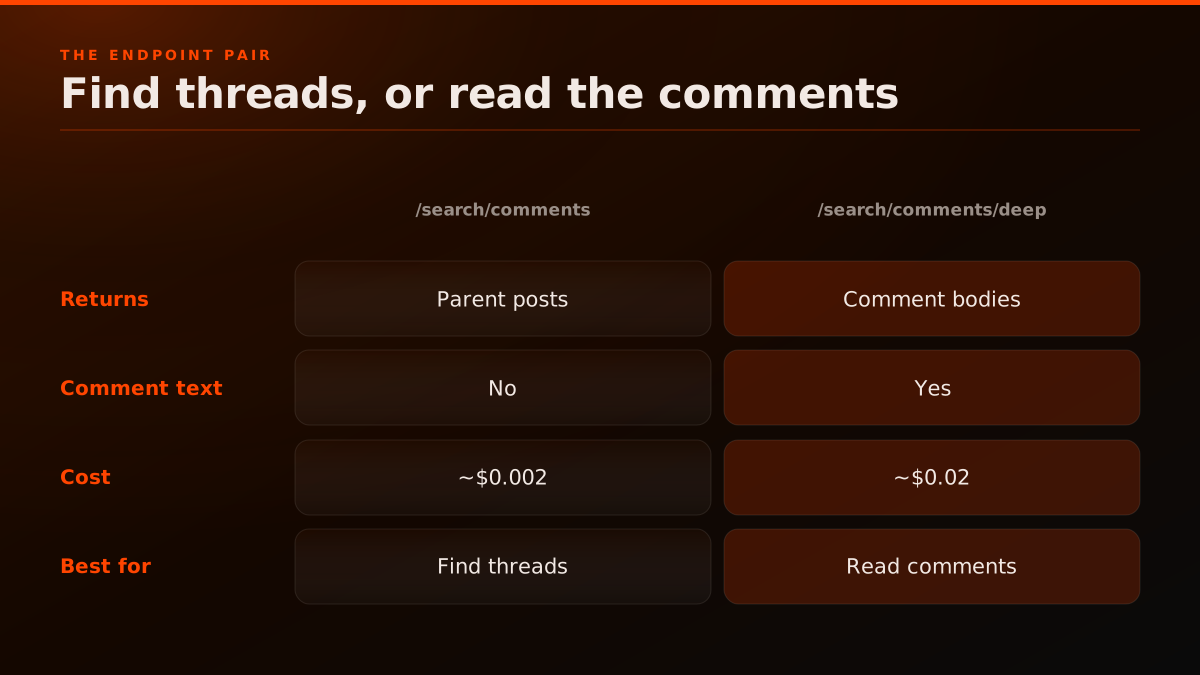
The comparison is easiest to hold as a small table:
/search/comments |
/search/comments/deep |
|
|---|---|---|
| Returns | Parent posts (t3) | Matching comment bodies (t1) |
| Comment text | No | Yes |
| Per-result fields | title, score, num_comments | body, score, author, permalink, parent_post |
| Cost tier | Standard read (~$0.002) | Premium read (~$0.02) |
| Best for | Finding threads | Reading the comments |
The reason the deep endpoint costs more is not arbitrary: one call to it fans out into a comment-search read plus one comment-tree fetch per expanded post, so it is doing several reads on your behalf. You are paying to skip writing and maintaining that fan-out yourself. If you only need to know which threads mention a term, the cheaper parent-posts call is the right tool, and it pairs naturally with the comments endpoint when you want to pull a specific thread in full.
Start building with Redditapis
Reads $0.002, votes $0.005, writes $0.012, DMs $0.025. $0.50 free credits.
How to search Reddit comments by keyword
To search Reddit comment bodies by keyword with a managed API, you send one authenticated request to the deep endpoint and read the comments back. There is no OAuth app to register, no comment tree to walk, and no filtering loop to write: the endpoint matches your query against the visible comment text at word boundaries, so a hit is always a real mention a reader would see, not a substring inside a link. Here is the call in curl, using your API key in place of the placeholder:
curl -s "https://api.redditapis.com/api/reddit/search/comments/deep?q=pushshift%20alternative&limit=10&sort=top" \
  -H "Authorization: Bearer YOUR_API_KEY"
The same call in Python, printing each matching comment with its score and subreddit:
import requests

API_KEY = "YOUR_API_KEY"

resp = requests.get(
    "https://api.redditapis.com/api/reddit/search/comments/deep",
    headers={"Authorization": f"Bearer {API_KEY}"},
    params={"q": "pushshift alternative", "limit": 10, "sort": "top"},
    timeout=30,
)
resp.raise_for_status()
data = resp.json()

for c in data["comments"]:
    print(f"[{c['score']:>4}] r/{c['subreddit']}  u/{c['author']}")
    print(f"       {c['body'][:120]}")
    print(f"       {c['permalink']}")

print("meta:", data["meta"])
Run against the live API on 2026-08-02, that query scanned 10 parent posts and returned the matching comments, including a 319-score comment in r/DataHoarder arguing that Pushshift's shutdown was overdue. The meta block reported posts_scanned, comments_matched, comments_returned, and a truncated flag, so you always know whether a comment tree was too deep to fully expand. A short walkthrough of the broader no-code and low-code approaches to pulling Reddit data, for readers who prefer a visual, is here:
If you want to scope the search, the same Reddit query operators work: subreddit:webdev keyword limits the match to one community, author:name keyword scopes to a person, and "exact phrase" matches a phrase. The advanced search filters guide covers the full operator set. One thing that does not work the way you might expect: AND, OR, and NOT are not boolean logic here, they are ordinary search terms; see Does the Reddit Search API Support Boolean Queries? for every operator tested live against the production endpoint.
How deep comment search actually works under the hood
The deep endpoint is not magic; it automates the exact do-it-yourself pipeline a developer would otherwise build by hand with a wrapper like PRAW. It starts from Reddit's own comment-search mode to get the matching parent posts, then fetches each post's comment tree with bounded concurrency, walks the nested replies, and keeps only the comments whose visible text matches your query. Understanding the steps matters because they explain both the cost and the honest limits: every stage is a real Reddit read, and a tree deep enough to be truncated can drop a match.
Laid out as a pipeline, the four stages make the tradeoffs visible.
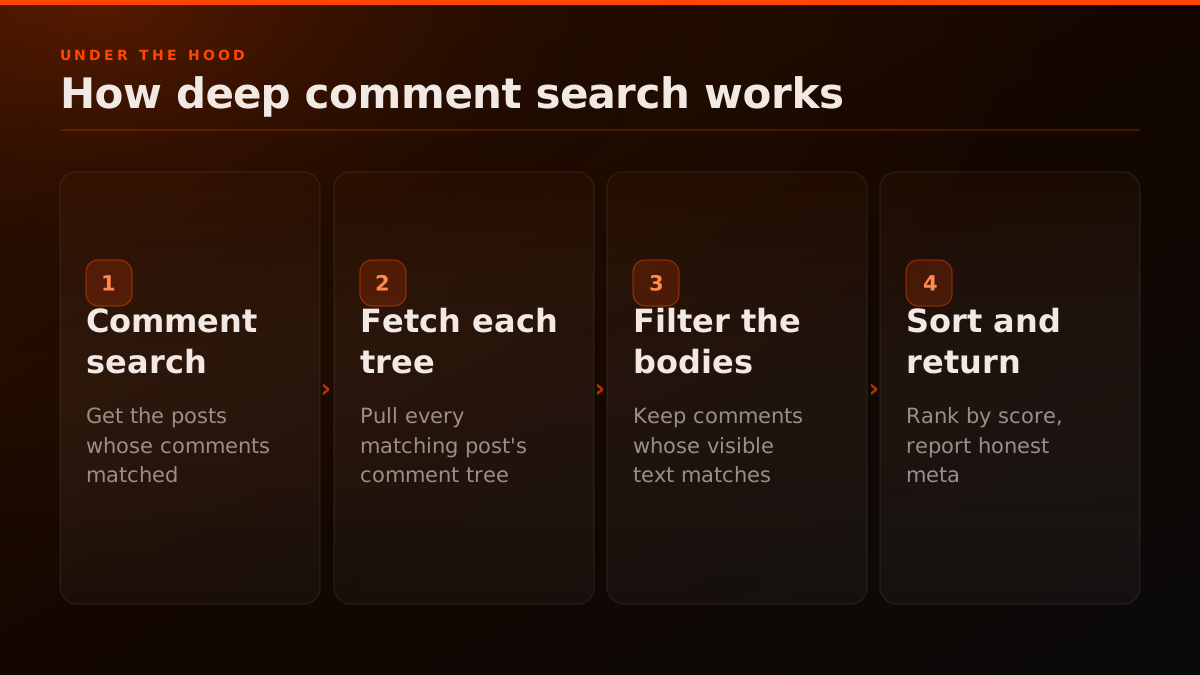
Two design choices are worth calling out. First, limit bounds the number of parent posts expanded, not the number of comments returned, because each parent post is one more upstream fetch and that is where cost and latency come from. Second, the endpoint reports honest meta: it tells you how many posts it scanned, how many comments matched, how many it returned, whether a cap trimmed the list, and whether any tree was truncated. A first-party probe on 2026-08-02 made this concrete.
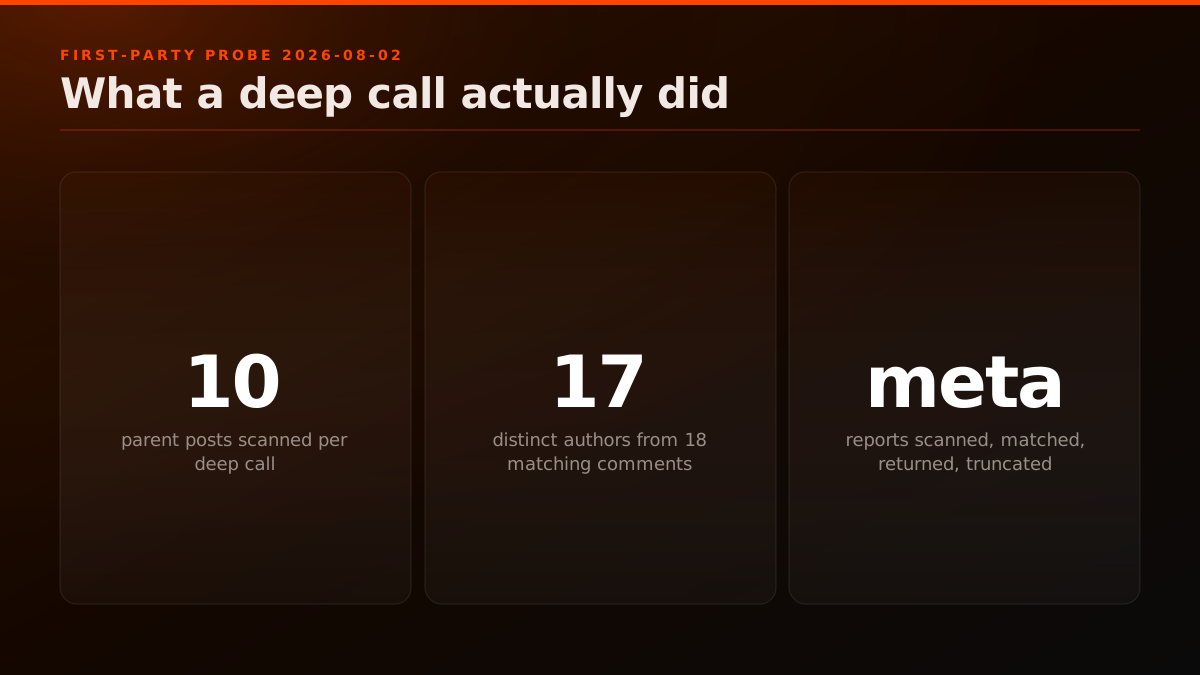
That transparency is the difference between a best-effort search you can trust and one that silently lies about completeness. Because the pipeline reads Reddit's live data, it reflects the present rather than a frozen archive, which is exactly the tradeoff the next section unpacks. For high-volume pulls, the same pattern underpins Reddit as a RAG data source.
The research mode: who is talking about your keyword
Sometimes the useful answer is not the comments but the people. The deep endpoint's group_by=author mode inverts a keyword search: instead of a flat list of matching comments, it returns the distinct authors who mentioned your query, ranked by how many of their comments matched and then by total score. Each author comes back with a comment count, a total score, the subreddits they matched in, and their single top comment. That is the shape you want for finding advocates, detractors, or domain experts on a topic, rather than just the raw mentions.
The call is the same endpoint with one added parameter and an optional cap on how many people come back.
import requests

API_KEY = "YOUR_API_KEY"

resp = requests.get(
    "https://api.redditapis.com/api/reddit/search/comments/deep",
    headers={"Authorization": f"Bearer {API_KEY}"},
    params={"q": "rate limit", "group_by": "author", "limit": 10, "max_authors": 5},
    timeout=30,
)
resp.raise_for_status()
data = resp.json()

for a in data["authors"]:
    subs = ", ".join(a["subreddits"])
    print(f"u/{a['author']}  ({a['comment_count']} comments, score {a['total_score']}) in {subs}")

print("meta:", data["meta"])
Run on 2026-08-02, a group_by=author search for "rate limit" scanned ten posts, found eighteen matching comments, and resolved them to seventeen distinct authors, capped to the five most prolific by the max_authors parameter. The meta block reported authors_matched, authors_returned, and authors_capped, so a trimmed people-list is never read as the whole set.
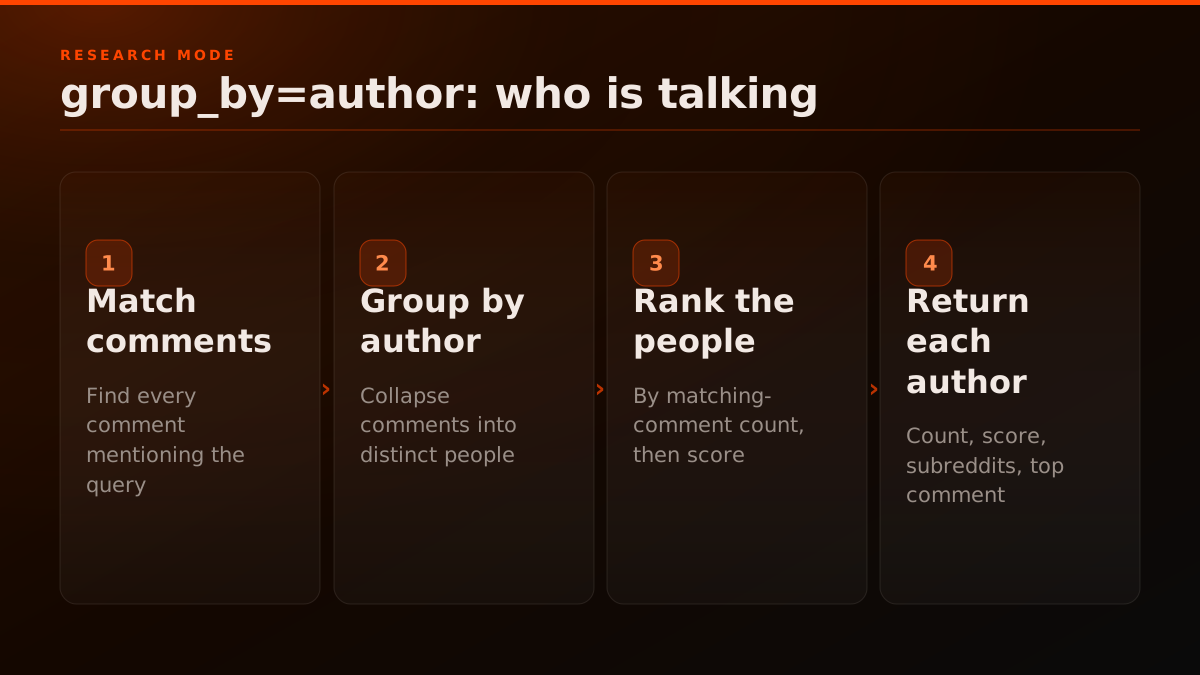
Removed accounts are dropped in this mode, because Reddit collapses every deleted user to the same [deleted] string, which would otherwise merge unrelated people into one phantom author. This is the mode most teams reach for when the goal is lead detection or influencer mapping rather than a raw comment feed.
PullPush vs a live comment-search API
The most important choice is between a historical archive and live search, because they solve genuinely different problems. PullPush is the community successor to Pushshift: a free, donation-funded archive that stores a large corpus of past comments and exposes a /reddit/search/comment endpoint to query them. It is the right tool when you need years of history on a term. A managed live API, by contrast, searches Reddit's current data through official access, so it reflects what is on Reddit now and carries a documented rate budget and a stable response shape. Neither is strictly better; they sit at opposite ends of the time axis.
The tradeoff is clearest as a direct comparison of what each is built to do, laid out side by side across data source, freshness, reliability, cost, and fit.
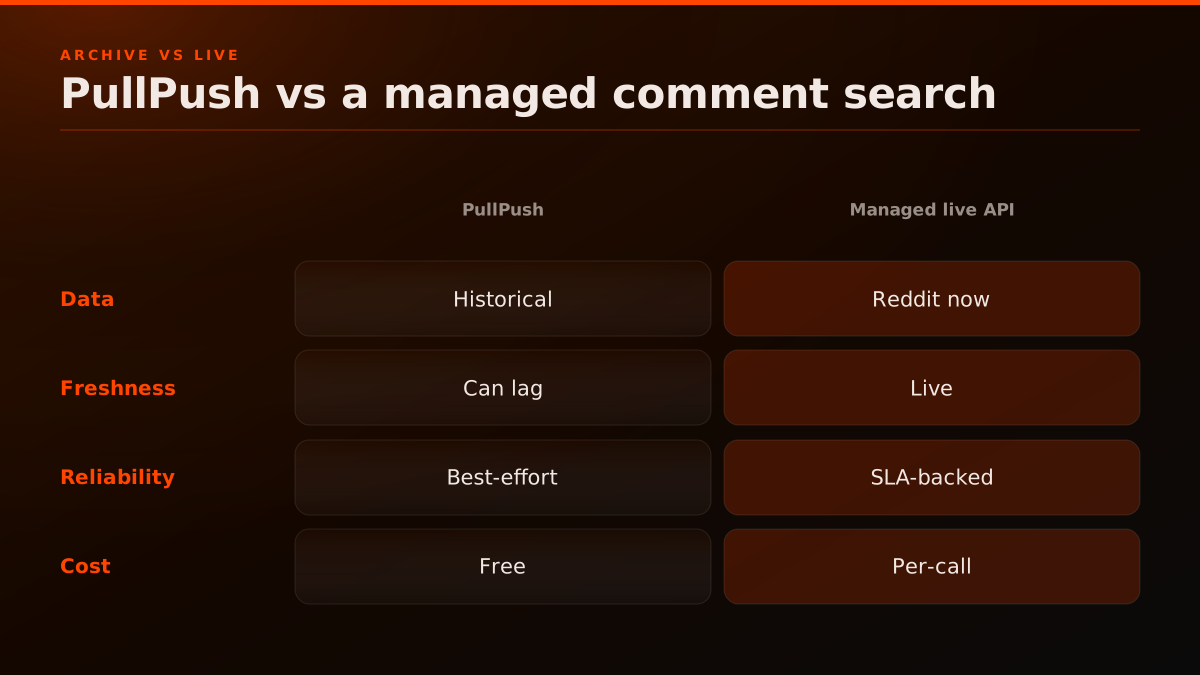
The honest recommendation is to match the tool to the time horizon. If you are studying how a topic was discussed over the last five years, PullPush and its free archive are hard to beat, and our Pushshift alternatives roundup scores the archive options in detail. If you are monitoring a keyword for fresh mentions, powering a product feature, or need a reliability promise a volunteer archive cannot make, a managed live API is the fit, and it will not 403 your cloud host the way the raw Reddit paths increasingly do.
The cheapest Reddit API. Try it free.
Reads from $0.002 per call. $0.50 free credits. No credit card required.
The comment-search response, field by field
A comment-search API is only as useful as the fields it returns, and the deep endpoint returns a complete, structured comment object rather than presentation HTML. Every matching comment comes back with the data you need to rank it, attribute it, and link to it, plus a compact reference to the post it lives under. Knowing the exact shape upfront saves you from probing the response by trial and error.
The deep comment-search response returns these fields per comment.
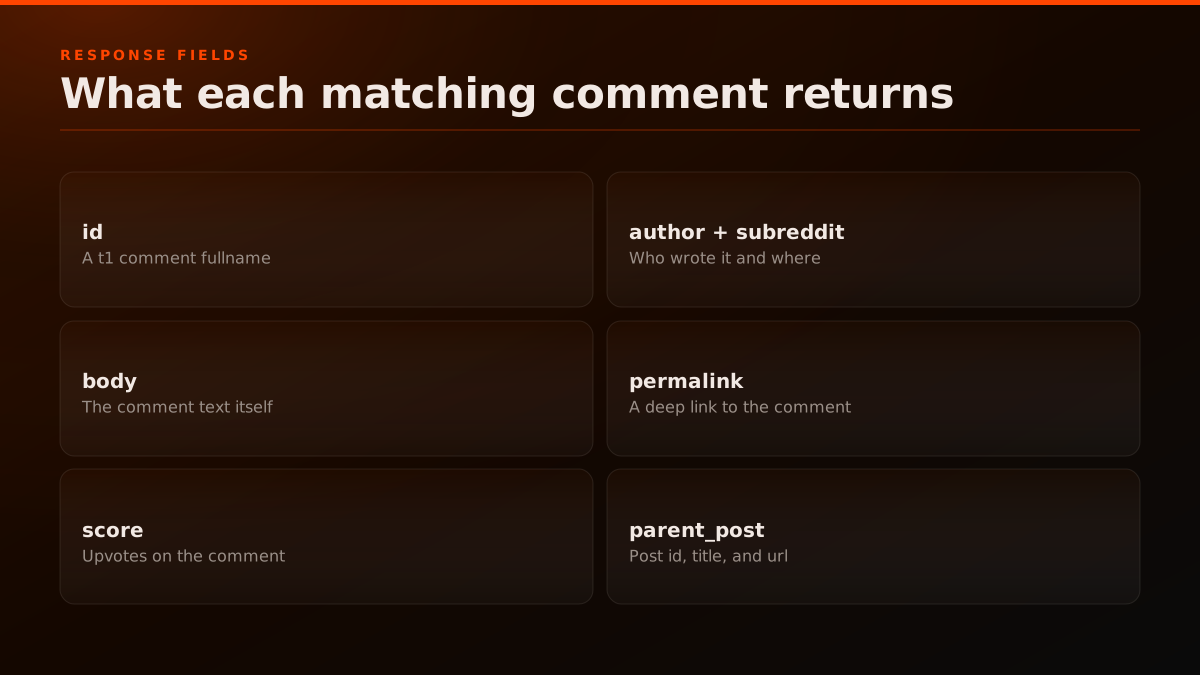
Alongside the comments array, the response carries an after cursor for pagination and the meta block that reports posts_scanned, comments_matched, comments_returned, capped, and truncated. In group_by=author mode the array becomes authors and each entry carries author, comment_count, total_score, subreddits, and top_comment. Because everything arrives as clean JSON rather than escaped markup, you can drop it straight into a pipeline without an HTML-stripping step, unlike the RSS feed path which returns presentation markup. The exact schemas live in the full API documentation.
How far back you can search, and how to paginate
Live comment search reads Reddit's current, reachable data rather than a full historical dump, so its depth is bounded and best-effort by design. A single call expands a limited number of matching parent posts, and a comment that was deleted since Reddit indexed it, or one nested below the fetched tree depth, will not appear, which the truncated flag warns you about. This is not a defect so much as the nature of reading the present: the archive job and the live-search job are different, and mixing them up is the most common source of surprise.
To widen a search beyond one call, you paginate.
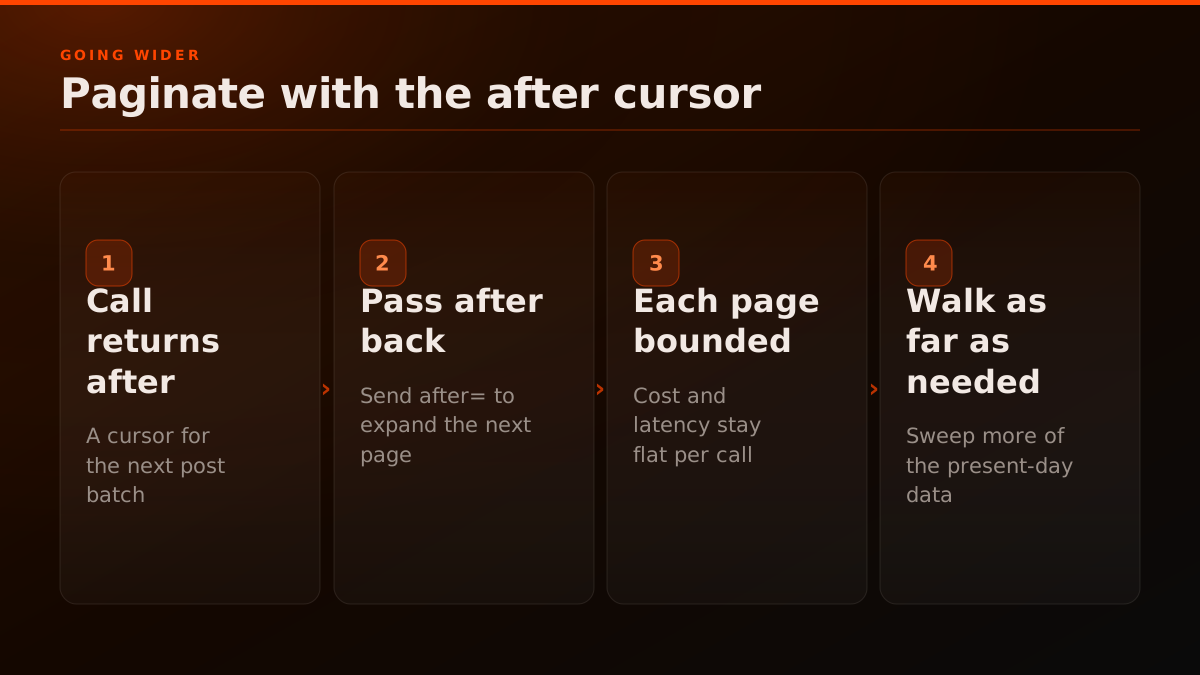
The response after value is Reddit's post-search cursor, so passing it back as after= expands the next batch of parent posts, and each page stays bounded in cost and latency. That lets a caller walk as far as they want without any single call ballooning. If your real need is years of history on a term rather than a wide sweep of the present, that is the point at which a historical archive is the better instrument, because it stores the past instead of reading the current listing. The mechanics of the cursor are the same across the API, and the pagination guide covers them in full, including how the cursor interacts with rate limits.
What comment search costs, and its honest limits
Comment search on a managed API is priced by how much work each call does, and the deep endpoint is honest about being a premium operation. A standard single read, including the /search/comments parent-posts call, runs around $0.002. The deep call runs around $0.02 because it performs a comment-search read plus one comment-tree fetch per expanded post, so a limit=10 deep call is roughly ten reads bundled into one request and one response. Framing it that way makes the price make sense: you are buying a fan-out you would otherwise build and pay to run yourself.
The cost is only half the picture; the limits matter just as much.
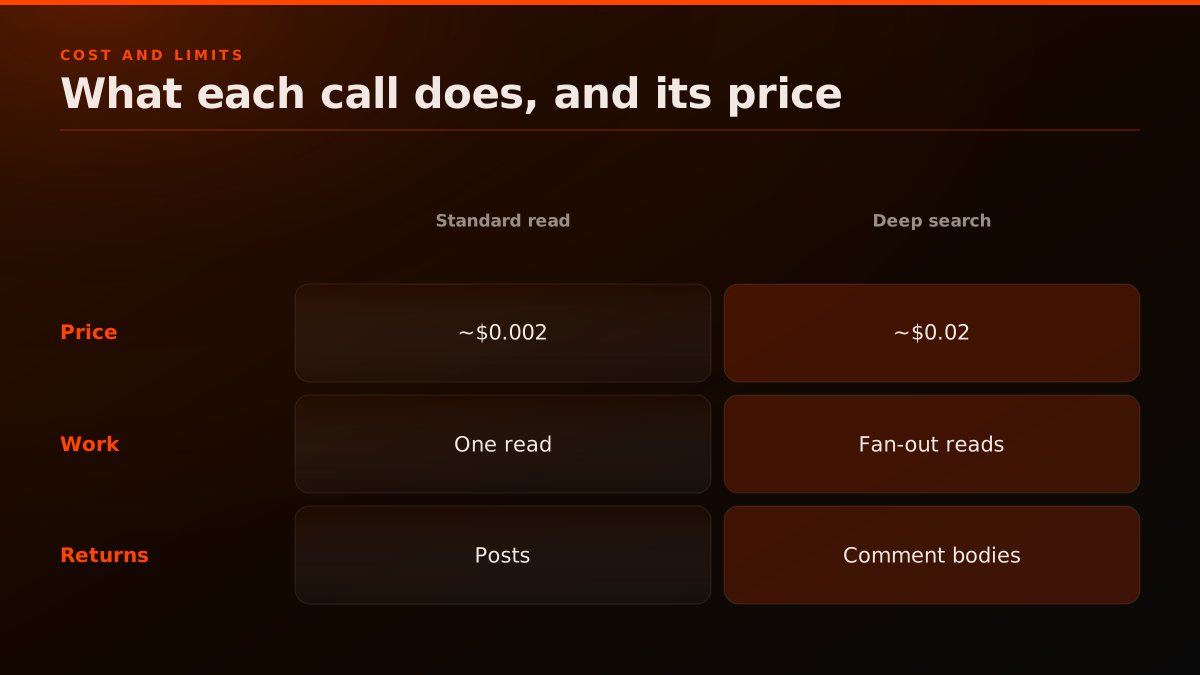
The honest limits are worth stating plainly. Deep search is best-effort, not exhaustive: it will miss a comment deleted after indexing or one below the fetched depth. It reads live data, so it is not a substitute for a full historical archive, a distinction Reddit draws in its own Data API Wiki. And the premium price means you should reach for the cheaper parent-posts call whenever you only need to find threads, not read every comment. None of this is hidden, because the meta block reports exactly what was scanned and returned. For a full cost breakdown against running your own access, see the pricing guide and the pricing versus general scraping platforms comparison.
What builders do with Reddit comment search
Comment search is not an academic feature; it powers a specific set of real builds that post-title search cannot serve. The common thread is that the signal lives in the replies, not the headlines: the buying intent, the product complaint, the recommendation, and the expert answer are all in the comments. Being able to search comment bodies by keyword, and to invert that into who is saying it, turns Reddit from a set of threads into a queryable opinion layer.
The recurring use cases cluster into a handful of patterns, each one a job that lives in the replies rather than the post titles.
- Brand and product monitoring: watch comments for a product or competitor name and surface fresh mentions
- Lead detection: catch the buying-intent phrasing that shows up in replies, not headlines
- Market and sentiment research: treat scored comments as a live survey of opinion
- Expert mapping: find who talks about a topic through the author-grouping mode
- AI context: feed structured comments into an agent or a retrieval pipeline
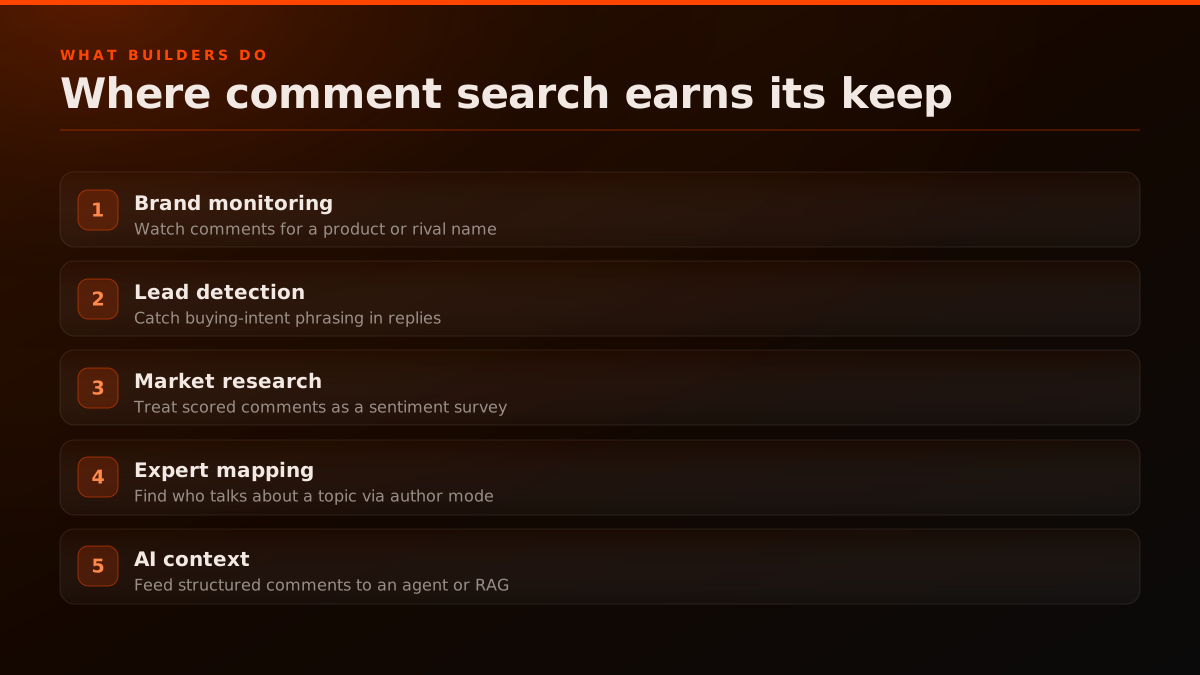
Brand monitoring watches for a product or competitor name in comments and surfaces fresh mentions to a human. Lead detection scans niche communities for the buying-intent phrasing that shows up in replies rather than post titles. Market and sentiment research treats the comment corpus as a survey of what people actually think, ranked by score. Author-mode research maps the experts and advocates on a topic. And AI builds feed structured comment context into an agent or a retrieval pipeline, because a model reasoning about a topic needs the discussion, not just the headline. Each of these is a comment-search problem first, and a good reason the missing endpoint has been felt so widely.
When you need something else, and the next step
Comment search covers a lot, but it is not the answer to every Reddit-data question, and being honest about the boundaries saves you from forcing the wrong tool. If you need years of historical comments on a term, a free archive like PullPush is the better fit than live search. If you already know the exact post and want its full discussion, the comments endpoint fetches the whole tree by permalink without a search step. If you want to search post titles and bodies rather than comments, that is post search. And if you want to write a reply rather than read one, that is a write endpoint, not a search one. Matching the job to the tool is most of the battle, and finding the right subreddits first makes every one of them sharper.
For the job this guide is about, searching Reddit comment bodies by keyword over live data, a managed REST API is the path that works in 2026 without rebuilding what Camas and Pushshift used to do.
- Read the Reddit data API guide for the full access picture
- Compare the paths in dollars in the pricing guide
- Get an API key to test
/search/comments/deepdirectly, with free credit at signup
Need to search Reddit comments, not just posts? redditapis.com gives you live comment search behind one bearer token: /search/comments to find the threads, /search/comments/deep for the actual comment bodies, and a group_by=author mode for who is talking. See pricing or get an API key with free credit at signup to pull the comments Reddit's own search leaves out.
Where these numbers come from.
Each row is a figure in this post and the artefact it was read from. Reddit's access rules and the third-party archives around them keep moving, so check the date on a source before you build against it.
- Reddit Data API documentation
- The official API whose search exposes type=comment but returns parent posts, not comment bodies.
- Reddit search endpoint reference (/dev/api)
- The GET /search documentation the article measures the type=comment behavior against.
- PullPush Reddit API
- The community Pushshift successor that exposes /reddit/search/comment for historical comments.
- Reddit Data API Terms
- The terms that route commercial and high-volume Reddit data use toward licensed access.
- redditapis.com API docs
- The managed comment-search endpoints and response shapes referenced throughout.
Frequently asked questions.
Not in Reddit's official API. Reddit's search endpoint accepts a type=comment parameter, but that parameter is a search mode, not a result type: it matches your keyword against comment text and returns the PARENT POSTS whose discussion mentioned it, never the comment bodies themselves. The old public comment-search paths, Camas and the Pushshift archive behind it, both went dark for non-moderators in 2023. Two options fill the gap in 2026: PullPush, a free community archive that exposes a /reddit/search/comment endpoint for historical comments with no reliability promise, and a managed REST API that returns live comment search with the actual matching comment bodies. Our Reddit data API guide covers the wider access picture.
Because type=comment on Reddit's /search.json is a matching mode, not an output format. Reddit matches your query against the text of comments, but its response hands back the posts (t3 objects) those comments belong to, carrying the post title, selftext, score, and comment count. It never tells you which specific comment matched or its text, so a developer who appends &type=comment gets a result they cannot read: the thread that matched, with no comment body. Getting the actual comment text means fetching each matching post's comment tree and filtering it yourself, or using an API that does that step for you.
Nothing replaced them exactly. Pushshift, the full-history Reddit archive, was cut off from the public in 2023 during Reddit's API changes, and Camas, the search UI built on top of it, stopped working with it. The community successor is PullPush, which rebuilt a similar archive and exposes /reddit/search/comment for historical comments, but it runs on donations with no service-level guarantee. For live comment search over Reddit's current data, rather than a historical dump, a managed REST API is the reliable path. See our best Pushshift alternatives roundup for the full provider comparison.
You have three realistic paths in 2026. First, PullPush for historical comments: GET https://api.pullpush.io/reddit/search/comment/?q=your+keyword, free and archive-based. Second, a do-it-yourself pass on Reddit's own API: run type=comment search to get matching posts, fetch each post's comment tree, then filter the comment bodies for your keyword. Third, a managed REST API that does the do-it-yourself step for you: one authenticated GET /api/reddit/search/comments/deep?q=your+keyword returns the matching comment bodies with score, author, permalink, and parent post. The Reddit search API tutorial covers post search; this guide covers comment-body search.
They answer two different questions. /search/comments mirrors what Reddit's own comment-search mode gives you: the PARENT POSTS whose comments matched your keyword, with title, score, and comment count, at the standard read price. /search/comments/deep goes the extra step: it takes those posts, fetches each one's comment tree, and returns the ACTUAL matching comment bodies, each with its body text, score, author, a comment-deep permalink, and its parent post. Because the deep call fans out into several reads, it is priced as a premium read rather than the standard single-read tier. Use the first to find threads, the second to read the comments themselves; the comments endpoint covers fetching a single known thread's full tree by permalink.
Yes, two ways. Reddit's own search syntax supports an author: operator, so a query like author:spez keyword scopes the match. A managed comment-search API also exposes a group_by=author research mode that inverts the question: instead of a flat comment list, it returns the distinct PEOPLE who mentioned your keyword, ranked by how many of their comments matched, each with a comment count, total score, the subreddits they matched in, and their top comment. That is the pattern for finding who is talking about a topic, not just where. It pairs with advanced search filters for tighter scoping.
PullPush is a free, donation-funded historical archive: it holds a large corpus of past comments and is excellent for backfilling history, but it makes no reliability promise and its coverage of very recent activity can lag. A managed live comment-search API queries Reddit's current data through official access, so it reflects what is on Reddit now and comes with a documented rate budget and a stable response shape you can build a product on. The honest split: PullPush for deep historical research, a managed API for live monitoring and production features. Our Pushshift alternatives guide scores both.
A live comment-search API searches Reddit's current, reachable data rather than a full historical dump, so it is best-effort by depth: it expands a bounded number of matching posts per call and can miss a comment that was deleted since Reddit indexed it or one nested below the fetched tree depth. To go wider you paginate with the response after cursor, expanding the next batch of parent posts. For genuinely deep history, years of comments on a term, an archive like PullPush is the better fit, because it stores the past rather than reading the present. The pagination guide covers the cursor pattern.
On a managed REST API, a standard single read, including the /search/comments parent-posts call, is around $0.002 per request. The deep comment search, /search/comments/deep, is a premium read at roughly $0.02 because a single call fans out into a comment-search read plus one comment-tree read per expanded parent post. That premium buys the step you would otherwise write and maintain yourself: fetching and filtering each tree. Free credit at signup lets you measure the exact cost for your query shape before committing, and the pricing guide breaks down the tiers.
Yes. Poll a comment-search endpoint on an interval and diff the results against what you have already seen, or wire it into an automation that routes new matches onward. Because the API returns structured comment bodies with score and author, you can filter by engagement or subreddit before acting. This is the standard build for brand monitoring and lead detection: watch a set of keywords, surface fresh comments, and alert or draft a reply for a human to review. The webhooks versus polling guide covers the cadence tradeoffs, and automating Reddit with n8n shows the workflow wiring.
The deep comment-search response returns each matching comment with its id (a t1 comment fullname), body (the comment text), score, author, subreddit, a permalink that deep-links to the comment, its created timestamp, and a parent_post object holding the post id, title, and url. The response also carries an after cursor for pagination and a meta block that reports posts scanned, comments matched, comments returned, and whether the result was capped or the tree truncated, so a trimmed result is never mistaken for the whole set. The Reddit data API guide shows how these fields fit the wider response set.
For Reddit's own API, yes: comment search built on type=comment plus tree fetching runs through Reddit's authenticated Data API, which since 2023 requires an approved application under the Responsible Builder Policy, and approval has become a common blocker in r/redditdev. PullPush needs no key for historical archive queries. A managed REST API sits in between: you authenticate with a single bearer token to the provider and skip running your own OAuth app and approval queue. The authentication guide covers the OAuth path in full.
Keep reading.
Continue exploring related pages.
Reddit API documentation
The complete 2026 reference: auth, all 59 endpoints, and code.
Get a Reddit API key
Instant bearer token, no waitlist and no enterprise contract.
Reddit Responsible Builder Policy
Why Reddit denies API applications, and the managed REST bypass.
Reddit API use cases
14 use cases from AI training to brand monitoring and DMs.
Reddit Search API
Search posts, comments, users, and communities over one REST endpoint.
Reddit MCP server
Wrap the REST API as MCP tools for Claude, Cursor, and any MCP client.
Reddit API for AI agents
Live Reddit context for tool calls, MCP servers, and RAG pipelines.
Redditapis pricing
Endpoint-level costs and quick monthly totals - reads from $0.002 / call.
Reddit API cost calculator
Estimate monthly spend using your request volume.
Reddit API guides and tutorials
Tutorials, walkthroughs, and API deep-dives for developers.
Reddit API alternatives
Evaluate alternatives by cost model, limits, and integration fit.
Cheap Reddit API
The cheapest way to get Reddit data: $0.002 per call, no contract, no minimum.
Official Reddit API vs Redditapis
Access, setup, rate limits, and pricing, side by side.
PRAW alternative
A hosted Reddit REST API for any language, no app registration or OAuth.
Reddapi alternative
A maintained Reddit REST API with published pricing and write endpoints.
Reddit comment scraper alternative
The raw comment API: search and filter comments, historical and live, clean JSON.
Reddit scraper API
Hosted scraper API vs building your own: managed proxies, clean JSON.
RapidAPI Reddit alternative
A direct, maintained Reddit API with published pricing and write endpoints.
Bright Data Reddit alternative
A purpose-built Reddit API vs a general scraping platform: structured JSON, plus writes.
ScraperAPI Reddit alternative
A Reddit-native API vs a generic HTML fetcher: auth and pagination handled, typed JSON.
TikHub alternative
TikHub's Reddit surface is read-only; get comment, vote, and DM endpoints too.
EnsembleData alternative
No $100/month floor: pay per call from $0.002, plus write, vote, and DM endpoints.
Scrape Creators alternative
7 read-only Reddit endpoints vs a dedicated API with real write, vote, and DM paths.
FetchLayer alternative
Posts, comments, and search only; add vote, comment, and DM over the same REST auth.
PullPush alternative
PullPush is free but volunteer-run and goes offline for reindexing; a maintained REST API that stays up.
Reddit monitoring API
Build your own keyword and brand-mention monitor: search, comment search, and subreddit streams over REST.
F5Bot vs Redditapis
F5Bot's Slack and Discord delivery needs its $49.99/mo Gold tier; Redditapis includes it from $19/mo.
Syften vs Redditapis
Syften caps you at 100 to 500 results a day; Redditapis allows 10,000 a day per monitor at the entry plan.
Octolens vs Redditapis
Octolens meters by mention with overage fees; Redditapis is flat-priced by subreddit slot from $19/mo.
Affiliate program
Earn 20% lifetime commissions - capped at $5,000/yr.
Reddit Vote API tutorial
Upvote and downvote a post programmatically via the REST API.
Reddit Data API: REST, no PRAW
REST endpoints for Reddit data with no PRAW and no OAuth dance.
Reddit scraping benchmarks
Real throughput, error rates, and cost benchmarks for Reddit scraping.
Reddit API answers
Direct answers on cost, access, rate limits, endpoints, and auth.
How much the Reddit API costs
Per-call pricing from $0.002 a read, with $0.50 in free credits.
Reddit API in Python
One requests call with a bearer token, no PRAW and no OAuth flow.
Reddit shadowban checker
Check if a Reddit account is shadowbanned in seconds, free and no login.
Subreddit stats checker
See any subreddit's live subscriber count, active users, and age, free and no login.
Similar reads.
More guides on the Reddit API, scraping, pricing, and MCP servers.

Reddit RSS Feeds vs the Reddit API in 2026
What the free Reddit .rss path still returns in 2026, its hard structural limits, where Reddit now throttles it, and when to move from RSS feeds to the managed API.

Arctic Shift for Reddit: The Clean AI Training Data Pipeline (2026)
How to assemble a clean Reddit training corpus in 2026: what Arctic Shift gives you (2.5B items, ~261GB Parquet through February 2026), what it cannot (real-time data), and the REST API path for current posts, JSONL formatting, and cross-source dedup.
The Subreddits AI Agent Builders Actually Use: 24 Communities, Measured
Five curated lists rank the best subreddits for AI agent builders and none of them measured anything. We pulled 24 communities and 2,400 posts and ranked them on data.
Building a Reddit Dataset From the API: What You Get That a Static Dump Does Not
The public archives ship monthly. We measured what one live call returns instead: 1,000 posts across ten communities, 22 fields each, a median newest record 12 minutes old, and 496 of those rows already changed 11 minutes later.

Reddit Demographics in 2026: What the API Tells You About Reddit Audience Research
Reddit has never exposed age, gender or income. Here is what the public data API does return, the five behavioural proxies you can build from it, and where each one breaks.
Reddit's API Returns 403 From GitHub Actions: A Customer's Report and What We Verified
A redditapis.com customer reported Reddit's own API returning 403 from GitHub Actions runners with no OAuth path available. What we verified independently, and what still works.
Reddit MCP Servers That Need No API Key: What Works, What Breaks, and When You Need an Authenticated Endpoint (2026)
Which no-API-key Reddit MCP servers still return data in 2026, which calls quietly break, and the exact point where an authenticated endpoint stops being optional for an AI agent.

Reddit Media API: Fetch Images, Videos and Galleries Programmatically (2026)
How to fetch Reddit images, videos and galleries over a plain REST call. What i.redd.it, v.redd.it and gallery_data mean, why videos split audio from video, and how to pull media at scale for datasets in 2026.